
Brabham BT46B Fan Car: One Race, One Win, One of F1’s Greatest Controversies
CLASSIC MOTORSPORT
1/16/20263 min read
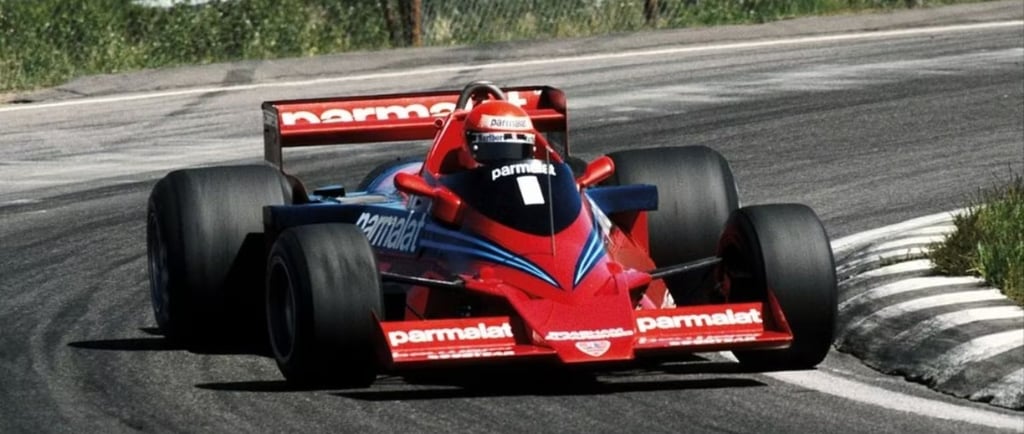
In 1978, Formula 1 was in the middle of an aerodynamic revolution. Ground effect had changed everything. Lotus had shown that downforce was no longer only about wings, but about what happened underneath the car. Venturi tunnels, sliding skirts, and underbody sealing became the new obsession of the paddock. Every major team was chasing the same idea.
Brabham went somewhere else.
Designed by Gordon Murray, the Brabham BT46 was originally conceived as a conventional ground-effect challenger powered by the heavy Alfa Romeo flat-12 engine. That engine created a serious problem: its width made efficient venturi tunnels almost impossible. While Lotus sculpted elegant underbodies, Brabham struggled with packaging, cooling, and airflow.
The solution Murray developed would become one of the most radical ideas ever seen in Formula 1.
Instead of relying on airflow speed to generate downforce, he created a system that actively removed air from beneath the car. A large fan was installed at the rear, driven mechanically by the engine. Officially, it existed to improve cooling. In reality, it extracted air from under the floor, creating a low-pressure zone that effectively sucked the car onto the track surface.
Unlike traditional ground-effect cars, whose performance depended heavily on speed and sealing, the Brabham’s system worked all the time. Low speed, high speed, corner entry, traction zones — the downforce was immediate and constant. The result was a car with extraordinary grip, minimal sliding, and exceptional stability under braking.
The car was named BT46B.
Its only appearance came at the 1978 Swedish Grand Prix at Anderstorp. From the moment Niki Lauda drove it in practice, the paddock understood something unusual had arrived. The Brabham accelerated harder out of slow corners, remained planted where others struggled, and showed a consistency that made conventional setups look obsolete.
During the race, Lauda never needed to force the issue. He stayed clear of trouble, picked his way through traffic, and steadily built a comfortable lead. Even when oil appeared on sections of the circuit, where other drivers visibly struggled for grip, the BT46B remained composed. The car’s ability to generate downforce independently of airflow speed made it uniquely stable.
Lauda crossed the finish line to win. The Brabham had competed once. The Brabham had won once.
Technically, the car was legal. The regulations prohibited devices whose primary purpose was aerodynamic, but Brabham argued — convincingly under the wording of the time — that the fan’s main function was cooling. The aerodynamic benefit, they claimed, was secondary.
The real problem was not legality. It was politics.
By 1978, Formula 1 was divided between constructors, manufacturers, and governing bodies. Bernie Ecclestone, owner of Brabham, was also the leading figure of the FOCA and deeply involved in negotiations over power, revenue, and authority in the sport. Keeping the fan car meant provoking every rival team and handing the FIA a technological war it was unprepared to manage.
Protests were forming. Pressure was building. Not only over safety and fairness, but over what Formula 1 was about to become if such interpretations were allowed to spread.
Within days of the Swedish Grand Prix, Ecclestone announced that the BT46B would be withdrawn voluntarily. There was no formal disqualification. No post-race ban. Brabham simply removed it from competition.
Later, the rules were rewritten to ensure no similar concept could ever return.
The BT46B became a ghost. A machine that appeared, demonstrated total technical superiority, won, and disappeared. It remains the only Formula 1 car in history to retire undefeated.
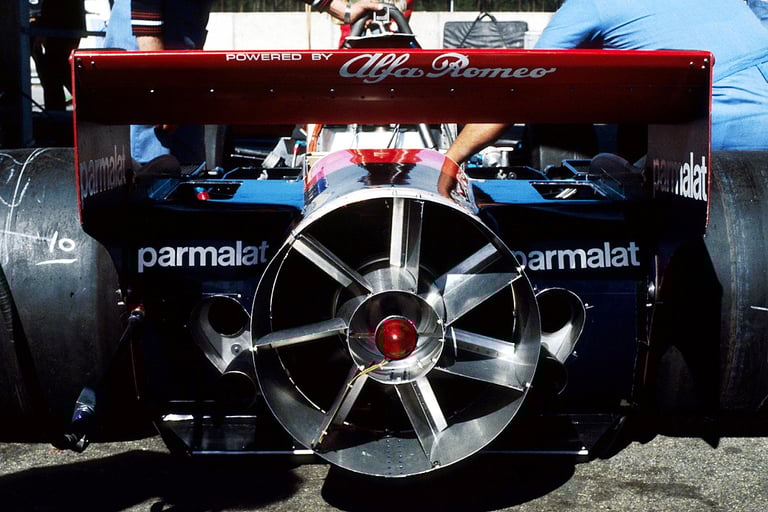
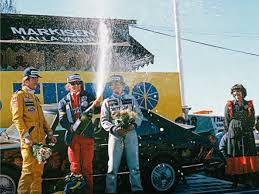
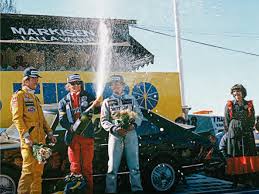
Brabham BT46B in Anderstop - Sweden
Lauda Spraying the Champagne
