Hans Herrmann Dies at 97: From Mercedes Silver Arrows to Porsche 917 Glory
CLASSIC MOTORSPORT
1/9/20263 min read
Herrmann's name first became widely known in 1954, when Mercedes brought back the legendary Silver Arrows to Formula 1 with a star‑studded line‑up that included Juan Manuel Fangio and Karl Kling. In that context, the young German was hardly the team's headline act, yet he quickly earned respect for his speed and resilience. His standout moment in F1 came at the 1954 Swiss Grand Prix, where he finished third and scored what would be his only world championship podium – a result that would, decades later, take on historic significance. That season, he also set the fastest lap at the French Grand Prix, demonstrating his raw pace even though mechanical issues prevented a finish.
Statistically, Herrmann's F1 record looks modest: 19 entries, 18 starts, 10 points, one podium and a single fastest lap spread over a fragmented career between 1953 and 1969. He drove for an eclectic list of manufacturers – Veritas, Mercedes-Benz, Maserati, Cooper, BRM and Porsche – often in seasons where reliability and safety were tenuous at best. His best championship finish was seventh place in 1954 with eight points for Mercedes. Yet numbers alone fail to capture his reputation in the paddock. Herrmann survived several spectacular accidents, including a terrifying flip at AVUS in 1959 from which he walked away unscathed, earning the nickname "Hans im Glück" – "Lucky Hans" – for his uncanny ability to escape enormous crashes.
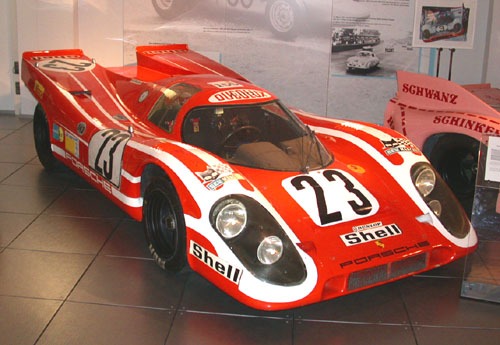
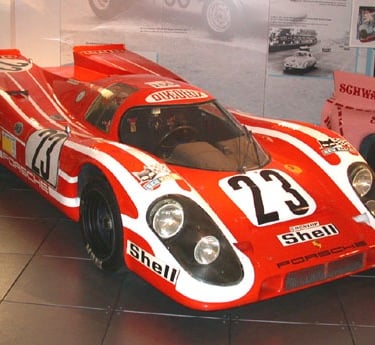
Where Herrmann truly became a legend was in endurance racing. He was instrumental in Porsche's climb from class contender to outright Le Mans powerhouse, competing 14 times at La Sarthe and winning five class victories. His second-place finish in 1969, losing to Jacky Ickx by just 120 meters after 24 hours of racing, remains one of the most dramatic conclusions in Le Mans history. The following year, driving the now iconic red‑and‑white Porsche 917K with Richard Attwood, he finally claimed overall victory and secured Porsche's first overall triumph in the French classic.
That 1970 Le Mans win also fulfilled a promise: Herrmann had told his wife Magdalena he would retire if he ever won the race, and true to his word, he stepped away from professional racing later that year at the age of 42. Beyond Le Mans, his palmares included victories at the Targa Florio in 1960, the 24 Hours of Daytona in 1968, and the 12 Hours of Sebring in 1956 and 1968.
By the 2020s, Herrmann had become a living link to the sport's formative era. Following the death of Tony Brooks in 2022, he was recognized as the oldest surviving Formula 1 podium finisher, his 1954 Swiss GP rostrum standing as a time capsule from the Fangio age. Well into his nineties he remained active as an ambassador for Mercedes-Benz Heritage, a beloved guest at historic events who embodied both the danger and dignity of his generation. When he passed away yesterday on January 8, 2026 at the age of 97, the world of classic motorsport did not just lose a race winner and Le Mans hero – it lost one of its last direct witnesses to the raw, uncompromising beginnings of modern Formula 1.
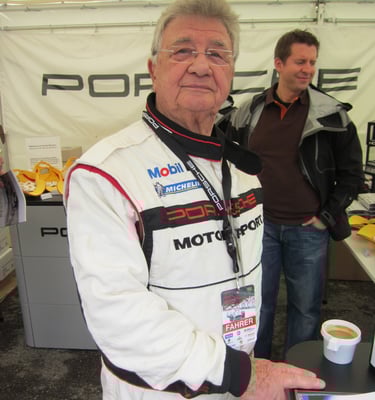
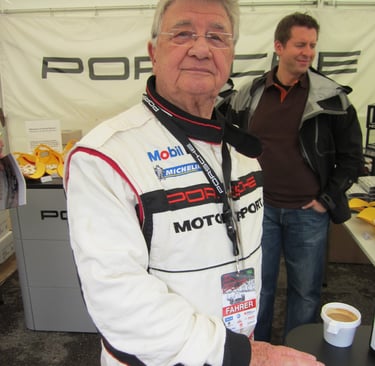
Hans Herrmann - Credit: Wikimedia Commons
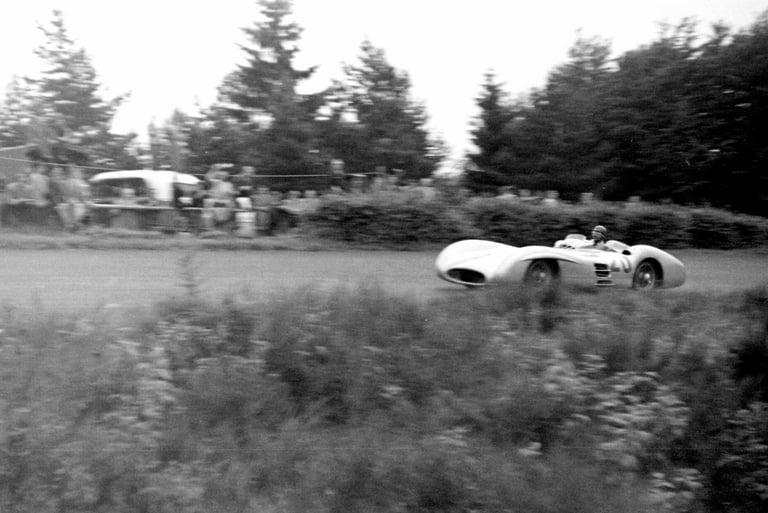
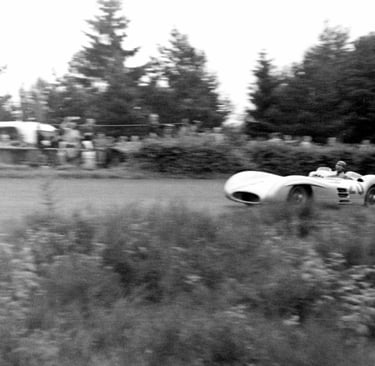
Hans Hermann and Mercedes W196 - 1954. Credit: Wikimedia Commons
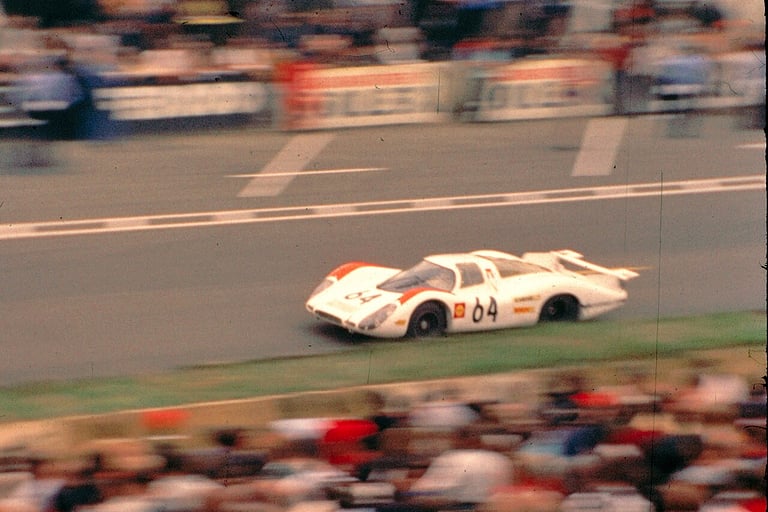
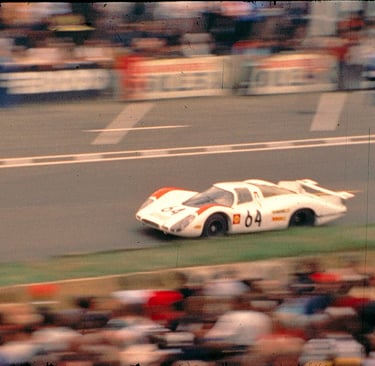
Porsche 908 - 2nd Place Le Mans 24h 1969. Credit: Wikimedia Commons
Porsche 917K - Winner Le Mans 24h 1970. Credit: Wikimedia Commons
Hans Herrmann was one of the quiet pillars of post‑war Grand Prix and sports car racing, a driver whose career bridged the heroic 1950s and the technological revolution of the late 1960s.
Born in Stuttgart on February 23, 1928, he emerged from Germany's devastated motorsport scene to become a key figure in both Mercedes-Benz's return to competition and Porsche's rise to global endurance glory.