Jochen Rindt’s Warning: He Knew the Lotus Was Dangerous a Year Before He Died
CLASSIC MOTORSPORT
1/13/20263 min read
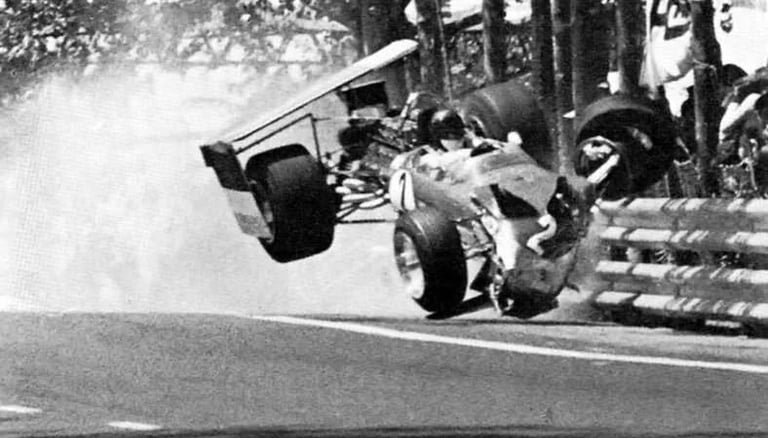
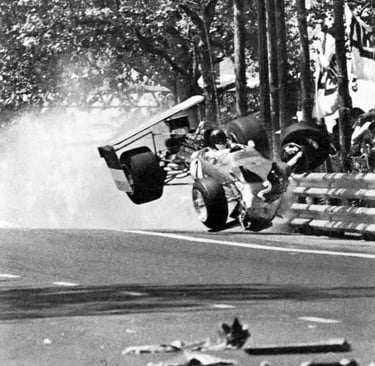
Jochen Rindt was one of the fastest and most charismatic drivers of his era, but behind his fierce competitiveness lay a calculated understanding of the dangers he faced. When he signed with Team Lotus in 1969, Rindt reportedly told those close to him that driving for Lotus meant he could either become world champion or die trying — a stark acknowledgment of his own mortality in cars that were thrillingly fast yet notoriously fragile.
That fragility was laid bare early in his Lotus career at the 1969 Spanish Grand Prix at Montjuïc Park. During that race, Lotus cars equipped with suspension-mounted wings experienced catastrophic failures: first Graham Hill’s car lost its rear wing and crashed, then Rindt’s Lotus suffered the same fate at high speed. The aerodynamic failure lifted the car off the track and into barriers, where it struck Hill’s wrecked machine. Rindt survived with relatively minor injuries — a broken nose — but the danger was unmistakable.
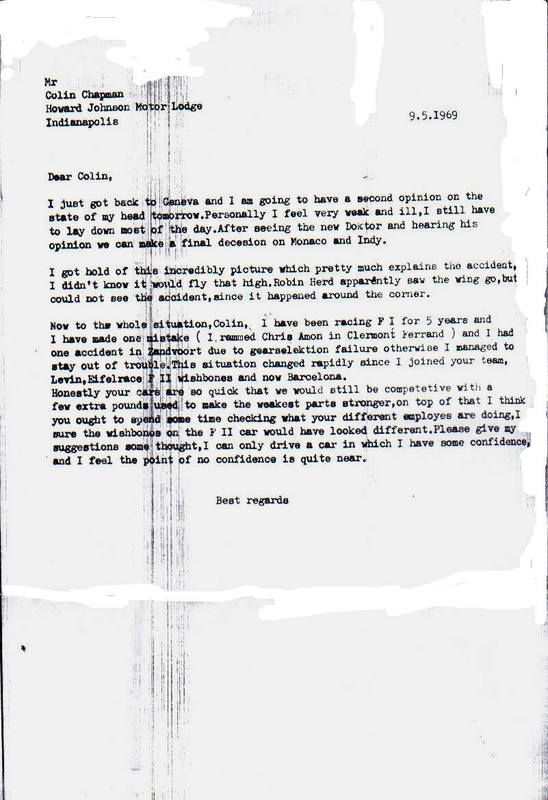
The incident ignited a fierce debate about safety. Rindt publicly criticized Lotus team owner Colin Chapman and the use of such delicate aerodynamic devices. In a letter he sent to Chapman on 9 May 1969, Rindt expressed his deep concerns: he argued that the cars were so quick they could still compete even if built sturdier, and insisted he could only drive a car in which he had confidence. This letter revealed not just frustration, but an acute awareness that the pursuit of speed at Lotus often came at the expense of reliability and safety.
Despite this conflict, Rindt stayed with Lotus. In 1970 the team introduced the revolutionary Lotus 72, a car with an advanced wedge shape and innovative engineering that made it exceptionally competitive. Rindt’s skill and the pace of the Lotus 72 quickly made him the favorite for the world championship. He won multiple Grands Prix, including Monaco, France, Britain, and others, and entered the Italian Grand Prix at Monza leading the championship by a comfortable margin.
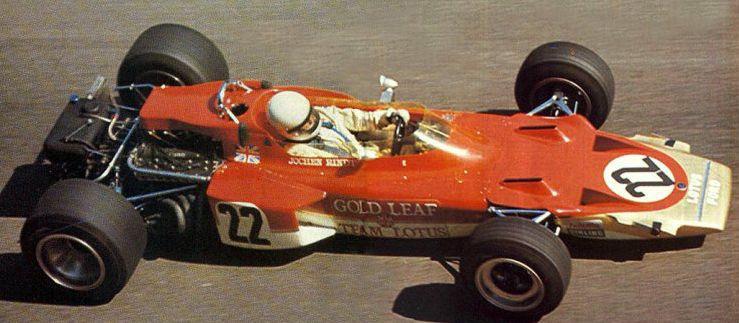
Yet the Lotus 72, like its predecessor, wasn’t without its dangers. At Monza, the team removed aerodynamic wings in pursuit of higher top speeds — a common tactic on the high-speed Italian circuit but one that reduced stability. During qualifying on 5 September 1970, Rindt’s Lotus inexplicably veered off under braking for the Parabolica corner and slammed into the barriers at very high speed. Investigations pointed to possible mechanical failures, including a broken brake shaft or instability from the wingless configuration.
The severity of the crash was compounded by the harness configuration and impact forces, and Rindt suffered fatal injuries. He was transported to the hospital but could not be saved. At just 28 years of age, his life was cut short on the very track where he had come so close to securing the sport’s highest honor.
Remarkably, Jochen Rindt became the only posthumous Formula 1 World Champion. No other driver scored enough points in 1970 to surpass the total he had accumulated before his death, securing his place in history.
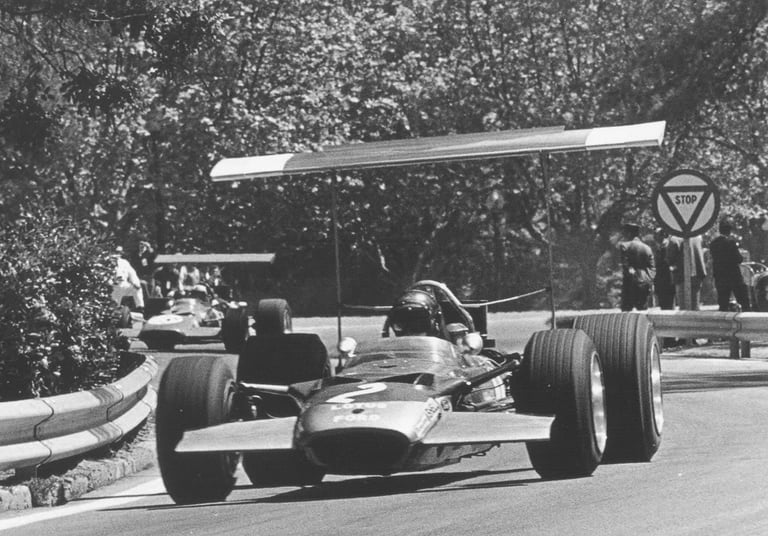
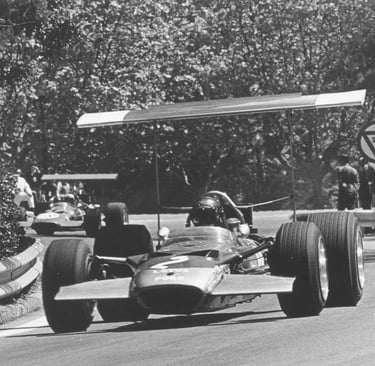
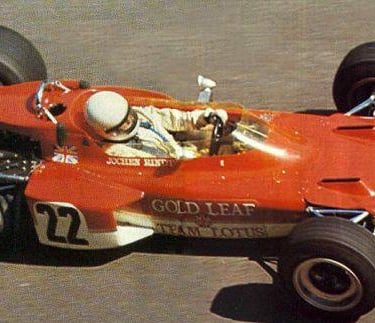
Rindt in his Lotus 49 in Montjuic
Rindt Crashes After Wing Failure
Rindt's Letter to Chapman
Rindt Just Moments Before His Fatal Accident in Monza

