Against All Odds: How a Crashed Transporter and Fuel Leak Nearly Cost Fittipaldi the 1972 F1 Title
CLASSIC MOTORSPORT
2/12/202612 min read
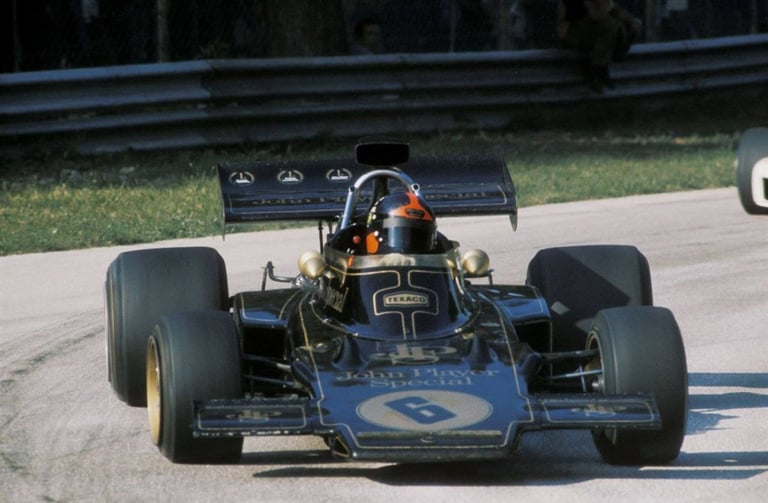
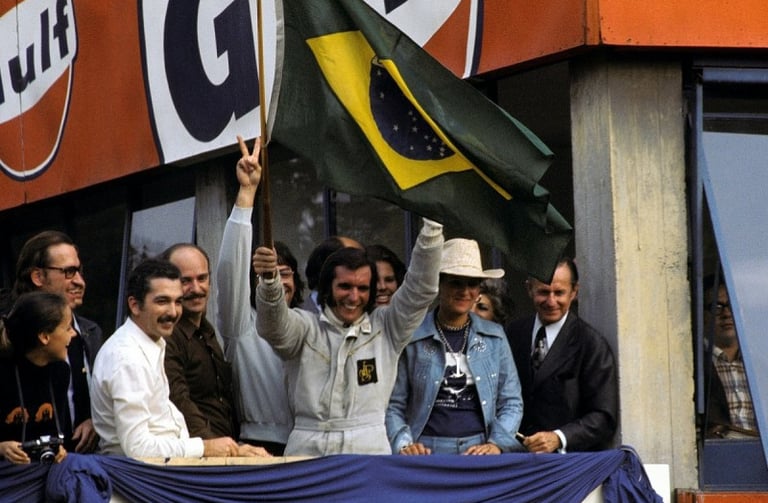
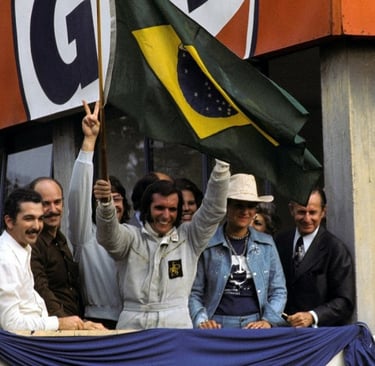
On September 10, 1972, Emerson Fittipaldi claimed one of Formula 1's most dramatic world championships. After a transporter crash destroyed his race car, a fuel leak minutes before the start, and a late-race comeback, the 25-year-old made history at Monza in front of a disappointed Italian crowd.
The 1972 Championship Battle
The 1972 Formula 1 World Championship had been a season of intense competition across twelve rounds. Emerson Fittipaldi entered the Italian Grand Prix at Monza with a commanding but not insurmountable points advantage.
The Lotus driver had accumulated victories at Jarama (Spain), Nivelles-Baulers (Belgium), Brands Hatch (Britain), Österreichring (Austria), and would need to finish well at Monza to secure the title.
Coming into the penultimate round at Monza, the championship situation was tense. Fittipaldi led the standings, but Jackie Stewart remained mathematically in contention.
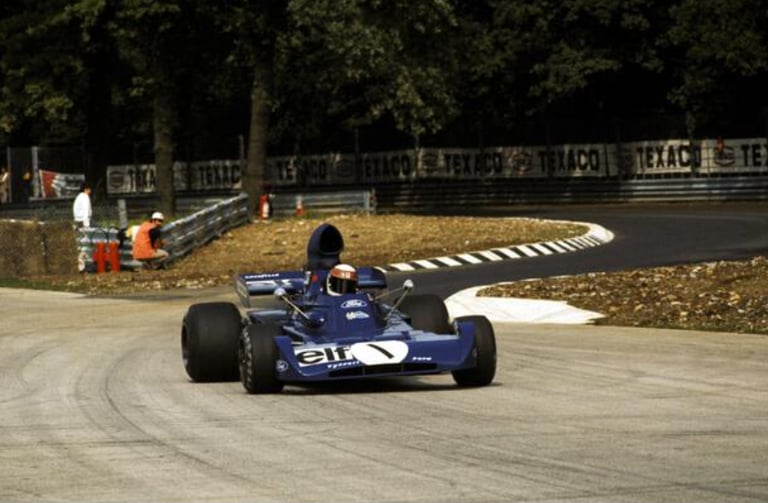
Stewart's Tyrrell had proven fast and reliable throughout the season, making him a genuine threat if Fittipaldi encountered problems. The pressure on the young Brazilian was immense - one mistake could hand the championship to the experienced Scot.
Team Lotus's Season
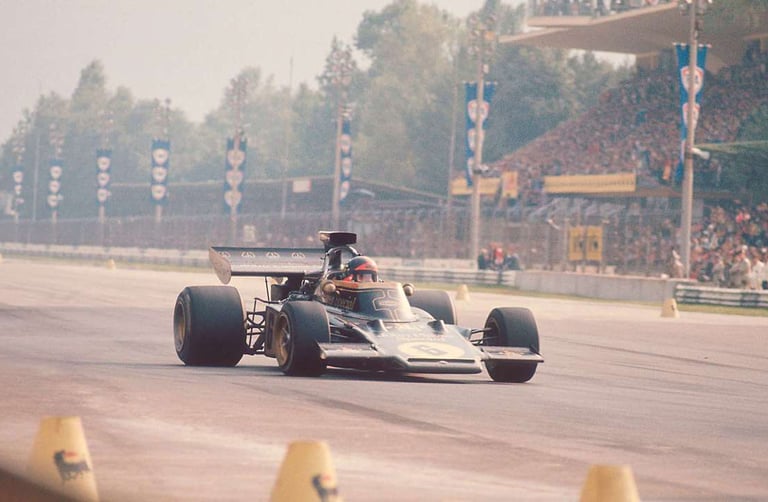
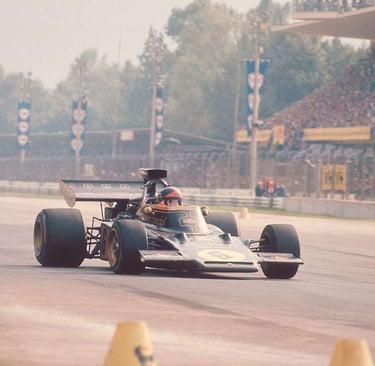
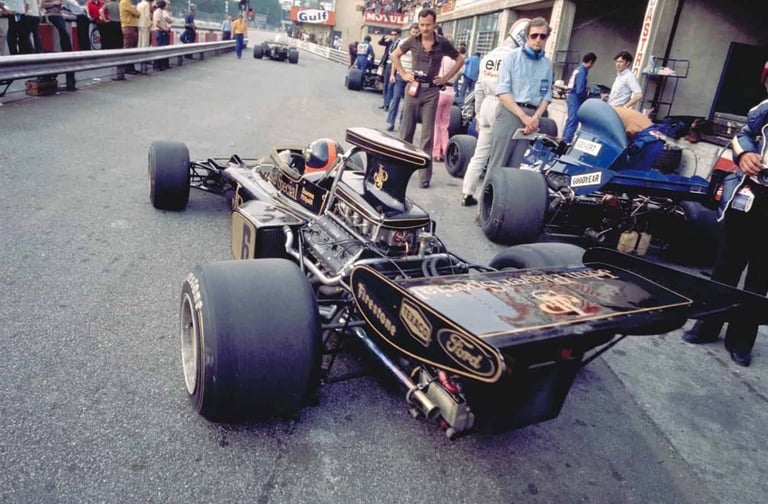
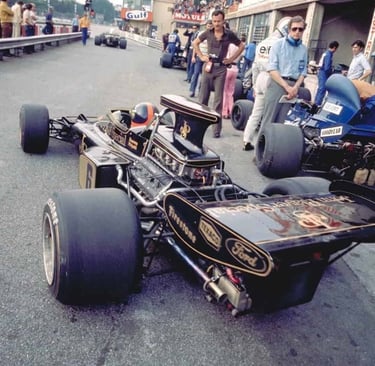
The Lotus 72D had proven to be the class of the field in 1972. Colin Chapman's revolutionary design, featuring side-mounted radiators, inboard front brakes, and advanced aerodynamics, gave Fittipaldi the tools to challenge for the championship.
However, the car's complexity also meant vulnerability - as the pre-race transporter accident would dramatically demonstrate.
Team Lotus had established itself as the team to beat in 1972. Beyond Fittipaldi's five victories, the team had shown remarkable consistency and technical innovation throughout the season.
The constructors' championship was also within reach, making Monza a double-stakes event for Colin Chapman's squad.
The Transporter Accident - The Late-Night Phone Call
Days before the decisive Monza weekend, Emerson Fittipaldi received a phone call that threatened to end his championship aspirations. The Lotus team's transporter truck had crashed on the freeway, just 60 miles before Milan.
The young driver could not believe the timing - here he was, heading to the championship decider, and the transporter had crashed.
Accompanied by team manager Peter Warr, Fittipaldi drove to the accident scene and witnessed spare parts scattered across the grass everywhere. Italians were attempting to grab them as souvenirs while the team desperately tried to stop them.
The Brazilian driver later recalled looking at that scene in disbelief, unable to comprehend that this was his car just days before he was to decide his world championship.
The race car was badly damaged, creating a potential catastrophe for Fittipaldi's title hopes. Without a competitive car at Monza, Stewart could capitalize and potentially overturn the points deficit with strong performances in the final two races.
The team decided to run the spare chassis R5, which already had significant mileage on it. This car, affectionately nicknamed "old faithful," would need to perform flawlessly to secure the championship.
Monza's Radical Circuit Changes
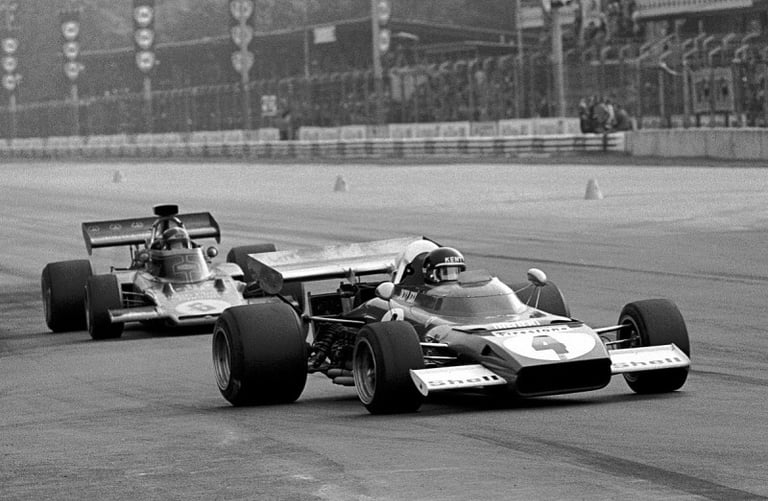
The 1972 Monza circuit was dramatically different from previous configurations. Organizers had installed two new chicanes to reduce the dangerously high speeds.
These modifications transformed Monza from a pure high-speed circuit into a technical challenge requiring constant braking and acceleration.
The first chicane was positioned at the end of the pit straight, where drivers had to brake hard from approximately 150 mph down to second gear. The track was divided by rubber cones keeping cars in the right-hand lane, leading them toward an Armco barrier opening wide enough for only one car.
Concrete plinths with beveled edges formed curbs through the chicane. Any driver overshooting on braking would continue straight toward the banking until stopped, then released through a gate by marshals.
The second chicane was positioned just before the apex of the left-hand Vialone Curva (Ascari bend) leading onto the back straight. This was less a traditional chicane and more a series of three corners: left-right-left, all taken in second gear.
The approach required more subtle braking since it began on a left-hand curve.
The new chicanes fundamentally altered race strategy at Monza. Traditional slipstreaming tactics that had characterized Italian Grands Prix for decades were now secondary to brake management and technical reliability.
For a championship contender like Fittipaldi, this meant conservative driving and careful tire and brake management would be more important than outright speed.
Qualifying Strategy
Practice had been difficult for the Lotus team, with several problems on the car, but they eventually made it work well. At Monza, the team worked extensively on the racing setup more than qualifying, and the car was looking promising for the race.
The approach paid dividends: while Fittipaldi qualified on the third row in sixth position, the Lotus 72D was perfectly set up for race distance. In championship terms, a podium finish would likely be sufficient to secure the title.
The qualifying session ended with a formidable front-running group:
Jacky Ickx (Ferrari 312B2) - Pole position
Chris Amon (Matra MS120D)
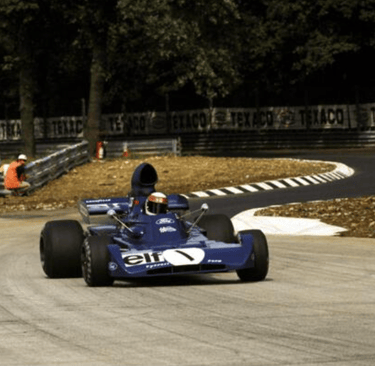
Jackie Stewart (Tyrrell 005) - Championship contender
Clay Regazzoni (Ferrari 312B2)
Denny Hulme (McLaren M19A)
Emerson Fittipaldi (Lotus 72D) - Championship leader
Mario Andretti (Ferrari 312B2)
Peter Revson (McLaren M19A)
Only 25 cars were accepted for the start, with Henri Pescarolo and Derek Bell failing to qualify.
Stewart's third-place grid position meant he was perfectly placed to capitalize on any problems Fittipaldi might encounter.
Pre-Race Tension
At 25 years old, Fittipaldi felt the crash and everything building up pressure. Italy was the worst place to win the championship, with everybody screaming for the Ferraris.
The tension was amplified by family involvement: Fittipaldi's father was broadcasting the race on Brazilian radio, adding enormous emotional weight to an already pressure-filled situation.
The mathematics were relatively straightforward: Fittipaldi needed to finish in the points to make Stewart's championship challenge nearly impossible. A victory would seal the title immediately, regardless of other results.
However, mechanical reliability remained the primary concern given the transporter accident and fuel leak. Simply finishing the race was paramount.
Race Morning Drama: Fuel Tank Leak
Race morning brought additional crisis. When the team fueled the Lotus 72D approximately 45 minutes before the start, they discovered a leak in the main fuel tank.
Fittipaldi later admitted he thought it was not his week, not his race weekend. With the championship on the line, another mechanical setback seemed like a devastating blow.
The situation caused a massive panic in the Lotus garage. The team had to pump the fuel out, take the tank out, repair the tank, and put it back in.
The car was ready just minutes before the warm-up lap. Fittipaldi later reflected that while stressful, the last-minute drama actually helped by taking away the waiting time, which in some way took the pressure off him.
With Stewart on the grid and ready to race, any failure to start would have been catastrophic for Fittipaldi's championship hopes. The mechanics worked frantically, knowing that the entire season's effort depended on getting the Brazilian to the starting grid.
Race Start: Chaos and Drama
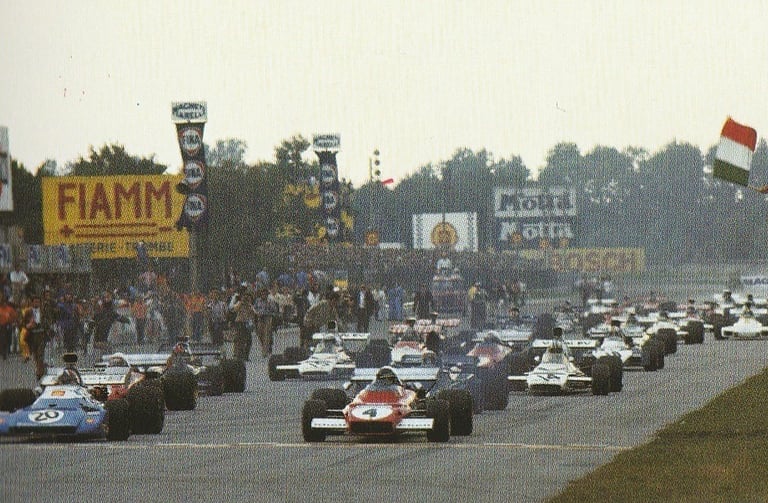
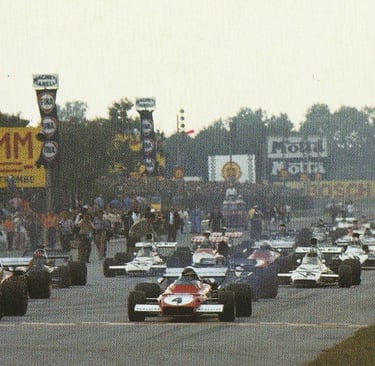
The start produced immediate chaos. Stewart traveled barely a hundred yards before losing all drive from engine to gearbox, leaving him freewheeling in the middle of the track.
Hair-raising dodging by following drivers ensued as Ickx, Amon, and Regazzoni bypassed the first chicane on the unused part of track. A massive dust cloud rose up, obliterating visibility and creating the most perilous start situation in years.
By sheer luck and driver skill, no collisions occurred.
Stewart's immediate retirement meant Fittipaldi's championship situation had dramatically improved. The Scot's clutch failure eliminated the most serious threat to the Brazilian's title hopes.
However, the race still needed to be completed, and mechanical gremlins could strike at any moment.
First Lap Order
By the Lesmo corners, Ickx had established a significant lead. The cars fell into single file through the back straight chicane, creating a typical Formula One procession.
Only 23 cars completed the opening lap. Stewart's Tyrrell was abandoned, and Niki Lauda pitted his March as dust and stones had blocked his throttle system.
Lap 1 order: Ickx, Regazzoni, Fittipaldi, Andretti, Amon, Hailwood, Hulme, Reutemann, Revson, Hill.
Fittipaldi had moved up to third place - an excellent championship position.
Fittipaldi made an excellent start and ran hard behind the Ferraris. The Lotus driver positioned himself strategically, waiting for opportunities while protecting his championship position.
By lap five, the scene had settled with the two Ferraris of Ickx and Regazzoni ahead, followed by a small gap to Fittipaldi, Amon, and Hailwood running nose-to-tail.
Running in third place with Stewart out, Fittipaldi was in a commanding championship position. Barring mechanical failure or accident, the title was within reach.
The strategy now was simple: maintain position, avoid risks, and bring the car home safely.
Early Retirements
The race quickly claimed victims:
Lap 6: Nanni Galli's Tecno engine exploded as he braked for Parabolica
Lap 14: François Cevert's Tyrrell retired with a broken engine
Each retirement reduced the field and made Fittipaldi's championship mathematics simpler.
The First Leadership Change
On lap 14, Ickx allowed Regazzoni to pass. The Swiss driver's lead lasted only three laps. The Ferrari team tactics were irrelevant to Fittipaldi's championship situation - third place was golden.
But on lap 17, drama struck. Regazzoni entered the second chicane on his usual line and speed, only to find Pace attempting to sort out his spinning March in the middle of the corners.
The Ferrari clipped the March, pulling out the right front upright from the English car and breaking the left-rear suspension on the Italian car. A minor fire broke out among auxiliaries alongside the Ferrari gearbox but was quickly extinguished.
After Regazzoni's accident, Fittipaldi found himself hanging on behind Jacky Ickx, constantly trying to find a way past.
Hailwood's Airbox Drama
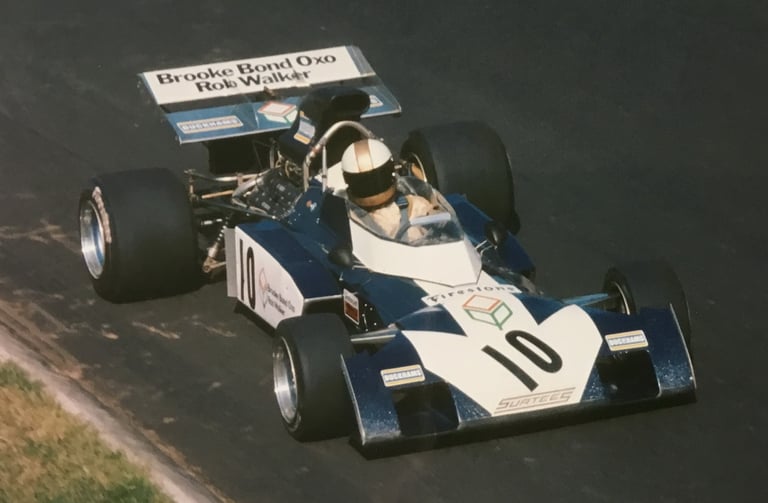
On lap 19, the air-collector box atop John Surtees's engine flew off and landed on the track. For Mike Hailwood, running fourth in the same Surtees team car, disaster followed: he suddenly found himself 300 rpm down on maximum speed.
The missing airbox also created more wind obstruction over the rear wing, producing excessive downthrust and upsetting the car's balance. Hailwood, a nine-time motorcycle world champion, adapted his driving style to extract the best performance of his car.
Multiple Mechanical Failures
The attrition rate accelerated around lap 20:
Wilson Fittipaldi abandoned his Brabham with a broken ball joint from hitting a chicane
Tim Schenken clipped the first chicane, bending left-front suspension
Carlos Reutemann walked back after abandoning his Brabham
John Surtees retired with fuel system problems
Mario Andretti pitted with a flat right-front tire, receiving a quick wheel change
More Battles
By lap 26, Hulme had taken the escape route at the second chicane, allowing Hill and Revson to close the gap. Graham Hill drove an admirable race in sixth place, enjoying himself enormously.
On lap 29, the leading foursome began lapping slower cars. Hailwood got separated from Amon momentarily, breaking out of the Matra's slipstream. With his engine breathing reduced due to the missing airbox, he couldn't regain the tow and rapidly dropped back.
Championship Cruising
Fittipaldi maintained second place comfortably, with no need to take risks. The championship was in his control - simply finishing would make him world champion.
The conservative approach reflected championship maturity beyond his 25 years.
On lap 33, Peter Revson attempted to pass Hill's Brabham at the first chicane but misjudged it and had to take the escape road. These battles behind Fittipaldi were irrelevant to the championship situation.
At the end of lap 37, with 18 laps remaining, Fittipaldi began showing signs of preparing to challenge the leading Ferrari.
Simultaneously, Amon felt his brakes deteriorate. On lap 38, he drove slowly into the pits with smoke pouring from the right-front brake.
With Amon out, attention focused on whether Fittipaldi could overtake Ickx. The Lotus driver could not pass the Ferraris because they were extremely quick on the straight.
The Lotus and Ferrari were evenly matched, creating an apparent deadlock.
Championship vs. Victory
An interesting strategic question emerged: should Fittipaldi risk everything to win the race, or maintain second place and secure the championship safely?
The answer seemed obvious - second place guaranteed the title with minimal risk. However, the competitive instinct of a racing driver made settling for second difficult.
The decision was made for him. Ickx experienced electrical problems and stopped at the pits, leaving Fittipaldi suddenly in the lead. The Brazilian later reflected that all the bad luck he had experienced before the race worked in his favor at precisely the right moment.
The Ferrari engine went dead as it exited the Parabolica curve. Ickx coasted toward the pits to complete lap 46 as Fittipaldi sailed by into the lead.
Championship Secured
With nine laps remaining and a comfortable lead, Fittipaldi had effectively secured both race victory and the world championship. The Italian crowd's disappointment was palpable, but the Brazilian's achievement was undeniable.
Fittipaldi drove the car extremely carefully, trying not to over-rev the engine, avoiding any mistakes, and being particularly cautious when passing slower cars. Everything required 100% concentration.
The final five laps felt interminably long.
In his mind, the driver could barely believe what was happening - driving a Lotus GP car, winning the race, winning the Italian GP, winning the world championship. It felt unbelievable, like a dream.
As the laps counted down, the magnitude of the achievement began to sink in. From the transporter accident to the fuel leak to leading the Italian Grand Prix with the championship on the line - the journey had been extraordinary.
At 25 years old, Fittipaldi was about to become Formula 1's youngest world champion.
With five laps remaining, Graham Hill's Brabham ran out of brakes, forcing him to rely on his gearbox for braking. Revson passed to follow his McLaren teammate home, while Hill struggled through the final laps.
These battles for minor points positions were happening in a different race - Fittipaldi was in his own championship-winning world.
The Checkered Flag
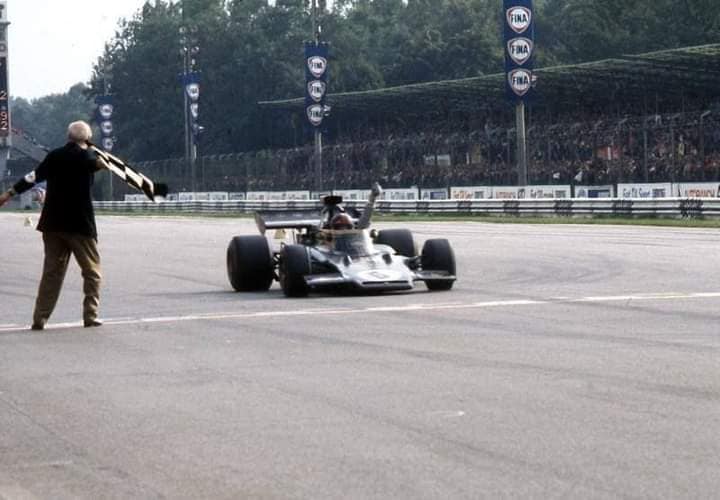
Colin Chapman threw his hat in celebration - it was fantastic. For Fittipaldi, it was like watching a movie with himself in it, where everything was perfect and he won the world championship.
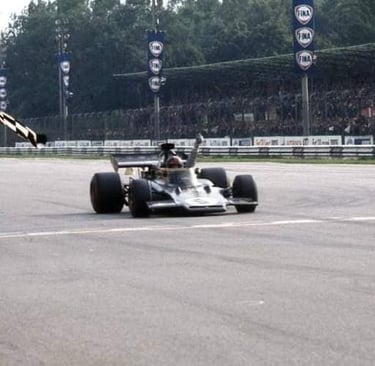
One by one, thirteen cars completed the race distance. Fittipaldi crossed the line after 1 hour, 29 minutes, and 58.4 seconds to claim both race victory and world championship.
Relive the dramatic moments of Emerson Fittipaldi's championship-clinching victory at Monza. This historic footage captures the atmosphere and tension of one of Formula 1's most memorable races. See the action unfold as the 25-year-old Brazilian secured his place in motorsport history.
Complete race results:
Emerson Fittipaldi (Lotus-Ford) - 55 laps, 1:29:58.4 - 9 points - WORLD CHAMPION
Mike Hailwood (Surtees-Ford) - +14.5s - 6 points
Denny Hulme (McLaren-Ford) - +23.8s - 4 points
Peter Revson (McLaren-Ford) - +35.7s - 3 points
Graham Hill (Brabham-Ford) - +1:05.6s - 2 points
Peter Gethin (BRM) - +1:21.9s - 1 point
Mario Andretti (Ferrari) - 1 lap down
Jean-Pierre Beltoise (BRM) - 1 lap down
Ronnie Peterson (March) - 1 lap down
Mike Beuttler (March) - 1 lap down
DNF: Ickx (electrical, lap 46), Amon (brakes, lap 38), de Adamich (brakes, lap 33), W. Fittipaldi (suspension, lap 20), Surtees (fuel system, lap 20), Schenken (accident, lap 20), Regazzoni (collision, lap 16), Pace (collision, lap 15), Reutemann (suspension, lap 14), Cevert (engine, lap 14), Galli (engine, lap 6), Stewart (clutch, lap 0).
Drivers' Championship (After USA GP)
The victory at Monza gave Fittipaldi an insurmountable points lead with only two races remaining:
Emerson Fittipaldi (Lotus-Ford) - 61 points - CHAMPION
Jackie Stewart (Tyrrell-Ford) - 45 points
Denny Hulme (McLaren-Ford) - 39 points
Jacky Ickx (Ferrari) - 27 points
Peter Revson (McLaren-Ford) - 23 points
Fittipaldi's 61 points made him mathematically secure for the championship, with the Canadian race and USA race at Watkins Glen unable to alter the outcome.
Constructors' Championship
Lotus-Ford also secured the constructors' championship after the USA GP result
Lotus-Ford - 61 points - CHAMPIONS
Tyrrell-Ford - 51 points
McLaren-Ford - 47 points
Ferrari - 33 points
BRM - 14 points
Colin Chapman's revolutionary Lotus 72 had dominated the season, securing both championships.
Season Statistics
Fittipaldi's championship season included impressive statistics:
5 victories: Spain, Belgium, Britain, Austria, Italy
3 pole positions: throughout the season
8 podium finishes: in 12 races
3 fastest laps: demonstrating consistent pace
The title was built on consistency, technical excellence, and the ability to finish races.
Post-Race Celebration
After the race, the team went to a restaurant in downtown Milan. People from Players, the Lotus team, and numerous supporters from Brazil who had traveled for the event celebrated until 3am, with everyone joking and drinking champagne.
Fittipaldi then drove his car back to Switzerland, where he was living in Lausanne at the time, arriving early in the morning.
The new champion only fully realized he was world champion the next day when he started reading the newspapers. The enormity of the achievement took time to process.
The newspapers the next day proclaimed that the oriundo Fittipaldi had won the world championship at Monza. They nearly made him Italian - he nearly got a new passport that day, as he later joked.
International motorsport media celebrated the emergence of a new champion. At 25 years old, Fittipaldi represented a new generation of technically sophisticated drivers who combined speed with strategic thinking.
The victory held special meaning given his father's involvement broadcasting the race on Brazilian radio while being emotionally invested in his son's performance. The driver later reflected on how special that moment was for him and his family - a journalist broadcasting his own son winning the world championship.
News of Fittipaldi's championship spread rapidly throughout Brazil. The country celebrated its first Formula 1 world champion, a achievement that would inspire future generations of Brazilian drivers.
Conclusion
Over five decades later, September 10, 1972 remains one of Formula 1's most dramatic championship conclusions. A 25-year-old driver in a hastily-prepared spare Lotus 72D, following a devastating transporter accident and race-morning fuel crisis, achieved the improbable and secured the world championship.
The victory came not through dominant speed, but through strategic patience, technical reliability, mental strength, and the fortuitous failures of rivals—proving that championships are often won by those who simply survive when others cannot.
Emerson Fittipaldi's 1972 world championship opened a new chapter in Formula 1 history, demonstrating that drivers from emerging motorsport nations could compete at the highest level and inspiring generations of future champions.