Alfa Romeo 158 Alfetta: From Pre-War Engineering to Formula 1 History
Born in 1938, the car that won Formula 1’s first world championship in 1950 was already racing history before the title even existed. Meet the Alfa Romeo 158 Alfetta — the machine that turned pre-war engineering into Formula 1 glory.
CLASSIC MOTORSPORT
5/30/20268 min read
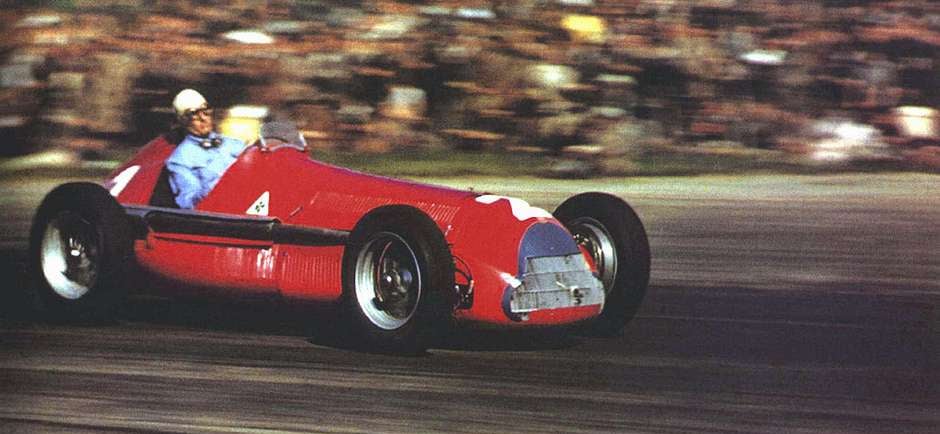
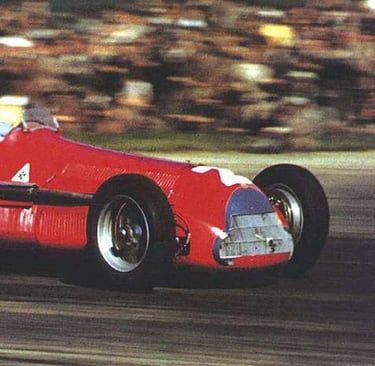
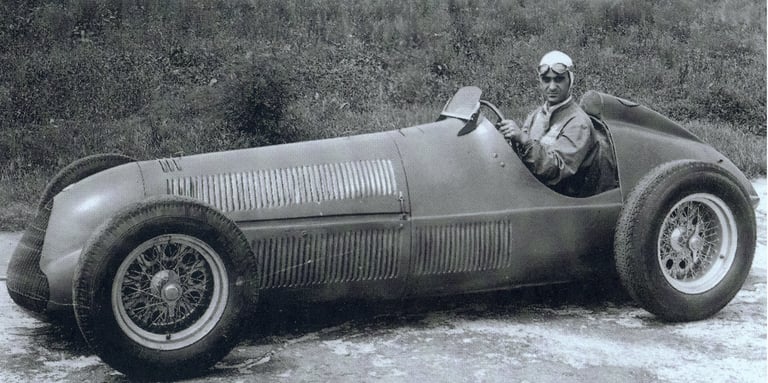
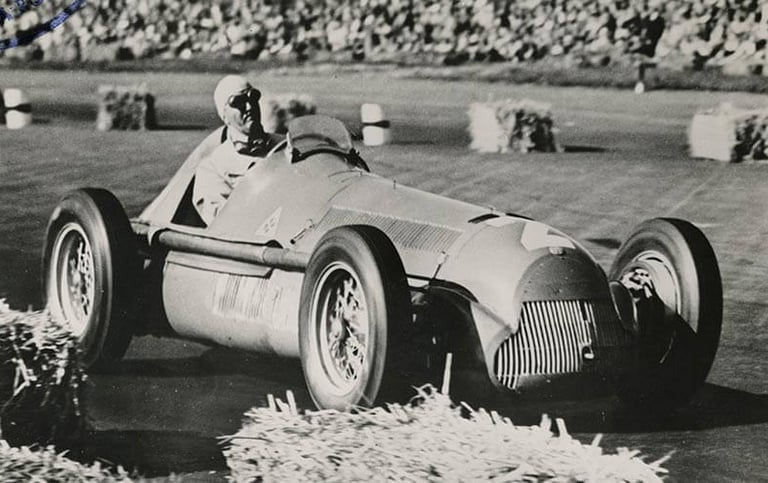
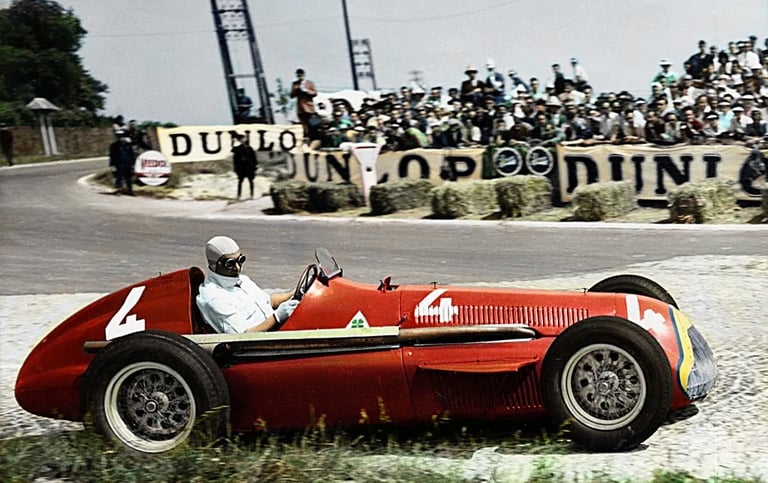
Alfa Romeo’s 158 Alfetta is one of the most important racing cars ever built. It began as a pre-war voiturette project, survived World War II, evolved through constant development, and finally won the first Formula 1 World Championship with Nino Farina in 1950. Its story is not only about speed, but also about continuity, technical progress, and the transition from the old Grand Prix era into modern Formula 1.
The origins of the Alfetta
The Alfa Romeo 158 was created in the late 1930s for the voiturette formula, a category for 1.5-litre supercharged engines. Alfa Romeo’s racing department wanted a compact but highly competitive car that could exploit the regulations and extend the company’s Grand Prix success into a new technical formula.
The car’s name reflects its basic design: 1.5 litres and eight cylinders. Its nickname, Alfetta, means “little Alfa” in Italian, and it became one of the most famous names in motorsport history. The project was led by Gioachino Colombo, whose engineering work helped shape the car into a remarkably advanced machine for its time.
Early racing life
The 158 made its debut in 1938 and immediately showed strong potential. At that stage, it was already a serious racing car rather than an experimental prototype, and its early outings demonstrated that Alfa Romeo had built something fast, compact, and technically sophisticated.
Its first victories came before the war fully disrupted motorsport, and those results confirmed the strength of the concept. The 158’s combination of a straight-eight engine, supercharging, and careful chassis design gave it an edge in the voiturette class. Even in this early phase, the car looked like a machine with a much longer future than the racing calendar around it.
War and survival
World War II interrupted the entire European racing scene, and the 158’s development was frozen for several years. Alfa Romeo, however, did not abandon the project. The cars were preserved through the war, allowing the team to return with a highly developed design once racing resumed.
That survival mattered enormously. When racing restarted after the war, many manufacturers were rebuilding from scratch or returning with outdated equipment, while Alfa Romeo had a car that already had pre-war development behind it. In practical terms, that meant the 158 re-entered competition with a head start that rivals could not easily match.
Post-war evolution
After the war, Alfa Romeo kept refining the 158 instead of replacing it. The engine, chassis, and overall package were continuously improved, and the car became even more effective in the late 1940s. The post-war version was no museum piece; it was a living racing machine that kept getting faster.
According to Alfa Romeo heritage sources, the engine’s output increased significantly over time, reaching around 350 hp in 1950, with a top speed close to 290 kph. That level of performance made the Alfetta one of the most formidable Grand Prix cars of its era. The strength of the package was not just raw power, but the way the whole car had matured through years of development.
Why it was so strong
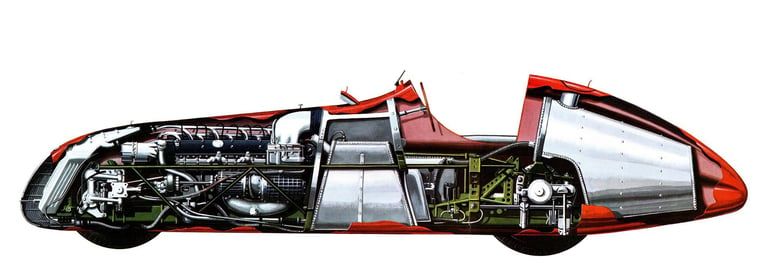
The 158’s technical formula was simple in concept but extremely effective in execution. It used a front-mounted straight-eight engine with a supercharger, and the powertrain was paired with a chassis and suspension system refined to suit both speed and endurance. This balance made the car highly competitive on fast circuits and reliable over long races.
Another key advantage was continuity. While many post-war rivals were still trying to organize factory programs or recover from the disruption of the war, Alfa Romeo had an engineering base that had been preserved and refined. The result was a car that entered the new Formula 1 era already carrying years of development knowledge.
The 1950 Formula 1 season
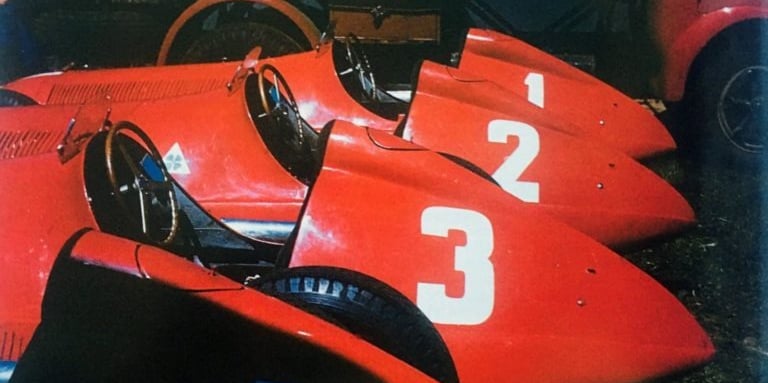
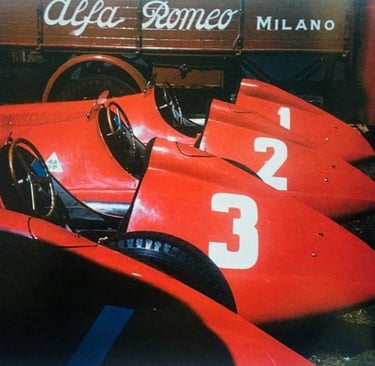
When the World Championship began in 1950, Alfa Romeo arrived with the 158 as the clear benchmark. The team’s driver lineup was extraordinary: Nino Farina, Juan Manuel Fangio, and Luigi Fagioli were all capable of winning races, and the internal competition inside the team was intense.
The 158 dominated the season. It won six of the seven championship races, and the only real measure of uncertainty came from the fact that Alfa’s own drivers were frequently racing each other as much as they were racing the opposition. That internal rivalry made the season fascinating, because it showed that the team’s greatest challenge was often deciding which driver would come out on top.
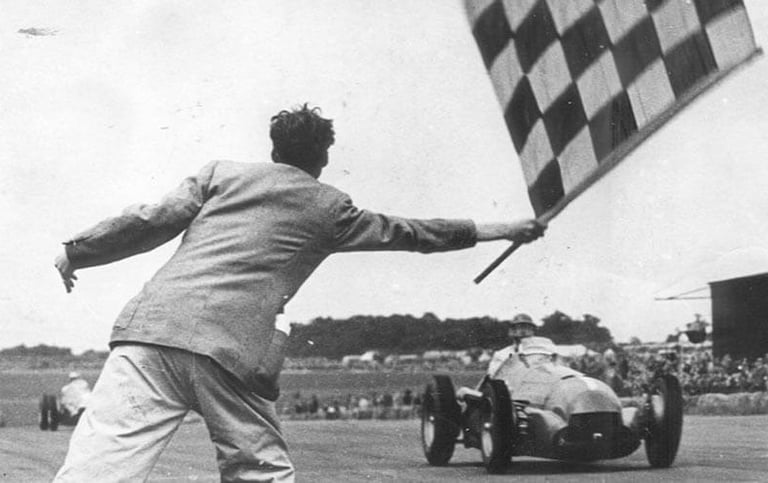
At Silverstone, in the opening race of the first Formula 1 World Championship, Farina won and set the tone for the entire year. That victory was historically significant because it made Alfa Romeo the first winner in the new championship era. From that point on, the 158 became the car to beat.
Farina and the title
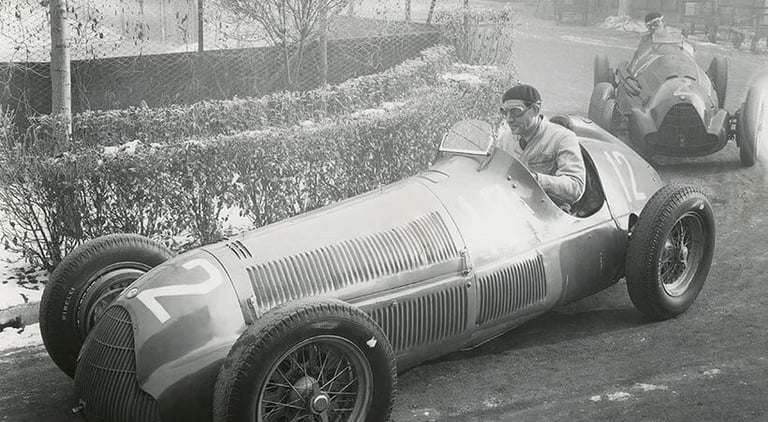
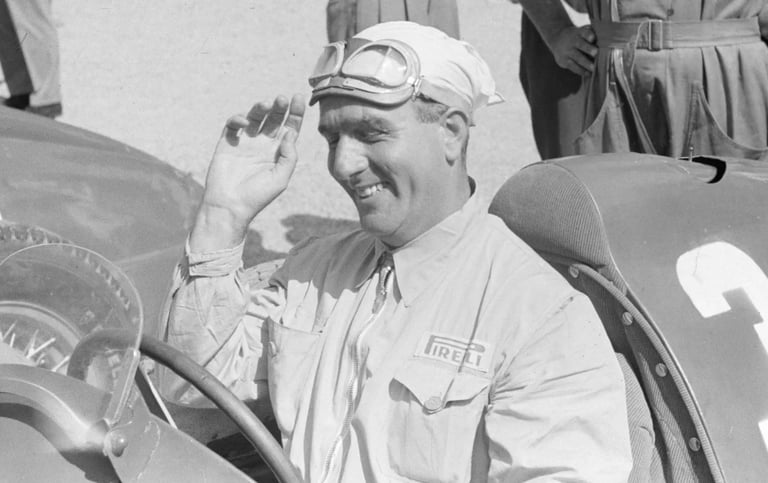
Nino Farina’s championship win in 1950 was the first Formula 1 world title in history, and it was inseparable from the Alfa Romeo 158. Farina was a sharp, aggressive, and highly skilled driver, but the car underneath him was just as important as his talent.
The 1950 season demanded not only speed but also consistency, mechanical strength, and the ability to perform under pressure. Farina had to compete against excellent teammates as well as rival teams, and that made the title fight particularly significant. His championship was not simply a product of being in the best car; it was also a demonstration of skill under the pressure of being part of a very strong three-car team.
Monza provided the decisive moment. Farina’s victory at the Italian Grand Prix sealed the championship and completed one of the most important seasons in the history of motorsport. With that result, Alfa Romeo and Farina entered Formula 1 history together.
The 1950 races
The Alfetta’s success in 1950 was not limited to one type of circuit. It was effective on fast tracks, technical tracks, and long championship events, which showed how complete the package had become.
Silverstone was the clearest statement of intent, because it was the first championship race and Farina won it in the 158. That result gave Alfa Romeo an immediate psychological advantage, proving that the old pre-war project was still the fastest machine in the new world championship.
At other European rounds, Alfa Romeo continued to dominate through a combination of pace and reliability. The team’s strength was not just that it could win one race; it was that it could control the season. The 158 handled the demands of the championship with a level of authority that no rival could match consistently.
Monza closed the story. Farina’s title-clinching win on home soil gave the championship a fitting Italian ending and confirmed the Alfa Romeo 158 as the foundational car of the Formula 1 era.
From 158 to 159
The Alfa Romeo 159 was not a completely new car, but a further development of the 158. Alfa Romeo kept the same basic philosophy and refined it to extract even more performance from the Alfetta concept. That continuity is one of the reasons the 158/159 family is so important historically.
The 159 added technical refinements and became the next step in Alfa Romeo’s Formula 1 dominance. It carried the same engineering spirit as the 158, but with improvements designed to keep the team ahead as competition slowly began to catch up. The evolution from 158 to 159 shows how Alfa Romeo treated the project as a living platform, not a fixed design.
In 1951, Juan Manuel Fangio used the 159 to win the World Championship, proving that the Alfetta lineage was not limited to a single season. That title extended the car’s legacy and confirmed that Alfa Romeo’s early Formula 1 success was built on more than one brilliant year.
Historical importance
The Alfa Romeo 158 Alfetta matters because it connects the pre-war Grand Prix world to the beginning of Formula 1 in a direct and concrete way. Few racing cars can claim to have started life before the war, survived the interruption, and then dominated the first world championship years later.
It was also a car that defined the meaning of dominance in early Formula 1. The 158 was fast, technically advanced, and supported by a team of elite drivers. Its results were not accidental. They were the product of a long development cycle, a strong engineering culture, and an ability to keep improving a design over time.
For Alfa Romeo, the 158 and 159 became part of the company’s identity in motorsport. They helped build the myth of Alfa as a manufacturer capable of combining elegance, engineering intelligence, and racing success. That reputation still shapes how the brand is remembered today.
Legacy
The Alfetta’s legacy is visible not only in statistics, but in the way it is remembered by historians, museums, and racing fans. It remains one of the most dominant Grand Prix cars ever built, and one of the most important in the history of Formula 1. Its story is unusually complete: a technical origin, a war-time interruption, a post-war rebirth, a world championship, and a successful career.
The 158/159 also reminds us that racing innovation is often about evolution rather than reinvention. Alfa Romeo did not discard the concept when circumstances changed. It refined it, improved it, and extracted every possible advantage from it. That approach turned the Alfetta into a legend.
Alfa Romeo’s 158 Alfetta is more than a race car. It is a bridge between eras, a symbol of technical persistence, and the machine that helped launch Formula 1 into history. From its pre-war debut in 1938 to Farina’s title in 1950 and Fangio’s success with the 159 in 1951, the Alfetta defined what early championship racing could be.