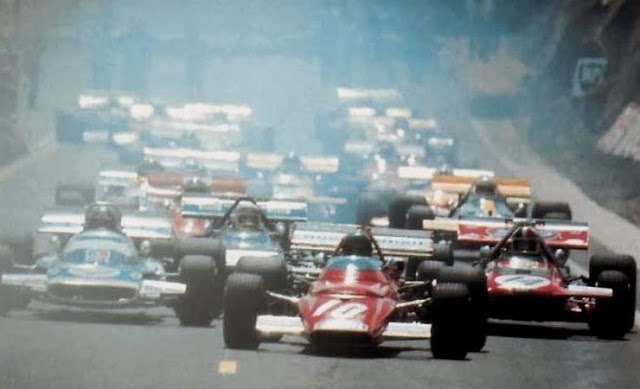
Charade – Volcano, Speed and Danger: The Story of the French "Nurburgring"
CLASSIC MOTORSPORT
1/31/20267 min read
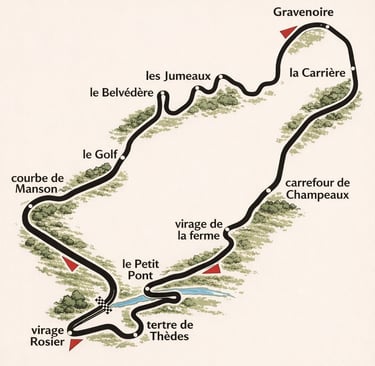
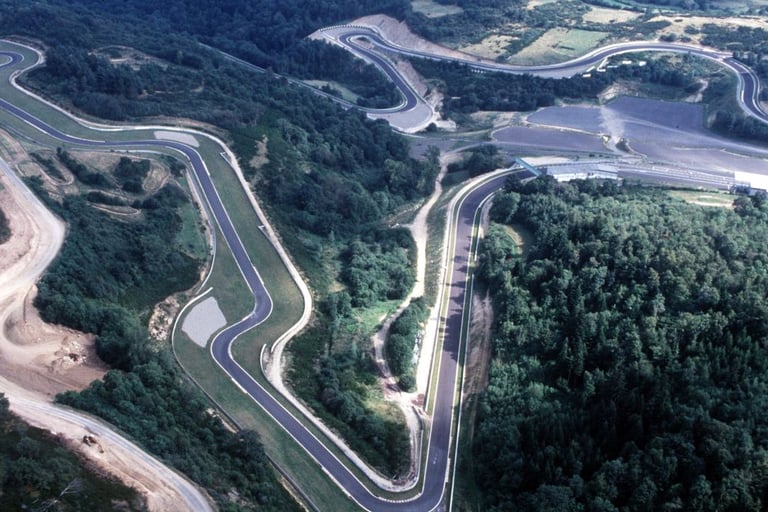
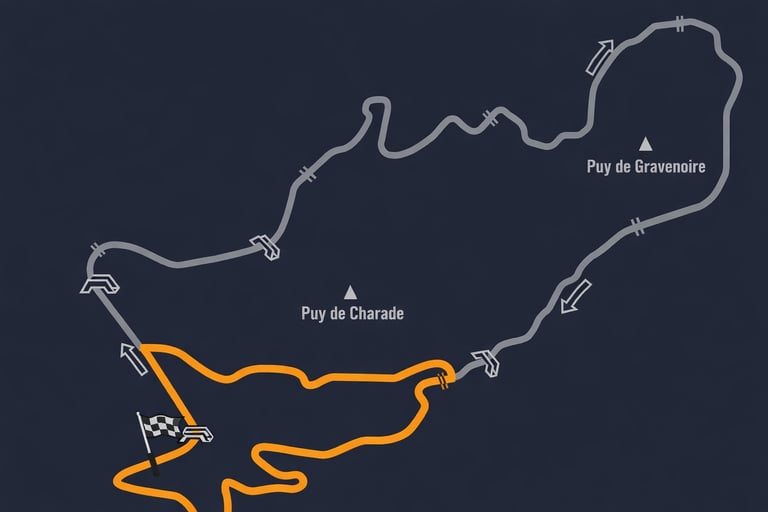
Few racing circuits were shaped so directly by nature as the Circuit de Charade. Located in the hills outside Clermont-Ferrand, in the Auvergne region of central France, Charade was not engineered onto open land. It was stitched together from existing mountain roads that circled extinct volcanoes, weaving through forests, stone walls and exposed rock faces. When it officially opened in 1958, the original layout measured 8.055 kilometres, featured close to 50 corners, and offered almost uninterrupted changes of direction and elevation. Unlike purpose-built circuits, Charade offered no visual or physical margin for error. It immediately stood apart from conventional circuits. Charade was never dangerous in theory — it was dangerous in daily practice
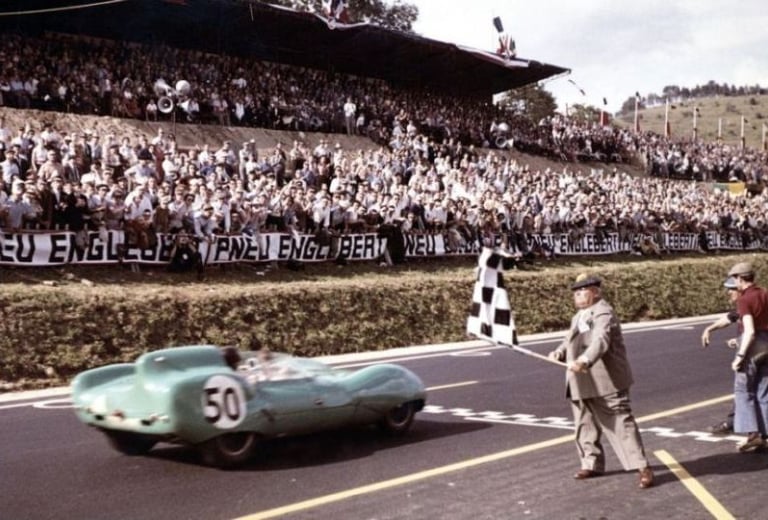
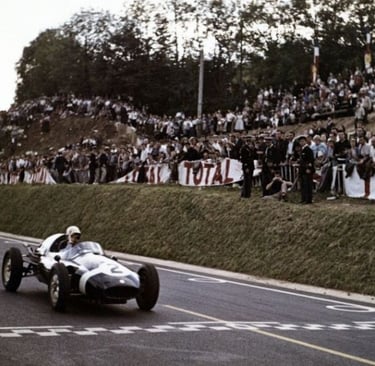
The project emerged in the early 1950s, driven by local officials and French racing figures who wanted to establish Clermont-Ferrand as a national motorsport centre. Among the strongest supporters was Louis Rosier, Le Mans winner and one of France’s most respected post-war drivers. Construction began in 1957, largely using public roads that already looped around the Puy de Gravenoire and neighbouring volcanic formations. Instead of reshaping the terrain, organisers adapted to it. The result was a true road course: narrow, fast in places, brutally slow in others, with blind crests, compressions and cambers that changed corner by corner. Learning the circuit was less about memorization and more about survival. On 27 July 1958, the circuit hosted its first events: a sports car endurance race won by Innes Ireland and a Formula 2 feature claimed by Maurice Trintignant.
By 1959, the circuit had already gained international attention. That year, Stirling Moss competed at Charade and delivered one of the most famous assessments ever attached to the venue:
“I don’t know a more wonderful track than Charade.”
For Moss, a driver who had raced everywhere from Monaco to the Nürburgring, the remark carried weight, and Charade was a circuit that rewarded memory, sensitivity and mechanical understanding.
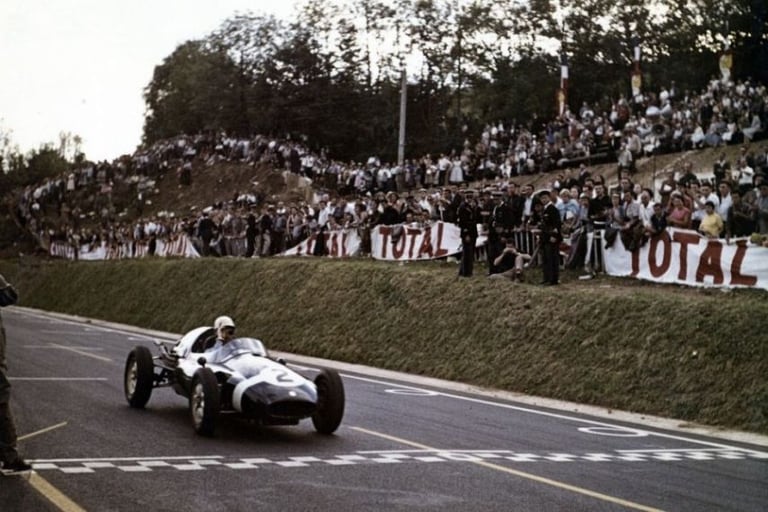
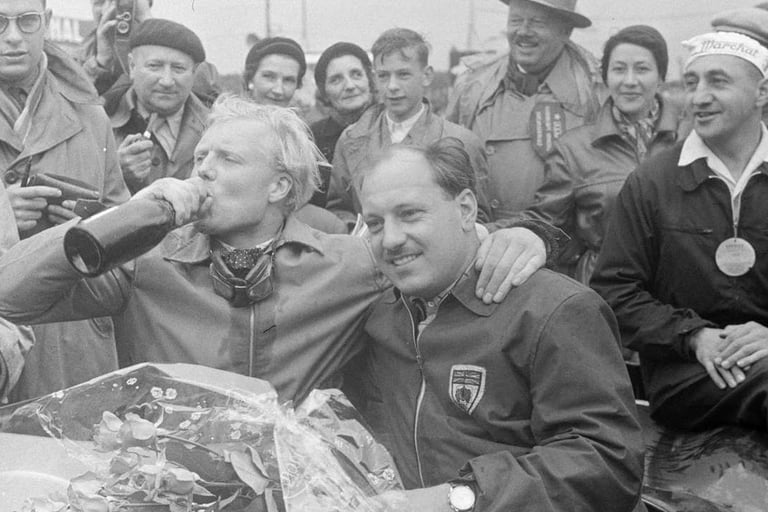
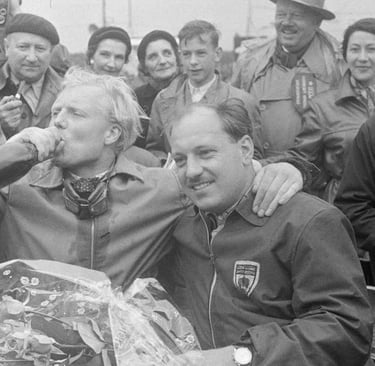
That same year, however, Charade’s beauty revealed its cost. On 26 July 1959, during a Formula 2 race, British driver Ivor Bueb — winner of the 1955 and 1957 24 Hours of Le Mans — crashed heavily in the fast Gravenoire section. His Cooper left the road and struck the embankment. Bueb was thrown from the car and sustained catastrophic head injuries. He was transported to hospital, where he died six days later, aged 36. His was the only driver fatality tied directly to competition at Charade itself, but the accident was deeply felt in European motorsport circles and permanently tied Charade’s reputation to risk as well as admiration.
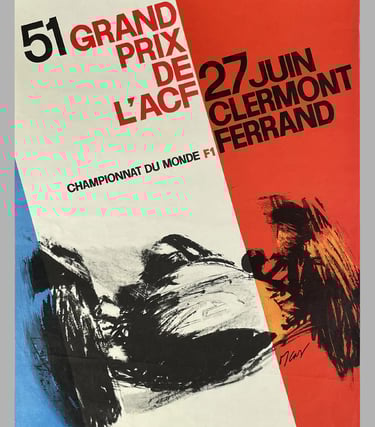
Despite this, the track’s prestige continued to rise. Through the early 1960s it hosted high-level races, including French motorcycle Grands Prix and Formula 2 events featuring future stars like Denny Hulme, Jackie Stewart and Jochen Rindt. These races were a prelude to Charade’s elevation to the Formula 1 World Championship. The circuit’s first Formula 1 appearance came in 1965, taking the French Grand Prix slot from Reims.
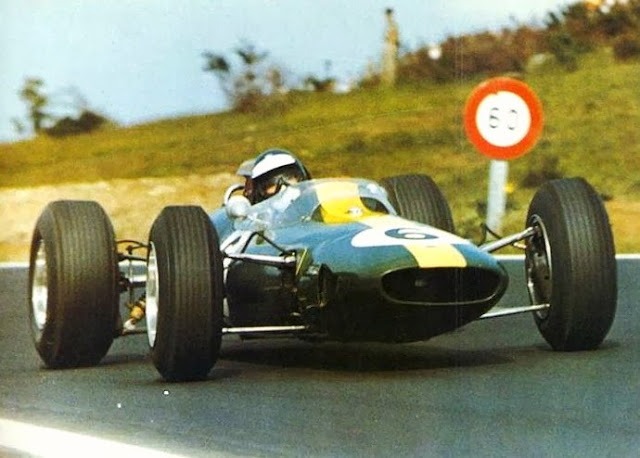
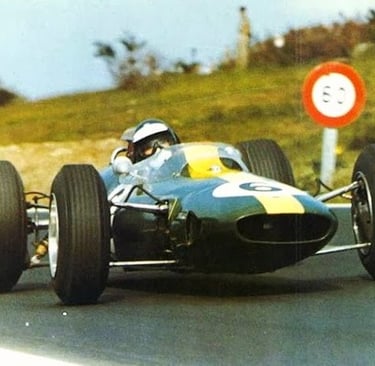
On 27 June 1965. the championship was already under the control of Jim Clark and Lotus, and the Scottish driver delivered one of the most dominant performances ever seen at the circuit. Clark took pole position and immediately pulled away, exploiting the Lotus 33’s balance and traction. Over the course of the race he lapped almost the entire field, a remarkable achievement on an 8-kilometre circuit where a single mistake could cost half a lap. Jackie Stewart (BRM) and John Surtees (Ferrari) completed the podium, but neither could sustain Clark’s pace through Charade’s endless direction changes.
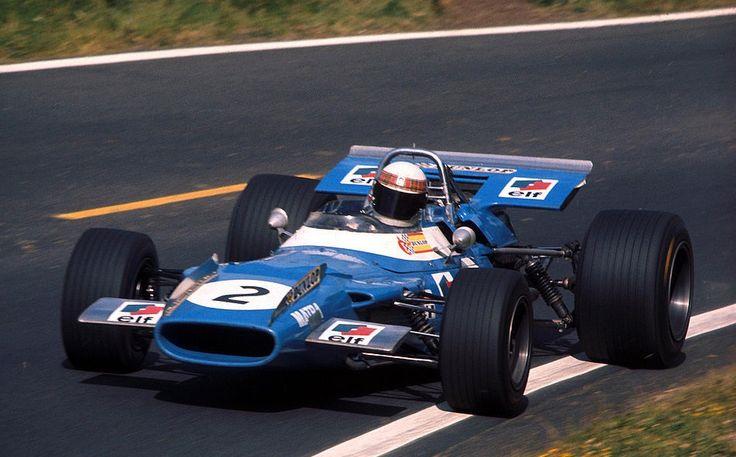
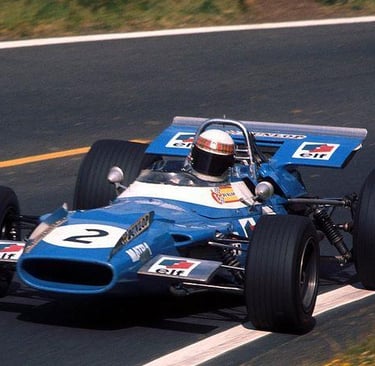
Charade returned to Formula One on 6 July 1969, this time as the home race for Matra, the French manufacturer entering Grand Prix racing at the highest level. Jackie Stewart secured pole position and controlled the race from the front. Stewart led the race from start to finish, controlling pace and tyre wear while preserving his machinery over the long, twisty 38-lap distance. Behind him, Jean-Pierre Beltoise delivered a strong and composed performance in the second Matra MS80. Beltoise kept a consistent rhythm and took advantage of steadiness and strategic positioning to hold off other contenders, crossing the line second, nearly a full minute behind his teammate. The podium was completed by Jacky Ickx, driving a Brabham-Ford.
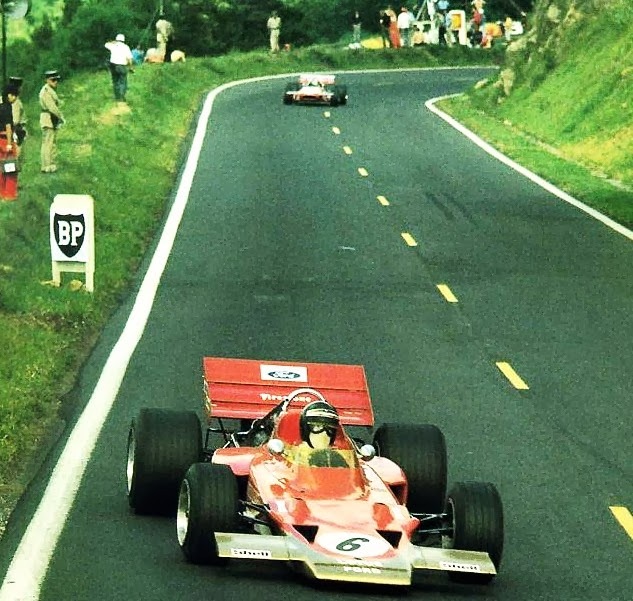
The 1970 French Grand Prix, held on 5 July, brought Formula One’s new aerodynamic era to Charade. The grid now featured low-slung, wing-laden machines, and the question was whether such cars could cope with a road circuit of this severity. Jochen Rindt, driving the Lotus 72, answered decisively. After a demanding race defined by attrition and handling problems, Rindt emerged victorious, mastering a circuit that exposed any aerodynamic imbalance or suspension weakness. Rindt’s victory was significant beyond the result itself. It showed that even Formula One’s most advanced machines still required a driver capable of adapting style to terrain.
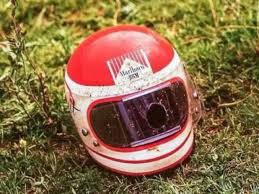
The final Formula One appearance at Charade in 1972 became its most infamous. Throughout the weekend, cars scattered loose volcanic stones onto the circuit. This was not an occasional hazard, but a recurring feature of racing at Charade. Punctures were frequent. Visibility was compromised. On lap nine, a stone thrown up by another car struck Helmut Marko in the visor, penetrating his helmet and severely injuring his left eye. Marko survived, but his Formula One career ended immediately. Although Jackie Stewart went on to win the race, the incident overshadowed the result. It was clear that Charade’s danger could not be solved by barriers or marshal posts. The environment itself — the volcanic slopes, the loose rock, the proximity of nature to the racing line — was incompatible with the safety direction Formula One was now taking. Charade did not fall out of favor suddenly — it simply became impossible to justify.
The original circuit’s lap record was set during the 1972 French Grand Prix by Chris Amon, who managed a 2:53.900 around the 8.055 km course — an average speed of over 166 km/h in an era without modern aerodynamics or tyre technology. Even by the standards of its era, Charade demanded an unusual level of commitment.
Charade did not fall out of favor suddenly — it simply became impossible to justify.
After 1972, the circuit remained active, hosting French Formula 2, touring cars, club racing and motorcycle events. The original 8-kilometre layout continued in use through the late 1970s and into the 1980s. But by then, infrastructure limitations were undeniable. Marshal posts were exposed. Rescue routes were long and narrow. Modern categories no longer fit the site.
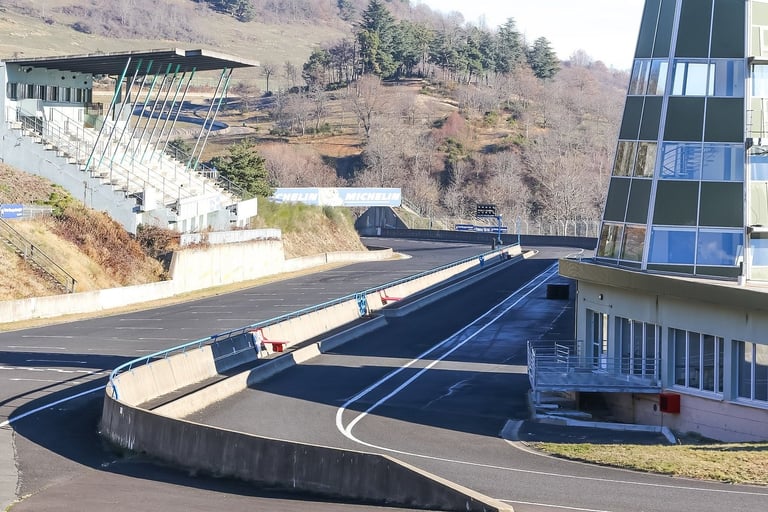
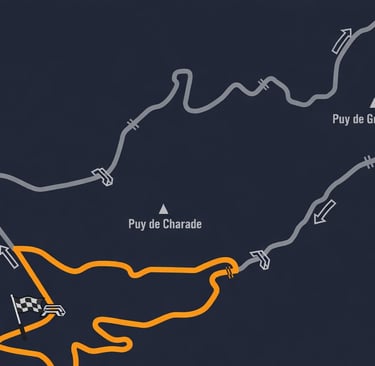
In 1988, competition on the full historic layout ended. The following year, Charade entered a new phase. A short permanent circuit, measuring just under four kilometres, was built using the southern portion of the old course. It introduced proper pit facilities, runoff areas, modern barriers and permanent medical access. The transformation preserved Charade as an active motorsport venue, but it also closed the chapter on one of Europe’s last great road circuits.
Today, the modern Circuit de Charade hosts national championships, manufacturer testing, historic festivals and track days. The original roads still exist in fragments, visible from surrounding hills, tracing the lines where Clark, Stewart, Rindt and Moss once wrestled their cars through volcanic rock.
Charade occupies a unique place in racing history. It was neither a pure street circuit nor a conventional permanent track. It belonged to a brief period when geography dictated design, and when drivers accepted that mastering a circuit sometimes meant surviving it. Its reputation was not built on legend, but on lived experience.
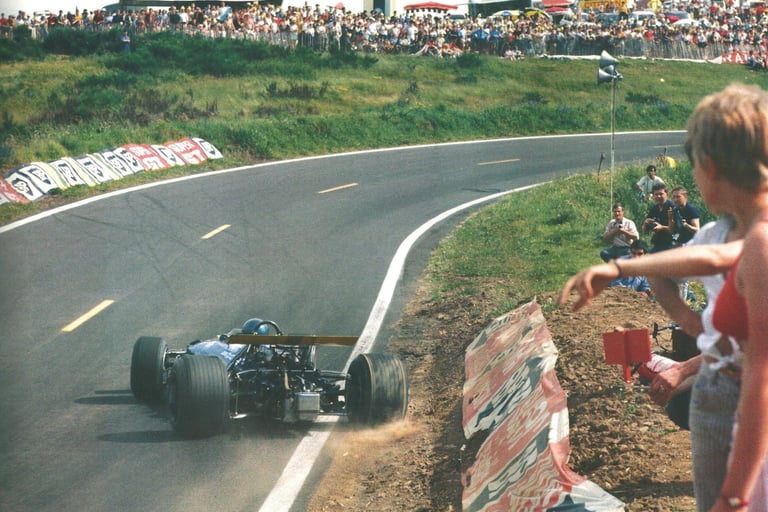
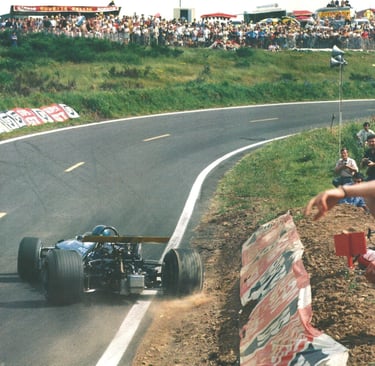
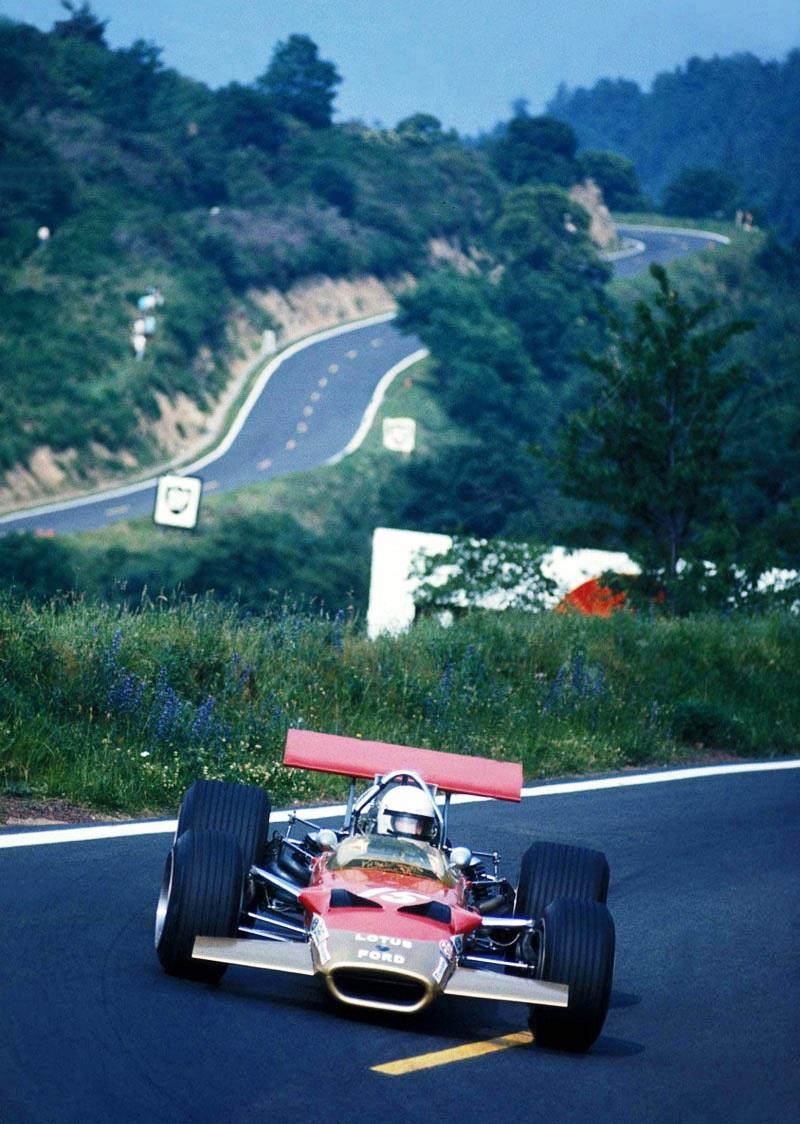
Jacky Ickx running inches from the edge of the circuit at Charade, 1969
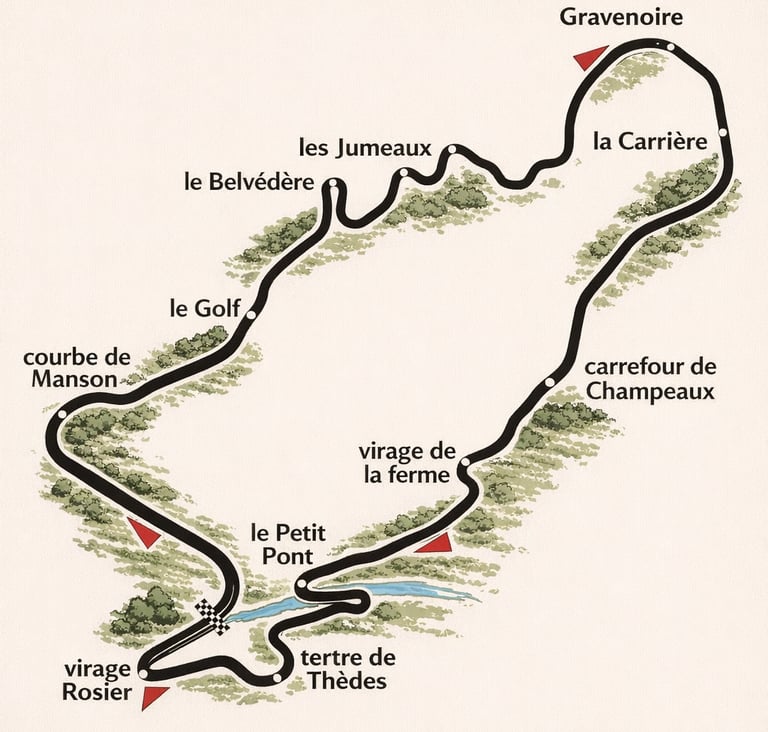
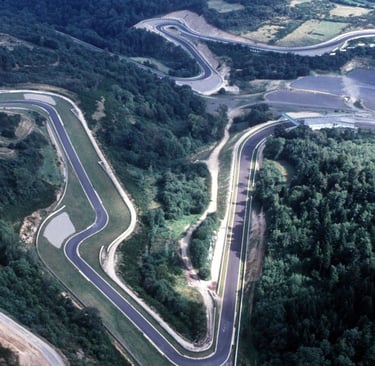
Original layout of the circuit inaugurated in 1958.
Innes Ireland, winner of the inaugural sports car race
Maurice Trintignant, winner of the F2 race
Mike Hawthorn and Ivor Bueb on the right, here during their victory at Le Mans in 1955.
1965 F1 Race Program
Jim Clark in his Lotus 33
Jackie Stewart in his Matra - Winner of 1969 GP
Jochen Rindt and the Lotus 49
Jochen Rindt in his beautiful Lotus 72, the 1970 winner
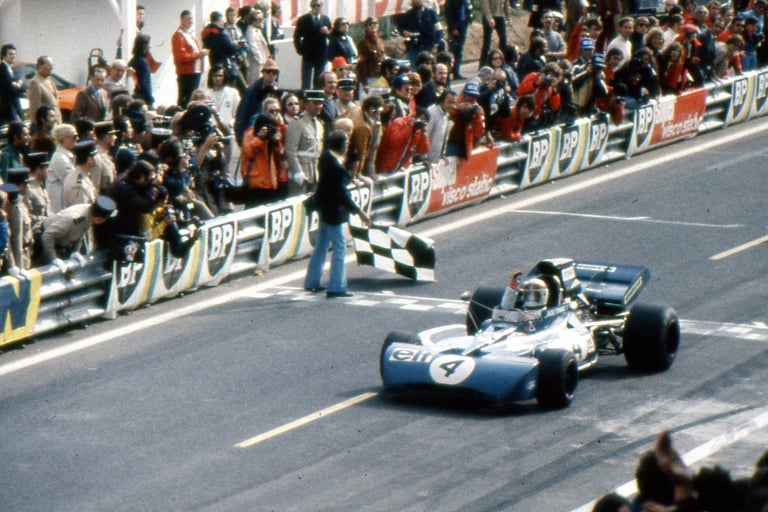
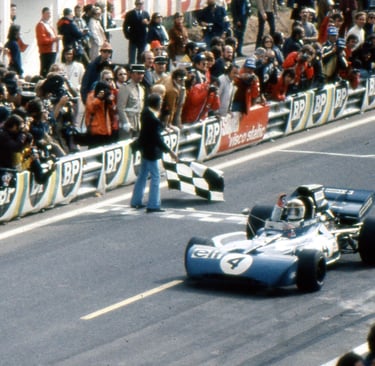
Stewart wins again in 1972
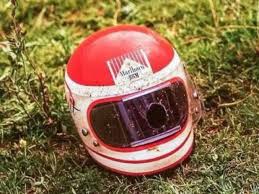
Helmut Marko’s helmet with the visor damaged by a stone
The current Charade layout compared to the old circuit
The current Charade layout
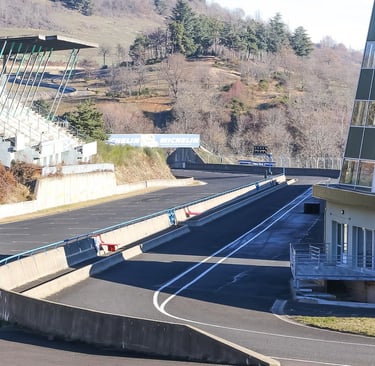
The pit straight