Control, fuel, and inevitability: how the 1970 British Grand Prix slipped away from Jack Brabham
CLASSIC MOTORSPORT
2/5/20264 min read
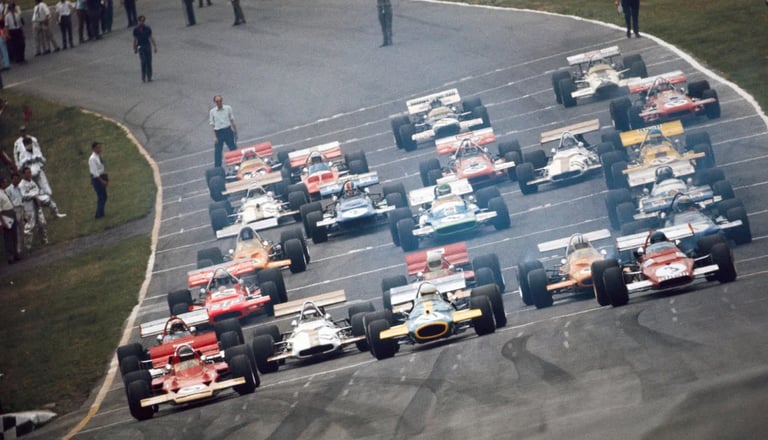
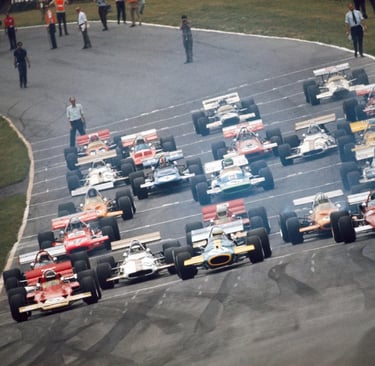
Brands Hatch, stable conditions, and a race built on control rather than chaos
The 1970 British Grand Prix was held at Brands Hatch under dry and consistent summer conditions, on a circuit that rewarded precision, balance, and rhythm more than outright aggression. The fast, flowing layout offered few natural overtaking zones, placing a premium on track position, mechanical sympathy, and sustained pace over long stints.
At that stage of the season, there was little to suggest an abnormal race. No regulatory changes, no weather variables, and no expectation of mass attrition framed the event. What followed was not a Grand Prix shaped by disruption, but one defined by how control shifted gradually — and how fragile that control ultimately proved to be.
Early control and the emergence of the protagonists
The opening phase did not immediately establish a fixed order. Jacky Ickx made the strongest initial impression, taking the lead in the early laps and setting the pace at the front. His Ferrari showed competitive speed, but that early advantage proved short-lived.
When Ickx retired with mechanical failure after six laps, the race entered its first true equilibrium. Jochen Rindt, starting from pole position, inherited the lead, with Jack Brabham settling into second. From that point onward, the identity of the race began to take shape.
The 1970 British Grand Prix is well documented in terms of lap charts, classification, and leadership sequence. The records clearly show three distinct phases at the front: Ickx leading early, Rindt controlling the central portion of the race, and Brabham leading briefly near the end.
How the race developed
A stable opening and a race defined by rhythm
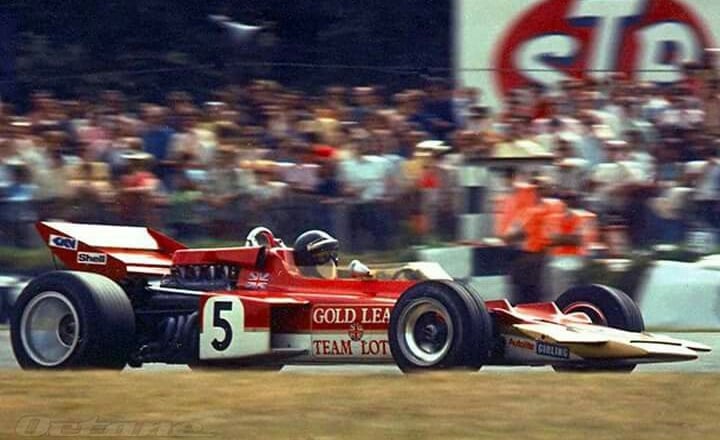
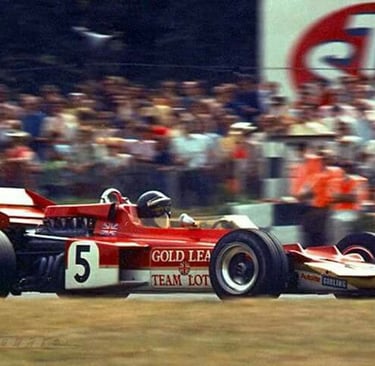
After Ickx’s retirement, the British Grand Prix settled into a stable pattern. Rindt led from lap 7 onward, establishing a consistent rhythm that suited both his Lotus and the demands of Brands Hatch. His pace was controlled rather than demonstrative, enough to keep the field in order without forcing unnecessary risk.
Brabham followed closely in second, maintaining steady pressure without provoking direct confrontation. Overtaking among the leaders proved difficult, and the gap between first and second remained narrow but largely unchanged. The race unfolded through flow and consistency rather than visible duels.
As the laps accumulated, the field stretched behind the leading pair. There were no safety interruptions, no weather changes, and no major incidents affecting the front of the race. Everything about the running order suggested stability.
Mid-race balance and pressure without confrontation
Through the middle phase, Rindt’s leadership appeared secure. His lap times were even, his car showed no visible signs of distress, and Brabham did not attempt sustained attacks. Instead, the Australian focused on remaining within reach, preserving position and keeping options open.
This balance defined the race for more than sixty laps. There were no exchanges of position, no escalating pressure, and no indication that the structure at the front was about to change. The absence of drama during this phase explains why the eventual reversal later felt abrupt rather than progressive.
The closing phase and the decisive moment
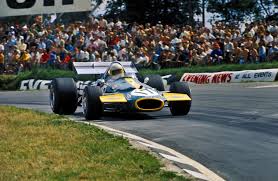
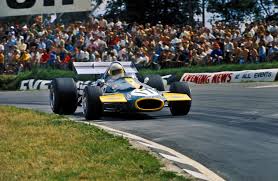
The first visible shift occurred late in the race. On lap 68, Brabham moved ahead of Rindt to take the lead — not through contact or error, but through positioning and momentum at a critical point on the circuit. It was the first time since Ickx’s retirement that Rindt was no longer leading.
From lap 69 onward, Brabham controlled the race from the front. The order stabilized once again, and with only a handful of laps remaining, the outcome appeared settled. There was no renewed challenge from Rindt and no sign of mechanical trouble ahead.
That perception collapsed on the final lap. Brabham’s car ran out of fuel before the finish, losing momentum almost instantly. Rindt, close enough to capitalize, passed in the final corner and took the lead just before the line. The reversal was measured in seconds, not laps.
The available footage of the 1970 British Grand Prix shows long periods of positional stability, limited wheel-to-wheel fighting at the front, and the sudden nature of the final change in order.
What the images reinforce is how little in the preceding laps hinted at the final outcome.
The video material aligns with contemporary reports. The race unfolds calmly, with Rindt leading for most of the distance and Brabham assuming control only very late. There is no visual buildup to the decisive moment, no escalating pressure, and no warning of imminent failure.
The result in perspective
The final classification suggests a straightforward victory for Rindt. Without context, it obscures the reality of a race led for most of its distance by another driver, and only decided after the lead had already changed once.
What makes the result notable is not drama, but dissonance. The race narrative and the final order do not naturally align, which is why the British Grand Prix of 1970 stands out despite its calm appearance.
Why this race still matters
This Grand Prix remains relevant because it illustrates how races in that era were often decided beyond visible confrontation. Control was established early, maintained for long stretches, and undone only when underlying assumptions finally surfaced.
With limited data and minimal feedback, drivers and teams relied heavily on judgment. At Brands Hatch, that judgment held for nearly the entire race — until the final moments exposed its limits. For historical analysis, the event matters not as a dramatic spectacle, but as a precise example of how structure, timing, and constraints shaped outcomes in Formula One’s past.
🏁 Final classification – 1970 British Grand Prix
📍 Brands Hatch – 18 July 1970
Jochen Rindt – 1:57:02.000 – Winner (Lotus-Ford)
Jack Brabham – +32.9s – Second place (Brabham-Ford)
Denny Hulme – +54.4s – Third place (McLaren-Ford)
Clay Regazzoni – +54.8s (Ferrari)
Chris Amon – +1 lap (March-Ford)
Graham Hill – +1 lap (Lotus-Ford)
François Cevert – +1 lap (March-Ford)
Emerson Fittipaldi – +2 laps (Lotus-Ford)
Ronnie Peterson – +8 laps (March-Ford)
📌 Fastest lap: Jack Brabham – 1:25.900 (lap 70)
📌 Distance: 80 laps — 341.2 km