David Purley, a True Hero of Formula One
CLASSIC MOTORSPORT
1/28/20265 min read
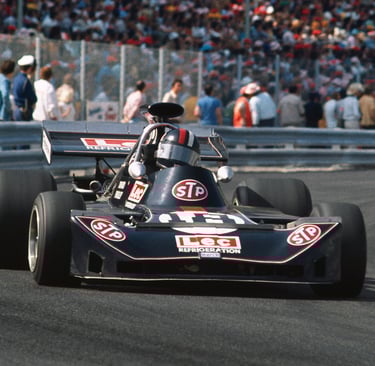
Formula One usually builds its legends around champions. Around statistics. Around speed converted into silverware. David Purley never belonged to that world. He never won a Grand Prix. He never stood on a podium. He never led a championship. Yet few men left a deeper human imprint on the sport. His legacy was not written in points, but in decisions and ultimately defined by courage.
David Charles Purley was born in January 1945 in Bognor Regis, on England’s southern coast. Long before racing cars became his environment, discipline and danger already were. He trained at Sandhurst and served as a paratrooper in the British Army, an experience that shaped his physical resilience and, more importantly, his relationship with risk. Those who knew him later in racing often remarked on his composure. Purley rarely raised his voice. Rarely dramatized. He observed, calculated, acted.
Motorsport came relatively late. While many of his future rivals had grown up in karting paddocks, Purley was finding his way through club racing, touring cars and junior single-seaters. His ascent was gradual, built on persistence rather than reputation. In British Formula 3 and Formula Atlantic, he became known as dependable, technically minded and intensely committed. He was not a prodigy. He was a professional.
By the early 1970s, that reputation opened the door to Formula One. He arrived without factory backing, without political weight, without the machinery that turns drivers into headlines. His results reflected that reality. He raced hard, often anonymously, learning the craft in an era when survival was as critical as speed. Inside the paddock, he was respected. Outside it, barely noticed until the afternoon of 29 July 1973.
The Dutch Grand Prix at Zandvoort was in its early laps, cars with full fuel tanks, when Roger Williamson’s March suffered a sudden failure at high speed. The car struck the barriers, flipped violently, slid upside down for hundreds of metres and came to rest in flames, but Williamson was alive.
From his cockpit, David Purley saw the movement, flames and the inverted car. And within seconds, he made a decision that separated him from every other driver on that track that day, he slowed, steered onto the grass, shut off his engine and got out of the car.
While the race continued at full speed, Purley ran back across the live circuit toward the wreck. In the unforgiving context of 1970s Formula One, this was almost inconceivable. There was no safety car, no coordinated response. Cars were still approaching at over 250 km/h, but he crossed the track anyway.
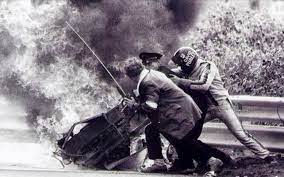
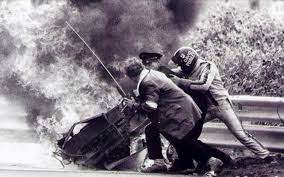
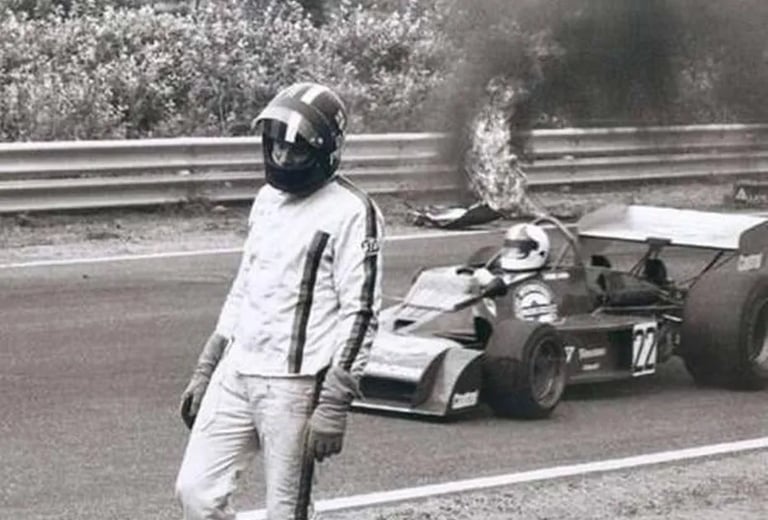
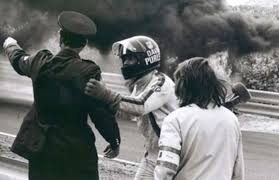
Reaching the burning March, Purley immediately tried to lift it. He placed his hands beneath the bodywork and strained. The car did not move. He repositioned and tried again. Flames licked around his arms and helmet. He seized a small extinguisher from a marshal and fought the fire himself. The extinguisher emptied. The fire did not, but Purley did not retreat.
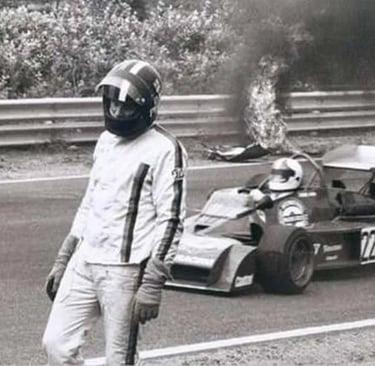
For several minutes, he worked alone — pushing, lifting, waving desperately for help, refusing to leave. Photographs from the scene show a solitary figure bent over a burning wreck while racing cars streak past in the background. They remain among the most haunting images ever produced in motorsport, because they capture a contradiction no one could ignore: competition continuing while a man fought for another man’s life.
Inside the wreck, Williamson could be seen moving, signalling. Alive.
When professional fire crews finally reached the site, Williamson had already died from suffocation. Purley collapsed beside the blackened shell, physically exhausted, emotionally broken. His life, in many ways, had changed.
In the aftermath, the world discovered David Purley. Newspapers, television, international magazines. He was awarded the George Medal for bravery. Yet those close to him recall a man uncomfortable with the word “hero.” He did not speak of what he had done, but of what had not been done, of time lost and equipment missing. Of a life that might have been saved, Zandvoort followed him everywhere.
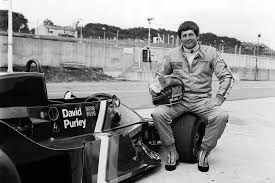
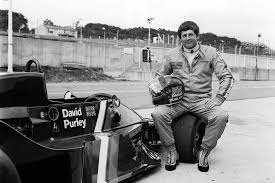
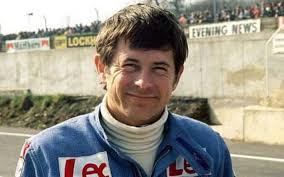
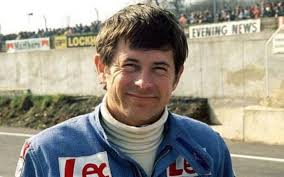
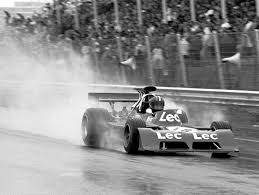
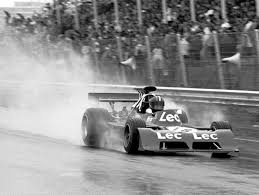
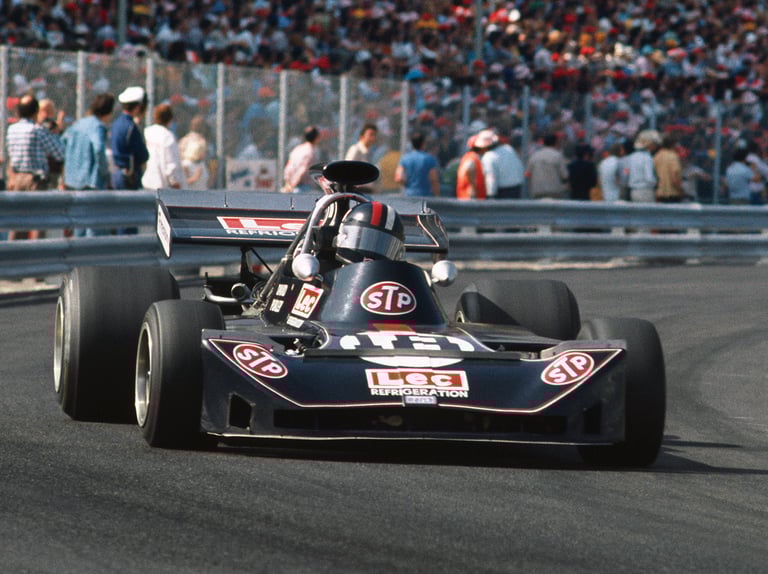
Purley returned to racing, but he was no longer simply another privateer. He had seen the sport stripped of illusion. Over the next seasons, he competed across categories, increasingly involved not only as a driver but as a builder. Backed by LEC Refrigeration, a company of his family, he helped create his own Formula One project, the LEC CRP1. It was an ambitious, underfunded effort, driven as much by belief as by budget. Purley became owner, developer and lead driver.
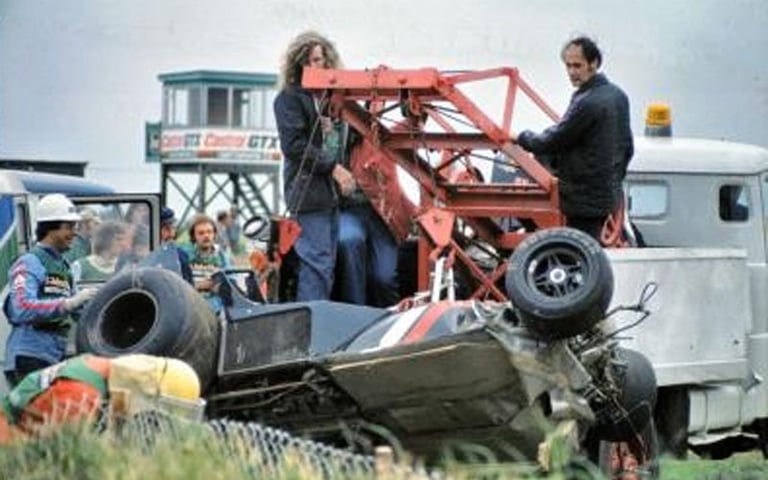
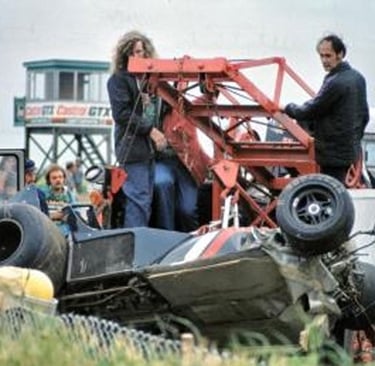
During practice for the 1977 British Grand Prix at Silverstone, his throttle jammed fully open. The car surged uncontrollably down the straight. There was no time. No escape road. Seconds later, it struck a concrete wall almost head-on, and the impact was catastrophic.
The car stopped in less than a metre. The structure disintegrated around him. Later analysis suggested a deceleration approaching 180 g — among the most extreme non-fatal forces ever recorded. And against all probability, David Purley was alive.
His injuries were devastating: shattered legs, fractured pelvis, broken ribs, internal trauma. Recovery took years. Surgeries. Rehabilitation. Learning to walk again. Learning to drive again. Many assumed his competitive life was finished, but Purley did not.
By the early 1980s, he was racing once more. Sports cars. Club events. Demonstrations. Speed, for him, was not spectacle. It was identity. Away from circuits, he found another expression of the same discipline and precision in aerobatic flying. He became a respected stunt pilot, performing demanding routines in high-performance aircraft over southern England.
Unfortunately, on 2 July 1985, during a flight over the English Channel, his Pitts Special suffered a catastrophic failure. The aircraft went into the sea. David Purley was 40 years old.
Today, Formula One is built around safety systems, medical cars, rapid-response crews and strict intervention protocols. Much of that culture was forged from the brutal clarity of the 1970s. Zandvoort stands among the defining moments. Not only because a man died, but because another refused to accept that nothing could be done.
And that choice is why, in a sport obsessed with success, David Purley remains its truest hero.