F1 Non-Championship Races: Everything You Need to Know About Formula One's Forgotten Events
From post-war paddocks to Brands Hatch in 1983, non-championship races were once the lifeblood of Formula One — thrilling, unpredictable, and today almost entirely forgotten.
CLASSIC MOTORSPORT
3/30/202611 min read
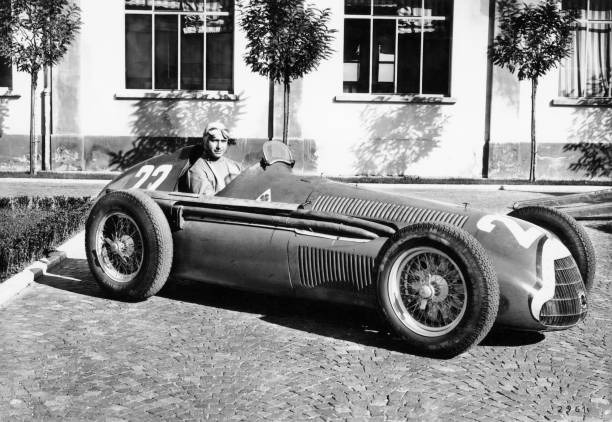
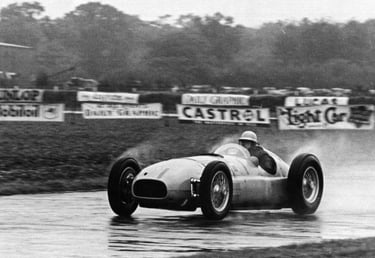
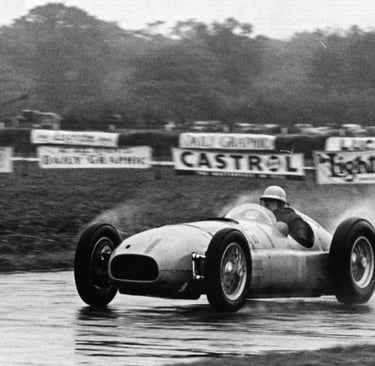
Long before Formula One had a World Championship, it had races. The concept of non-championship F1 events predates the official title itself, with the first recognisable event — the Silverstone International Trophy — taking place in 1949, one year before the FIA World Drivers' Championship was inaugurated in 1950.
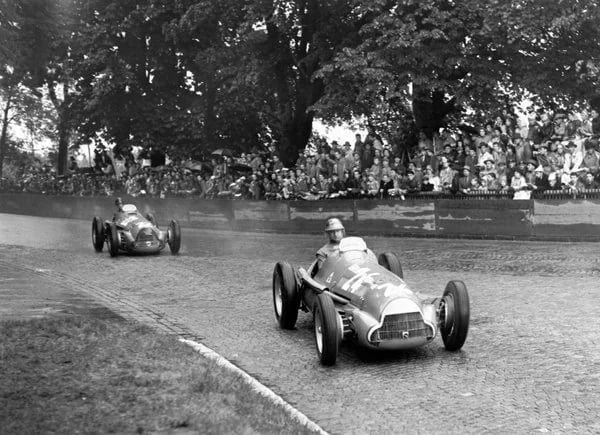
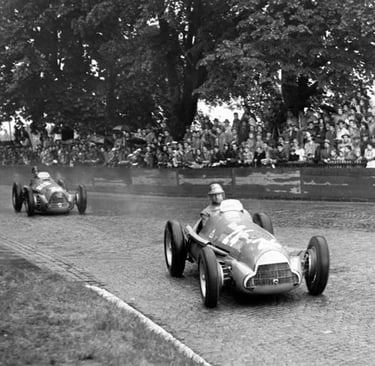
When the World Championship finally began in 1950, it consisted of just seven rounds. But the calendar was far more expansive than those seven races suggested. In that inaugural year alone, 15 additional Formula One-specification races were held across Europe — at circuits including Goodwood, Silverstone, Zandvoort, Albi, Montlhéry, Pau, Ospedaletti (home of the San Remo Grand Prix), Geneva, Pescara, Bari, and Pedralbes in Spain, as well as Douglas on the Isle of Man, Dundrod in Northern Ireland, and Saint Helier in Jersey.
The reasons for this proliferation were simple: the sport had infrastructure, passion, and machinery, but no unified commercial structure. Circuit promoters, national automobile clubs, and wealthy private organisers could stage their own events using Formula One cars and attract world-class drivers with competitive prize purses. In many cases, the prestige of these events rivalled — or even exceeded — that of championship rounds. The Syracuse Grand Prix in Sicily, for example, regularly drew full works entries from Ferrari, Maserati, and other top constructors for its two-and-a-half-hour, 70-lap test of endurance and speed.
There was also a practical consideration: teams needed race experience to develop their cars. Testing facilities were primitive by modern standards, and the best way to understand a new car was simply to race it. Non-championship events offered exactly that opportunity — competitive running without the enormous pressure of World Championship points on the line.
Characteristics of Non-Championship Races
Non-championship Formula One races shared a broadly consistent set of characteristics that distinguished them from Grands Prix, even when the two ran on the same circuits.
No World Championship points were awarded, which was both their defining feature and, ultimately, their undoing. Drivers and teams competed for prize money, trophies, and prestige — not for the title. This occasionally produced more relaxed, experimental, and spectacular racing, since the stakes were calibrated differently.
Many non-championship events were shorter in distance than full Grands Prix. While a World Championship round typically ran for around 300 kilometres, non-title races often covered 150–200 km, making them faster-paced spectacles with less emphasis on strategy and more on outright driver performance.
The entry lists varied wildly. Some of the most prestigious events — particularly the Race of Champions at Brands Hatch and the International Trophy at Silverstone — attracted full works entries from every top constructor and were as competitive as any World Championship round. Others, particularly regional events in the early 1950s, were contested by a handful of local privateers and little-known drivers.
These races also served a crucial developmental function. New cars were frequently unveiled at non-championship events before their official championship debut. Drivers on the cusp of full-time careers were given their first outings in competitive conditions without the full commercial scrutiny of a Grand Prix weekend. There was also a financial dimension for smaller teams and privateers: prize funds at prestigious events were significant, and for independent constructors operating on tight budgets, a good result at Silverstone or Brands Hatch could help fund the rest of the season.
The Homologation Races: Auditions for the Championship
One of the most specific — and least documented — functions of non-championship F1 races was their role as mandatory qualification trials for circuits seeking a place on the World Championship calendar. The FIA regulations of the era explicitly required that a new venue host at least one non-championship F1 race as a quality check before being admitted to the official calendar. In effect, these events were high-stakes auditions: if the circuit, the organisation, and the infrastructure passed scrutiny, the championship followed.
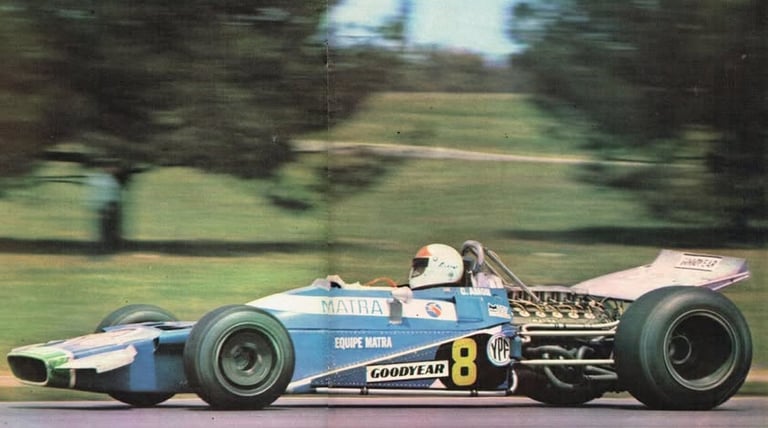
The most prominent examples were clustered in Latin America during the early 1970s. Argentina hosted a non-championship GP at Buenos Aires in January 1971, won by Chris Amon, and entered the World Championship calendar the following year.
Brazil held its homologation race at Interlagos in March 1972, won by Carlos Reutemann, and debuted on the championship calendar in 1973. Brasília staged its own homologation event in 1974, won by Emerson Fittipaldi — but unlike the other two, it never led to a championship race, as Interlagos was already firmly established.
The circuit was later renamed Autódromo Internacional Nelson Piquet. Beyond Latin America, Imola hosted non-championship F1 races in 1963, 1977, and 1979 before finally earning its place on the calendar in 1980, and the Autódromo Hermanos Rodríguez in Mexico City followed the same FIA protocol before its own World Championship debut.
The FIA requirement for demonstration races was eventually relaxed and eliminated as the sport's commercial structure changed in the 1980s. Today, circuit homologation is a purely technical and infrastructural process — the romantic idea of staging a full F1 race to earn a calendar slot has been consigned to history along with the non-championship events themselves.
The Most Famous Races
While dozens of non-championship F1 events existed across three and a half decades, a handful of races achieved iconic status:
The International Trophy (Silverstone, 1949–1978) was the longest-running and most prestigious non-championship event. Organised by the BRDC, it ran for 29 editions and became a defining fixture of the European racing season. Its final edition in 1978 ended in catastrophe when heavy rain flooded the newly resurfaced circuit, eliminating most of the field on the opening lap and leaving the constructors furious at the bill for damaged machinery.
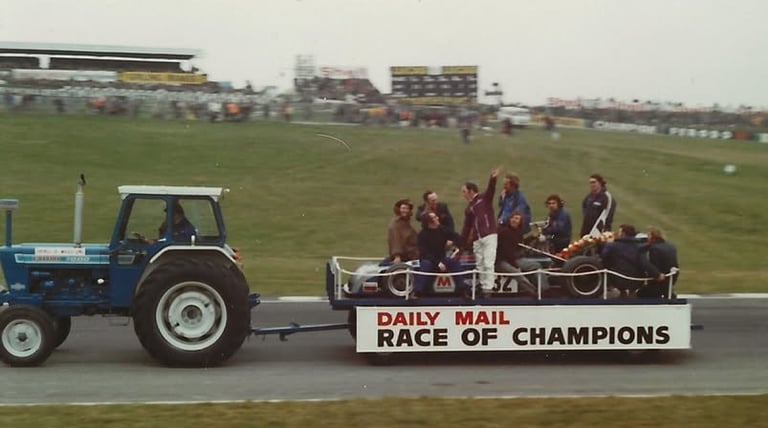
The Race of Champions (Brands Hatch, 1966–1983) was the other pillar of the non-championship calendar. Held at the atmospheric Kent circuit, it typically opened the European racing season and featured glamorous entries and a festive atmosphere. Circuit promoter John Webb maintained it through periods of declining interest until its final, historic edition in April 1983.
The Syracuse Grand Prix (Sicily) was one of the most respected events of the 1950s and early 1960s. Set on a challenging street circuit in the ancient Sicilian city, it attracted full factory teams from Ferrari and Maserati and was treated as genuine preparation for the Italian Grand Prix.
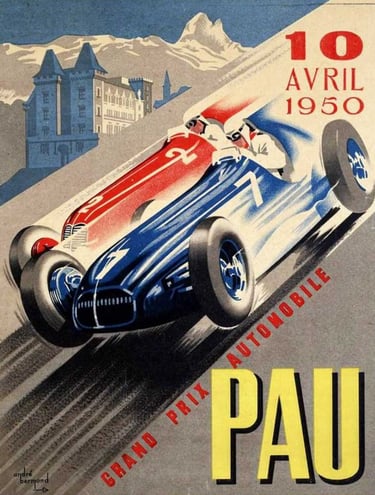
The Pau Grand Prix (France) was held on a tight, technical city circuit in the Pyrénées-Atlantiques region, with a history dating to the pre-war era. Juan Manuel Fangio memorably won there in an Alfa Romeo in 1950.
The Oulton Park Gold Cup provided close, technical racing on a challenging British circuit and was considered a reliable indicator of driver ability. Chris Amon regularly excelled there, and the Gold Cup was prized for its unpredictability and intimacy.
Competitors and Attractions
The competitor pool in non-championship F1 racing was extraordinarily diverse — far more so than the tightly controlled World Championship of today. At the top sat the full works teams: Ferrari, Maserati, Alfa Romeo, BRM, Cooper, Lotus, and later McLaren, Tyrrell, and Brabham, often debuting new machinery and sending their lead drivers. Alongside them raced semi-works and privateer operations — teams that found the non-championship calendar valuable because it offered world-class competition without the logistical demands of a full international season. At the bottom of the hierarchy were genuine unknowns: local drivers and aspiring professionals for whom even a minor F1 win was a lifetime milestone.
For fans, accessibility was paramount — strong grids without the premium pricing that official Grands Prix increasingly demanded. Unpredictability was another draw: with championship pressure removed, teams experimented, tried different strategies, and promoted drivers outside their usual hierarchy. The Autosport analysis of hypothetical non-championship titles revealed that years like 1975 would have seen journeyman driver John Watson crowned "champion." Testing and development added technical intrigue — fans at non-championship events sometimes got their first glimpse of revolutionary new cars before their official debut. Finally, the social atmosphere of these weekends preserved an informality the World Championship was losing: drivers mixed freely with journalists and fans, and the paddock felt genuinely accessible.
If a hypothetical championship had been constructed from all non-championship results, Jim Clark would lead with 19 victories, ahead of Stirling Moss with 18, Jack Brabham with 15, and Juan Manuel Fangio with 13.
Race Summaries: The Best Non-Championship Moments
The 1968 Season — The McLaren Arrival
Three non-championship races defined 1968 as the year the McLaren M7A announced itself to the world. Bruce McLaren took a flag-to-flag victory at Brands Hatch in the Race of Champions, the season opener. A month later at the International Trophy, Denny Hulme led McLaren home in a 1-2 that confirmed the orange car as an instant force, with Chris Amon a close third for Ferrari. The Oulton Park Gold Cup rounded out the season, belonging to Chris Amon in his endless, unrewarded brilliance for Ferrari. McLaren himself claimed the hypothetical non-championship title that year.
The 1971 Victory Race — Triumph and Tragedy
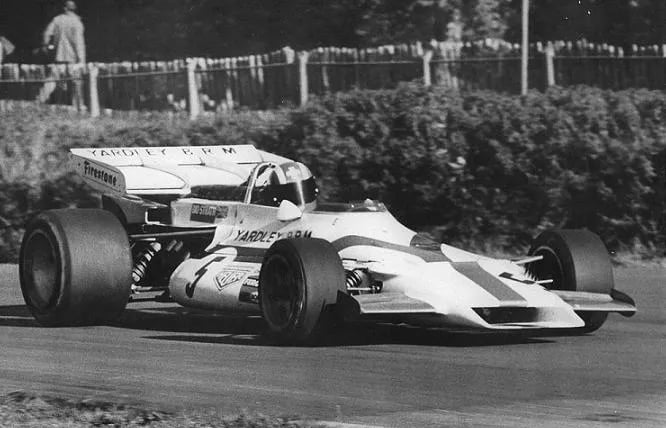
The final non-championship event of 1971 at Brands Hatch should have been a celebration. Instead, it became one of the sport's darkest days. Swiss driver Jo Siffert, who had won the Austrian Grand Prix just weeks earlier, was running in 4th place in his BRM P160 when a mechanical failure sent him off the road on lap 15. The car caught fire and marshalling proved inadequate — Siffert perished in the blaze. The leader at the time of the accident was Peter Gethin. Siffert's BRM teammate Pedro Rodriguez had already been killed earlier in the year, leaving the team devastated. The race was abandoned after just 14 laps.
The 1974 Race of Champions — Ickx Comes From Nowhere
The Race of Champions, held at Brands Hatch on 17 March 1974, opened the European season under wet conditions and produced one of the non-championship calendar's most surprising victories. James Hunt took a stunning pole position in the underdog Hesketh 308 — the team's first ever — and led comfortably until retiring on lap 20 with handling problems, handing the lead to the field.
The beneficiary was Jacky Ickx, who had started only 11th in the Lotus 72E and had quietly carved his way through the spray. With Hunt gone and Carlos Reutemann already out after a lap 19 accident, Ickx led home a tight Ferrari challenge from Niki Lauda by just 1.5 seconds, with Emerson Fittipaldi a further 18 seconds back in third.
The 1975 International Trophy — Lauda's Tenth-of-a-Second Thriller
The 27th Daily Express International Trophy, held at Silverstone on 13 April 1975, delivered one of the most dramatic finishes in the non-championship calendar's history. James Hunt in the Hesketh dominated from pole and set the fastest lap, before his engine failed on lap 26, handing the lead to Niki Lauda in the Ferrari 312T.
What followed was a last-lap duel for the ages. Emerson Fittipaldi threw his McLaren at Lauda through Woodcote Corner on the final tour, drawing alongside — but Lauda left no room and crossed the line just 0.1 seconds ahead. Mario Andretti completed the podium in the Parnelli, with John Watson fourth in the Surtees.
The 1978 International Trophy — Biblical Chaos
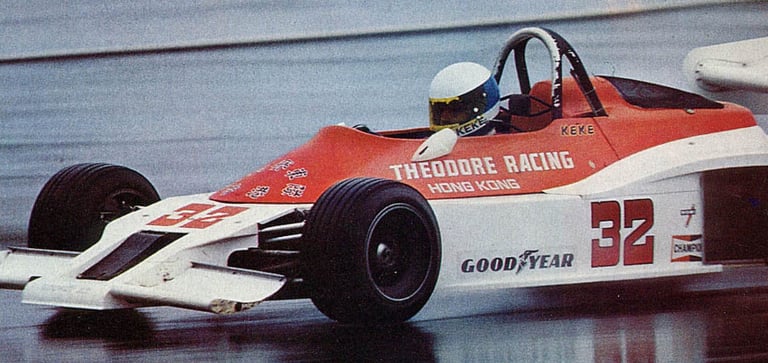
The final running of the International Trophy descended into near-farce when apocalyptic rain flooded the newly resurfaced Silverstone circuit. On the opening lap, cars aquaplaned off the track at Abbey Corner, where a river was literally running across the tarmac. Most of the field was eliminated in a slow-motion catastrophe — chassis bent, cars tangled in catch-fencing. Only Keke Rosberg, whose car control in the conditions was described as freakish, and Emerson Fittipaldi survived to take the flag. The constructors, furious at the bill, never returned.
April 10, 1983 — The Last Race
Nobody at Brands Hatch on April 10, 1983 knew they were witnessing history. When Keke Rosberg took the chequered flag at the Race of Champions ahead of an improbable Danny Sullivan, a 35-year chapter in motorsport history quietly closed. The grid of just 13 cars told the story of a concept past its commercial viability — Renault and Alfa Romeo had preferred a tyre test at Paul Ricard that same weekend. Sullivan's extraordinary second place — achieved after a raucous Saturday night beer-and-curry session in London — was the race's accidental gift to history: a gloriously improbable human story worthy of the entire non-championship era.
Why They Disappeared
The demise of non-championship F1 racing was not sudden. Bernie Ecclestone's commercial consolidation of Formula One was the decisive factor. As Ecclestone organised the constructors into the FOCA and negotiated television contracts, the financial framework of F1 shifted entirely towards championship races. Non-championship events contributed nothing to the central commercial model he was building — they were anomalies, unpredictable and incompatible with the uniform structure he envisaged.
The teams themselves gradually lost interest as sponsorship budgets grew and the cost-benefit calculation shifted. The 1978 Silverstone disaster crystallised this sentiment: why risk expensive machinery at an event that counted for nothing? Spain 1980 and South Africa 1981 ran as non-points events only as casualties of the FISA/FOCA war — championship races stripped of status, not genuine non-championship events. By 1982, the calendar carried no non-championship races at all for the first time in the sport's history. The Race of Champions' brief resurrection in 1983 was an act of nostalgia — and the concept was already a relic. Formula One had become a global television product, commercially centralised and tightly controlled, in which there was simply no room for races that didn't count.
A Hidden Legacy
The non-championship era represents a hidden statistical universe within Formula One history. Jim Clark's 25 World Championship victories are etched into every record book — but his 19 additional victories in non-championship races go largely unacknowledged. The same applies to Stirling Moss, who achieved 16 World Championship race wins without ever claiming the title, with a further 18 non-championship victories cementing his status as one of the most complete drivers in the sport's history.
Beyond the numbers, non-championship racing shaped careers, gave life to circuits that would otherwise never have hosted F1, and preserved the sport's spontaneous, improvisational character long after the World Championship had grown too large to accommodate it. Their disappearance was a symptom of Formula One's success — and perhaps, also, of something quietly lost in that success.
If stories like this matter to you — the ones history almost forgot, the drivers who raced at the edge of everything and paid the ultimate price — then Racing and Beyond is the channel you've been looking for. We go into the races, the rivalries and the lives that shaped motorsport forever. Subscribe and never miss a story worth remembering: