Ferrari 312 B3 Spazzaneve: The Unraced F1 Car That Shaped Ferrari's 1970s Dominance
The Ferrari 312 B3 “Spazzaneve” looked like an akward mistake, but helped unlock the design philosophy that carried Ferrari back to the top of the sport in the mid-1970s.
CLASSIC MOTORSPORT
4/24/20269 min read
The Ferrari 312 B3 “Spazzaneve” looked like a mistake, raced like a dead end, and lasted only briefly as an active Formula 1 project, yet it helped unlock the design philosophy that carried Ferrari back to the top of the sport in the mid-1970s. What made the car so important was not what it achieved on a Grand Prix grid, but what Mauro Forghieri learned from it about aerodynamics, centralized mass, packaging, and the direction Formula 1 was about to take.
The Strange Ferrari That Changed Everything
By the early 1970s Ferrari was in a familiar cycle of brilliance followed by frustration, a team still capable of flashes of greatness but increasingly vulnerable to the innovation of British rivals. The 312B of 1970 had restored some competitiveness thanks to Ferrari’s flat-12 engine, whose low center of gravity gave the car real promise, but the follow-up 312B2 did not keep pace with the fastest ideas in Formula 1, and Ferrari’s form across 1971 and 1972 was disappointing enough to demand something radical.
That radical answer came from Mauro Forghieri, Ferrari’s brilliant but often embattled engineer, who was looking beyond the team’s immediate slump and toward the aerodynamic future of the sport. Working in parallel with Ferrari’s dominant 312PB sports car program, Forghieri began to understand how a broad, flat body surface close to the ground could generate far more downforce than the slimmer Formula 1 shapes then used by Tyrrell, McLaren, and others. From that insight came the idea for a very different Ferrari single-seater: the 312 B3 prototype that the world would remember by its mocking nickname, Spazzaneve — “snowplow.”
Why Ferrari Built It
The Spazzaneve was conceived in 1972 not as a polished Grand Prix weapon, but as an experimental tool built to explore a new aerodynamic philosophy. Forghieri later said the car was “always meant to be an experimental car” and that it served as the basis for his aerodynamic studies, marking a major turning point in his thinking.
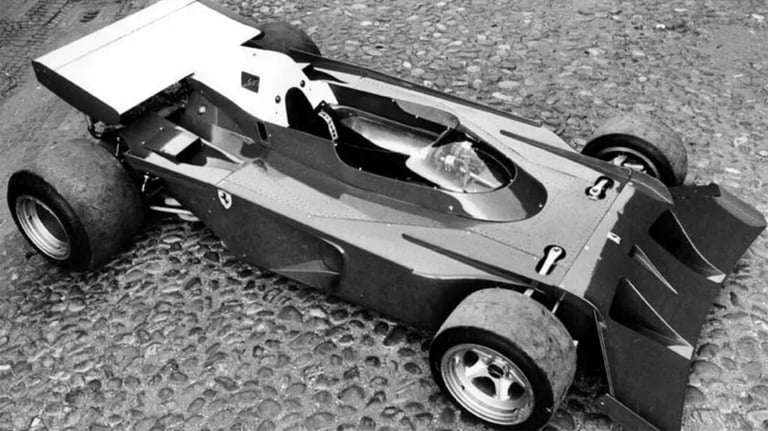
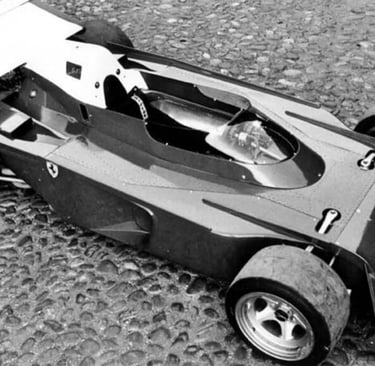
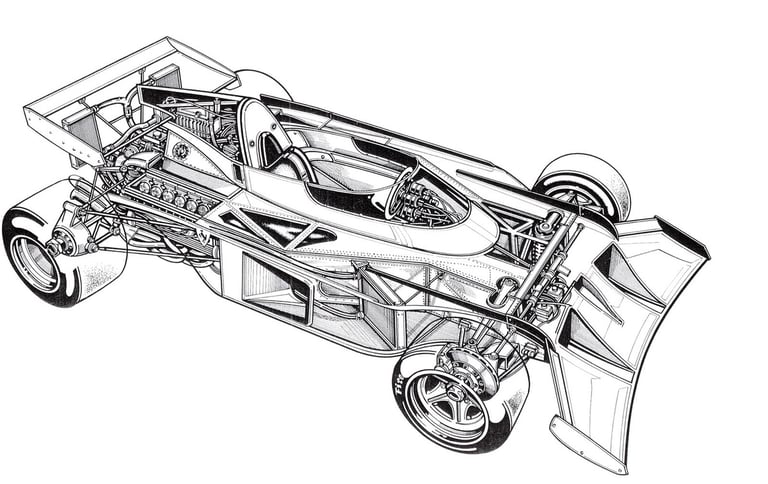
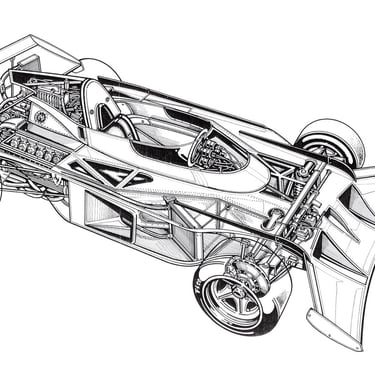
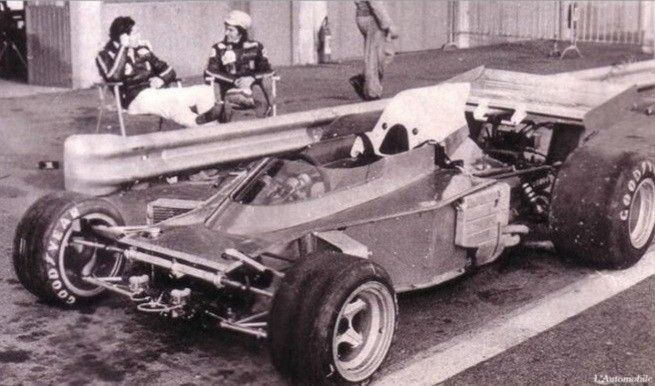
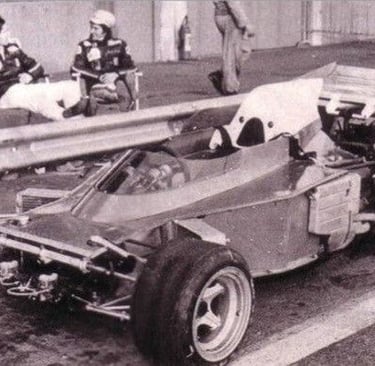
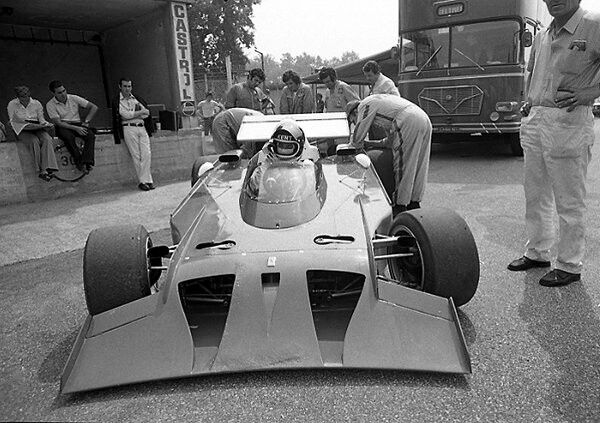
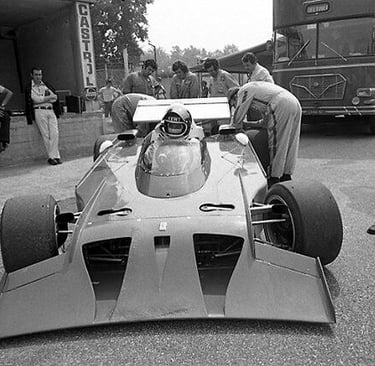
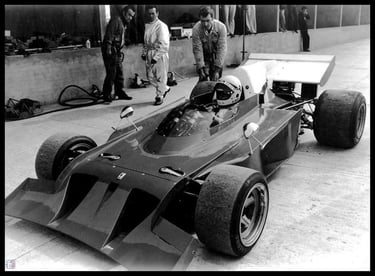
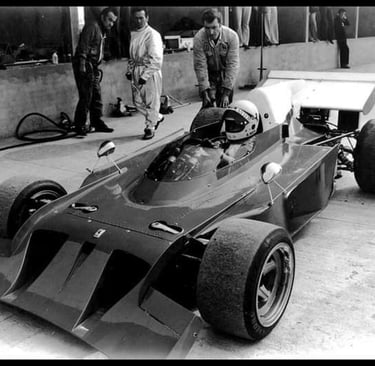
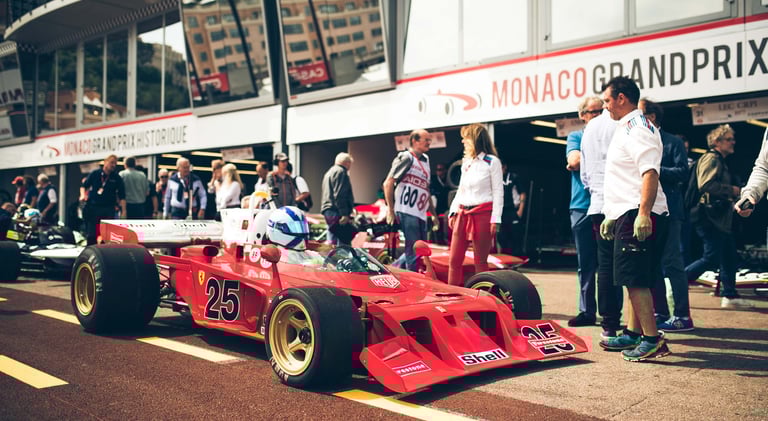
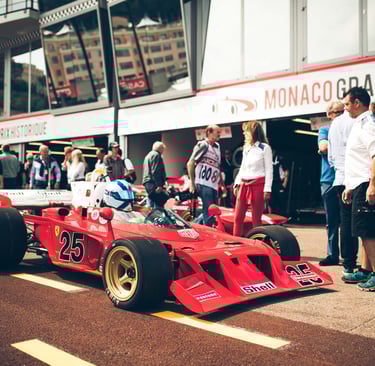
Its design was unlike anything else in Formula 1 at the time. It had a very short wheelbase, a wide slab-sided body, a dramatic full-width nose that seemed to scrape the road like a shovel, and radiators mounted alongside the cockpit rather than in a conventional frontal layout, even though the intakes remained at the front. The aim was to place as much of the car’s mass as possible within the wheelbase, reducing polar moment and helping the car rotate more quickly while also taking advantage of a much larger upper body surface to generate aerodynamic load.
This was an extraordinary conceptual leap for Ferrari. Rather than simply refining the existing 312B formula, Forghieri was trying to package an F1 car in a way that anticipated the next phase of the sport, one in which downforce, airflow management, and side-mounted cooling would increasingly define winning design.
The Spazzaneve’s bizarre appearance was the visible result of a packaging experiment. The nose stretched across the full width of the car and plunged low to the ground, while the body sides were flat and boxy, creating a large aerodynamic surface that Forghieri believed could produce significantly more downforce than the current “coke bottle” forms of rival teams.
Wind-tunnel work at Stuttgart University showed that Ferrari’s wider, more enveloping approach generated much more aerodynamic load than the more conventional 312B2, even though the exposed wheels still limited its ultimate efficiency. That result mattered because more downforce meant Ferrari could rely less on oversized rear wings and could keep more weight centralized rather than hanging it off the back in search of traction. In simple terms, the Spazzaneve was trying to solve several problems at once: grip, balance, straight-line speed, and mass distribution.
Testing Promise and Real Problems
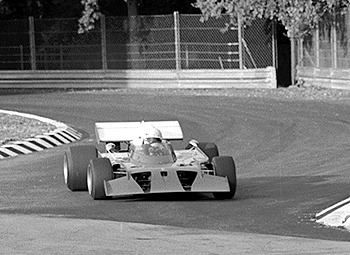
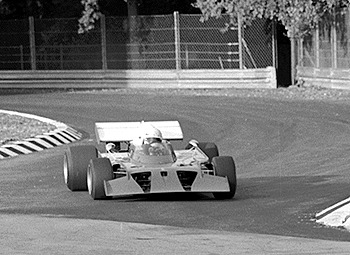
The car was tested at Fiorano and also ran at Monza, with Jacky Ickx and Arturo Merzario among the drivers who evaluated it, while Goodwood’s website later account also includes Clay Regazzoni in the testing story told by the current owner of this incredible car, Franco Meiners. In testing, the picture was mixed: the car clearly had potential, but it was also difficult, nervous, and far from race-ready.
The biggest technical problem was that its extreme short-wheelbase concept came with serious handling drawbacks. Drivers found the car vicious and unstable in fast corners, a result consistent with a layout that concentrated mass tightly and sought ultra-low polar inertia but had not yet found the balance needed for predictable behavior at speed. Even though Merzario set quick times at Fiorano, the car still frightened drivers and behaved too twitchily to inspire confidence as an immediate race machine.
There were also practical issues that mattered in a racing environment even if they were less relevant for a pure test prototype. Ferrari mechanics complained that changing the engine took around eight hours, and the car’s unusual bodywork made maintenance awkward, a serious drawback once the project was exposed to the pressures of a Grand Prix weekend rather than being kept behind closed doors as Forghieri had wanted.
The Monza Backlash
Forghieri intended the Spazzaneve as a private development platform, but events overtook him in late summer 1972 when Ferrari revealed the car publicly ahead of Monza. The timing was disastrous. Instead of being judged as a research tool, it was presented in a climate where the press and public expected Ferrari’s next serious Formula 1 challenger.
The reaction was harsh. Its strange form made it an easy target for cartoonists and critics, and the nickname “snowplow” stuck immediately because of the car’s massive front end. At the same time, Ferrari’s own team was fragmenting, mechanics disliked the machine, and Ickx, after comparing it with the older B2 at Monza, made dismissive comments that further weakened support for the project. Although it was entered for the Italian Grand Prix, the car was withdrawn before practice began and never raced in the Formula 1 World Championship.
Politics Killed It Too
The Spazzaneve did not fail only because it was difficult to drive. It also arrived during a period of internal instability at Ferrari, when technical direction, corporate politics, and management confidence were all in flux. A “mini meltdown,” with Enzo Ferrari sidelined by illness for much of the time, Fiat’s growing influence inside the company, and Forghieri effectively pushed away from Formula 1 development while others took over the 1973 car project.
In this context, politics mattered just as much as lap time. Forghieri’s prototype lost its most powerful internal advocate just as criticism mounted, and the replacement direction under Sandro Colombo led Ferrari toward a more conventional 312 B3 for 1973, one that incorporated far less of the original car’s radical spirit and proved remarkably unsuccessful.
In that sense, the Spazzaneve was abandoned because the team lacked the stability, patience, and technical continuity required to refine them. The car was unveiled too early, judged in the wrong context, and caught in a power struggle that made it easier to discard than develop.
Why It Still Mattered
If the story ended there, the Spazzaneve would be little more than a bizarre footnote. Instead, it became one of the most important dead ends in Ferrari history, because Forghieri learned from it exactly what needed to be kept and what needed to be tamed.
The first lesson was aerodynamic. The broad body concept worked in principle: a larger surface area and smarter airflow management could produce significantly more downforce than Ferrari’s previous cars. The second lesson was about packaging. Side-mounted cooling, forward driver placement, and the effort to centralize mass inside the wheelbase were all sound ideas, but the total package needed a more mature chassis, better weight distribution, and a less extreme interpretation if it was going to win races consistently.
That is why historians often describe the Spazzaneve not as a failed Grand Prix car, but as a laboratory. It was a laboratory that contributed to the development of the 312T and all future success and titles of the Scuderia.
The Bridge to the 1974 Ferrari
Ferrari’s 1973 season showed how costly it had been to abandon Forghieri’s line of thinking without replacing it with something better. The Colombo-era B3 was weak, the team became destabilized, and the Scuderia drifted into one of its most chaotic periods. Then, late in 1973, Enzo Ferrari brought Forghieri back and demanded results.
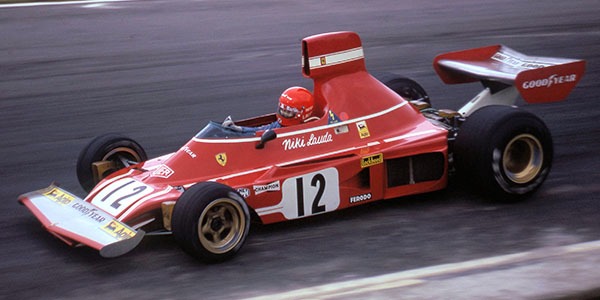
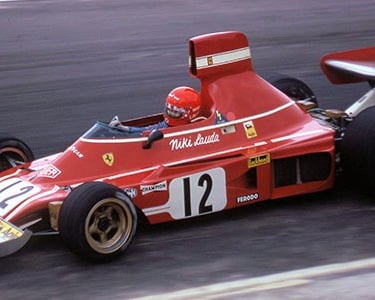
From there, the path from experimental oddity to contender becomes much clearer. Forghieri reworked the B3, introducing new bodywork, hip-mounted radiators, and aerodynamic solutions that echoed what he had studied with the Spazzaneve and in the wind tunnel. The resulting 312 B3 of 1974 no longer wore the snowplow nose, but it carried over crucial principles: centralized mass, wide bodywork, improved packaging, and a driver-forward layout.
This transformed Ferrari’s competitiveness. In 1974 the Scuderia returned to the front with Niki Lauda and Clay Regazzoni, and although the team did not win the title, Regazzoni took the championship fight to the final round and lost by only one point. The important point is that Ferrari was no longer lost; it had found the right design direction again.
From Spazzaneve to 312T
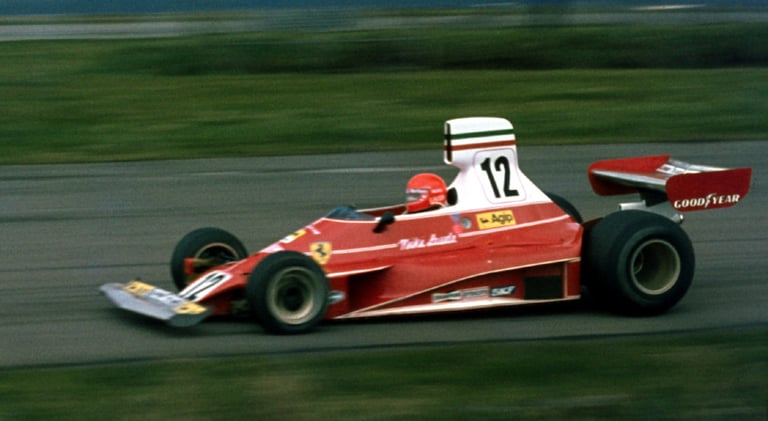
The final step came in 1975 with the 312T, the car that turned Ferrari’s recovery into outright dominance. The famous transverse gearbox is often treated as the decisive innovation, and it certainly was critical, but the deeper philosophical roots of the 312T reach back to the Spazzaneve.
The 312T refined the same goals that had driven the 1972 experiment. It sought centralized mass, compact packaging, strong aerodynamic efficiency, and a layout that allowed the flat-12 engine to be used to best effect without compromising balance. What had been too nervous and too awkward in the Spazzaneve emerged in the 312T as a coherent, race-winning whole.
This is why the strange 312 B3 matters so much in Ferrari history. It did not deliver trophies itself, but it changed how Ferrari thought about Formula 1 design at precisely the moment when the team needed a new intellectual foundation. The snowplow nose disappeared, but the concepts behind it survived and matured into the cars that made Ferrari champions again.
Legacy of the Snowplow
In retrospect, the Spazzaneve was a prototype ahead of its time and also trapped by its own time. It appeared before Ferrari had the organizational calm to nurture it, before its handling problems had been solved, and before the sport had fully caught up with the aerodynamic direction it pointed toward. That combination made it look absurd in 1972, but highly significant in hindsight.
Its true legacy lies in the chain it helped start: experimental thinking in 1972, recovery in 1974, and championship success from 1975 onward. The Ferrari 312 B3 Spazzaneve remains one of the clearest examples in racing history of a car that failed on the surface while succeeding at a deeper level, because sometimes the machine that is unsuccessful is the one that teaches the most.
Perhaps the most extraordinary footnote to this entire story is that the Ferrari 312 B3 Spazzaneve is not merely a museum piece. The car survives in running condition and has been demonstrated publicly at historic racing events, including the prestigious Monaco Historic Grand Prix, where it has turned heads on the same streets that once hosted the greatest Formula 1 battles of its era. Seeing it move under its own power — flat-12 screaming, that unforgettable snowplow nose carving through the narrow Monégasque streets — is a reminder that the strangest Ferrari ever built was always more alive than its critics believed. You can watch the car in action at the 2026 Monaco Classic Grand Prix in the video below: