Fittipaldi vs. Lauda: The 0.35-Second Battle That Defined the 1974 Belgian Grand Prix
CLASSIC MOTORSPORT
3/5/20269 min read
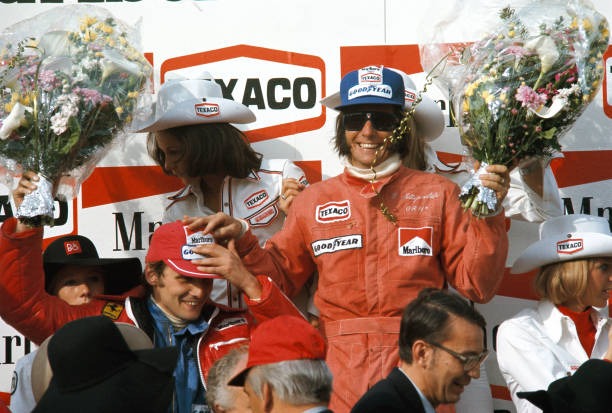
The 1974 Belgian Grand Prix was one of the most electrifying duels of the entire Formula 1 season — a race where Niki Lauda spent nearly every one of 85 laps glued to Emerson Fittipaldi's gearbox, only to lose by a heartbreaking 0.35 seconds. But the story of May 12, 1974 goes far beyond that razor-thin margin. It is also the story of Nivelles-Baulers, a forgotten circuit carved into the Belgian countryside that the world of motorsport would never see again in Formula 1.
A Season on a Knife's Edge
The 1974 Formula 1 World Championship was shaping up to be one of the most competitive title fights in the sport's history. Going into the fifth round of fifteen, held at Nivelles, the championship standings were extraordinarily tight. Emerson Fittipaldi, the reigning world champion driving for McLaren, led the standings with 13 points — but Niki Lauda, Ferrari's young Austrian ace, was right behind him, separated by just a handful of points alongside his teammate Clay Regazzoni.
The season had already delivered drama at every turn. McLaren's M23, powered by the Cosworth DFV, was the benchmark of reliability, while Ferrari's 312B3 offered raw pace and threat. At every race weekend, fans were witnessing the emergence of a generational battle: the polished, calculating Fittipaldi against the precise, ice-cool Lauda. Nivelles would be the stage for one of their most memorable confrontations.
Nivelles-Baulers: Belgium's Forgotten Circuit
Before we dive into the race itself, it is worth pausing to understand the venue — because Nivelles-Baulers is one of motorsport's most poignant "what if" stories. The circuit opened in 1971 as a safer alternative to the legendary but increasingly dangerous Spa-Francorchamps road circuit, which had been the subject of growing controversy among drivers throughout the late 1960s.
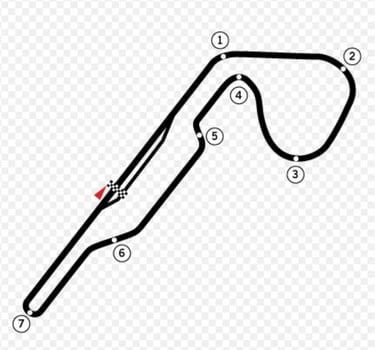
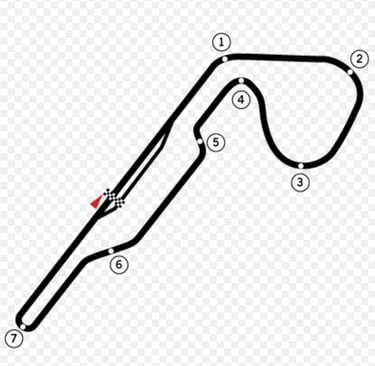
The original design, conceived by Dutch architect John Hugenholtz — the same man who designed Suzuka and Jarama — envisioned a 3.5-mile permanent facility. However, financial constraints forced the organisers to build a shorter version first, with plans to expand it later once revenue started flowing in. It was a fateful decision. The shortened track measured just 3.724 km (2.314 miles), and when the organisers eventually tried to buy the adjacent land for the planned extension, the landowner dramatically raised his price. The full circuit was never built.
What remained, nonetheless, was a technically interesting layout. Its most challenging feature was the "Big Loop" — known locally as "La Crosse" — a pair of long, fast right-hand corners with some elevation changes that demanded commitment and precision from the drivers. The circuit also featured a 1.1-kilometer main straight, which allowed for high top speeds and set up heavy braking zones.
Critics, including many of the drivers, considered Nivelles-Baulers too short, too flat, and insufficiently challenging compared to the raw drama of Spa. But those who actually drove it often saw things differently — the Big Loop was a genuine test of nerve, and the compact layout led to close, intense racing. The 1974 Belgian Grand Prix would prove that point emphatically.
Qualifying: A Suspicious Pole and a Stacked Grid
Qualifying for the 1974 Belgian Grand Prix produced an eyebrow-raising result. Clay Regazzoni, Fittipaldi's Ferrari rival, set a pole position time of 1:09.82 — a full second faster than his nearest competitor, Jody Scheckter in the new Tyrrell. The gap was so large that it raised immediate suspicion, and many observers at the time questioned whether the timing was entirely accurate.
Behind Regazzoni and Scheckter, the grid was incredibly tightly packed. Niki Lauda qualified third with a 1:11.04, sharing the second row with Emerson Fittipaldi, who was just three thousandths of a second slower at 1:11.07. The next ten drivers were all covered by under one second — a testament to the competitive density of the 1974 field.
Notable absentees from the session's upper echelons included home hero Jacky Ickx, who could only manage 16th in his Lotus, and Carlos Reutemann, who was a calamitous 24th after a troubled practice. The race also marked the Formula 1 debut of Welsh driver Tom Pryce, starting 20th in the Token-Ford — a career that would tragically end too soon. Finnish driver Leo Kinnunen was the only driver to fail to qualify for the 32-car entry.
The Race: Chaos, Traffic, and a Battle for the Ages
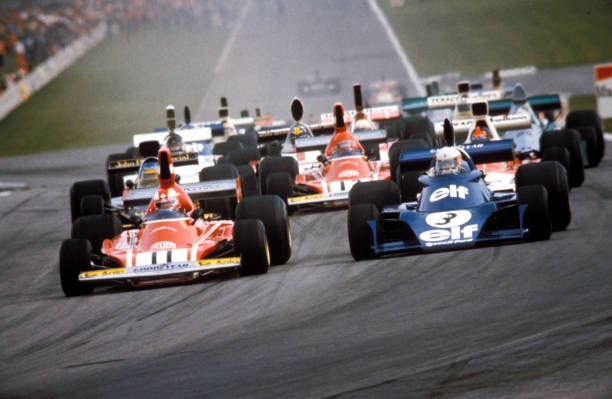
When the lights went out on May 12, 1974, Regazzoni rocketed off the line and into the lead as expected from pole. Fittipaldi, using the cleaner side of the grid to his advantage, swept past Scheckter on the run to the first corner to claim second place. Lauda slotted into third, with Ronnie Peterson, James Hunt and Carlos Pace following in the opening exchanges.
The first laps saw the top six running nose-to-tail in an extraordinary convoy. Overtaking at Nivelles was genuinely difficult — the circuit's layout, despite its challenging corners, funneled cars onto the same racing line and offered few alternative routes. The leading group was essentially locked together, each driver watching and waiting for an opportunity that simply would not present itself on open track.
On lap 3, Lauda made his first significant move, passing Ronnie Peterson. A few laps later, he dispatched Scheckter too, climbing to third place, right behind Fittipaldi. The order then stabilised, with Regazzoni, Fittipaldi and Lauda running as a unit separated by mere car lengths — a spectacular sight on the wide Belgian asphalt.
As is so often the case in Formula 1, the decisive moments came not from wheel-to-wheel combat between the leading cars, but from the unpredictable chaos of lapping backmarkers.
The first significant shuffle came when the leaders encountered the tail-enders around lap 25. Regazzoni and Fittipaldi blasted past the limping BRM of François Migault without issue. But Lauda hesitated slightly in the braking zone, losing his tow off Fittipaldi. Recognising that he lacked the raw pace to keep up with the leading duo without a draft, Lauda made a cunning tactical decision — he deliberately let Scheckter back through to reclaim the tow. It worked: within half a lap, the group was reformed.
The second and more decisive intervention came when Regazzoni misjudged a move on the recovering Carlos Pace and was pushed onto the grass. Fittipaldi charged through into the lead, and in the same instant, Lauda pounced on Scheckter to claim second. The complexion of the race had changed entirely.
Hunt's race ended when his Hesketh suffered a suspension failure and spun off the circuit. Depailler came up briefly to fifth before his Tyrrell succumbed to brake problems. Peterson's race ended with a fuel tank leak after lap 56, and Regazzoni — despite recovering to fourth — would eventually lose even that position on the final lap when his Ferrari ran out of fuel.
Fittipaldi vs. Lauda: 85 Laps, 0.35 Seconds
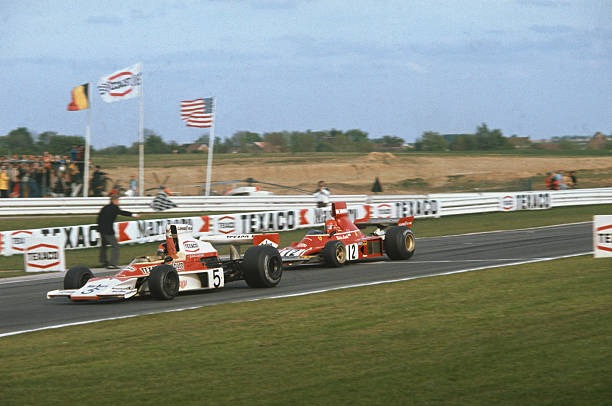
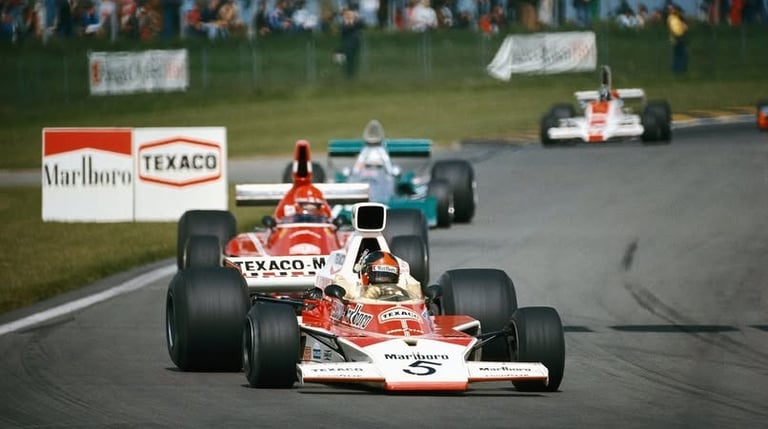
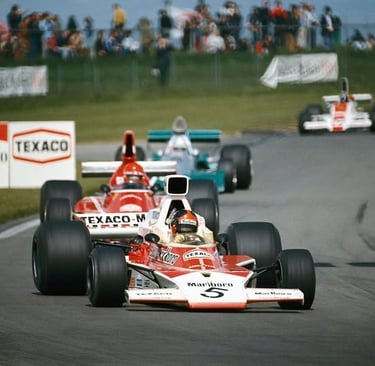
The final phase of the race was a study in tension. Lauda sat directly behind Fittipaldi, close enough to read the number on the McLaren's engine cover, lap after lap after lap. With Regazzoni dropping back and no longer a factor, the championship battle was playing out in real time on the 3.7-kilometre Nivelles circuit. Every corner, every straight, every braking zone was a micro-battle.
Yet Lauda simply could not find a way past. The Nivelles layout, with its long right-hand loops and limited overtaking options, made the difference. Fittipaldi defended intelligently without ever looking ragged. The McLaren M23 — perhaps the most complete car of the 1974 season — was perfectly balanced and reliable, leaving no chink in its armour.
When the chequered flag fell after 1 hour, 44 minutes and 20.57 seconds, Fittipaldi crossed the line to take victory — his second Belgian Grand Prix win at Nivelles, having also won there in 1972. Lauda was classified second, a breathtaking 0.35 seconds behind. Jody Scheckter completed the podium in third, a full 45 seconds adrift after his earlier difficulties in traffic. Regazzoni came home fourth, having run out of fuel on the final lap.
Words can only go so far. If you want to feel the tension of those final laps — Lauda's Ferrari filling Fittipaldi's mirrors, lap after lap, with nowhere to go — watch the race highlights below and see why the 1974 Belgian Grand Prix remains one of the most underrated battles in Formula 1 history.
1974 Belgian Grand Prix — Final Classification (Top 6)
Circuit de Nivelles-Baulers | May 12, 1974 | 85 Laps | 3.724 km
P1 — Emerson Fittipaldi (Brazil) | McLaren-Ford M23 | 85 laps | 1:44:20.570
P2 — Niki Lauda (Austria) | Ferrari 312B3 | 85 laps | +0.350s
P3 — Jody Scheckter (South Africa) | Tyrrell-Ford 007 | 85 laps | +45.610s
P4 — Clay Regazzoni (Switzerland) | Ferrari 312B3 | 85 laps | +52.020s
P5 — Jean-Pierre Beltoise (France) | BRM P201 | 84 laps | +1 lap
P6 — Denny Hulme (New Zealand) | McLaren-Ford M23 | 84 laps | +1 lap
P7 — Carlos Reutemann (Argentina) | Brabham-Ford BT44 | 84 laps | +1 lap
P8 — Mike Hailwood (Great Britain) | McLaren-Ford M23 | 84 laps | +1 lap
P9 — Henri Pescarolo (France) | BRM P160E | 83 laps | +2 laps
P10 — Graham Hill (Great Britain) | Lola-Ford T370 | 83 laps | +2 laps
P11 — Jacky Ickx (Belgium) | Lotus-Ford 76 | 83 laps | +2 laps
P12 — Tom Pryce (Great Britain) | Token-Ford RJ02 | 82 laps | +3 laps
DNF — Ronnie Peterson (Sweden) | Lotus-Ford 72E | 56 laps | Fuel leak
DNF — Patrick Depailler (France) | Tyrrell-Ford 007 | 53 laps | Brakes
DNF — James Hunt (Great Britain) | Hesketh-Ford 308 | 45 laps | Suspension
DNF — Carlos Pace (Brazil) | Surtees-Ford TS16 | 43 laps | Engine
DNF — François Migault (France) | BRM P160E | 30 laps | Engine
DNF — John Watson (Great Britain) | Brabham-Ford BT44 | 18 laps | Accident
DNF — Chris Amon (New Zealand) | Amon AF101 | 14 laps | Engine
DNF — Arturo Merzario (Italy) | Iso-Ford IR | 10 laps | Engine
Pole Position: Clay Regazzoni — Ferrari 312B3 — 1:09.820
Fastest Lap: Niki Lauda — Ferrari 312B3 — 1:11.160
Race Distance: 316.540 km (85 laps x 3.724 km)
The result at Nivelles had significant consequences in the 1974 Drivers' Championship. Fittipaldi's nine points lifted him to 22 points at the top of the standings, while Lauda's second place earned him six points, bringing his total to 21. The gap between the two championship leaders was a mere one point with ten rounds still to go — the season was delicately poised, and everyone in the paddock knew it.
In the Constructors' Championship, McLaren-Ford extended their lead to 35 points, ahead of Ferrari on 27. For Ferrari, the Belgian result was both encouraging and frustrating — Lauda had been fast enough to win, but the circuit's characteristics and a moment in traffic had denied him the victory.
The End of Nivelles in Formula 1
The 1974 Belgian Grand Prix turned out to be the last Formula 1 race ever held at Nivelles-Baulers. The circuit was scheduled to return to the calendar in 1976, but by then, the Belgian FIA delegation determined that the track surface had deteriorated beyond acceptable standards and required a new layer of asphalt. No investor could be found to fund the resurfacing, and Formula 1 moved on — predominantly to Zolder for the remainder of the decade.
Without F1, Nivelles struggled to survive. The circuit continued to host motorcycle events through 1981, but when its racing licence expired on June 30 of that year, the track was permanently closed. For the next seventeen years, the circuit sat abandoned in the Belgian countryside, slowly reclaimed by nature and used by daredevils for illegal racing.
In 1998, the decision was made to demolish the circuit and convert the land into a business park, now known as "Les Portes de l'Europe." The pits and control tower were torn down in 1999. By 2020, the very last remnants of the racing surface — a section of back straight and a few corners hidden in the trees — were cleared to make way for further industrial development.
Today, if you visit the site near the Belgian town of Nivelles, you will find warehouse units, loading docks and office buildings where racing cars once thundered at nearly 300 km/h. A public road now follows portions of the old circuit layout, including sections of the famous Big Loop — a ghostly echo of what once was. Emerson Fittipaldi won both Formula 1 races ever held at Nivelles, in 1972 and 1974. It is the only circuit where he holds a 100% victory record, and one of the few F1 tracks to have disappeared from the map entirely.
The 1974 Belgian Grand Prix at Nivelles deserves far more recognition than it typically receives in the historical canon of Formula 1. It delivered one of the closest finishes of the entire decade. It encapsulated the fierce championship battle between two of the sport's all-time greats. And it served as the final chapter for a circuit that, despite its critics, gave the world genuine racing.
Fittipaldi and Lauda would continue their battle through the rest of 1974, but it was in Belgium — on a flat track tucked into the rolling Walloon countryside — that the true essence of their rivalry was laid bare: two champions, separated by a fraction of a second, with nothing left to give.