Flat-Out Through the Forest: The Story of Hockenheim
Few circuits in Formula One history carry as much weight as the Hockenheimring — a track born in the German forests, shaped by tragedy, and rebuilt for the modern era. From Jim Clark's fatal crash in 1968 to Barrichello's unforgettable victory in 2000, Hockenheim is more than a racetrack: it is a living archive of motorsport history.
CLASSIC MOTORSPORT
6/15/202610 min read
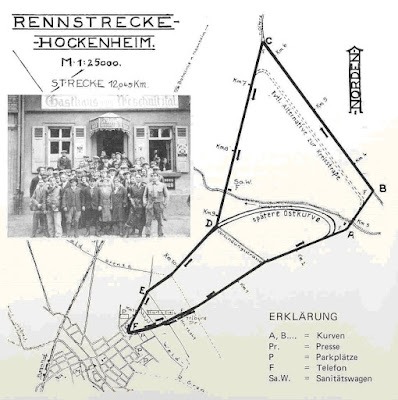
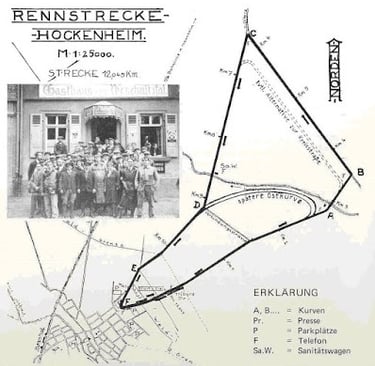
The Hockenheimring’s history is really the story of several circuits sharing one name. It began as a local road course built on the edge of a small German town, evolved into one of Europe’s fastest and strangest Grand Prix venues, and eventually became a modern, compact autodrome designed around safety, visibility, and commercial realities. Over nearly a century, Hockenheim has been defined as much by tragedy and reinvention as by speed, and that tension is what gives the circuit its lasting place in Formula One history.
Origins in the early 1930s
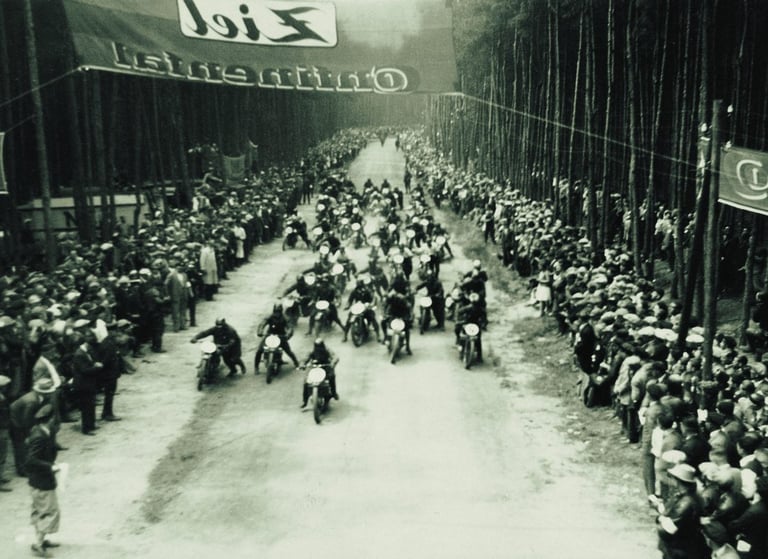
The idea for a racing circuit in Hockenheim did not begin as a Mercedes test-track project, despite how often that claim is repeated. Multiple historical accounts trace the initiative to local timekeeper Ernst Christ, who pushed for a circuit in his hometown and won support from mayor Philipp Klein and the municipal council, which approved the project on Christmas Day in 1931. Construction began on 23 March 1932 through a job-creation scheme, and the first version of the track was a roughly 12-kilometre triangular road course known as the Dreieckskurs, created largely by adapting existing public roads through the forest.
The earliest Hockenheim races were primarily for motorcycles, and even the first event in May 1932 took place on a surface that was still partly unpaved. That rough beginning established the track’s original identity: fast, simple, local, and strongly tied to the wooded landscape around Hockenheim rather than to monumental permanent facilities.
The pre-war and post-war circuit
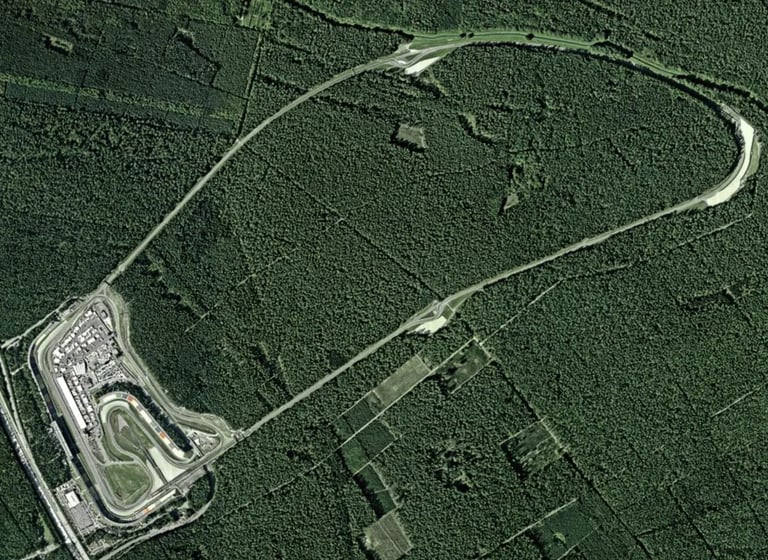
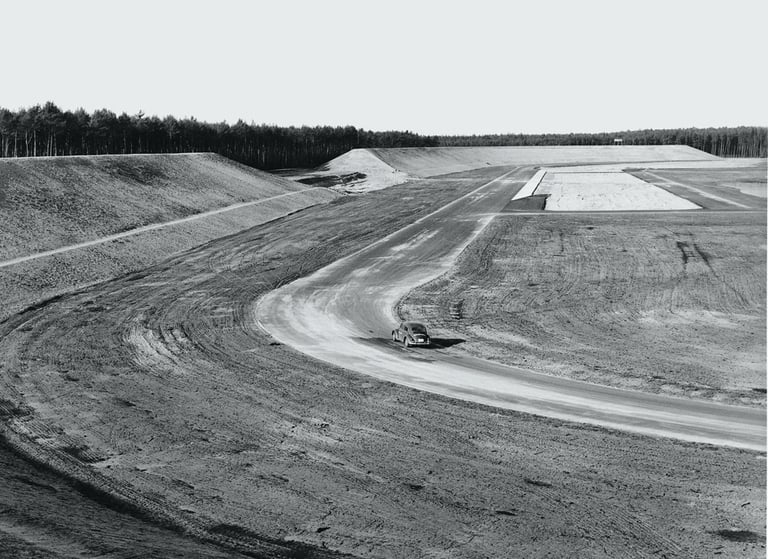
In 1938, the circuit was shortened and transformed by the addition of the fast Ostkurve at the eastern end, creating the famous oval-like profile that later generations would associate with old Hockenheim. The layout was renamed the Kurpfalzring, the straights were widened, the surface was sealed, and spectator infrastructure began to appear, marking the first clear step from improvised road course to more permanent motorsport venue.
The Second World War interrupted that development and badly damaged the track, with military use ruining the surface and much of the infrastructure disappearing. Racing resumed in 1947, the Hockenheim-Ring GmbH was established to organize the venue’s commercial side, and the post-war Hockenheimring quickly reasserted itself as an important center of German motorsport, especially for motorcycle racing.
The Motodrom and the modern identity
The next decisive transformation came in the 1960s, when the planned Mannheim-Walldorf autobahn cut across part of the old course and forced a redesign. A new stadium complex, usually referred to as the Motodrom, was developed from plans associated with Ernst Christ and finalized by John Hugenholtz, giving the circuit a pit straight, grandstands, and a far more spectator-friendly infield section. Opened in 1966, this redesign also turned Hockenheim into a fully permanent circuit and changed its direction from anti-clockwise to clockwise.
That 1966 layout created the Hockenheim most fans still mythologize today: long, lonely straights through the forest combined with a cramped, technical stadium section where cars arrived carrying enormous speed. It was an unusual contrast. On one part of the lap, drivers chased maximum velocity and engine efficiency; on another, they had to wrestle low-downforce cars through tighter corners in front of packed grandstands.
Jim Clark and the circuit’s darkest memory
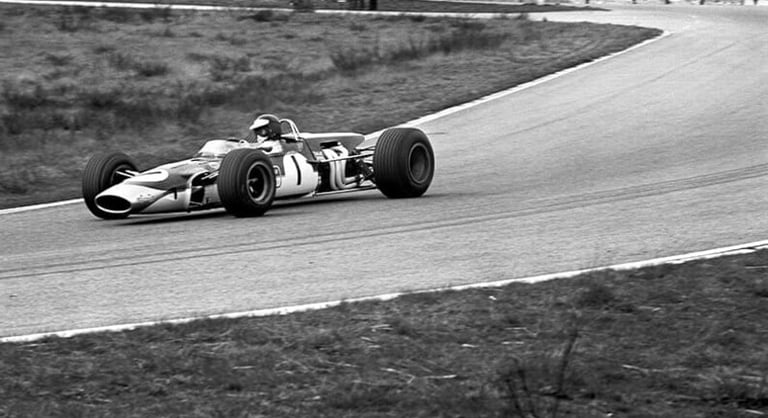
Hockenheim’s history cannot be told honestly without beginning its tragedy chapter with Jim Clark. On 7 April 1968, the two-time Formula One world champion was killed during a Formula Two race at Hockenheim, in an accident that several sources note was never fully explained. A memorial near the forest section still marks the site, and that the circuit remains deeply associated with Clark’s death even after all the later redesigns.
Clark’s fatal crash changed the emotional meaning of Hockenheim. What had been admired as a sweeping, ultra-fast course through the woods also came to symbolize the vulnerability of drivers on circuits where tiny failures at enormous speed could have catastrophic consequences. In the years that followed, safety changes at Hockenheim increasingly reflected this new reality, even if the circuit would remain brutally fast for decades.
Patrick Depailler and further warnings
Another major tragedy followed in 1980, when Patrick Depailler was killed while testing for Alfa Romeo at Hockenheim. The fatal accident occurred in the Ostkurve area, one of the circuit’s most feared sections, and later accounts connect the addition of a chicane there to the effort to reduce the danger of that high-speed corner.
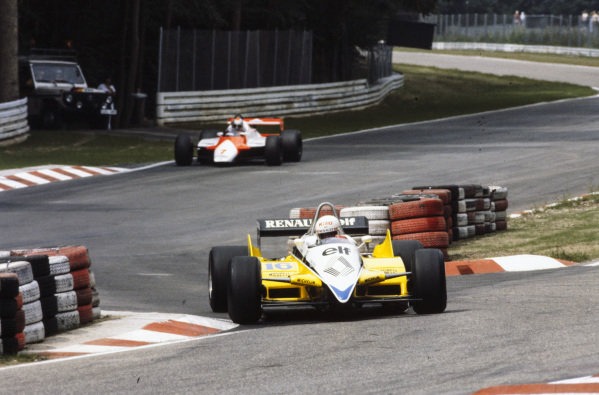
Depailler’s death reinforced what many in Formula One already knew: Hockenheim’s long forest straights were as just fast, as were unforgivable. The old layout placed enormous demands on engines, brakes, concentration, and visibility, while giving drivers little margin for error once something went wrong. In wet conditions, the wooded environment made visibility worse still, and that poor visibility in the dense forest contributed to the circumstances surrounding Didier Pironi’s career-ending crash at Hockenheim in 1982.
The road to Formula One
Hockenheim first hosted the German Grand Prix in 1970, because the construction and safety work at the Nürburgring made an alternative necessary. To prepare for Formula One, two chicanes were inserted on the forest straights and metal barriers were installed around the circuit, showing how the venue already had to adapt itself for the speed and danger of top-level single-seater racing. Jochen Rindt won that 1970 race, giving Hockenheim its first Formula One Grand Prix.
In the link below, you can watch some of the best moments from this first Formula 1 race at Hockenheim.
Formula One returned to the Nürburgring in 1971, but the balance changed decisively after Niki Lauda’s 1976 Nürburgring crash convinced much of the sport that the Nordschleife was no longer acceptable for modern Formula One. From 1977 onward, Hockenheim became the regular home of the German Grand Prix, hosting the race every year through 2006 except 1985, before later alternating with the Nürburgring. That long run secured Hockenheim’s place not just as a substitute venue, but as one of Formula One’s defining European circuits of the late twentieth century.
What made old Hockenheim special
Old Hockenheim was never loved in exactly the same way as Spa or Monza, but it had a character that was unmistakable. A place where cars blasted through the long straights at more than 350 km/h before plunging into the slower, tighter Motodrom, forcing drivers to manage a setup compromise between straight-line speed and control in the stadium section. That made the circuit an extreme test of engine power, drag levels, braking stability, and driver commitment.
The track also created a particular style of race. Slipstreaming mattered, chicanes invited late-braking moves and occasional chaos, and the long flat-out sections produced mechanical strain that could reshape the competitive order. The layout’s identity was rooted in its contrast: empty forest speed on one side of the lap, enclosed grandstand theatre on the other.
Safety changes through the 1970s, 1980s and 1990s
The safety-driven modifications at Hockenheim were gradual at first. Two chicanes were added in 1970 on the main forest straights, specifically to slow the cars for Formula One’s first visit. In 1982, a third chicane was added at the Ostkurve after Depailler’s fatal test crash, although some sources note that motorcycle racing still used the original section for a time rather than the new car-specific variation.
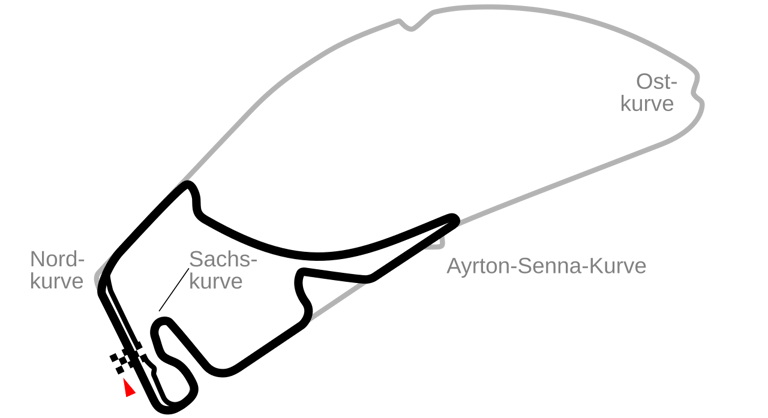
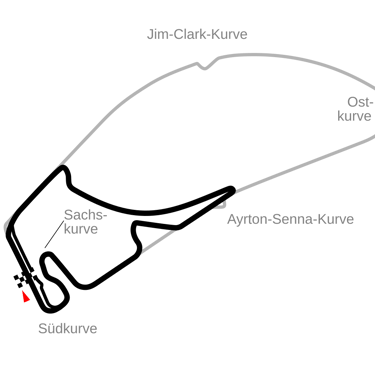
Those chicanes did not remain fixed. The Ostkurve chicane was revised in 1992, and that after the fatal Imola weekend of 1994 the remaining chicanes were tightened for Grand Prix use in another major safety response. The first and third chicanes later became known as the Jim Clark Chicane and the Ayrton Senna Chicane, underlining how Hockenheim’s architecture gradually turned into a memorial map of Formula One’s dangers.
Even with those interventions, the old circuit remained one of the fastest on the calendar. The changes reduced peak velocity, but they did not erase the layout’s underlying DNA: long periods at full throttle, heavy braking zones, and a rhythm built around acceleration, top speed, and survival.
Notable Formula One years at Hockenheim
Because Hockenheim stayed on the Formula One calendar for so long, it accumulated a wide range of important moments. The old circuit hosted the 1970 debut of Formula One at the venue, became the permanent German Grand Prix home after the Nürburgring's decline as an F1 venue, and then carried the race through the turbo era, the V12 years, and the early twenty-first century. That alone makes it a circuit through which several distinct ages of Formula One can be traced.
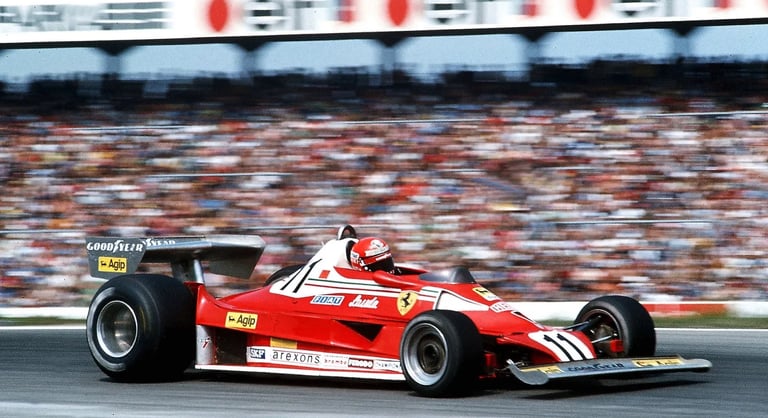
The 1977 race carried an almost symbolic weight. Niki Lauda — the man whose near-fatal crash at the Nürburgring in 1976 had effectively transferred the German Grand Prix to Hockenheim — returned to win the first permanent edition of the race at the circuit. Few victories in that era carried as much personal meaning.
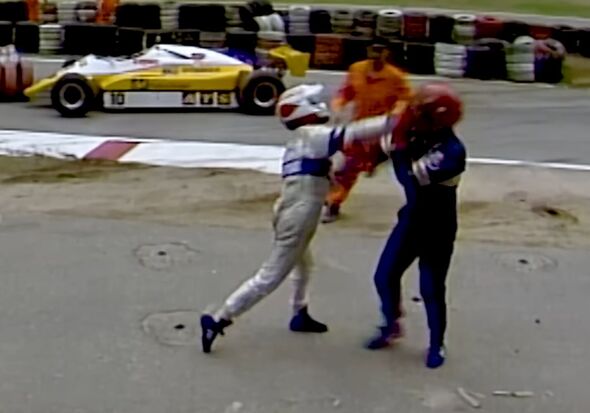
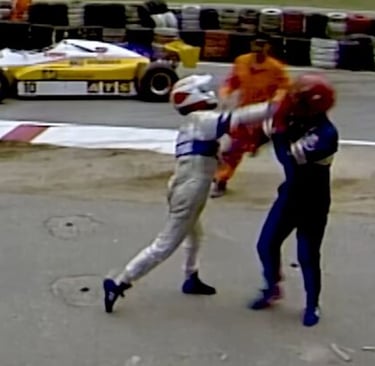
In 1982, a collision between Nelson Piquet's Brabham and Eliseo Salazar's ATS at the Ostkurve chicane ended with Piquet climbing out of his car and physically attacking the Chilean driver in front of television cameras and a packed grandstand. It remains one of the most replayed incidents in Formula One history, and a scene that only Hockenheim, with its sudden violence at the chicanes, seemed capable of producing.
Patrick Tambay's 1983 victory stands among the most emotionally charged wins of the decade. Driving car number 27 — the same number previously carried by the late Gilles Villeneuve — Tambay gave Ferrari a victory that meant far more than the championship points it delivered.
Ayrton Senna won at Hockenheim three consecutive times between 1988 and 1990, a run that underlined McLaren-Honda's dominance and his own mastery of a circuit where raw engine power translated directly into lap time advantage. His 1991 appearance produced a very different kind of memory: a controversial collision with Alain Prost at a chicane that added another sharp chapter to their legendary rivalry.
Gerhard Berger's 1994 win for Ferrari arrived in the shadow of Ayrton Senna's death at Imola just months earlier. Berger had been one of Senna's closest friends in the paddock, and his victory at Hockenheim — powered by Ferrari's engine advantage through the long forest straights — carried an emotional weight that went far beyond motorsport.
The circuit produced one of its most emotional modern endings in 2000, when Rubens Barrichello claimed his first Formula One win after starting 18th in a race shaped by weather, risk, and changing grip. That victory was the swansong of the old Hockenheim atmosphere, even though the pre-2002 layout remained in use for the 2001 Grand Prix as well. Ralf Schumacher won that final Grand Prix on the old full-speed version in 2001, at an average race speed of 235.351 km/h, a reminder of just how extreme the place still was at the end.
The 2002 transformation
By the late 1990s, the future of the old layout was under increasing pressure. The FIA wanted changes if Hockenheim was to retain the Grand Prix, arguing that the 6.8-kilometre circuit was too long and that its remote forest sectors were poor for spectators and event presentation. Public consultation followed, but the final decision was a wholesale redesign rather than a modest alteration.
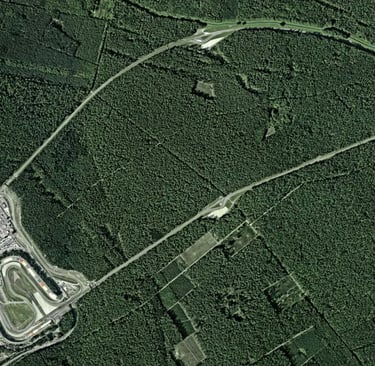
The rebuilt circuit, designed by Hermann Tilke and opened for the 2002 season, removed most of the forest section and replaced it with a shorter, more compact layout linked by the long Parabolika and a new hairpin. The project cost 62 million euros, expanded grandstand capacity significantly, and led to the official name Hockenheimring Baden-Württemberg. The stadium section stayed largely intact, but the defining blast through the woods was gone.
This redesign was the clearest expression of the sport’s modern priorities. Safety, visibility, overtaking opportunities, television presentation, and commercial practicality all outweighed the old circuit’s elemental character. The result was a track many judged better for wheel-to-wheel racing, but also one that many fans saw as less unique than the Hockenheimring that had existed before.
Hockenheim in recent Formula One memory
The modern Hockenheimring remained part of Formula One after 2002, but its place was less secure than before. Financial difficulties linked to the cost of reconstruction and Grand Prix hosting pushed Hockenheim into an alternating arrangement with the Nürburgring from 2007 onward, the venue later faced losses of several million euros per Formula One event. That economic pressure became one of the main reasons the German Grand Prix disappeared from the calendar for extended periods.
Even so, the venue continued to produce notable races and remained recognizable through key elements such as the Motodrom and the Parabolika-to-hairpin braking zone. Hockenheim has therefore occupied two places in Formula One memory at once: as a modern circuit capable of good racing, and as the ghost site of an older, stranger, faster place that still shapes how the name is remembered.
The last Formula One race at Hockenheim, in 2019, ended in the kind of chaos the circuit had always been capable of producing. A rain-soaked afternoon, multiple crashes, and Sebastian Vettel spinning out of the lead on home soil gave Max Verstappen the victory and gave the German crowd one last reminder that Hockenheim never made things simple.
Legacy
Hockenheim’s legacy rests on contradiction. It was born from local ambition, grew into a national motorsport center, became a Formula One institution, and then sacrificed much of its original layout in order to survive in the modern era. It was thrilling and often visually spectacular, yet it was also marked indelibly by the deaths of Jim Clark and Patrick Depailler and by the injuries and near-disasters that exposed the limits of old high-speed circuit design.
That is why Hockenheim matters historically. It shows how Formula One circuits evolved from open-road speed tests into controlled, heavily managed sporting arenas, and it shows the price of that evolution both ways: the price once paid in danger, and the price later paid in lost identity.