Formula 1 1973 German Grand Prix: Nürburgring Masterclass and Jackie Stewart’s Historic Final Triumph
CLASSIC MOTORSPORT
1/24/20263 min read
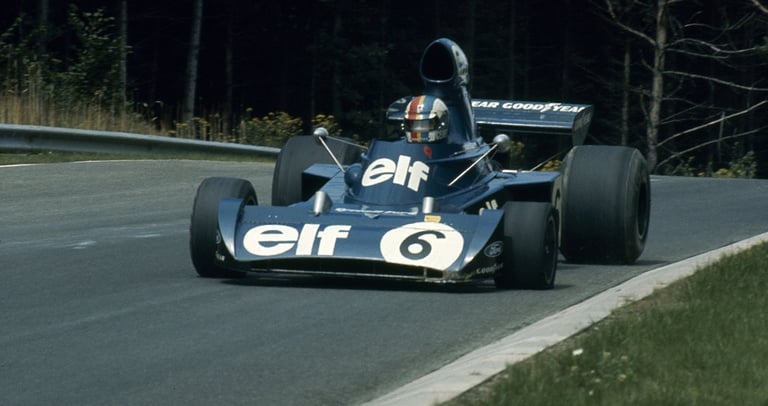
On 5 August 1973, Formula One’s circus arrived at the legendary Nürburgring Nordschleife for the German Grand Prix, the eleventh of fifteen rounds in a season defined by fierce competition and dramatic twists. The Nordschleife, a nearly 23-kilometre circuit of unforgiving corners and blind crests, was already infamous as the toughest challenge on the calendar — and 1973 would add another remarkable chapter to its history.
Entering Germany, the championship battle was dominated by Jackie Stewart in his Tyrrell-Ford. Stewart had been consistently strong throughout the year, accumulating key victories that put him ahead of rivals like Emerson Fittipaldi and team-mate François Cevert. His calm but relentless pace had made Tyrrell a formidable force, and by the time the paddock reached Nürburg, Stewart held a sizeable lead in both the Drivers’ and Constructors’ standings, with Cevert and Fittipaldi closely trailing.
However, the weekend was shadowed by recent tragedy; just one week earlier, the sport had suffered the loss of Roger Williamson at Zandvoort, and the emotional weight of that event carried into Germany. Some teams — including March and Hesketh — withdrew from the Nürburgring event out of respect and logistical challenges, reducing the usual grid and prompting larger entries from McLaren, Brabham and Surtees to bolster the field.
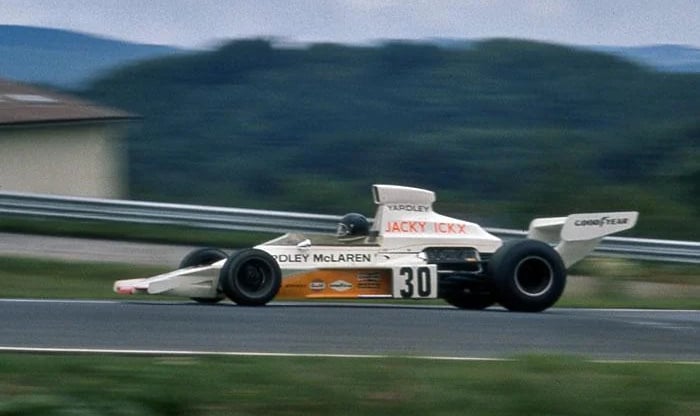
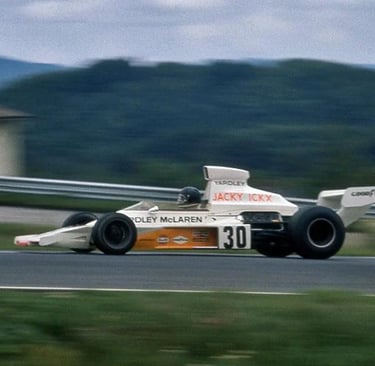
In qualifying, Stewart put in a masterful lap to claim pole position, narrowly edging out the fast-charging Ronnie Peterson in his Lotus. Behind them, Cevert and Jacky Ickx — driving a one-off McLaren with permission from Ferrari — filled out the front ranks.
As race day dawned, the skies were clear and the atmosphere electric. When the flag dropped, Stewart converted his pole into a commanding lead, with Cevert slotting in behind. Peterson briefly threatened the Tyrrell duo on the opening tour, but within moments his engine failed and he was forced out of contention. From that point, Stewart and Cevert began to pull away from the pack on the long, twisting expanses of the Nordschleife.
The early stages of the German GP were marked by intense battles further down the field. Niki Lauda, showcasing promising pace for BRM, crashed at Kesselchen on just the second lap, breaking his wrist and ending his weekend prematurely. Peter Revson flirted with the barriers in his McLaren, while Carlos Reutemann’s Brabham succumbed to engine trouble mid-race.
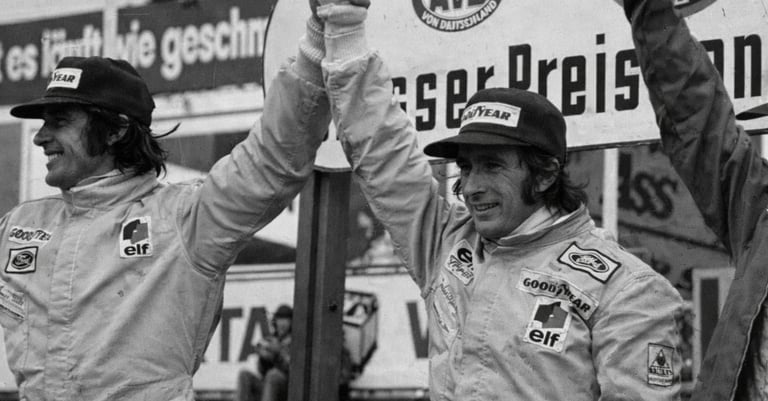
Up front, though, there was no catching Stewart. The Scotsman drove with characteristic precision, extending his advantage lap after lap. Cevert followed solidly in second, delivering a strong demonstration of team dominance for Tyrrell. Behind them, Ickx scored a well-deserved third place for McLaren, exploiting his Nürburgring expertise in a car unfamiliar to him.
Brazil’s Carlos Pace set the fastest lap of the race in his Surtees-Ford, underlining his pace despite running behind the leaders, while the Fittipaldi brothers — Wilson and Emerson — crossed the line just outside the podium positions to secure valuable points for their respective teams.
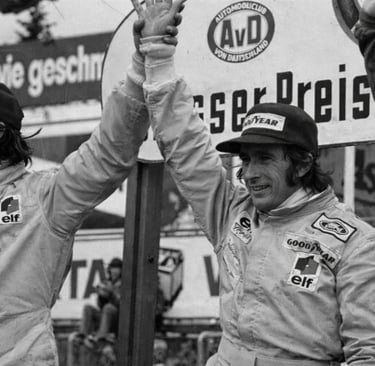
Stewart’s triumph in Germany was momentous: it marked the 27th and final victory of his Formula One career, a tally that stood as the all-time record for wins until the late 1980s. It was also the last time a Scottish driver would stand atop an F1 podium until David Coulthard’s victory in 1995.
When the chequered flag fell, the Tyrrell cars had delivered a commanding one-two finish that boosted both Stewart’s championship aspirations and the team’s morale.