Formula 1’s Forgotten Giant: The Story of Tyrrell Racing
Tyrrell Racing was one of Formula 1’s great independent teams, built by Ken Tyrrell with sharp instincts, bold engineering, and a close partnership with Jackie Stewart. From championship glory in the early 1970s to the radical P34 six-wheeler and the final season in 1998, Tyrrell left a lasting mark on F1 history.
CLASSIC MOTORSPORT
7/14/20269 min read
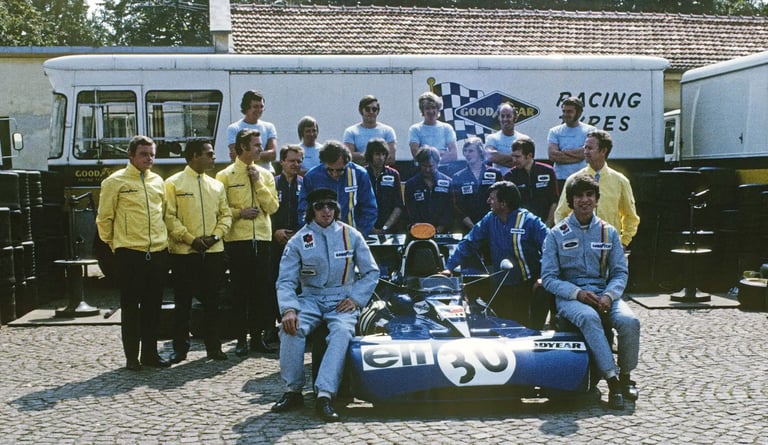
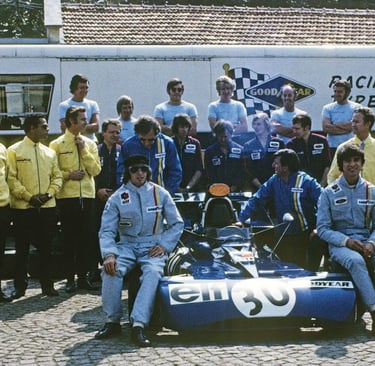
Ken Tyrrell was never the sort of man who needed a grand office, a corporate logo, or a factory campus to matter in Formula 1. He came from the timber business and from the practical world of club racing and lower formulas, and he built his team on a principle that has always had a special place in motorsport: if you cannot outspend the big names, you must outthink them. That idea would define Tyrrell Racing from its first days to the final race in 1998, and it is the reason the team still deserves to be remembered not as a charming underdog, but as one of the most important independent outfits in Formula 1 history.
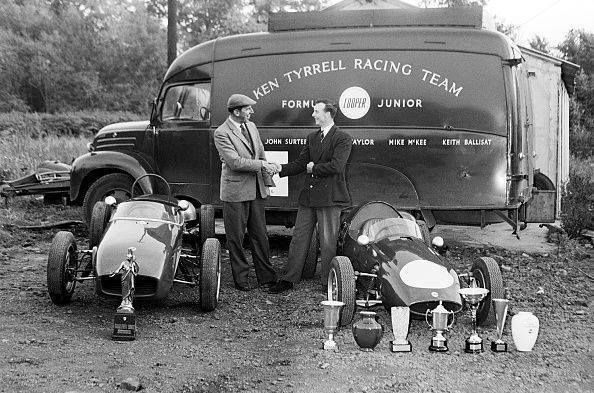
Tyrrell’s rise was not an accident, nor was it the work of a single golden season. It was the result of a man who understood people, cars, and racing logic better than most. Long before the Tyrrell name appeared on a Formula 1 entry list, Ken Tyrrell had already been making his mark in the junior categories, where he developed a reputation for organization, discipline, and a sharp eye for talent. He was not interested in presenting himself as a visionary. He was a racer’s team boss, and in the paddock that often mattered more than polished speeches or clever marketing.
That early discipline was important because Formula 1 in the 1960s was still a place where a determined privateer could matter. Tyrrell first worked as an entrant before becoming a constructor in his own right, and those steps were essential in shaping the team’s character. He was not trying to copy Ferrari or Lotus. He was building something smaller, leaner, and more direct. That meant careful recruitment, technical trust, and above all the right driver. In Jackie Stewart, Tyrrell found the perfect partner.
The Jackie Stewart Partnership
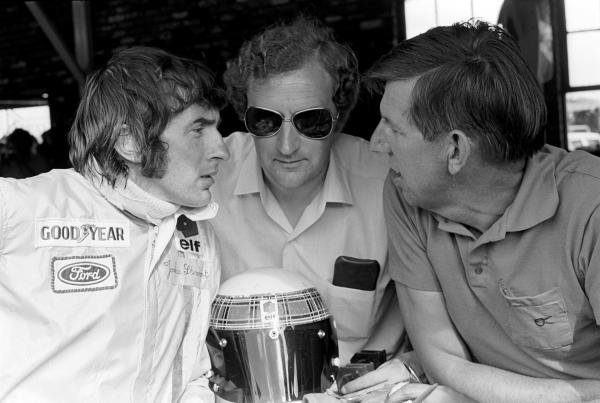
The Tyrrell-Stewart relationship became one of the great foundations of the team’s identity. Stewart was fast, yes, but speed alone was never what made him essential. He had the technical intelligence to communicate with engineers, the discipline to develop a car, and the racecraft to turn a good chassis into a winning one. Tyrrell recognized that immediately. The two men trusted each other in a way that is rare in motorsport, and that trust would carry them from the team’s formative years to the summit of Formula 1.
The first Tyrrell Formula 1 cars came from a period of transition. The team initially competed with customer machinery from Matra in 1968/69 and March in 1970, before the first true Tyrrell chassis arrived. The Tyrrell 001, built in secrecy while the team was still using March cars, marked the beginning of the constructor era. When Stewart put the 001 on pole at the 1970 Canadian Grand Prix, it was a clear signal that Tyrrell had moved from being merely competitive to being genuinely dangerous. The car showed that the team had the technical base to stand on its own feet.
The Championship Years
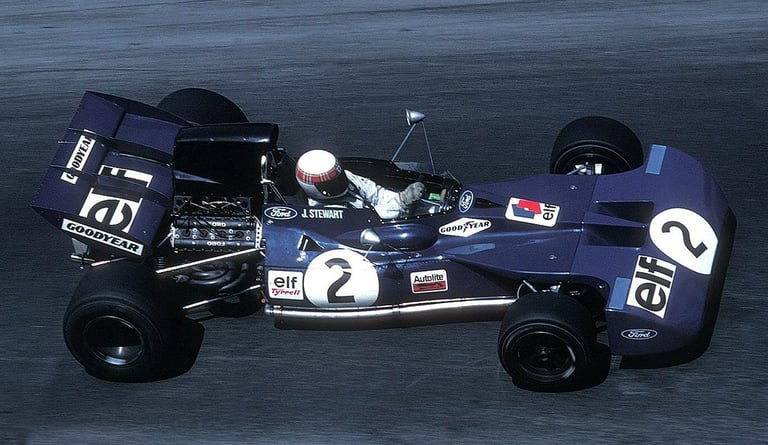
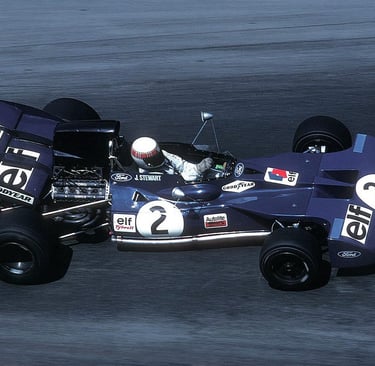
The real breakthrough came in 1971 with the Tyrrell 003, an evolution of the 001. Built around the Ford Cosworth DFV, the car was not dramatic in appearance, but it was beautifully judged for the era. The DFV was the engine that powered so much of the grid, but Tyrrell understood that success with a proven engine was never simply about horsepower. It was about packaging, balance, and the way the chassis worked with the driver. Stewart won repeatedly, and Tyrrell captured the Constructors’ Championship. For an independent team, it was a stunning achievement. It proved that in the right hands, a small operation could beat the established giants without pretending to be something it was not.
The 1971 title was a statement about how Formula 1 could still work. Tyrrell was a team built on sharp management, an excellent driver, and an engineering staff that knew how to maximize limited resources. In a sport increasingly defined by budgets and technical arms races, Tyrrell had shown that racing intelligence could still beat raw scale.
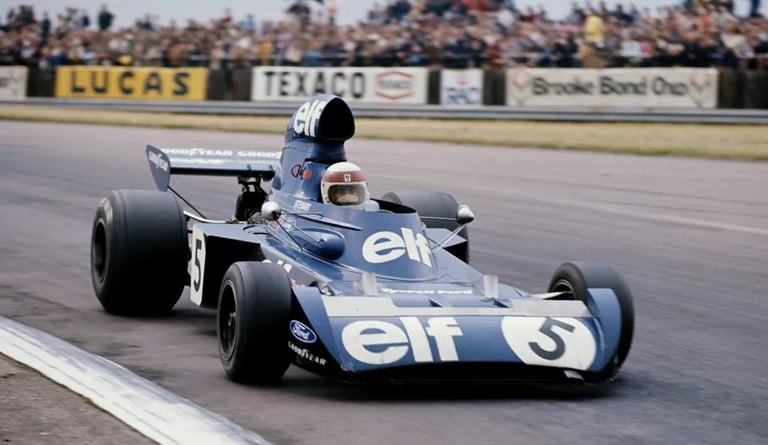
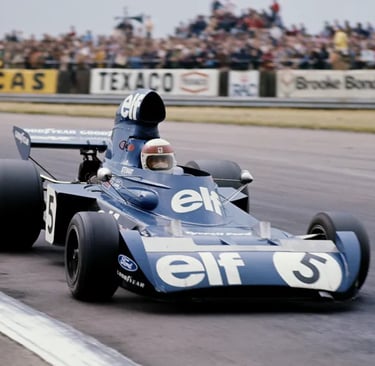
The team confirmed that championship was no fluke in 1973, when Stewart won the Drivers’ title again. That season reinforced Tyrrell’s place at the top of the sport, but it also brought a tragedy that would alter the emotional shape of the team forever. François Cevert, Stewart’s teammate and widely regarded as the future of the team, was killed at Watkins Glen. Cevert had the talent to become a star in his own right, and his loss was felt deeply inside Tyrrell. It was one of those moments when a racing team loses not just a driver, but part of its future.
Stewart’s retirement at the end of 1973 closed the first great chapter in Tyrrell’s life. With Stewart gone and Cevert lost, the team had to redefine itself. This is where many histories of Tyrrell become fragmented, but the real story is more interesting than a simple fall from grace. Tyrrell did not vanish. It adapted. It remained active, competitive in patches, and always inventive.
The P34 Six-Wheeler
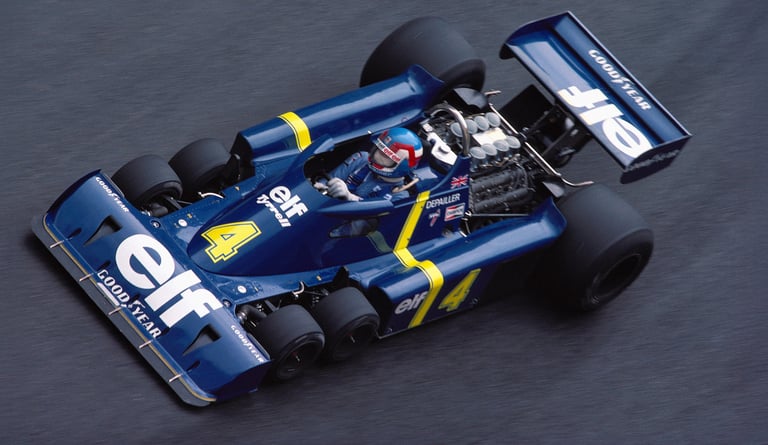
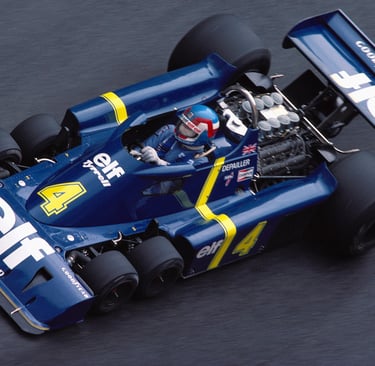
Derek Gardner, the team’s designer, was central to that next stage. Gardner understood the boundaries of Tyrrell’s resources, but he also understood that those boundaries could be pushed through originality. His most famous creation was the Tyrrell P34, introduced in 1976. The six-wheeler remains one of the most famous cars in Formula 1 history, and it still looks astonishing decades later: four small front wheels and two rear wheels, a radical attempt to reduce drag and improve front-end grip.
The P34 was not a trick. It was a real engineering solution to a real problem. Tyrrell believed there was performance to be found in an unconventional layout, and for a while they were right. The car was competitive enough to matter, and it produced one of the most unforgettable wins in the sport’s history at the 1976 Swedish Grand Prix, where Jody Scheckter and Patrick Depailler finished first and second. That result gave the P34 its place in the record books as the only six-wheeled winner in Formula 1.
And yet the P34 also revealed the harsh truth about innovation in a sport without equal resources. The car depended on special small front tires, and those tires did not receive the development support needed to keep the concept alive at the highest level. As the years passed, the advantage faded. The P34 became a symbol of Tyrrell’s best quality — ingenuity — and one of its great limitations: the difficulty of sustaining a highly specialized idea in a championship where rivals could simply outdevelop you.
Tyrrell Beyond the Six Wheeler
The mid-1970s and early 1980s produced a Tyrrell identity that was less glamorous but still deeply meaningful. Jody Scheckter, Patrick Depailler, and later drivers such as Michele Alboreto kept the team relevant, not always through victories, but through performances that reminded the paddock Tyrrell could still fight. These were not seasons of comfortable superiority. They were years of perseverance. Tyrrell remained one of the sport’s most respected independent operations because it stayed honest about what it was and what it could still do.
That honesty is one reason the team retained such a strong identity while others faded. Tyrrell did not have the political weight of Ferrari or the commercial scale of the future manufacturer teams, but it had something harder to build and easier to lose: a garage culture. The people around Ken Tyrrell understood the rhythms of racing, the value of detail, and the need to keep moving even when the odds were not in their favor. That made the team resilient, even when the results became more intermittent.
The Changing Formula 1 Landscape
As Formula 1 changed through the turbo era, the environment became increasingly hostile to teams like Tyrrell. Costs rose, development cycles shortened, and the scale of operation required to remain competitive grew larger every season. What had once been a sport where technical creativity could regularly upset the order became one where deep pockets and manufacturer backing increasingly dictated the front of the grid. Tyrrell could still produce smart cars and recruit talented drivers, but the game had changed around it.
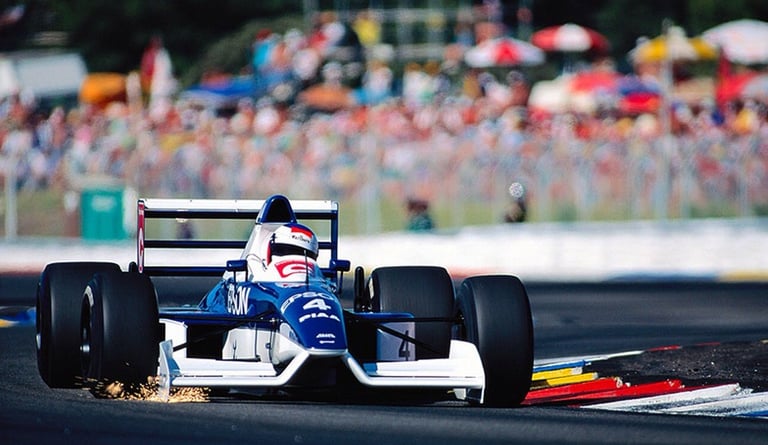
Even so, the team was capable of technical relevance in moments that mattered. The Tyrrell 019, introduced in the early 1990s, became notable for its raised nose design. It was not a title-winning machine, but it pointed toward a direction the entire sport would eventually follow. This was classic Tyrrell: not always the fastest team, but often one of the most interesting. The 019 proved that even in decline, the team could still contribute to Formula 1’s technical evolution.
Jean Alesi became one of the most important Tyrrell drivers of that later era. His speed was obvious, and Tyrrell gave him a platform at a time when his talent needed a real stage. That was another defining feature of the team across its entire history: it could identify drivers with genuine ability and give them an environment where they could show it. From Stewart to Cevert, from Scheckter to Alboreto, from Alesi to others, Tyrrell consistently connected itself to drivers whose talent was undeniable.
The Last Days in 1998
But by the 1990s the gap between Tyrrell and the top teams had become too wide to ignore. Formula 1 had become a business of scale, with factory resources, major sponsorships, and increasingly industrial levels of development. Independent teams could still exist, but they were fighting against a model that no longer rewarded them in the same way. Tyrrell remained respected, but respect alone does not keep a team alive.
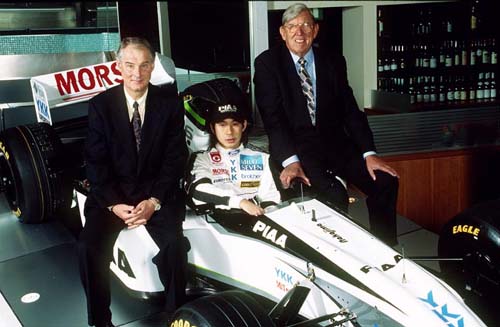
Ken Tyrrell understood this as clearly as anyone. In 1997, after the financial pressure became unsustainable, he sold the team to British American Tobacco. The deal marked the beginning of the end. The Tyrrell name remained on the grid in 1998, but the old spirit was already fading. The final Tyrrell car, the 026, carried the badge in the team’s last season, and by the end of that year the operation was transformed into British American Racing for 1999.
The disappearance of Tyrrell from Formula 1 was more than the end of a name. It was the closing of a kind of racing story that had become increasingly rare. Tyrrell had entered the sport as a determined independent and climbed all the way to championships, iconic cars, and a lasting reputation for technical courage. It had proven that a small team could matter at the highest level. And when it finally fell away, it did so only after surviving far longer than most people would have expected.
Ken Tyrrell’s Legacy
Ken Tyrrell died in 2001, but his legacy remains deeply embedded in Formula 1’s history. He was not a corporate architect or a media celebrity. He was a racing man. He knew how to build a team, how to choose a driver, and how to trust the right people around him. That may sound simple, but in Formula 1 it is never simple. It is the difference between a team that merely exists and a team that leaves a mark.
That is why Tyrrell History was so important to the sport. Not just because of Jackie Stewart’s titles. Not just because of the six-wheeled P34. Not just because of the raised-nose 019 or the names of the drivers who passed through the garage. It is because Tyrrell represented a version of Formula 1 that was defined by personality, by practical intelligence, and by the belief that a smaller team could still write important chapters in the sport’s history.