From Outsiders to Winners: The Weekend Hesketh Defied Formula 1’s Order
CLASSIC MOTORSPORT
1/26/20263 min read
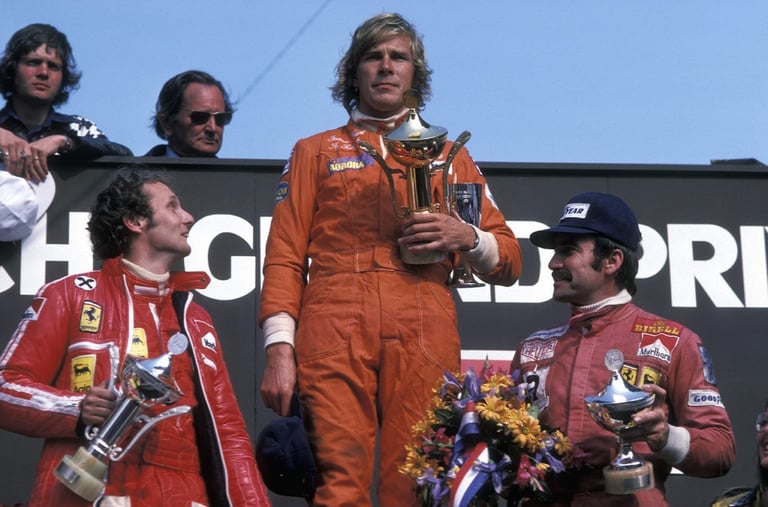
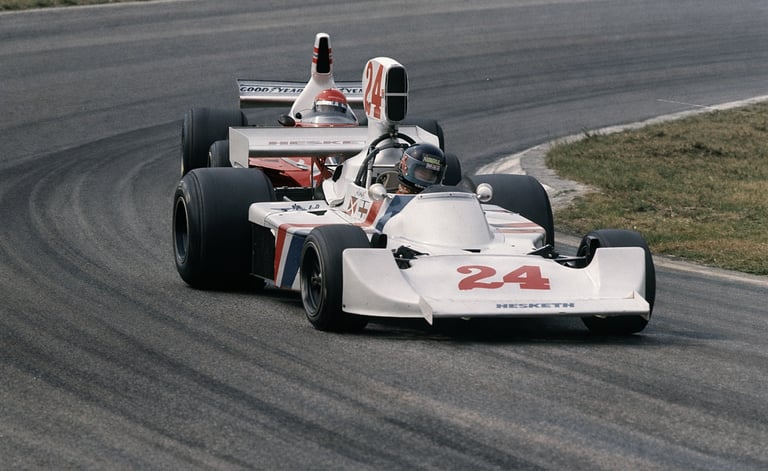
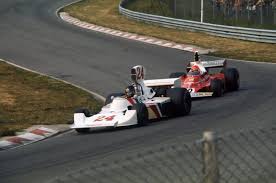
On 22 June 1975, Formula 1 recorded one of its most improbable victories. At Zandvoort, in weather that shifted from steady rain to a drying, wind-swept track, James Hunt secured his first Grand Prix win and delivered the only World Championship victory in the history of Hesketh Racing. It was a result that stood in direct contrast to the competitive landscape of the season, dominated by Ferrari and the metronomic consistency of Niki Lauda.
The foundations of the result were laid long before the start. From the opening practice sessions, Ferrari established itself as the reference. Lauda immediately looked comfortable in the 312T, while Clay Regazzoni maintained a constant presence near the top of the timesheets. Yet within the smaller Hesketh operation, there was quiet encouragement. The 308B, shaped by Harvey Postlethwaite, proved well suited to Zandvoort’s fast, flowing layout. Hunt repeatedly reported strong front-end response and balance through the exposed high-speed sections, allowing the team to refine the setup rather than chase fundamental solutions.
Qualifying confirmed the impression. Lauda secured pole position, Regazzoni completed Ferrari’s front-row lockout, but Hunt’s lap to claim third on the grid was widely noted across the paddock. Hesketh, operating without the technical depth or resources of the leading manufacturers, had nevertheless placed itself in direct contention through methodical preparation and an increasingly confident driver.
Race day introduced a final layer of uncertainty. Rain before the start left the circuit damp and tyre choice ambiguous. Ferrari and much of the field favoured a conventional wet-race approach. Hesketh, observing the strengthening wind and the improving visibility, anticipated a quicker transition. Hunt held station in the early laps, maintaining tyre life while a dry line began to appear.
The defining decision came early. Hesketh called Hunt in for slick tyres well before most of the leading runners. The stop dropped him out of contention temporarily, but within a few laps the pace advantage was evident. As grip increased, Hunt began to recover positions on a circuit where overtaking was traditionally difficult. By lap 15, he had assumed the lead.
The middle phase of the race clarified the challenge. Jean-Pierre Jarier, briefly part of the lead group, suffered a dramatic tyre failure that removed one competitor. Ferrari adjusted its strategy, and once Lauda changed to slicks, he began to reduce the gap in measured fashion. The contest developed into a prolonged exercise in control rather than outright speed.
For over twenty laps, Lauda maintained close proximity. The Ferrari gained through Zandvoort’s tighter sections; the Hesketh responded in the faster curves, where the 308B remained stable and predictable. Hunt’s task became one of discipline — managing pace, positioning the car precisely, and avoiding the errors that had previously undermined his strongest races.
As the finish approached, confusion over the lap count in the grandstands underlined the tension of the closing phase. Lauda remained within striking distance, but opportunities were limited. Hunt maintained his rhythm and crossed the line just over a second ahead, sealing a victory few had considered realistic at the start of the weekend.
The implications were immediate and enduring. It marked James Hunt’s first Grand Prix success, a performance that established him as a complete Grand Prix driver rather than simply an aggressive qualifier or crowd attraction. For Hesketh, it represented the peak of its Formula 1 campaign — its only World Championship victory, achieved through car balance, strategic clarity, and precise execution.
Hunt later reflected that Zandvoort altered his professional outlook. Leading under pressure, defending against the season’s dominant driver, and converting opportunity into result removed a lingering psychological barrier. The confidence gained would play a significant role in the following season’s championship campaign.
Zandvoort 1975 remains significant because it was not defined by disorder, but by construction. Across practice, qualifying and race, a small private team identified a competitive window, refined its package, interpreted the conditions correctly, and committed decisively. On a weekend shaped by wind, weather and judgement, Hesketh and Hunt assembled one of Formula 1’s most enduring underdog victories.
Watch the electrifying final laps of the Dutch Grand Prix below.