He Spun on Lap 6. He Won on Lap 78. Ronnie Peterson's 1974 Monaco Grand Prix Is Pure Legend
CLASSIC MOTORSPORT
3/9/20269 min read
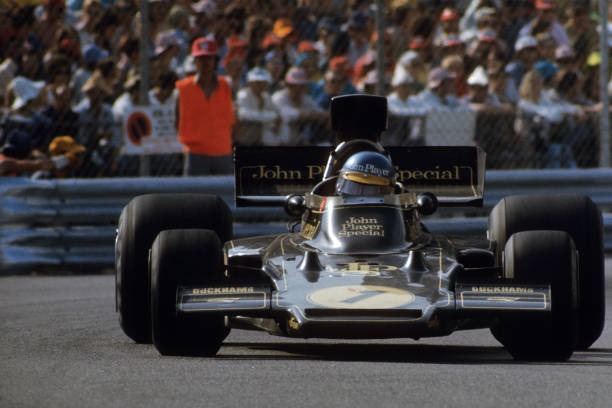
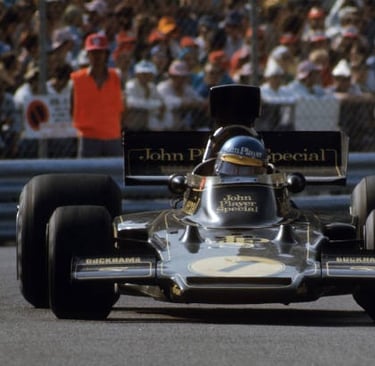
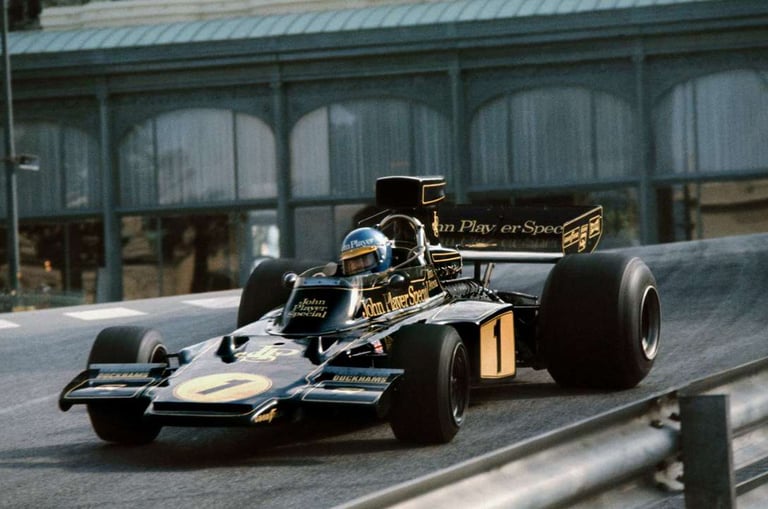
The 32nd Monaco Grand Prix, held on May 26, 1974, stands as one of the most dramatic and chaotic races in Formula 1 history — a day of spectacular crashes, spinning world-class drivers, engine heartbreak, and an extraordinary comeback that turned a seemingly lost race into an unforgettable victory for Ronnie Peterson and Team Lotus.
Setting the Scene: Ferrari Dominates Qualifying
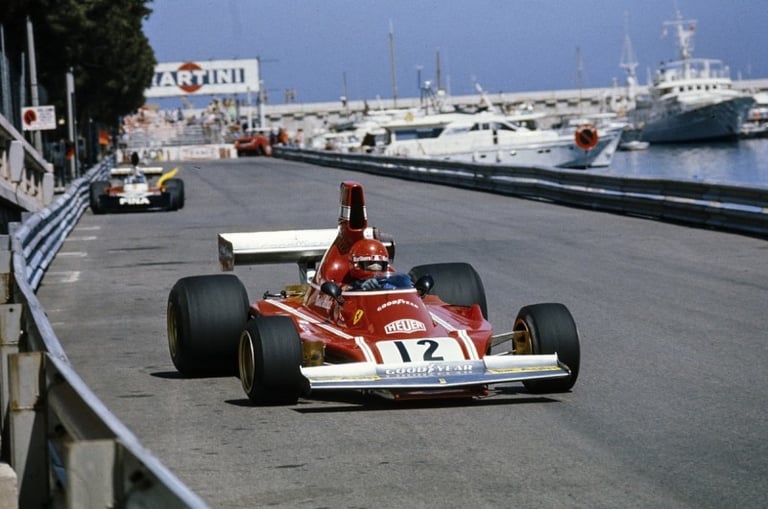
Going into Monaco, the 1974 Formula 1 season was shaping up to be a Ferrari year. Niki Lauda and Clay Regazzoni had been fast all season long, and the streets of Monte Carlo only amplified their advantage. The new concrete kerbing installed since 1973 at Casino Square and Mirabeau hairpin made the tight circuit even more demanding, punishing the slightest error in suspension setup.
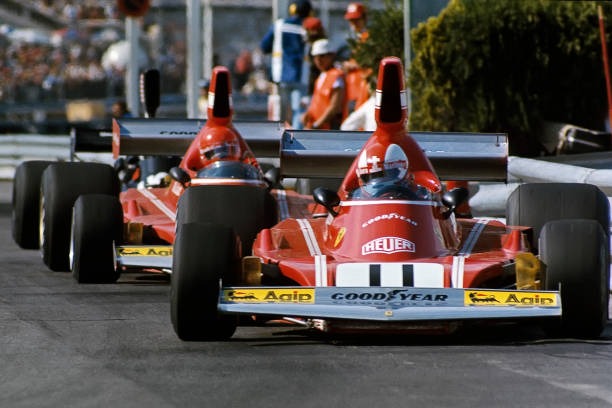
Lauda set the benchmark with a stunning 1 min 26.3 sec in practice — well below the existing lap record of 1:28.1 set by Fittipaldi in 1973. Peterson, driving the aging but agile Lotus 72 (rather than the troublesome new Lotus 76), was the only Cosworth-powered driver to match that pace, recording a 1:26.8. Regazzoni then pulled out his best on Saturday afternoon with a 1:26.6, claiming second on the grid ahead of Peterson.
The front two rows, then, were all red and black: Lauda on pole, Regazzoni alongside him, and Peterson sharing the second row with Patrick Depailler (Tyrrell). Jody Scheckter and Jean-Pierre Jarier in the surprising Shadow DN3 filled row three, followed by James Hunt (Hesketh) and Carlos Reutemann (Brabham). The top ten was completed by Hans-Joachim Stuck (March) and Mike Hailwood in the Yardley McLaren.
A bitter blow struck Depailler before the race even began: his Tyrrell's engine misfired on the warm-up laps, forcing a last-minute engine change. He was sent to the back of the grid in the unpracticed spare car, effectively handing the Ferraris a clean run into the first corner.
Lap One Carnage: Half the Field Gone Before the First Corner Is Cold
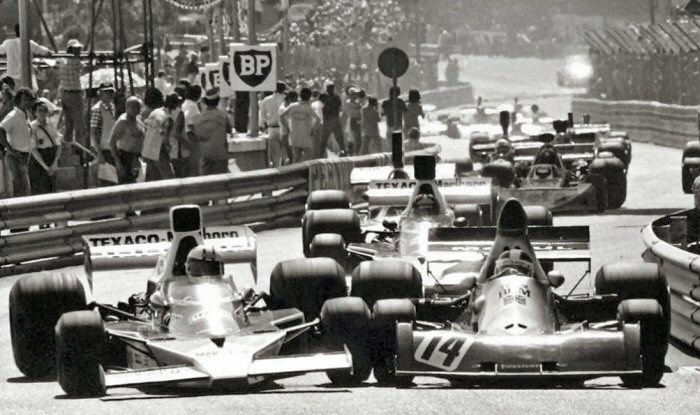
When the flag dropped, Regazzoni bolted from the line and led up the hill, with Lauda tucked in behind. The opening lap seemed routine at the front — but in the midfield, it was carnage.
Denny Hulme somehow lost his position in the train of cars heading up toward Casino. Nobody was willing to let the McLaren back in, and the inevitable contact came: Hulme tangled wheels with Jean-Pierre Beltoise's BRM, and the McLaren was stuffed hard into the guardrail. Beltoise continued briefly with broken rear suspension.
The collision triggered a chain reaction of destruction. Vittorio Brambilla (March) ran under the back of Arturo Merzario's Iso Marlboro, which in turn rammed Brian Redman's Shadow and launched it into Carlos Pace's Surtees. Tim Schenken managed to stop — and was immediately rearranged by Vern Schuppan in the Ensign. Jacky Ickx skated through the wreckage, knocking off his front wing.
Before the first lap was complete, Hulme, Pace, Merzario, Redman, Brambilla, Schenken, Schuppan, and Beltoise were either out or limping. Seven cars retired on lap one alone. From 25 starters, the race was already down to a shadow of itself.
The Early Leaders: Ferrari's Perfect Afternoon — For Now
With the midfield demolished, the race settled into a fascinating battle at the front. Regazzoni led Lauda, but the Austrian was clearly frustrated behind his team-mate. On lap 3, Ronnie Peterson made his first bold move: he outfoxed Jarier for third place, and was now breathing down Lauda's exhaust pipes, the three cars separated by barely a second.
But before the leading quartet could truly establish themselves, lap 4 brought more chaos behind them. Hans-Joachim Stuck's March ran into the back of James Hunt's Hesketh at Casino Square. The March was launched into the air, bounced off the barriers, and careered along the pavement heading toward Mirabeau, with Stuck suffering a broken thumb in the impact. Hunt continued, damaged but alive.
Meanwhile, François Migault had a complete brake failure approaching the chicane and went head-on into the catch-fencing, the front of his BRM P160 destroyed in a frightening accident at racing speed.
Lap 6: Peterson's Spin — The Fall That Makes the Comeback
With order tentatively restored at the front, lap 6 brought the decisive moment of the race — or what seemed to be a decisive setback. As the leaders entered the final hairpin at Rascasse, Peterson clipped a barrier with a rear wheel and spun, the Lotus going backwards across the track.
Before he could recover, Carlos Reutemann arrived and drove straight over the front of the Lotus 72, breaking the Brabham's rear suspension and putting him out of the race on the spot. Miraculously, the Lotus survived the impact. Peterson gathered himself, pointed the battered car the right way, and rejoined the race — but now in sixth place, having been passed by Jarier, Scheckter, and Hailwood while the car was sideways.
This is the moment that defines the 1974 Monaco Grand Prix: from that position, with a damaged car, on a street circuit where overtaking is nearly impossible, Peterson began one of the most celebrated recoveries in Formula 1 history.
More Victims: Schuppan, Hailwood, and the Oil Trap
As Peterson began his charge, the race continued to devour competitors. Tim Schenken's damaged Trojan had been leaking oil around the Casino Square area, and the marshals spread cement dust over it — creating a treacherous white patch on the road surface.
On lap 4, Vern Schuppan lost the Ensign on that very cement dust at the Casino Square entry and slid into the guardrail. And shortly after, Mike Hailwood — running a strong fourth — arrived at the same spot, hit the oil, and spun his McLaren M23 into the barrier on lap 12. His race was over, and his bent car was pushed into the same gap in the barrier that had already swallowed the Ensign.
With Hailwood gone, Peterson had already gained two positions through the chaos. He was now fourth, with Scheckter directly ahead of him.
Peterson Hunts Down the Field — One by One
Driving with fierce precision, Peterson set about rebuilding his race. By lap 19, he had caught and passed Scheckter for third place, just as the leading trio was lapping Pescarolo's BRM.
The two Ferraris nipped past without issue, but Jarier got baulked by Pescarolo at Saint Devote, losing significant ground. Peterson, on full throttle, stormed through the corner and gained a huge amount of ground on the Shadow as he accelerated up the hill toward Casino.
Then, on lap 21, came Regazzoni's devastating mistake. Having led comfortably since lap one, the Swiss-Italian Ferrari driver simply overcooked his entry into Rascasse — the same corner that had claimed Peterson on lap 6 — and spun off the lead. Lauda, Jarier, Peterson, and Scheckter all swept past the stranded Ferrari. Regazzoni rejoined in fifth, his race lead gone, his chance of victory thrown away by a single moment of inattention.
Lauda in Control — But Not for Long
With Regazzoni eliminated from contention, Lauda now had a clear track and immediately pulled away from Jarier. But Peterson, freshly past Scheckter and now second overall, was not done.
On lap 25, the Swede swept past Jarier and set his sights on the Ferrari. The gap closed with every passing lap — from five seconds, to four, to three. By lap 28, there were barely three seconds separating the Ferrari and the Lotus. Lauda could hear Peterson coming, and he looked anything but comfortable in the cockpit.
Then Jarier suffered his own peculiar undoing: while twirling his steering wheel through a tight corner, he accidentally switched off his own ignition, momentarily killing the engine. It was just enough for Scheckter to catch and pass him, and once the Tyrrell was by, Jarier had no chance of getting the position back.
Lap 32: Lauda's Engine Dies — Peterson Inherits the Lead
The race's decisive moment arrived on lap 32. Those following closely noticed that the crispness had gone from Lauda's Ferrari exhaust note. The engine was misfiring, then cutting in and out. On the next lap, Peterson pulled alongside the slowing Ferrari and swept past on the Mickey Mouse section along the harbour front — and Lauda rolled to a stop at the kerb, his ignition system having failed completely.
Hunt had also quietly retired with a broken drive-shaft on lap 28, further thinning the field. Peterson now had a lead of over 30 seconds, the race firmly in his hands.
To the Chequered Flag: A Victory Earned the Hard Way
From lap 33 to lap 78, Peterson drove a masterclass in smooth, controlled racing. There was no pressure from behind — Scheckter held a firm second in the Tyrrell, Jarier a lonely third, and a humbled Regazzoni fourth. Emerson Fittipaldi, fighting off flu, circulated a distant fifth and was lapped by Peterson on lap 59, which seemed to wake the Brazilian up for the final stint.
At the back, Patrick Depailler was earning quiet respect — starting from the back of the grid in a car he had never practiced in, he was eighth at the finish, stopping once for a loose wheel nut.
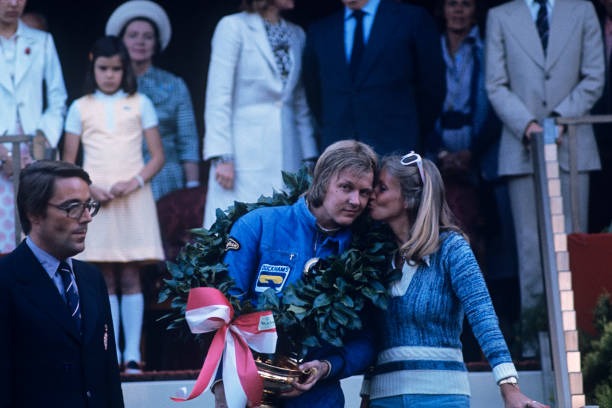
When Peterson crossed the finish line and received the chequered flag, the joy from the Lotus garage was unmistakable. Team Lotus had been starved of victories, and this one — won the hard way, through disaster, determination, and pure speed — was among the sweetest. Peterson also set the fastest lap of the race at 1:27.9, further underlining his complete dominance once he had inherited the lead.
You've just read the story. Now see it happen. Every spin, every crash, every desperate overtake and every heartbreaking retirement — all of it captured on film on that extraordinary afternoon in Monte Carlo. The highlights of the 1974 Monaco Grand Prix are right below. Press play, and watch the legend in motion.
1974 MONACO GRAND PRIX — FULL RACE RESULTS
May 26, 1974 | Circuit de Monaco | 78 Laps | 3.337 km
CLASSIFIED FINISHERS
Ronnie Peterson — Lotus-Cosworth 72E — 78 laps — 1h 58m 03.700s — Started: 3rd
Jody Scheckter — Tyrrell-Cosworth 007 — 78 laps — 1h 58m 32.500s — Started: 5th
Jean-Pierre Jarier — Shadow-Cosworth DN3 — 78 laps — 1h 58m 52.600s — Started: 6th
Clay Regazzoni — Ferrari 312B3 — 78 laps — 1h 59m 06.800s — Started: 2nd
Emerson Fittipaldi — McLaren-Cosworth M23 — 77 laps — +1 Lap — Started: 13th
John Watson — Brabham-Cosworth BT42 — 77 laps — +1 Lap — Started: 23rd
Graham Hill — Lola-Cosworth T370 — 76 laps — +2 Laps — Started: 21st
Guy Edwards — Lola-Cosworth T370 — 76 laps — +2 Laps — Started: 26th
Patrick Depailler — Tyrrell-Cosworth 006 — 75 laps — +3 Laps — Started: 4th
RETIREMENTS
Henri Pescarolo — BRM P160E — Lap 62 — Gearbox — Started: 27th
Jacky Ickx — Lotus-Cosworth 72E — Lap 34 — Engine — Started: 19th
Niki Lauda — Ferrari 312B3 — Lap 32 — Ignition — Started: 1st
James Hunt — Hesketh-Cosworth 308 — Lap 28 — Drive Shaft — Started: 7th
Mike Hailwood — McLaren-Cosworth M23 — Lap 11 — Accident — Started: 10th
Carlos Reutemann — Brabham-Cosworth BT44 — Lap 5 — Accident — Started: 8th
François Migault — BRM P160E — Lap 5 — Brakes/Accident — Started: 22nd
Vern Schuppan — Ensign-Cosworth N174 — Lap 4 — Accident — Started: 25th
Hans-Joachim Stuck — March-Cosworth 741 — Lap 3 — Accident — Started: 9th
Vittorio Brambilla — March-Cosworth 741 — Lap 1 — Accident — Started: 15th
Jean-Pierre Beltoise — BRM P201 — Lap 1 — Accident — Started: 11th
Tim Schenken — Trojan-Cosworth T103 — Lap 0 — Accident — Started: 24th
Carlos Pace — Surtees-Cosworth TS16 — Lap 0 — Accident — Started: 18th
Brian Redman — Shadow-Cosworth DN3 — Lap 0 — Accident — Started: 16th
Arturo Merzario — Iso Marlboro-Cosworth FW — Lap 0 — Accident — Started: 14th
Denny Hulme — McLaren-Cosworth M23 — Lap 0 — Accident — Started: 12th
DID NOT START
Jochen Mass — Surtees-Cosworth TS16 — Shortage of Parts — Started: 17th
Chris Amon — Amon-Cosworth AF101 — Mechanical — Started: 20th
DID NOT QUALIFY
Rikky von Opel — Brabham-Cosworth BT44
Pole Position: Niki Lauda — 1:26.300
Fastest Lap: Ronnie Peterson — 1:27.900 (134.252 km/h)
Classified Finishers: 9 of 25 starters
Retirements by Accident: 10
The 1974 Monaco Grand Prix is a perfect storm of everything that makes Formula 1 great. It had dominant machinery humbled by human error (Regazzoni's spin, Lauda's ignition), mechanical heartbreak at the worst possible moment, a biblical first-lap accident that nearly halved the field, and a driver — Ronnie Peterson — who refused to accept that his race was lost.
For Peterson, it was a reminder of his genius. For Lauda, it was a painful lesson in Monaco's cruelty — a lesson he would apply in the years ahead on his way to two world championships. And for all who witnessed it, the 32nd Grand Prix Automobile de Monaco remains a timeless example of why no race is over until the chequered flag falls.