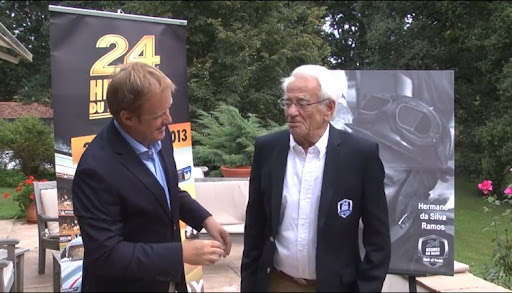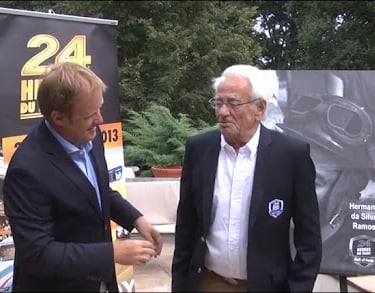
Hermano "Nano" da Silva Ramos: The Franco-Brazilian Pioneer Who Raced Into History and Lived to 100
On May 4, 2026, Formula 1 lost its oldest living driver. Hermano "Nano" da Silva Ramos was 100 years old and the last human connection to F1's founding decade.
CLASSIC MOTORSPORT
5/6/20265 min read
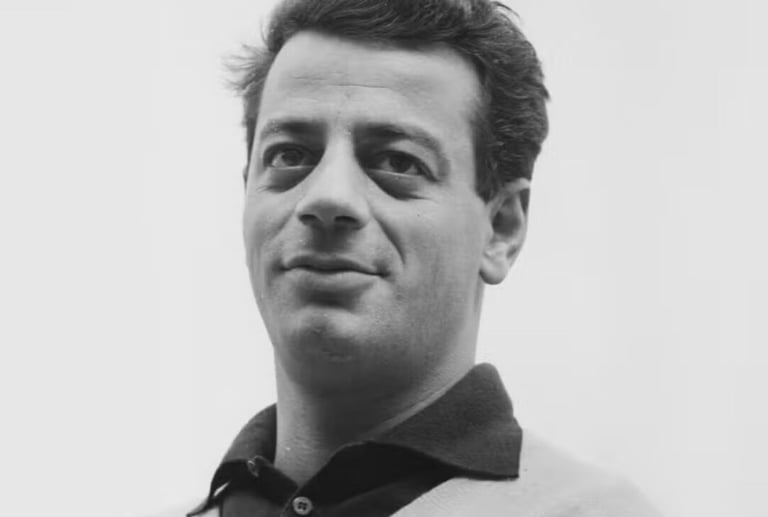
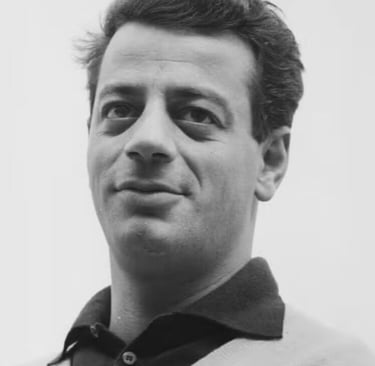
Hermano da Silva Ramos — affectionately known as "Nano" — was one of the most fascinating figures in the early history of Formula 1. A Franco-Brazilian racing driver with the soul of a gentleman and the courage of a pioneer, Nano lived a life that spanned an entire century, carrying with him memories of an era when racing was raw, dangerous, and utterly romantic. He passed away on May 4, 2026, at the age of 100, in Biarritz, France, following complications from pneumonia. His death marks the end of a living connection to the very first decade of Grand Prix racing.
Early Life and Background
Born on December 7, 1925, in Paris, France, Hermano da Silva Ramos was the son of a Brazilian father and a French mother. This bilingual, bicultural upbringing gave him a unique identity in the world of motorsport — he was simultaneously a proud Brazilian and a deeply French racing personality, equally at home on the boulevards of Paris and the circuits of Europe.
Growing up in post-war France, Nano developed a passion for automobiles at a young age. The French motorsport scene of the late 1940s and early 1950s was thriving, and the young Silva Ramos was drawn to the thrill of competition. He began racing in French national competitions before gradually working his way up to the highest level of the sport. His talent was undeniable, and by the mid-1950s, he had earned a seat in Formula 1.
A Career in Formula 1
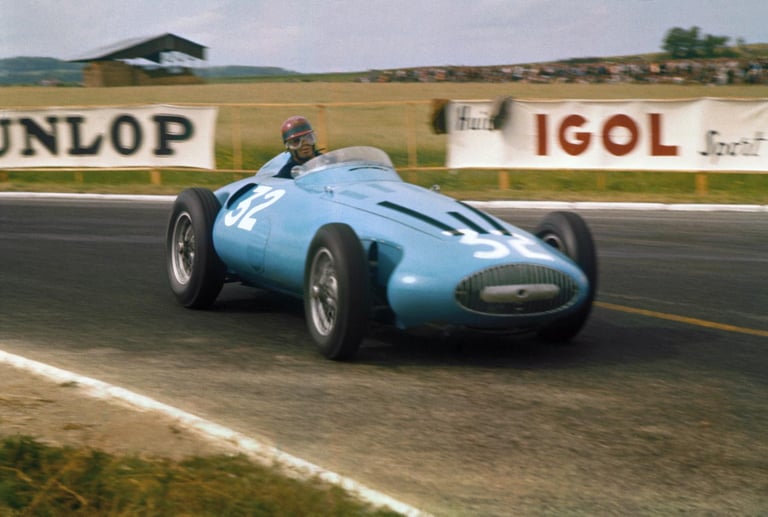
Nano da Silva Ramos made his Formula 1 World Championship debut at the 1955 Dutch Grand Prix, where he finished 8th place — a solid result that confirmed his potential. He competed for the Équipe Gordini, the beloved French constructor founded by Amédée Gordini.
He went on to take part in seven Formula 1 World Championship Grands Prix between 1955 and 1956, competing on legendary circuits that defined the golden age of Grand Prix racing. He lined up against some of the greatest names the sport has ever produced: Juan Manuel Fangio, Stirling Moss, Peter Collins, and Mike Hawthorn.
His career highlight came at the 1956 Monaco Grand Prix, one of the most prestigious races on the calendar. On the narrow, unforgiving streets of the Principality, Nano delivered a masterful performance to finish 5th place. That result made him the highest-scoring Brazilian driver in Formula 1 history at the time — a record he held for over a decade, until Emerson Fittipaldi began his own extraordinary championship journey in 1970.
Beyond Formula 1: Le Mans and Other Competitions
Nano's motorsport career extended well beyond the Formula 1 paddock. He was a regular competitor at the 24 Hours of Le Mans, participating in the legendary endurance race in 1954, 1955, 1956, and 1959 — four editions that further cemented his reputation as a versatile and courageous racing driver.
He also competed in other major European events of the era, showcasing his ability across different formats and machinery. His versatility made him a respected figure among the racing fraternity of the 1950s, and his performances at endurance events demonstrated a racecraft and strategic intelligence that went beyond pure speed.
The Tragedy That Changed His Passion
In 1957, Nano's relationship with motorsport took a deeply personal and painful turn. His close friend, the Spanish-American aristocrat and racing driver Alfonso de Portago, was killed during the Mille Miglia — the legendary Italian road race — in a horrific accident that also claimed the lives of several spectators.
The tragedy shook Nano profoundly. Deeply affected by the loss of his friend and disturbed by the reckless lack of safety standards that characterized motorsport at the time, he made a courageous decision: he refused to start the 1957 Monaco Grand Prix and withdrew from Formula 1 competition entirely. It was a stand of principle in an era when drivers were expected to simply accept the mortal risks of their profession.
Unlike many of his contemporaries who continued racing despite the constant shadow of death, he chose life — and in doing so, became one of the few drivers of his generation to survive the 1950s entirely unscathed.
Final Years of Racing and Retirement
Although Nano stepped away from Formula 1 after 1957, he did not abandon motorsport immediately. He continued to compete in selected events, eventually bringing his racing career to a close at the Grande Prêmio do Rio de Janeiro in November 1960, piloting a Porsche RS 1500. He was 35 years old. It was a fitting farewell on Brazilian soil — a symbolic closing of the chapter that had made him a pioneer of his country's motorsport story.
After retiring from competition, Nano built a distinguished life away from the circuits. He remained connected to both France and Brazil, and was known in European cultural and social circles as a refined, articulate man with extraordinary stories to tell. He had lived through the most dangerous and romantic era in motorsport history and had chosen to walk away — with his life, his dignity, and his memories intact.
A Century of Life
By November 2025, when he celebrated his 100th birthday, Hermano da Silva Ramos had become the oldest living Formula 1 driver in history — a milestone warmly celebrated by the global motorsport community with features, tributes, and retrospectives on major outlets worldwide.
In his final years, motorsport historians and journalists treasured access to him as a living archive of a vanished era. His first-hand accounts of racing alongside Juan Manuel Fangio and Stirling Moss, of the circuits of Monaco, Spa, and Reims, and of the friendships forged in the dangerous fraternity of 1950s Grand Prix racing, were irreplaceable.
He was sharp, warm, and lucid — a man who had witnessed the entire arc of Formula 1, from its inaugural World Championship season in 1950 to the ultra-modern, technology-driven spectacle of the 2020s. His perspective was priceless, and those fortunate enough to hear his stories were left with a deeper appreciation for the human courage that built the sport.
Death and Tributes
Hermano da Silva Ramos passed away on May 4, 2026, in Biarritz, France, following complications from pneumonia. He was 100 years old.
The news of his death was received with deep sadness by the Formula 1 community worldwide. Tributes poured in from Brazilian motorsport publications, European racing journals, and international platforms, all honoring his memory.
His passing closes the last human bridge to Formula 1's founding decade. The era of front-engined cars, leather helmets, straw bales, and circuits with no guardrails now exists only in photographs, film reels, and the written record. Nano was the final living witness — and his voice has now gone quiet.
Nano da Silva Ramos leaves behind a legacy that transcends statistics. In an era when Brazilian drivers were extraordinarily rare at the highest level of motorsport, he blazed a trail. He proved that South American talent belonged on the world stage — a torch that Fittipaldi, Piquet, and Senna would later carry to championship glory.
His 5th place at Monaco in 1956 remains one of the finest results by a Brazilian driver in the early history of the sport. His record as the longest-lived Formula 1 driver in history is one that may stand for generations to come. And his principled refusal to race after the death of Alfonso de Portago in 1957 stands as a quiet act of moral courage in a sport that too rarely rewarded such choices.
Rest in peace, Nano. You crossed the finish line in style.