Ickx vs Fittipaldi vs Stewart: Inside the Greatest and Most Strategic Three-Way Battle of the 1972 Formula One Season
CLASSIC MOTORSPORT
2/26/20267 min read
On July 15, 1972, Brands Hatch hosted one of the most tactically gripping races of the Formula One season — a 76-lap battle where pole position meant nothing, mechanical failure rewrote the script, and a young Brazilian sealed his destiny as world champion. The 1972 British Grand Prix was not just a race. It was a chess match fought at 150 miles per hour.
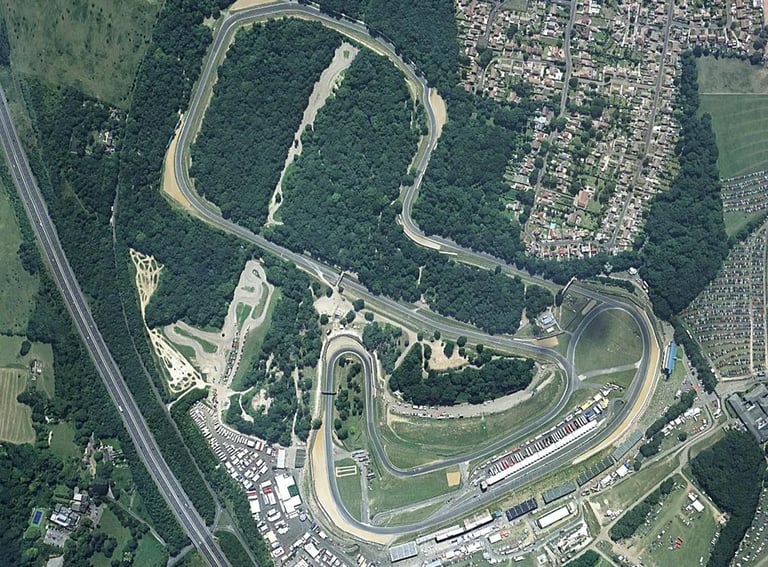
Brands Hatch in 1972
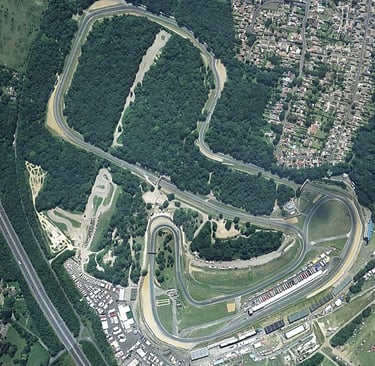
There are circuits that flatter certain types of drivers, and Brands Hatch has always flattered the brave. The track drops violently from the start line into Paddock Hill Bend — a corner you commit to before you can see where it goes — then climbs back through Druids, threads through a sequence of medium-speed curves, and returns via the wide, sweeping Clearways. It is not a circuit where you can fake confidence. You either have it or you are slow.
By 1972, the Grand Prix layout had been refined enough to produce genuinely close racing, but the physical and technical demands remained extreme. Tyre wear was significant, mechanical reliability was always a question mark, and the asphalt at certain corners — Druids in particular — was beginning to break up under the stress of the cars. The conditions, in other words, were exactly the kind that separate good drivers from great ones.
The Contenders: Three Masters, One Track
Jacky Ickx — The Ferrari Charger
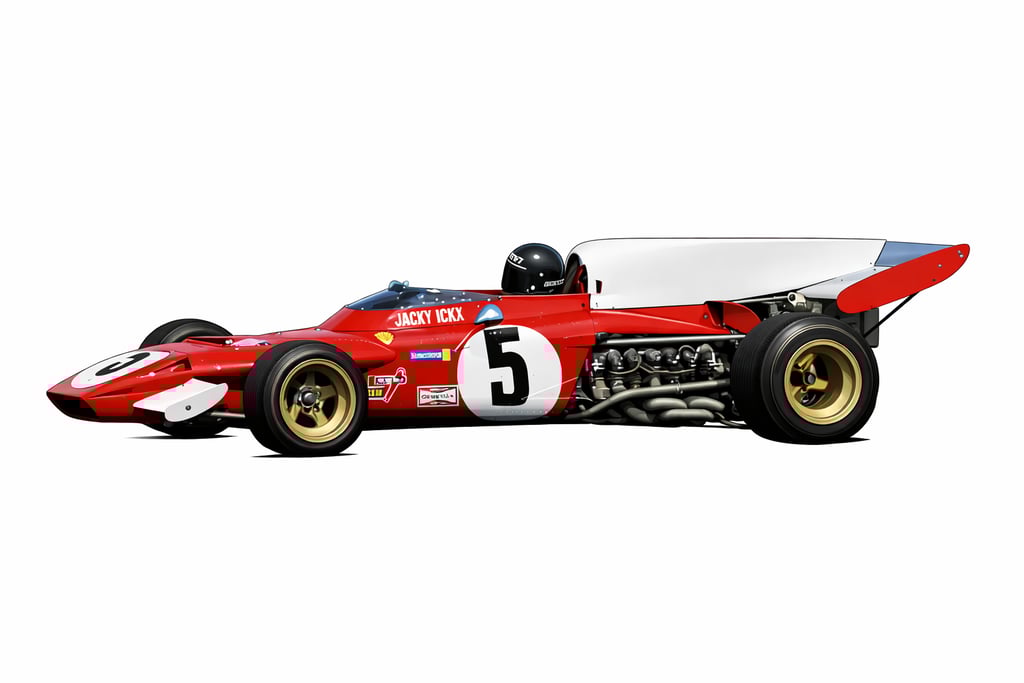
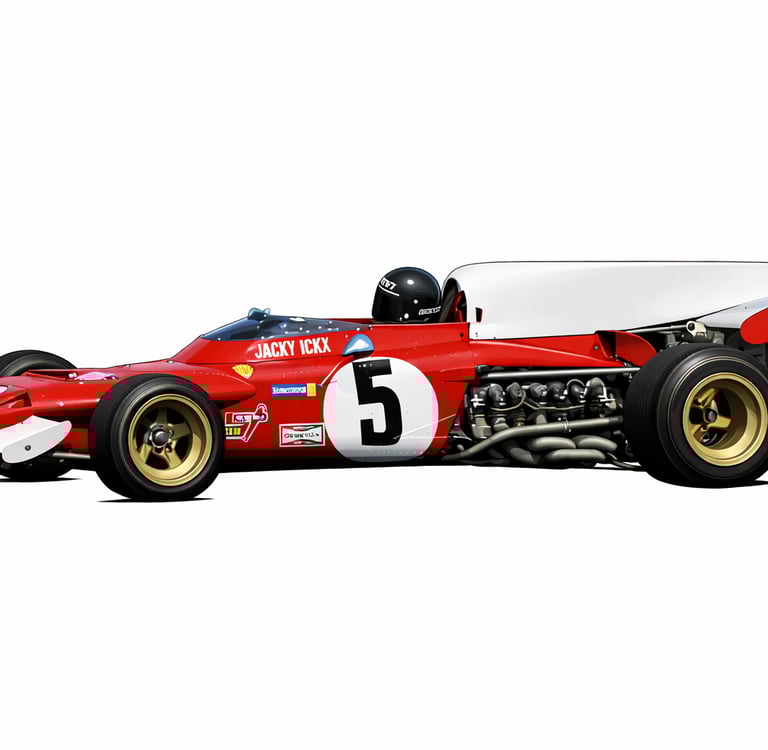
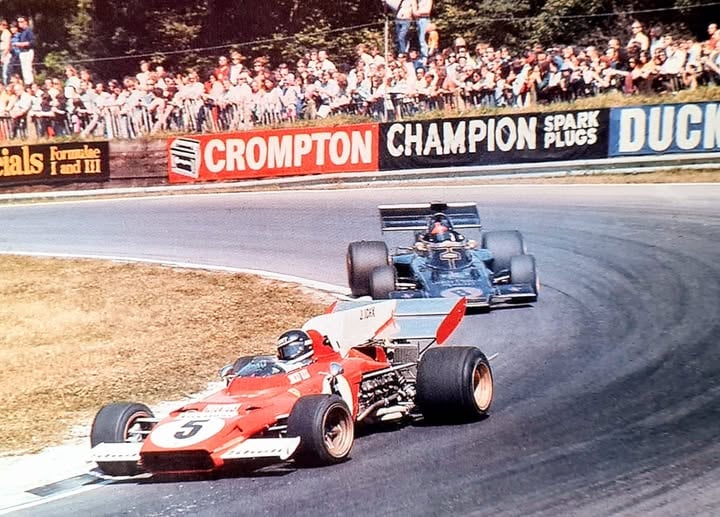
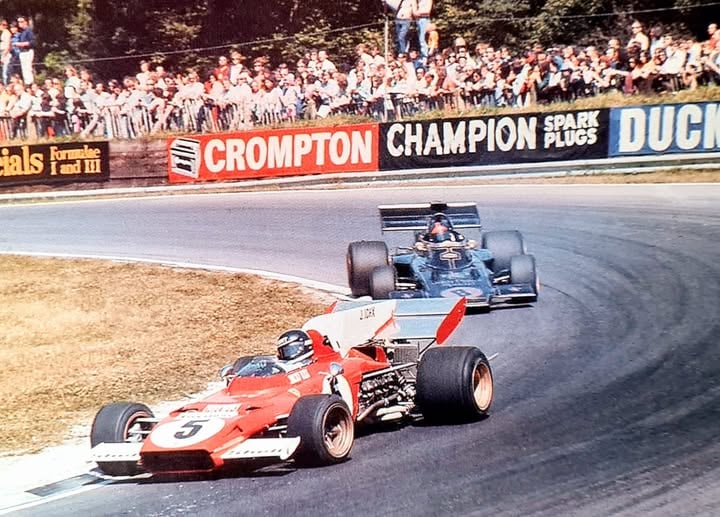
Jacky Ickx arrived at Brands Hatch as the man most expected to challenge for the win. The Belgian had already demonstrated his extraordinary talent in previous seasons, nearly taking the 1970 world title in a fight with Jochen Rindt. In 1972, driving the Ferrari 312B2, Ickx was fast, fearless, and hungry. He qualified on pole position, a statement of intent that silenced any doubters.
Emerson Fittipaldi — The Championship Leader
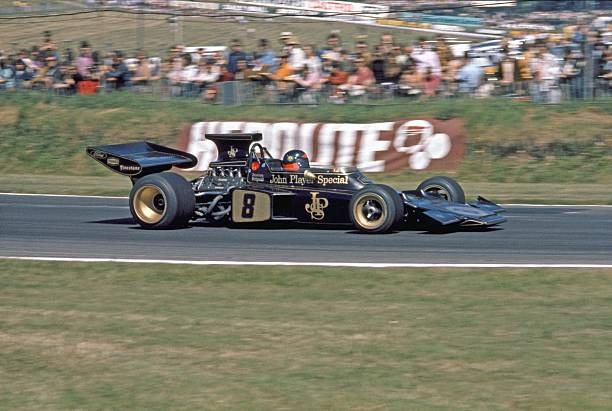
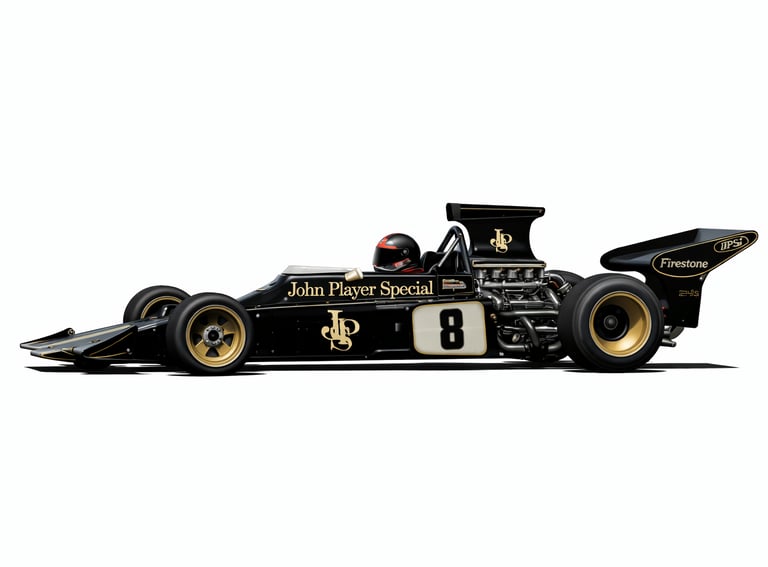
Emerson Fittipaldi came to Brands Hatch leading the world championship. The 25-year-old Brazilian had transformed the Lotus 72D into the class of the field, combining raw speed with a maturity that belied his age. His season had already produced multiple victories, and a win at the British GP would put him in an almost unassailable position in the title race. Calm, calculating, and devastatingly quick, Fittipaldi was the man to beat.
Jackie Stewart — The Reigning Champion
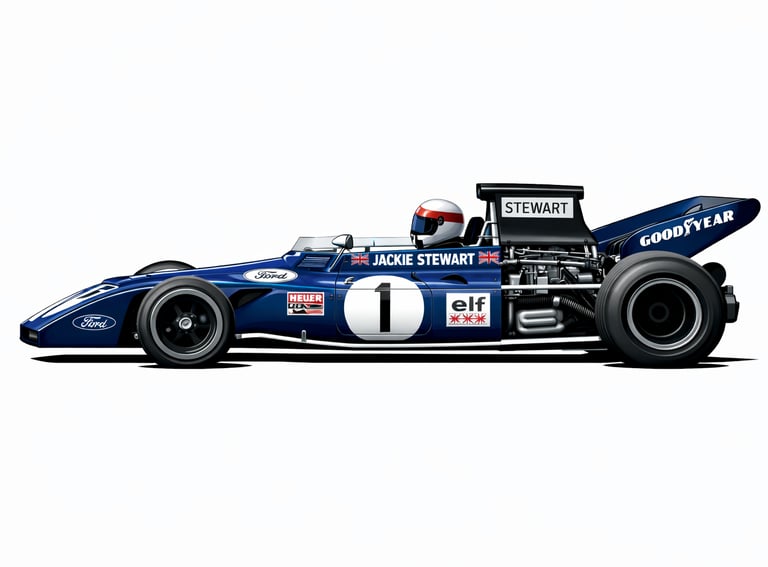
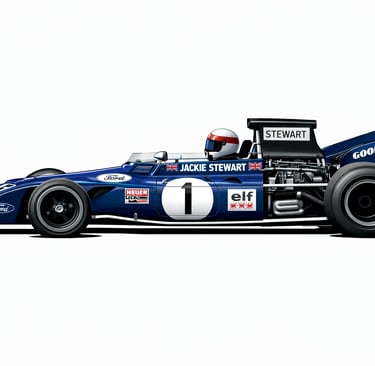
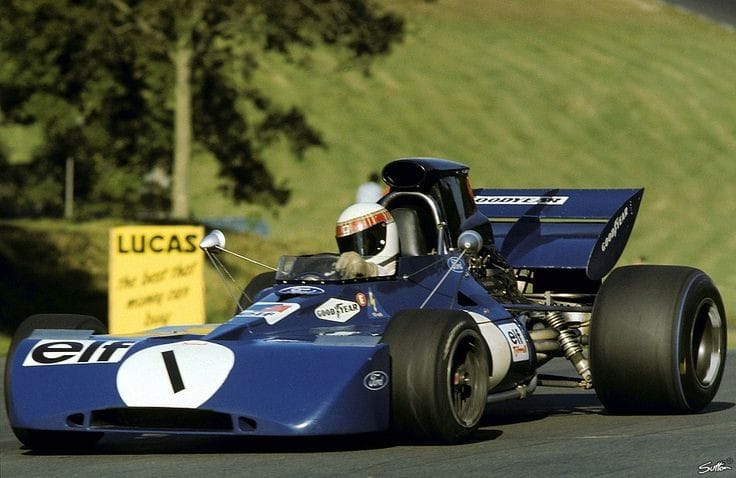
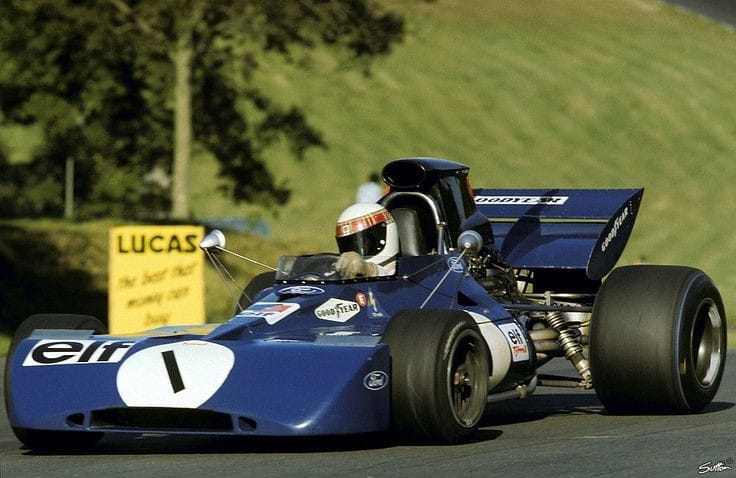
Jackie Stewart, driving the Tyrrell 003 for Ken Tyrrell's team, was never far from the equation. The Scotsman had won the world championship in 1969 and 1971, and despite a difficult start to the 1972 season, his racecraft and experience made him a constant threat at any circuit. At Brands Hatch — where tactical intelligence often proved more valuable than outright speed — Stewart was exactly the kind of driver who could disrupt anyone's plans.
Qualifying: Ickx and the Ferrari Statement
Jacky Ickx put the Ferrari 312B2 on pole position with a lap of 1 min 22.2 sec, the fastest time of the entire practice weekend. Fittipaldi, in the Lotus 72D, qualified alongside him on the front row after a blistering late run of 1 min 22.6 sec — set on a lighter fuel load after Chapman found and fixed a critical chassis problem on the race car. Jackie Stewart qualified fourth in the Tyrrell 003, having been forced to abandon the newer Tyrrell 005 after a suspension failure threw him into the barriers during Thursday practice. Peter Revson was on the second row in the McLaren M19A, and Tim Schenken qualified an impressive fifth in the Surtees.
The Race: 76 Laps of Controlled Chaos
When the lights went out, Ickx wasted no time. The Ferrari surged to the front, and the Belgian began building a lead that looked, at first, like it might translate into a dominant victory. The 312B2 was quick in clean air, and Ickx drove with his trademark combination of commitment and controlled aggression.
Fittipaldi tracked him closely, never allowing the gap to grow to a dangerous margin, while Stewart worked his way through the field with the methodical efficiency that had made him a two-time world champion.
For the first twenty laps, a stalemate settled. Ickx and Fittipaldi ran nose to tail at the front, the gap between them stable and deliberate. Fittipaldi could close on the Ferrari through the section between the start line and South Bank Bend, but lost ground on the fast wooded section at the back of the circuit. He was watching the Ferrari carefully — and from those early laps, he could already see oil on the 312B2's bodywork.
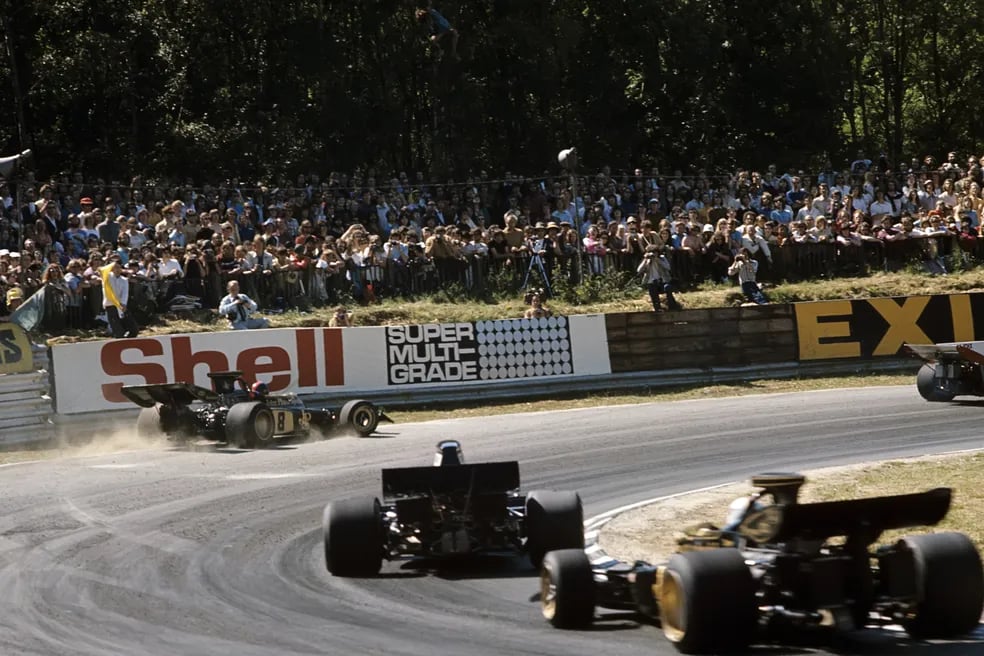
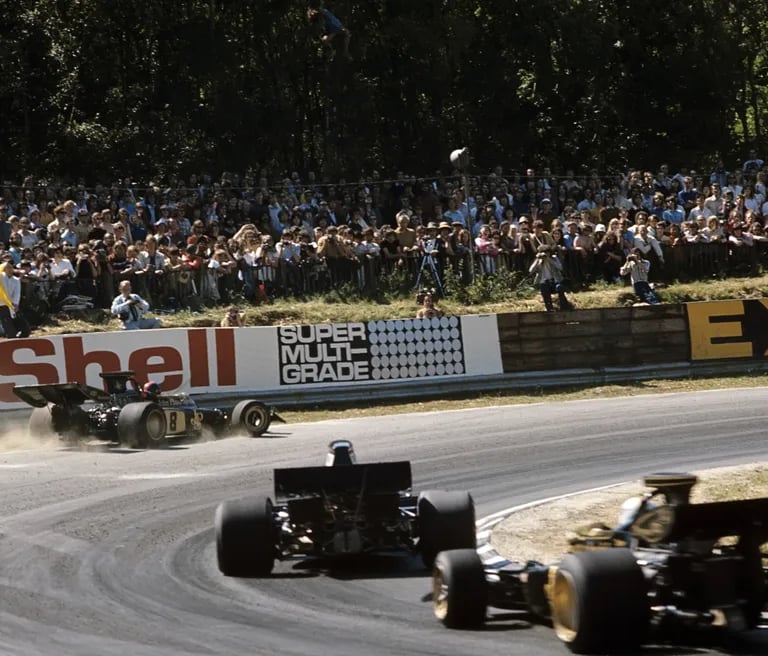
On lap 23, the leaders lapped Walker and had some trouble getting past, which allowed Stewart to close right up on the front two. Then, on lap 25, approaching Druids Hairpin, Ickx got his braking slightly wrong. The moment unbalanced Fittipaldi behind him — the Brazilian had to adjust mid-corner on the deteriorating surface to avoid contact — and while he was sorting the Lotus out, Stewart was already through into second place.
Fittipaldi did not react. He recalibrated. He found his pace again, managed his tyres, and tracked Stewart without crowding him. On lap 34, through the South Bank section, he found the gap he had been waiting for and went through cleanly. No drama, no late braking. Second place restored, order re-established, and not a single point wasted on an unnecessary risk.
The three drivers ran that formation — Ickx, Fittipaldi, Stewart — deep into the second half of the race. The gaps barely changed. The pace was controlled. From the outside it looked stable. Inside the Lotus, Fittipaldi was watching the oil stains on the Ferrari grow.
By lap 47 the Ferrari was visibly slowing. Fittipaldi had closed right onto its gearbox, and Stewart in turn had closed onto Fittipaldi, and for a few laps Brands Hatch had its race — three cars within striking distance, the championship balanced on what happened next.
On lap 49, Ickx switched off. The split oil cooler had destroyed the engine's oil pressure, and there was nothing left to save. He had led every single lap from the start. He climbed out of the car at the side of the circuit without ceremony and the race he had controlled simply ceased to exist.
Fittipaldi was now leading the 1972 British Grand Prix.
Watch the Race
The footage from Brands Hatch Race captures this battle with a clarity that race reports can't fully replicate — Ickx and Fittipaldi running inches apart, Stewart threading through the field, and the Brands Hatch crowd watching a race that kept refusing to settle. Worth seeing before reading any further analysis.
The Run to the Flag
Stewart pressed for the remaining 27 laps but could not manufacture an opportunity. Fittipaldi managed the Lotus with the same discipline he had shown all afternoon — protecting the tyres, maintaining a pace that was fast enough to be safe, slow enough to last. The Tyrrell was never far enough away to stop worrying, but never close enough to genuinely threaten.
Late in the race, Graham Hill and then François Cevert both lost control on the debris at Paddock Hill Bend and hit the barriers. On lap 75, Ronnie Peterson's engine cut at the same spot, stranding the March without power at the bottom of the hill where the two wrecked cars were parked. The final lap had a wreckage-strewn backdrop that added an element of caution even Fittipaldi didn't need.
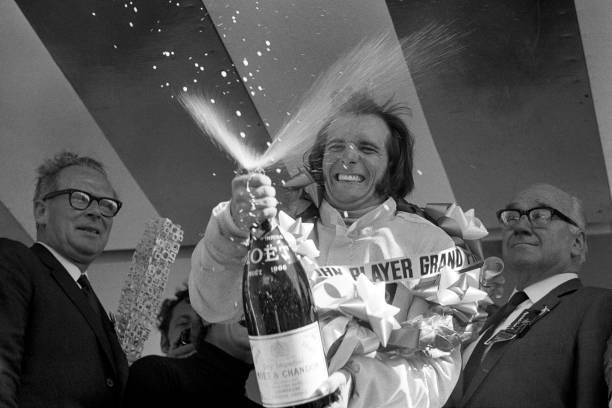
The flag fell after 1 hour 47 minutes and 50.2 seconds. Fittipaldi, 4.1 seconds ahead of Stewart. Revson third. A result that was neat, and earned, and somewhat inevitable from the moment lap 49 ended.
Championship Status
Going into the British GP, Fittipaldi already led the championship. Coming out of it, he led it by a margin that was beginning to look safe. The Lotus 72D had shown, again, that it was the most complete race car in the field across a full race distance. More importantly, its driver had shown that he could absorb a setback — the Druids incident, third place, the momentary loss of control — without losing composure or making it worse.
He clinched the title six weeks later at Monza. Brands Hatch was the afternoon that made Monza feel inevitable.
Three Drivers, Three Verdicts
Ickx left Brands Hatch having done almost everything right. His qualifying lap was the fastest of the weekend, his race management was correct, and the failure that stopped him was mechanical and unforeseeable. That was his season in miniature — a driver whose talent exceeded his results, repeatedly let down by the cars beneath him.
Stewart's second place was a measure of his quality in a year when Tyrrell simply didn't have the tools to compete with the Lotus on equal terms. He was there, consistent, difficult to beat — and ultimately not enough.
Fittipaldi, at 25, was becoming the kind of champion that doesn't just win races but makes rivals feel that winning is not an available option. Brands Hatch 1972 was one of the first days the sport fully understood that.