Lorenzo Bandini: From Mechanic to Ferrari Star - The Monaco Tragedy That Sparked F1's Safety Revolution
CLASSIC MOTORSPORT
2/11/20267 min read
Introduction
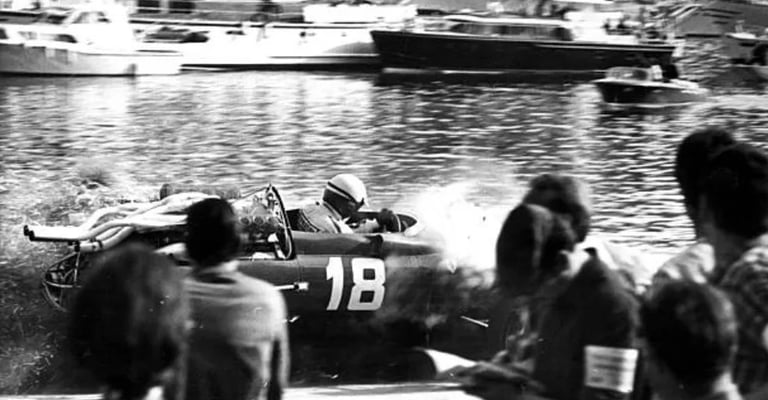
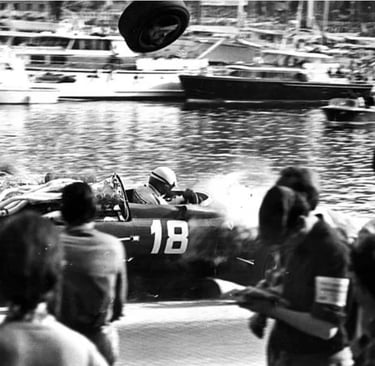
Monaco, May 7, 1967. A Ferrari 312 bursts into flames at the harbor chicane, its driver trapped inside as marshals struggle with inadequate fire extinguishers and outdated safety equipment. What followed were three agonizing days that would end Lorenzo Bandini's life—but also ignite a revolution in motorsport safety that continues to save lives today. The Italian driver, Ferrari's brightest hope and a beloved figure in racing, became a tragic catalyst for change in a sport that had normalized death as part of the spectacle. His story is not just about what was lost that day in Monaco, but about everything that changed because one man's preventable death finally forced Formula 1 to confront its deadly complacency.
From Italian Colonies to Racing Dreams
Lorenzo Bandini was born on December 21, 1935, in Barce, Libya, when it was still an Italian colony. His early years in North Africa were cut short when his family returned to Italy in 1941, as World War II reshaped the geopolitical landscape. The young Lorenzo would face his first major tragedy early—the death of his father during his adolescence left the family in financial hardship. At just 15 years old, he was forced to abandon formal education and begin working as a mechanic's apprentice, learning the intricate mechanics of automobiles from the ground up. This hands-on experience would prove invaluable, giving him an intimate understanding of how racing cars worked—knowledge that would serve him well on the track.
His racing career began modestly in 1957 with a Fiat 1100, competing in local events. Bandini quickly demonstrated natural talent and fearless determination, catching attention with victories in the legendary Mille Miglia driving a Lancia Appia Zagato. By the late 1950s, he had progressed to Formula Junior, where his performances turned heads throughout the Italian racing community. His rise was meteoric for someone who had started as a mere mechanic—a true working-class hero climbing the ladder of motorsport through skill and persistence.
The Ferrari Star
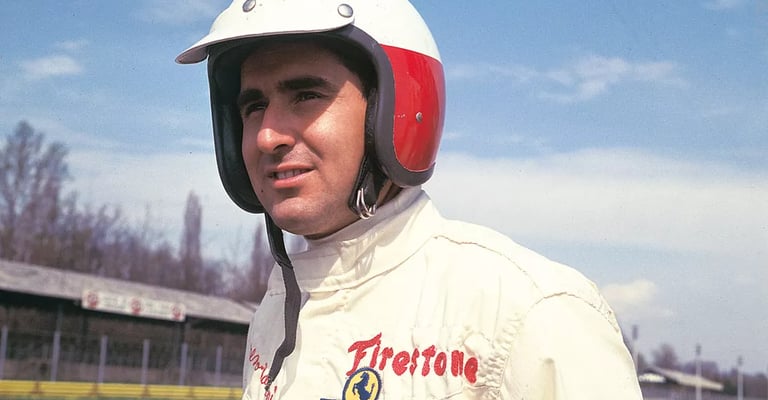
Lorenzo Bandini's Formula 1 debut came in 1961 with the independent Scuderia Centro Sud team, but his talent quickly attracted the attention of Enzo Ferrari himself. In 1962, Ferrari recruited him, recognizing the young Italian's potential to become a future champion. Between 1961 and 1967, Bandini competed in 42 Grand Prix races, securing one victory at the 1964 Austrian Grand Prix, one pole position, eight podiums, and accumulating 58 championship points.
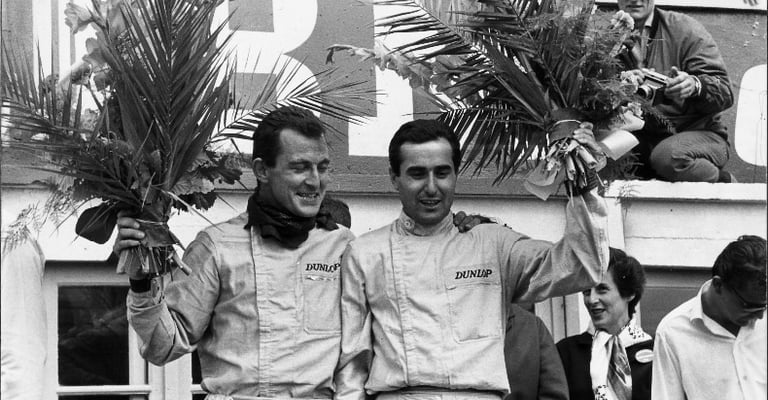
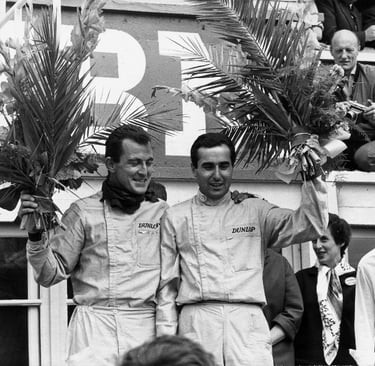
However, his achievements extended far beyond Formula 1. Bandini proved himself a versatile and complete driver in endurance racing, where he truly excelled. In 1963, he won the prestigious 24 Hours of Le Mans alongside Ludovico Scarfiotti, driving for Ferrari.
Two years later, he conquered the treacherous Targa Florio in 1965, one of the most demanding road races in motorsport history. His final major victory came at the 1967 24 Hours of Daytona, where he partnered with Chris Amon just months before his fatal accident.
By 1967, Bandini had become Ferrari's number one driver, inheriting the role after John Surtees' departure. He was no longer just a promising talent—he was the man Enzo Ferrari trusted to lead the Scuderia to championship glory. Colleagues and fans admired his "borghese" personality—dignified, approachable, and modest despite his growing fame. At 31 years old, Lorenzo Bandini stood at the peak of his career, ready to fulfill the Italian dream of a homegrown Ferrari world champion.
The Monaco Accident: Anatomy of an Avoidable Tragedy
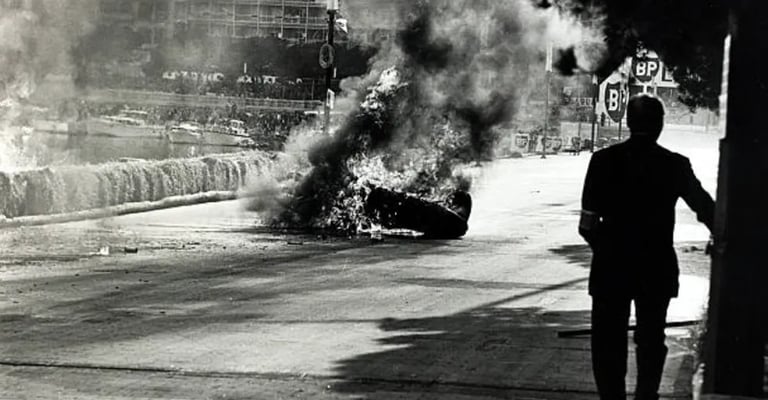
The 1967 Monaco Grand Prix should have been Lorenzo Bandini's moment of glory. Running in second place behind Denny Hulme on lap 82, Bandini approached the harbor chicane—a section he had navigated successfully dozens of times before. What happened next remains partially debated: some suggest driver fatigue, others point to a possible mechanical failure or misjudgment. His Ferrari 312 clipped the chicane, lost control, struck a barrier, overturned, and immediately erupted in flames with Bandini trapped underneath.
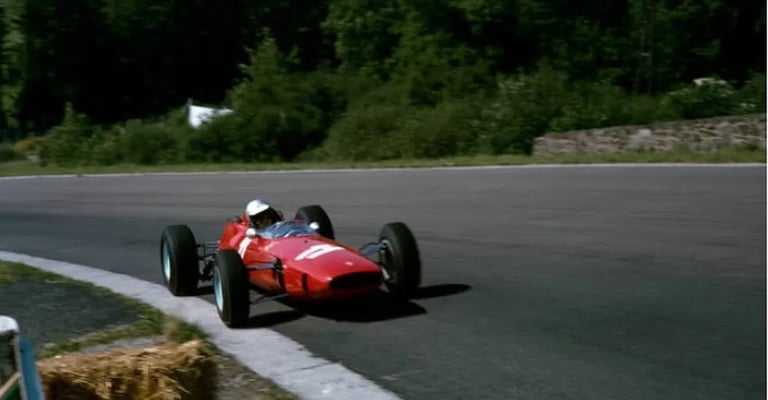
Footage of the 1967 Monaco Grand Prix provides a sobering window into that fateful day—showing not only Bandini's skill as he raced through Monaco's streets, but also the inadequate safety measures that would prove catastrophic. [Watch the race highlights and accident footage here].
What transformed an accident into a preventable tragedy were the catastrophic safety failures that defined 1960s Formula 1. The barriers at Monaco were protected by straw bales—highly flammable materials that ignited instantly upon impact, turning the crash site into an inferno. Track marshals arrived quickly but were woefully unprepared: they carried small, inadequate fire extinguishers that proved nearly useless against the massive fuel fire. Precious minutes were lost as marshals struggled to lift the overturned car while flames consumed both the vehicle and its driver.
Bandini's racing suit offered minimal fire protection—fire-resistant materials were rudimentary at best in 1967. The Ferrari's fuel tank, like all Formula 1 cars of that era, was vulnerable and ruptured on impact, spilling gasoline that fed the flames. There was no coordinated rescue protocol, no medical helicopter standing by, and no rapid response team trained for such emergencies. By the time Bandini was finally extracted, he had suffered burns covering over 70% of his body.
He was rushed to Princess Grace Hospital in Monte Carlo, where doctors fought desperately to save him. For three agonizing days, Lorenzo Bandini clung to life as the racing world held its breath. On May 10, 1967, he succumbed to his injuries. His funeral drew an estimated 100,000 mourners in Milan, a testament to how deeply Italy loved its fallen hero. But the question haunted everyone present: how many of those safety failures could have been prevented?The Legacy in Life: Achievements Beyond Formula 1
The Legacy in Life: Achievements Beyond Formula 1
Lorenzo Bandini's greatness wasn't confined to Grand Prix circuits. His versatility as a driver shone brightest in endurance racing, where patience, mechanical sympathy, and consistency mattered as much as raw speed. The 1963 Le Mans victory remains one of Ferrari's proudest moments—Bandini and Scarfiotti drove with precision and intelligence over 24 grueling hours. The Targa Florio win in 1965 demonstrated his mastery of treacherous Sicilian mountain roads, where one mistake meant certain death.
Beyond statistics and trophies, Bandini was respected for his character. Unlike some racing stars of his era, he maintained humility despite fame. His "borghese" demeanor—middle-class, dignified, unpretentious—made him beloved by fans and teammates alike. Mechanics appreciated his technical knowledge from his apprentice days; he could discuss setup and engineering with genuine understanding. Young drivers looked up to him not just as a competitor but as someone who had climbed from poverty to racing's elite through sheer determination.
His 1967 Daytona victory with Chris Amon, achieved just months before Monaco, showed he was still at the peak of his abilities. Ferrari had every reason to believe their investment in Bandini would deliver a world championship. Italy had every reason to dream.
The Post-Death Legacy: Formula 1's Safety Revolution
Lorenzo Bandini did not die in vain. His horrific accident at Monaco forced Formula 1 to confront a truth it had long ignored: driver deaths were not inevitable tragedies but preventable failures of safety design. The immediate aftermath saw swift, decisive changes that began reshaping the sport's approach to driver protection.
Straw bales were banned from Formula 1 circuits almost immediately after Bandini's death. These flammable barriers, which had turned countless accidents into fiery catastrophes, were replaced with more effective crash protection systems. Tracks were required to improve their fire-fighting equipment, stationing multiple extinguisher stations around circuits with industrial-grade suppression systems rather than inadequate handheld units. Marshal training became standardized, with emergency response protocols developed specifically for racing incidents.
The revolution extended to the cars themselves. Fuel cell technology—self-sealing, rupture-resistant fuel tanks—became mandatory in the years following 1967, dramatically reducing the risk of post-crash fires. Fire-resistant racing suits evolved from basic fabric to sophisticated multi-layer Nomex materials that could withstand extreme temperatures for crucial seconds. Onboard fire suppression systems were developed, allowing drivers to activate extinguishers from inside the cockpit. Helmet and visor designs improved to protect against both impact and heat.
Cockpit design underwent fundamental rethinking. Engineers worked to make driver extraction faster and easier, recognizing that every second mattered in fire situations. Roll-over structures were strengthened. Medical response protocols were established, with trained doctors and ambulances required at every race. The entire infrastructure of circuit safety—from barrier design to emergency helicopter evacuation—was reimagined with driver survival as the paramount concern.
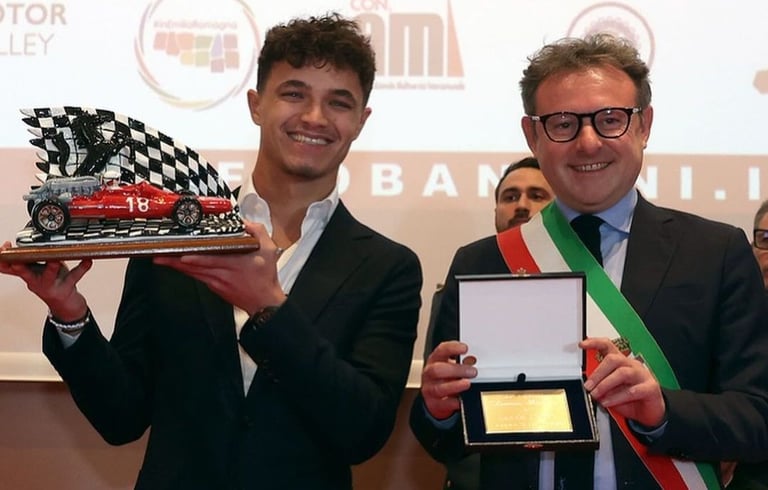
In 1992, twenty-five years after his death, the Lorenzo Bandini Trophy was established to honor the best Italian driver each year. But his true memorial isn't a trophy—it's every driver who has walked away from a fiery crash that would have been fatal in 1967. It's the decades of safety evolution that transformed Formula 1 from a sport where death was expected into one where it became increasingly rare.
Conclusion
Lorenzo Bandini's story is ultimately one of transformation. A boy born in colonial Libya who lost his father young, worked as a mechanic at 15, and rose through sheer talent to become Ferrari's champion-in-waiting. His victories at Le Mans, Targa Florio, and Daytona proved his brilliance. But his greatest legacy came not from what he achieved in life, but from what his death changed forever.
The Monaco accident of May 7, 1967, exposed every deadly flaw in Formula 1's safety culture: flammable barriers, inadequate fire equipment, vulnerable fuel systems, insufficient driver protection, and untrained rescue personnel. Each of these failures was correctable. Each had been ignored until 100,000 people mourned at Bandini's funeral and the sport could no longer look away.
How many lives has Lorenzo Bandini saved? We'll never know the exact number, but every fire-resistant suit, every fuel cell, every trained marshal, every improved barrier carries his invisible legacy. Formula 1 today, while still dangerous, is incomparably safer than the sport that killed him. That transformation didn't happen by accident—it happened because one man's preventable death finally proved that change was not just possible, but essential. Lorenzo Bandini gave Formula 1 everything: his talent, his passion, his dreams, and ultimately, his life. In return, the sport finally learned to value the lives of those who risk everything for its glory.