Monza 1971, Without Chicanes: Formula One’s Closest Finish
CLASSIC MOTORSPORT
1/19/20263 min read
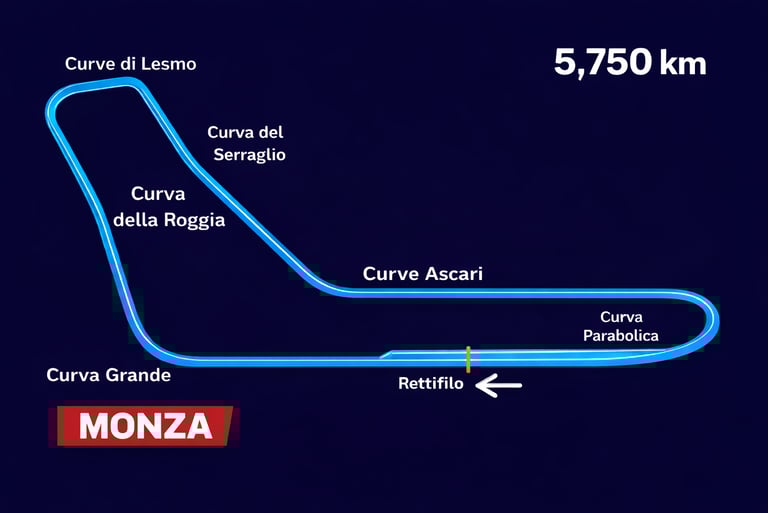
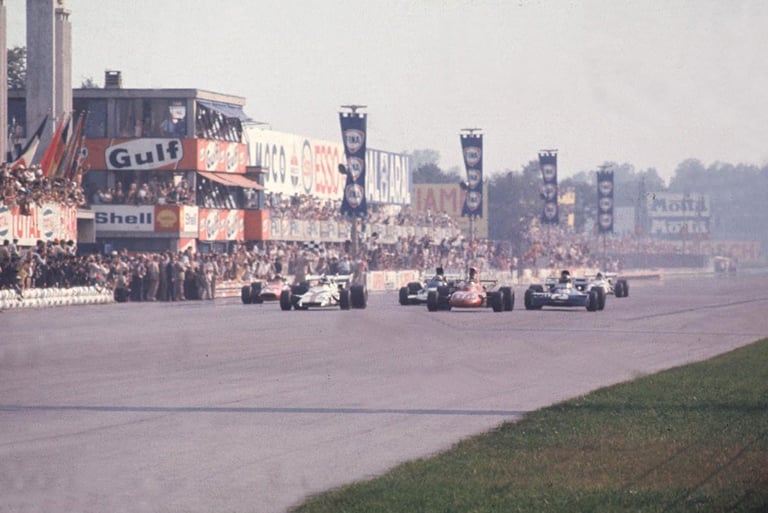
The 1971 Italian Grand Prix at Monza remains one of the most extraordinary races ever held in Formula One, both for what unfolded on track and for the records it established. It was run on the original high-speed layout, still without chicanes, where long straights dominated the lap and corners were taken almost flat. From the opening moments, the race developed into a continuous slipstream battle, shaped by low-drag setups, extreme top speeds, and a leading group that never truly broke apart.
Clay Regazzoni set the tone immediately. Starting only eighth on the grid, the Ferrari driver reacted perfectly to the start and surged forward before the field had even settled. By the end of the opening straight, he was already in the lead, having swept past much of the pack to the surprise of both rivals and spectators. Jo Siffert followed him through into second, with Jacky Ickx close behind, while pole-sitter Chris Amon was quickly swallowed by the tightly packed group. From the first lap, positions were changing constantly as drivers used the aerodynamic tow to pass and repass one another.
By lap four, Ronnie Peterson had forced his way to the front, triggering a long sequence of lead changes involving Regazzoni, Siffert, Jackie Stewart and François Cevert. The performance gap between the cars was minimal, and no driver could escape the slipstream. On Monza’s extended straights, any advantage gained under braking disappeared within seconds. Leading became temporary, often lasting no longer than a single straight.
As the race developed, the front settled into a relentless pattern. Packs of five and six cars ran together at more than 250 km/h, spreading wide into the braking zones and reforming into tight lines under acceleration. Mechanical limits soon appeared. Helmut Marko retired with engine failure, and John Surtees was also eliminated by mechanical trouble. Jackie Stewart, who had been a constant presence at the front, began to lose power as fuel pressure problems affected his Tyrrell. Unable to maintain speed on the straights, he gradually slipped out of the lead group and was eventually forced to retire, removing one of the main contenders from the fight.
Despite the attrition, the lead pack refused to break. Peterson, Regazzoni and Cevert continued to exchange the lead, while Mike Hailwood, Howden Ganley and Peter Gethin remained locked into the draft. With no pit stops to restructure the order, the contest became increasingly dependent on positioning rather than raw pace. Leading was no longer an advantage. Drivers lifted slightly on the straights, carefully timing their runs, each trying to avoid being the one providing the decisive tow.
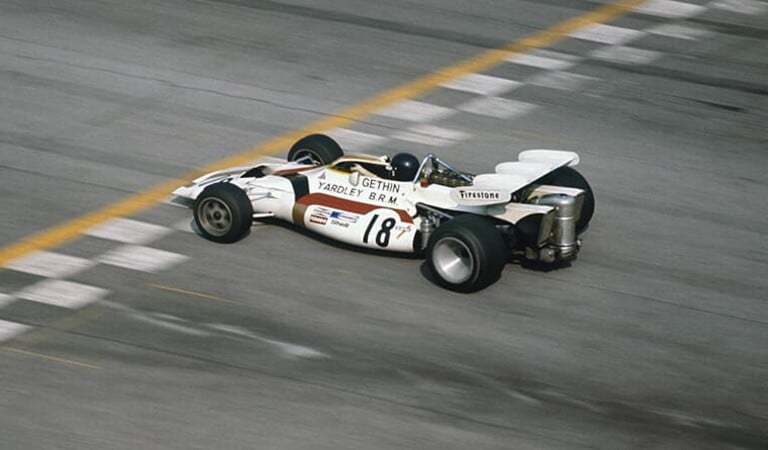
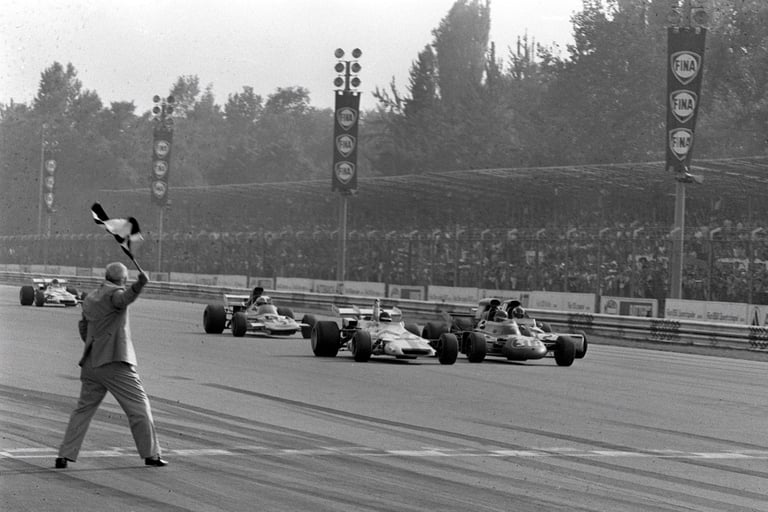
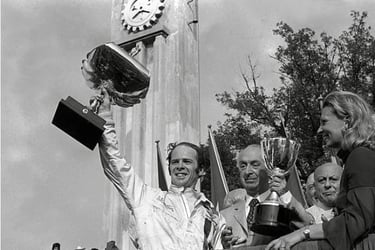
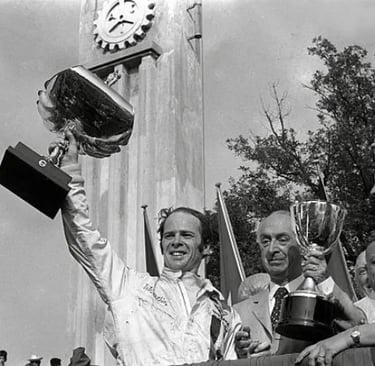
After 55 laps, the race was still compressed into a single high-speed train. The decisive moment came on the run from Parabolica to the finish. Five cars exited the final corner almost together, engines at maximum revs. Peter Gethin, driving for BRM, found the strongest slipstream and surged forward in the final meters. He crossed the line just 0.01 seconds ahead of Ronnie Peterson, securing the only victory of his Formula One career. François Cevert finished third, followed immediately by Mike Hailwood and Howden Ganley.
The top five were separated by only 0.61 seconds, a margin that remains the closest finish in Formula One history. The statistics were equally remarkable. The race produced an average speed of 242.615 km/h (150.754 mph), which stood for decades as the fastest Grand Prix ever recorded.