Mr. Monaco: How Graham Hill Made the Most Glamorous Race His Own
CLASSIC MOTORSPORT
2/19/20267 min read
Some circuits reveal a driver's talent. Monaco revealed Graham Hill's soul.
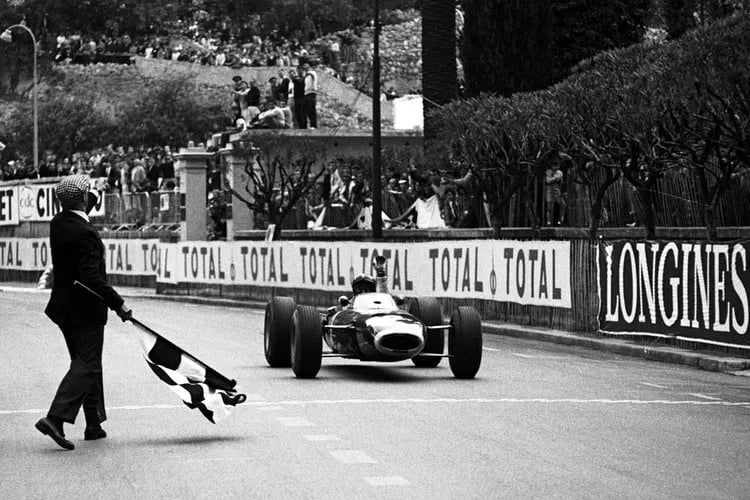
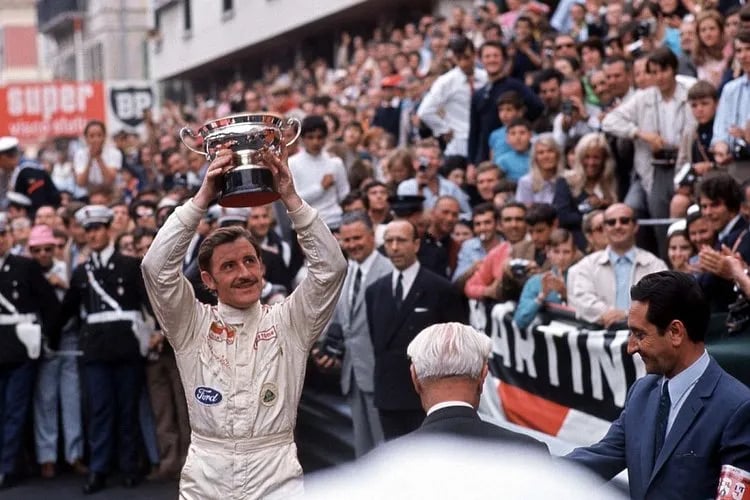
There is something almost philosophical about the relationship between a racing driver and a circuit. You can measure it in lap times, in points, in victories — and for Graham Hill, the numbers at Monaco are staggering: five wins between 1963 and 1969, a record that stood for nearly a quarter of a century. But the numbers alone don't explain the legend. Numbers don't earn you a nickname. What earned Hill the title of Mr. Monaco was something deeper than speed — it was the rare combination of obsession, resilience, and an almost theatrical affinity for the most glamorous stage in motorsport.
The Circuit That Sorts Men From Machines
To appreciate what Hill accomplished, you first need to understand what Monaco actually is — and what it isn't.
It isn't a circuit in the traditional sense. It is a city that tolerates racing once a year, a warren of streets where the barriers are real walls, the run-off areas don't exist, and every mistake is permanent. In the 1960s, drivers ran one hundred laps of that suffocating layout, three hours of absolute concentration in cars with no safety cells, no power steering, and no room for error. Where circuits like Monza or Spa rewarded pure speed, Monaco rewarded something harder to quantify: judgment. Mechanical sympathy. Patience. The ability to be fast without ever being reckless.
These were not qualities that the era's great romantic heroes — the Clark's and Rindt's of the world — were particularly celebrated for. Those men had talent, the kind that seems to bend the laws of physics. Hill had something else. He had craft.
A Craftsman in a World of Artists
Graham Hill came to Formula 1 late and the hard way. He talked his way into a job as a mechanic at Lotus, convinced Colin Chapman to give him a shot, and spent years assembling his career bolt by bolt, the same way he assembled his cars. He was not a natural. He knew it, said so openly, and decided it didn't matter. What mattered was preparation.
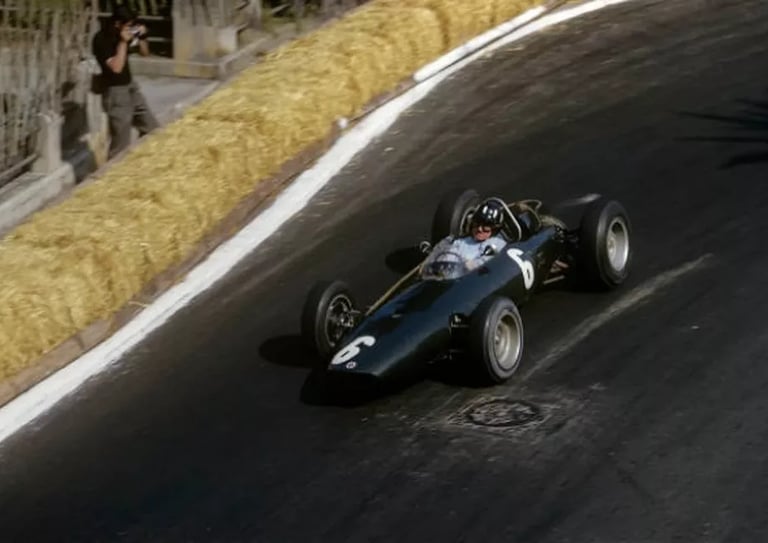
At BRM in the early 1960s, he became notorious for his obsessive involvement in car setup — adjusting suspension, dialling in gear ratios, building a mechanical vocabulary that let him extract the maximum from a car that wasn't always the fastest on the grid. His teammates sometimes found it exhausting. But at Monaco, where the difference between winning and hitting a barrier often came down to a few millimetres of chassis balance, that obsession became a superpower.
There was also something less technical at play. Hill loved Monaco. Not as a professional challenge, but as a place. As a young man with ambitions and an empty wallet, he had talked his way into the Steering Wheel Club during race week, nursing a drink for hours just to absorb the atmosphere, to sit among the people who belonged to that world. By the time he was a Formula 1 driver, he wasn't just competing in Monaco — he was returning home. And few things focus a man's mind quite like performing on the stage he spent his whole life trying to reach.
1963: Never Stop Pushing
The first Monaco victory, in 1963, is the one that most clearly shows the Hill formula — and it almost didn't happen.
Jim Clark was in a different universe that season. In his Lotus 25, he was so dominant that the rest of the field was effectively racing for second place. Monaco was supposed to be no different. Clark qualified on pole, led from the start, and was pulling away from Hill's BRM with a composure that suggested the result was a formality.
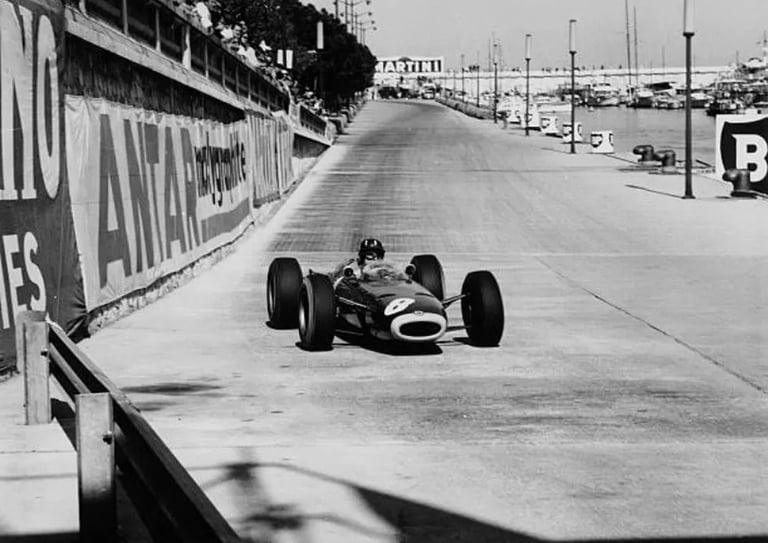
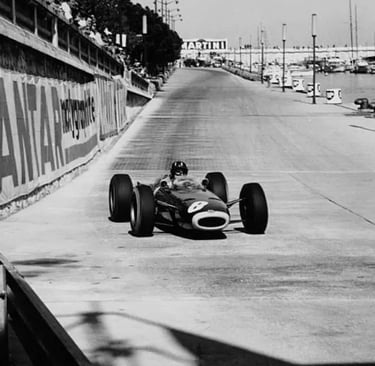
But Hill never conceded. Lap after lap, while Clark extended his lead, Hill kept his foot down and his mind sharp. On lap 85 — with Clark still ahead — he set a new lap record. Not a desperate fluke, but the product of a driver who was simply refusing to accept a secondary role. When Clark's gearbox failed and he coasted to a halt, Hill didn't inherit victory so much as seize it — because he had been driving at winning pace all along. The retirement was Clark's. The victory, morally and mechanically, was always Hill's to take.
1964: Ownership, Quietly Declared
There is a certain kind of victory that announces itself without drama, and Hill's 1964 win was exactly that.
He arrived as defending champion — both of Monaco and of the World Championship — and drove accordingly. No incident, no crisis, no heroics required. While others tested Monaco's patience and paid the price, Hill administered the race with a precision that made it look almost routine. Back-to-back wins on this circuit, where mechanical fragility and narrow margins destroyed champions routinely, was the clearest possible signal: this was not a lucky streak. This was a man who had made his understanding of one specific circuit into something close to an art form.
Monte Carlo was no longer just a race on Hill's calendar. It was, quietly and definitively, his race.
1965: The Race He Should Have Lost
If 1964 was the victory of a man in control, 1965 was something far more alive — and far more revealing.
Hill's BRM was strong enough to fight for pole, but his teammate Jackie Stewart — in his first full Formula 1 season — beat him to it, a stinging reminder that youth and talent were always snapping at Hill's heels. The two BRMs led the opening laps together, pulling away from the Ferraris, the race apparently under control.
Then everything unravelled. A slow car obstructed Hill at the chicane, forcing him onto the escape road and requiring him to literally get out and push his own car back to rejoin the circuit. He resumed in fifth place. A few laps later, Stewart threw away his lead with a spin. The race that had been Hill's was now, seemingly, anyone's but his.
What happened next is the reason 1965 remains the most talked-about of his five Monaco wins. Hill did not manage the gap. He did not settle for points. He drove with a controlled fury that is extremely rare in a sport where anger usually produces crashes rather than overtakes. He picked off his rivals one by one — Stewart, Surtees, and finally Bandini's Ferrari, which he hunted across twenty laps before making the decisive move at the Gasworks Hairpin. He won. He also set a new lap record in the process.
Three consecutive Monaco victories. No driver had ever done it before. And the one that cemented the hat-trick was the one he was never supposed to win.
1968: Leading When It Mattered Most
By 1968, Graham Hill had reasons to be elsewhere, mentally.
His teammate and friend Jim Clark had been killed at Hockenheim in April. Test driver Mike Spence had died at Indianapolis weeks later. The Lotus team was hollowed out by grief, and Hill — at 39, no longer considered a title favourite — found himself in the role of anchor, the experienced man who had to hold things together when everything around him was falling apart.
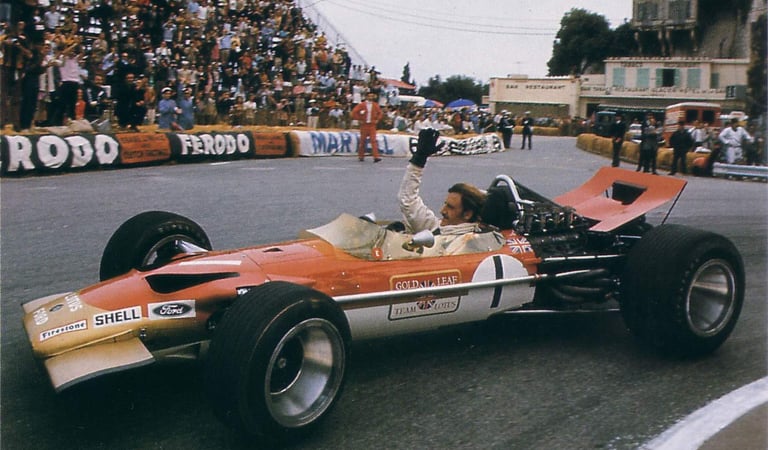
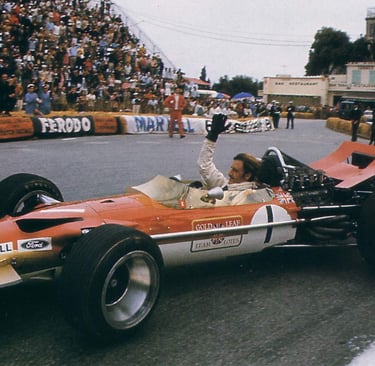
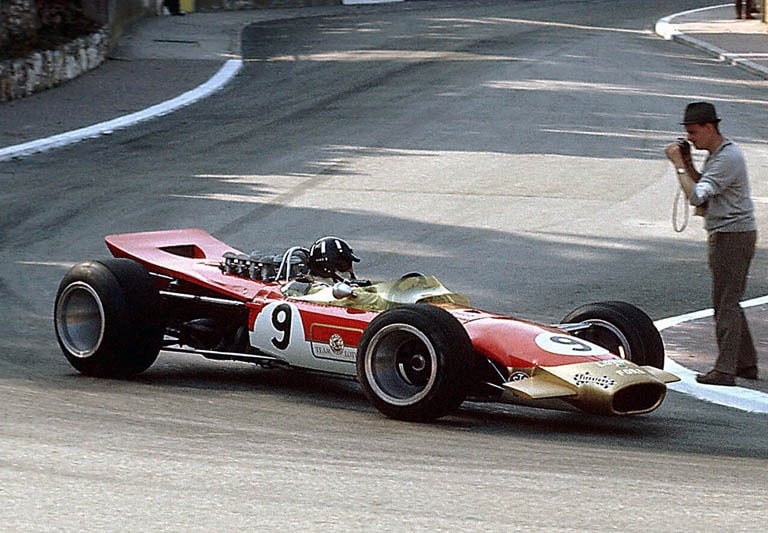
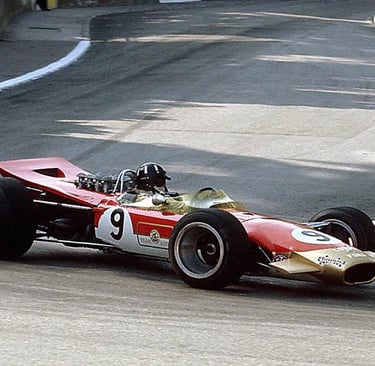
He arrived at Monaco driving the Lotus 49D, a car bristling with aerodynamic wings that made it look like nothing that had raced there before. Different machine, same driver, same circuit. And once again, Monaco rewarded the man who understood it best. As the attrition mounted around him — and at Monaco, it always does — Hill managed his pace, his tyres, and his nerves with the equanimity of someone who had navigated this circuit in conditions far more difficult than this.
The fourth win was perhaps the quietest of the five, but in context it may have been the most significant. It told the world that Mr. Monaco wasn't a product of a particular car or a particular era. It was a state of mind — one that Hill carried regardless of the colour of the car or the weight of the season.
1969: The Closing Chapter
By the time the 1969 Monaco Grand Prix arrived, the nickname was already established, the reputation already set in stone. Graham Hill at Monaco was less a sporting contest than an annual confirmation of a known truth.
He delivered one last time. Managing the race with the unhurried authority of a man who has nothing left to prove on these streets, Hill navigated the inevitable carnage of a Monaco afternoon and crossed the finish line first for the fifth time. It was also the last victory of his Formula 1 career — a detail that, in retrospect, feels less like coincidence and more like narrative perfection.
The circuit that had once left him collapsed from heat exhaustion on his debut would also be the circuit where his story reached its most complete expression. Five victories. One city. One man.
The Name That Numbers Couldn't Take Away
Ayrton Senna would eventually surpass Hill's tally, winning Monaco six times across the 1980s and 90s with a dominance that was, if anything, even more statistically emphatic. And yet, to this day, when people speak of a driver who owned Monaco, they reach for Hill's name first.
The reason is not sentimental. It is substantive. Hill's relationship with Monaco wasn't built on having the best car or the best era — it was built on arriving at the most unforgiving circuit in the world, year after year, and refusing to let it beat him. He pushed his car back onto the circuit by hand. He recovered from fifth place with twenty laps remaining. He led a team through its darkest season by winning the race that mattered most.
Monaco exposes a driver's character more completely than any other circuit in the world. It exposed Graham Hill's character too — and what it found was a man who simply would not break.
That is what a nickname is really made of. Not five wins. Not a lap record. A character.