Ten F1 Cars That Never Raced: The Machines That Never Made It to the Grid
The history of Formula 1 is often told through champions and iconic circuits, but behind them lies a quieter chapter: cars fully built and tested on track that never started a Grand Prix.
CLASSIC MOTORSPORT
5/23/202614 min read
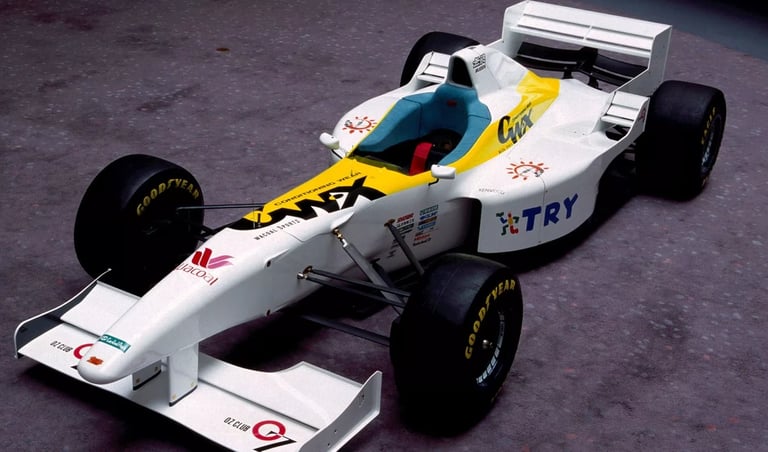
The history of Formula 1 is usually written in icons: World Champions, legendary circuits, and last‑lap title deciders. But between the champions and the podiums, there is a quieter, more speculative chapter: cars that were fully built, tested on track, and sometimes even faster than lower‑midfield machines, but never actually started a Grand Prix.
In this article, we have ten forgotten F1 cars that never contested a race, each one with its own story of ambition, innovation, and frustration.
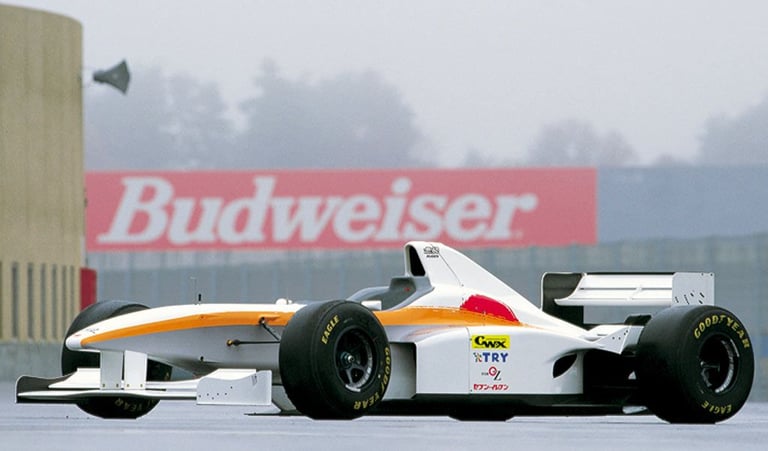
1. Dome F105 – Japan’s Bespoke F1 Dream
In the mid‑1990s, Japanese constructor Dome—known for its endurance prototypes and junior‑formula cars—decided to take on the ultimate challenge: a works‑style entry in Formula 1. The Dome F105 project was born as a serious attempt to build a Japanese‑made Formula 1 car from the ground up.
Unlike the Honda‑powered teams of the 1980s, Dome would control both chassis and branding, while partnering with Mugen‑Honda for power. The car used a Mugen‑Honda MF‑301 3.0‑L V10, engines that had powered Ligier and other mid‑field teams earlier in the decade. The chassis was a conventional but compact monocoque, designed for reliability and ease of package rather than extreme aerodynamic bravado.
Testing began in 1996 at Japanese circuits like Suzuka and the Aida International Circuit, with drivers such as Marco Apicella, Naoki Hattori, and Shinji Nakano behind the wheel. The F105 was reported to be around 15–20 seconds per lap slower than a front‑runner like the Williams‑BMW, but within the range of a struggling back‑marker. For a team with no prior F1 experience, that was considered promising.
Dome aimed for a 1997 entry, with sponsorship talks underway, including a much‑discussed Seven‑Eleven‑branded livery. However, major Japanese sponsors backed out, citing the high cost and the unclear return on investment. The project was quietly shelved, and the F105 chassis were dispersed to museums or stored.
The Dome F105 remains the most serious attempt at a Japanese‑built F1 car that never actually raced. It was not just a concept model, but a fully functional prototype that came close to the grid before being halted by the harsh realities of sponsorship and regulation.
2. Sigma Grand Prix (Pininfarina Sigma GP, 1969) – The Safety Concept That Never Left the Showroom
By the late 1960s, Formula 1 was becoming dangerously fast. The rise of rear‑engine monocoques and powerful engines meant that crashes, when they happened, were often fatal. The death of Jim Clark in 1968 was a turning point, sparking a push for stronger safety standards.
In this climate, Ferrari and Pininfarina collaborated on a research project that became the Sigma Grand Prix, or simply Sigma. The car was based on a Ferrari 312 chassis and 3.0‑L V12 engine, but wrapped in a radically different body designed by Aldo Brovarone. The Sigma was not a racing entry; it was a concept show‑car built to test ideas in driver protection and crash survivability.
The design featured enclosed front wheels, a deep, shark‑like nose, and large side pods flanking the cockpit—structures intended to absorb impact and shield the driver. The low profile and clean lines also explored early ideas about aerodynamic efficiency and airflow conditioning, concepts that would become central in the 1970s.
The Sigma debuted at the 1969 Geneva Motor Show, generating both fascination and controversy. Some journalists hailed it as the future of F1; others criticized it as a styling exercise with limited practical value. The car later appeared at non‑FIA events such as races at Zandvoort, where it was displayed as a safety research prototype rather than a competitor.
Because it was never homologated and never entered an FIA World Championship entry list, the Sigma remains a pure concept—beautiful, influential, but never driven in anger. It did not win a single race, but it helped engineers think about driver protection and crash structures in ways that would later define the sidepods and monocoque designs of the 1970s.
3. Honda RA099 – The Constructor Project Cut Short by Tragedy
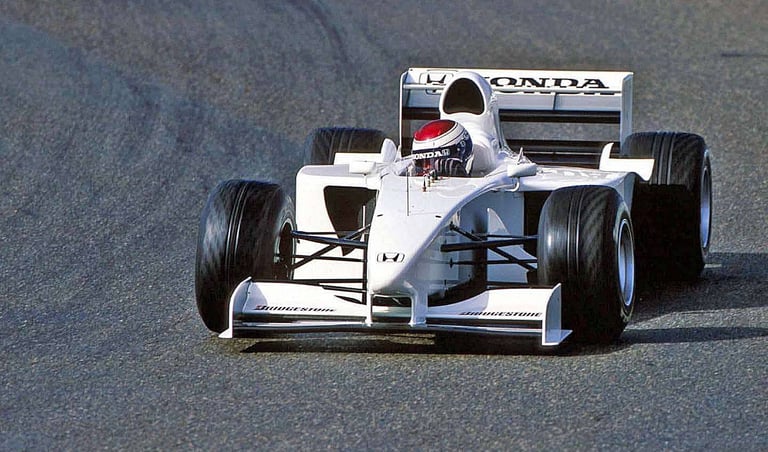
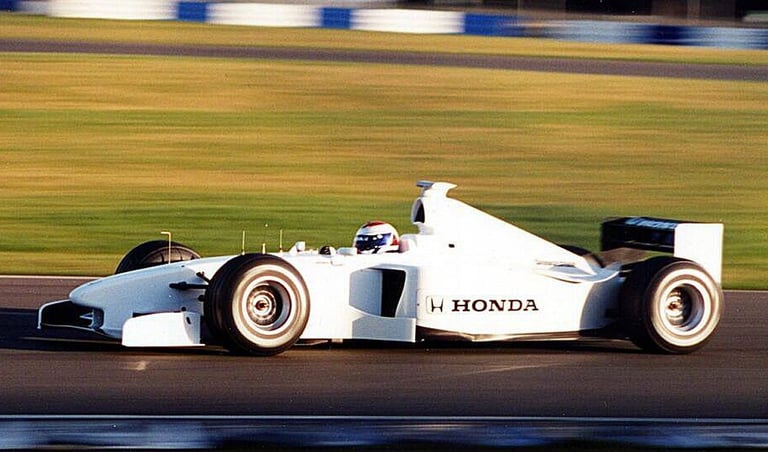
By the late 1990s, Honda had already tasted glory as an engine supplier to Williams and Mclaren. But the company’s long‑term ambition was to return as a full works constructor, controlling both engine and chassis. The Honda RA099 project, developed in 1998–1999, was the first concrete step toward that goal.
The car was designed by Harvey Postlethwaite, former technical director at Ferrari and Williams, and built by Dallara in Italy. It used a Honda‑branded V10 engine. The RA099 followed the contemporary low‑nose layout, but with a compact, clean side‑pod package aimed at maximizing aerodynamic efficiency and mechanical grip.
Testing was carried out by Jos Verstappen, whose feedback was unusually positive. Reports suggest the car was competitive in the mid‑field range, with respectable balance and brake performance. For a team preparing for a 2000 entry, those laps were an encouraging sign that Honda could be more than a back‑marker.
All that changed in early 1999, when Postlethwaite suffered a fatal heart attack during a test session at Jerez. The loss of the car’s chief designer created chaos inside Honda’s motorsport hierarchy. At the same time, internal divisions deepened between a pro‑entry faction and a more conservative management team wary of the financial commitment.
In the end, Honda abandoned the constructor plan and instead signed a deal to supply engines to British American Racing (BAR). The RA099 was never homologated for a Grand Prix and was retired as a non‑race‑active prototype.
The RA099 thus stands as one of the great “what‑ifs” of late‑1990s F1: a car built with the potential to challenge for points that never had the chance to prove itself on the grid.
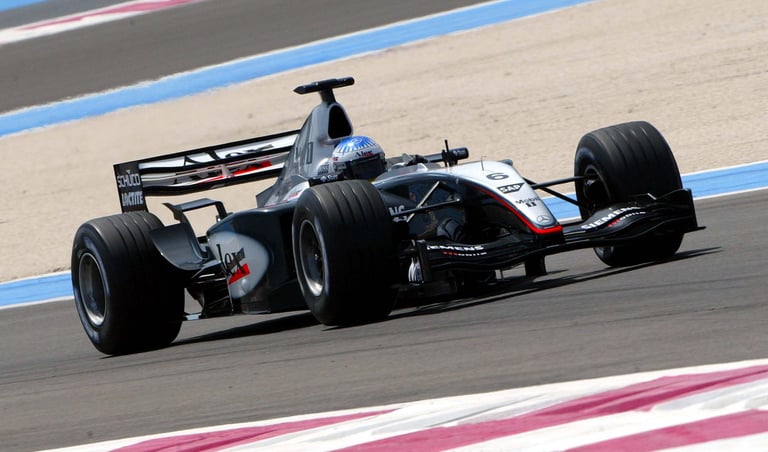
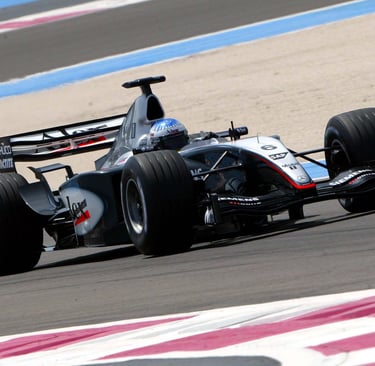
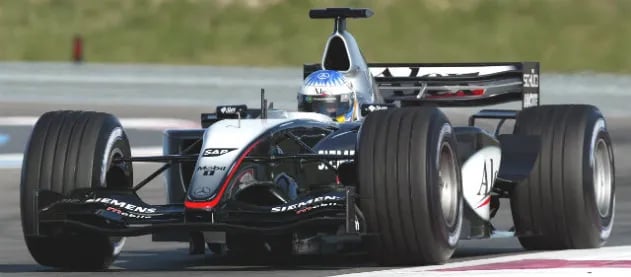
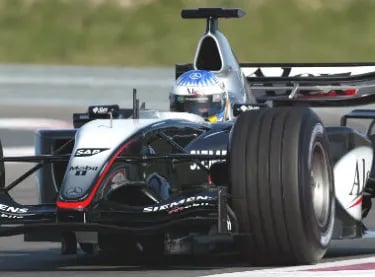
4. McLaren MP4‑18 – The Car That Was Too Ambitious to Race
In 2003, McLaren was locked in a fierce battle with Ferrari for the constructors’ title. The MP4‑17 had been reasonably competitive, but the team wanted a step‑change for 2003, hoping to close the gap to Michael Schumacher’s scarlet car. The result was the MP4‑18, an ultra‑compact design that pushed packaging and aerodynamics to their limits.
Designed by Adrian Newey and his team, the MP4‑18 featured a radically low nose, tightly packed suspension, and a pull‑rod front‑suspension system borrowed from the 2002 concepts. The sidepods were almost “square,” designed to keep airflow as clean as possible for the rear wing and diffuser. The car looked futuristic even by 2003 standards.
Early private tests, however, revealed serious problems. The suspension struggled under high‑speed loads, leading to multiple failures, including a front‑wing detachment at high speed during a test. The chassis was also thermally stressed, with cooling and reliability issues that made the car unsuitable for a full race weekend.
Instead of risking driver safety, McLaren shelved the MP4‑18 and continued the season with the MP4‑17D, an evolution of the 2002 car. The MP4‑18 was never entered into any World Championship race and became a test‑bed only, with key lessons feeding into the MP4‑19.
Despite never racing, the MP4‑18 has become iconic in McLaren’s history: a car so radical and flawed that it was deemed too dangerous to use, yet influential enough to shape the next generation of the team’s designs.
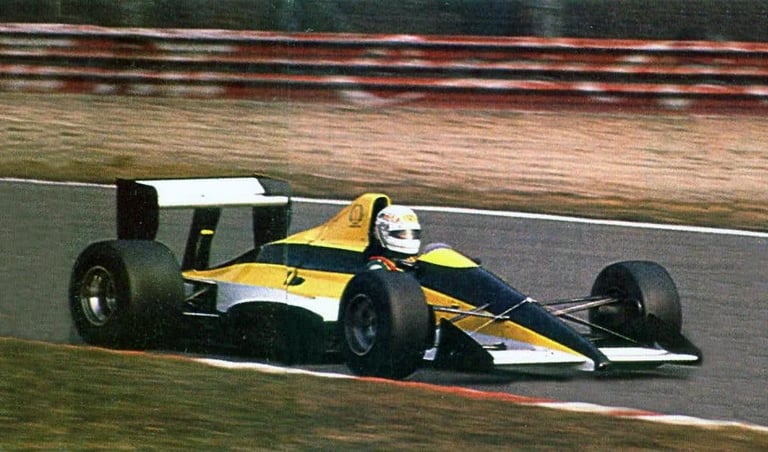
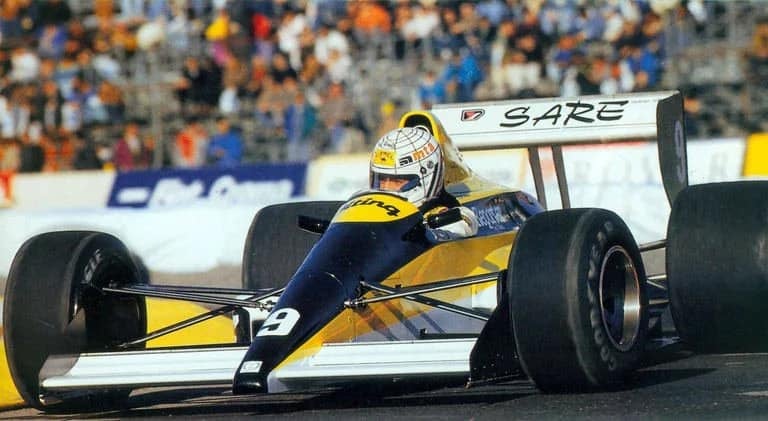
5. First F189 – The European‑Built Chassis That Became Life’s F190
In the late 1980s, Italian constructor First Racing, led by Lamberto Leoni and entrepreneur Teo Martin, aimed to break into Formula 1 with a European‑built car. The project centered on the First F189, a chassis designed by Brazilian engineer Ricardo Divila and powered by a Judd CV 3.5‑L V8—a relatively new, lightweight engine that had already shown promise in other projects.
The F189 followed the 1989 formula: rear‑mounted V8, conventional layout, and a modest body tailored for mid‑field performance. Testing was conducted with drivers such as Gabriele Tarquini and Marco Apicella. The car was reported to be drivable but not spectacular; more important, concerns grew about its structural integrity.
Divila eventually distanced himself from the project, reportedly unhappy with the final build. When the chassis was submitted for the mandatory FIA crash test, it failed to meet the minimum safety standards. Without a valid crash‑test certification, the car could not be granted an entry for the 1989 season.
Leoni, already in deep financial trouble, sold the single chassis to Ernesto Vita, a businessman who re‑branded the project as Life Racing Engines. The car was reworked into the Life F190, which did appear on the 1990 grid—but with an uncompetitive W12 engine that made it one of the slowest cars in F1 history.
This makes the First F189 a fascinating case: a car that never raced in its original configuration, but indirectly did appear on the grid under a different name and identity.
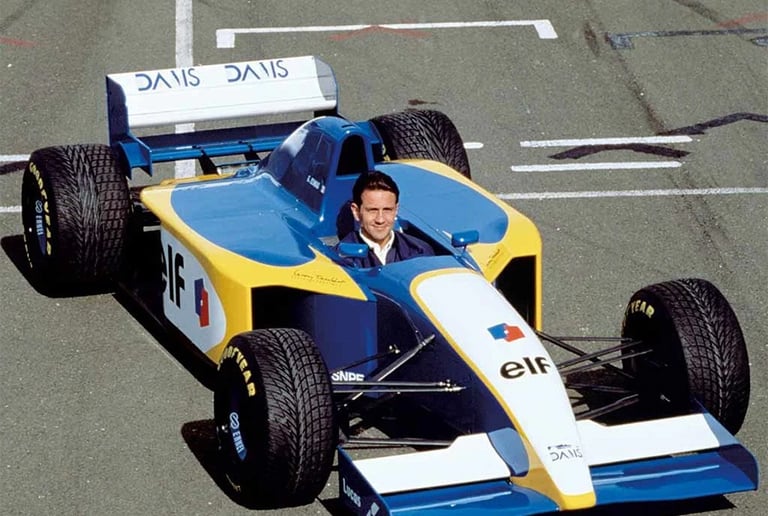
6. DAMS GD‑01 – The French Lamborghini‑V12 Machine That Never Got Its Chance
By the mid‑1990s, French team DAMS had become a dominant force in Formula 3000, producing drivers such as Jean Alesi and Olivier Panis. Owner Jean‑Pierre Baillot saw the natural next step as a Formula 1 entry, and the GD‑01 was the product of that ambition.
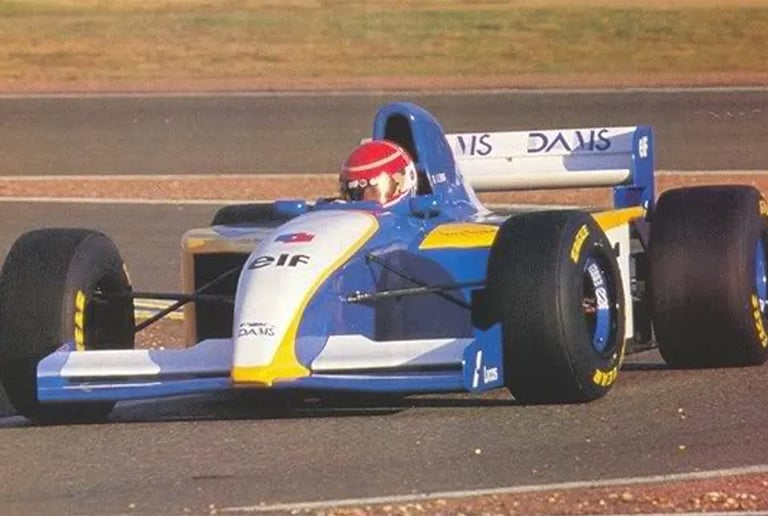
The GD‑01 was a 1995 project intended for a 1996 World Championship entry. The car used a Lamborghini 3.5‑L V12 engine, the same unit that had powered the Larrousse and Lotus teams in the early 1990s. The chassis was built in France and unveiled at the Circuit Bugatti at Le Mans in October 1995, in front of a small media group.
Testing was limited. Former F1 drivers Jan Lammers and Érik Comas each completed only a handful of laps, reporting that the car was slow and heavy, with no real hope of keeping up even with the back‑markers. The combination of a heavy V12 and a relatively conservative chassis made the GD‑01 unlikely to ever qualify for a race.
At the same time, Renault was preparing to end its works involvement with Williams, and the financial climate for new teams was grim. With no major sponsor willing to step in, DAMS dropped the project, and the GD‑01 was never homologated for a Grand Prix.
The GD‑01 thus became the last serious French attempt at building a home‑grown Formula 1 car. It was a legitimate, fully built entry candidate, but one that ran out of money and speed before it could ever reach the grid.
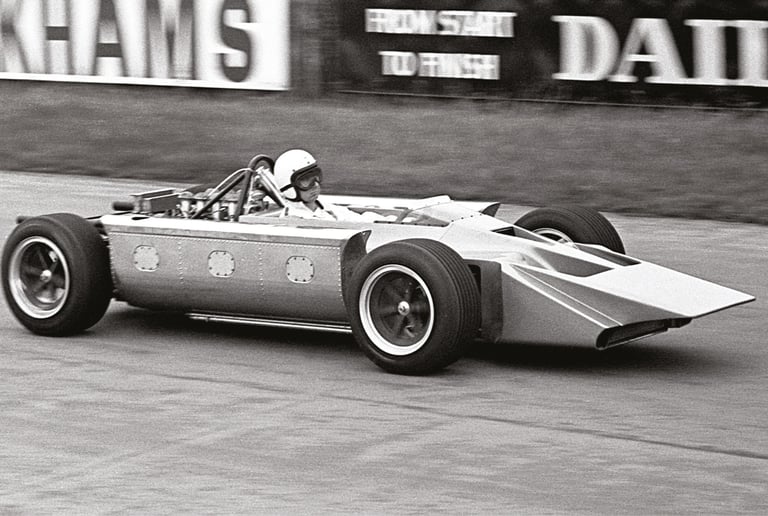
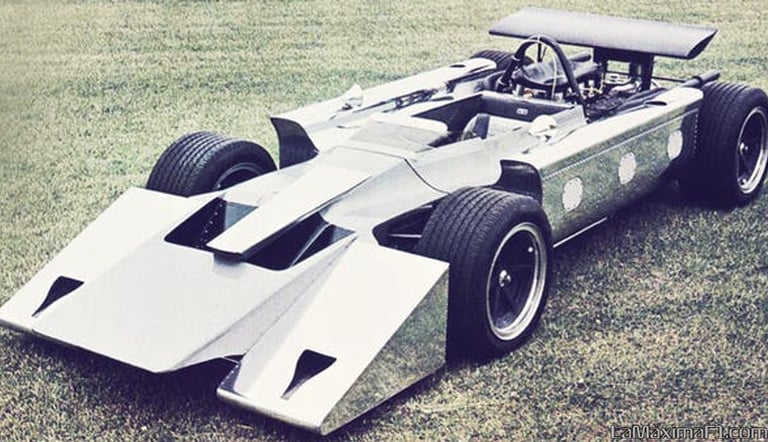
7. Cosworth’s 1969 Four‑Wheel‑Drive Prototype – The Experimental DFV That Never Raced
As the 1960s drew to a close, Cosworth’s DFV V8 was rapidly becoming the engine of choice for privateers and mid‑field teams. But the company’s engineers also wanted to explore more radical concepts, and one of these was a four‑wheel‑drive Formula 1 prototype developed around 1969.
The car used a Cosworth DFV engine mounted in a lightweight chassis with a four‑wheel‑drive system. The project aimed to improve traction out of low‑speed corners and reduce wheel spin under heavy acceleration. The drivetrain added considerable weight and complexity, and the car was built mainly as an engineering exercise rather than a race‑oriented project.
Tests reportedly showed that the four‑wheel‑drive layout did not offer a decisive advantage. The additional mechanical load made the car fragile and unpredictable, and the benefits disappeared as tyre technology and aerodynamics improved. By the time the FIA formally banned four‑wheel drive in Formula 1 regulations, the idea had already been abandoned.
The Cosworth 4WD prototype never entered a Grand Prix, and only a handful of photos and anecdotes survive. Yet, it remains a fascinating relic of an era when F1 designers were still free to experiment with mechanical layouts that would later be banned.
8. The Lola T97/30 – The 1997 Project That Never Made It to the Grid
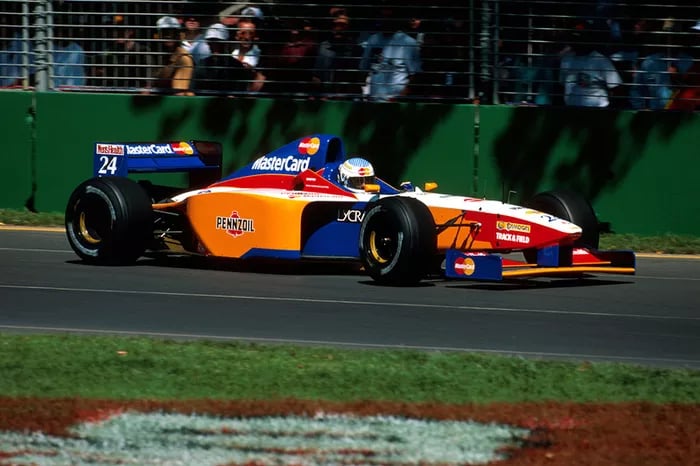
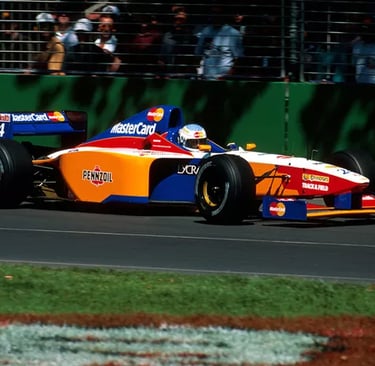
In 1997, Lola—a legendary constructor in junior formulas and sports cars—attempted one of the most audacious comebacks in Formula 1 history: a full‑works entry built around its T97/30 chassis. Designed by Eric Broadley, the team’s long‑time chief engineer, the car was a compact, conventional machine powered by Ford‑Cosworth ED V8 engines, aiming to compete as a mid‑field contender rather than a back‑marker.
The Lola T97/30 was completed in time for the 1997 season, with French driver Vincenzo Sospiri as the team’s lead driver and Brazilian rookie Ricardo Rosset as the second. The car was tested at circuits like Silverstone and Jerez, where reports suggest it was roughly 2–3 seconds per lap slower than a front‑runner, but at least in the ballpark of lower‑midfield performance. However, the project was plagued by chronic underfunding, poor reliability in testing, and a lack of major sponsors willing to back a new team built around an unproven engine package.
By the time the 1997 season began, Lola had failed to secure enough money to run a full season, and the team’s management faced tough decisions about logistics and competitiveness. After a brief appearance at Melbourne for the season‑opening Australian GP weekend, where the car failed to qualify, Lola withdrew the T97/30 from the entry list and the project was abandoned. The Lola T97/30 therefore stands as one of the last new teams to attempt a serious F1 entry in the 1990s—a car that was fully built and raced‑ready, but ultimately kept off the grid by financial and political pressures rather than pure mechanical failure.
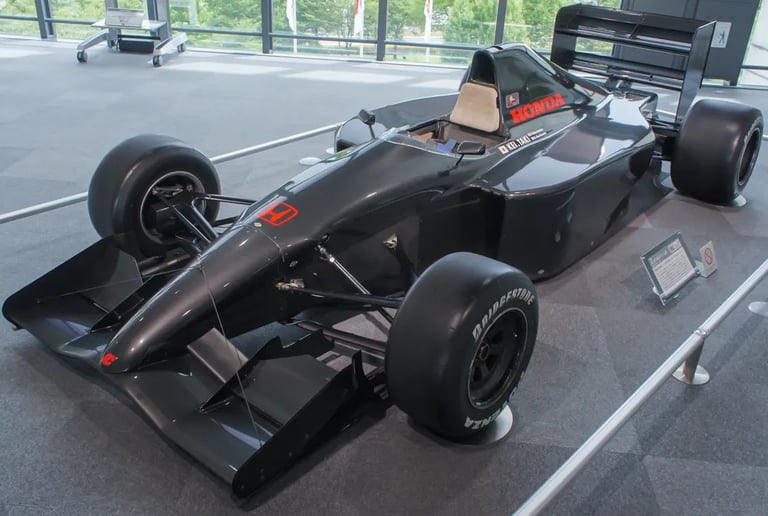
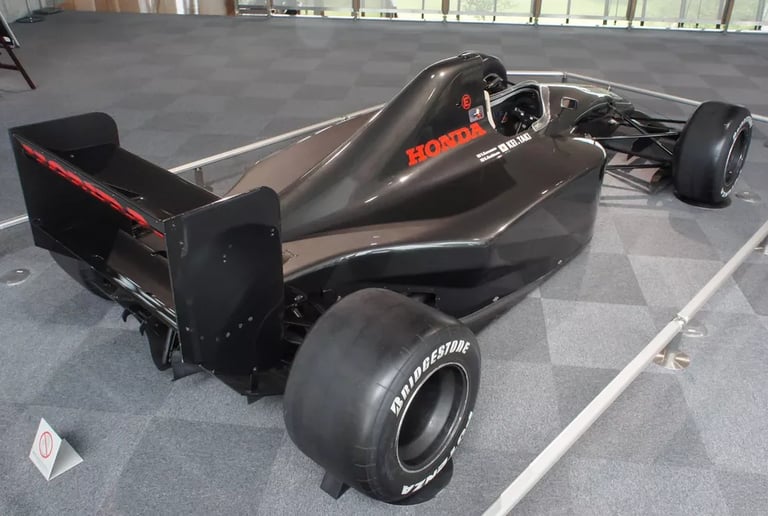
9. Honda RC100 – The Secret F1 Project Built After Hours
When Honda officially withdrew from Formula 1 at the end of the 1992 season, it left behind a legacy of six Constructors' Championships and five Drivers' titles. But within Honda's R&D department, a small group of young engineers refused to let the dream die. Working largely outside official working hours, they began a clandestine project to build a Formula 1 car entirely from scratch—not as a company directive, but as a self-imposed engineering challenge. The result was the Honda RC100.
The RC100 was the first of a series of secret prototypes, followed by the RC101 and RC101B, collectively known informally as the RC-F1 series. The original RC100 used a Honda V12 3.5‑L engine, built around a monocoque chassis designed and assembled entirely within Honda's internal R&D facilities. The project had no official budget, no race team structure, and no FIA entry paperwork—it was purely a proof-of-concept machine built by enthusiasts who happened to work at one of the most advanced automotive companies in the world.
Testing took place discreetly at the Suzuka Circuit, and the results were reportedly encouraging. Later evolutions of the car—particularly the RC101B—were upgraded with a Mugen-Honda V10 engine, giving the project a more modern powertrain that aligned with the 3.0‑L regulations of the mid-1990s. By this stage, the cars had become more refined, with aerodynamic bodywork and suspension geometry that showed clear progression from the rough early prototype.
The project ran from approximately 1991 to 1996, spanning nearly five years of informal development. During that time, Honda's official motorsport management was aware of the cars but never formally endorsed them as a return-to-racing programme. The RC-F1 series existed in a corporate grey zone: tolerated, occasionally encouraged, but never officially funded or entered into competition.
Eventually, Honda did return to Formula 1—first as an engine supplier to BAR in 2000, and later as the sponsor behind the RA099 constructor project (also discussed in this article). But the RC100 and its successors were never homologated, never received FIA chassis numbers, and never appeared at a Grand Prix weekend. They were quietly preserved, and today several of the RC-F1 prototypes are on display at the Honda Collection Hall in Motegi, Japan, where they stand as a testament to what engineers can achieve when ambition outlasts official permission.
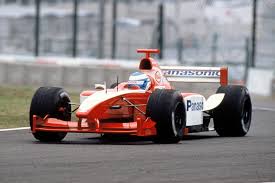
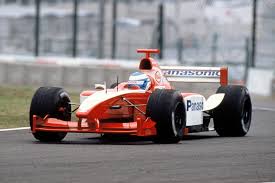
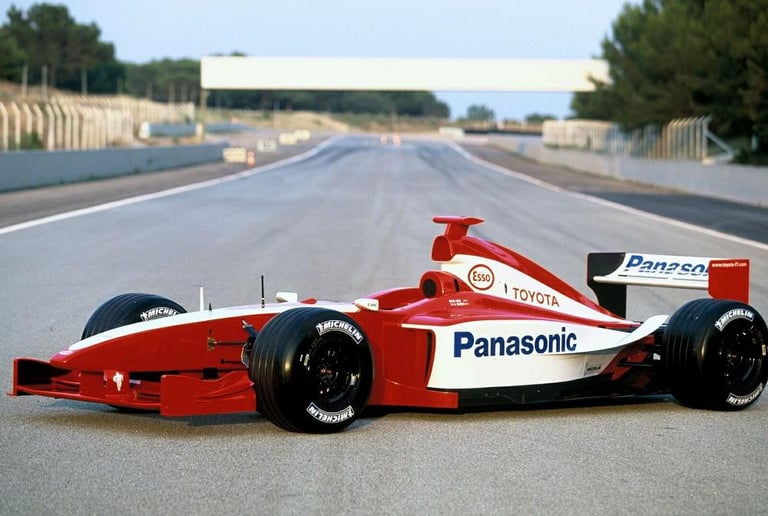
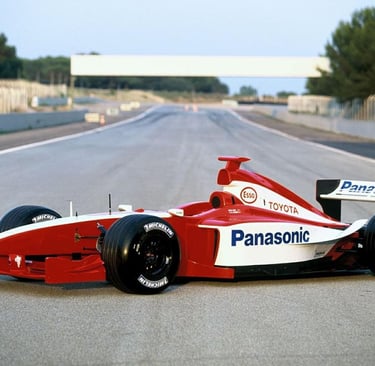
10. Toyota TF101 – The Car That Was Never Meant to Race
When Toyota decided to enter Formula 1, the Japanese giant did nothing halfheartedly. Long before its official debut in 2002, the company spent nineteen months designing and building its first Formula 1 car entirely from scratch at its Toyota Motorsport GmbH (TMG) facility in Cologne, Germany. The result was the TF101—internally known as the AM01 until its successor's name was announced—a car built not to race, but to learn.
The TF101 was initially designed by Jean-Claude Martens and André de Cortanze, and powered by Toyota's brand-new RVX-01 V10 3.0‑L engine, running on Esso fuel—making it the first F1 car to use Esso since the 1960s. The car was equipped with Michelin tyres and followed the conventional layout of the early 2000s, with a low nose and conventional sidepod package. However, from the very beginning, the TF101 proved to be a difficult and uncompetitive machine: it was heavy, slow, and poorly balanced, leading driver Mika Salo to famously describe it as "a piece of shit".
Despite its shortcomings, Toyota pressed on with an intensive global testing programme. Drivers Mika Salo and Allan McNish accumulated an extraordinary 3,000 laps and nearly 23,000 kilometres across eleven Formula 1 circuits around the world, as well as the specialist facility at Paul Ricard in southern France. The scale of the testing effort reflected Toyota's corporate ambition: this was not a low-budget operation, but a billion-dollar manufacturer determined to enter F1 prepared.
Midway through the programme, de Cortanze left the team due to the car's persistent performance issues and was replaced by Austrian engineer Gustav Brunner, poached from Minardi. Brunner oversaw the continued development of the TF101 and used the data gathered to shape its successor, the TF102, which would become Toyota's first official race car when the team debuted at the 2002 Australian Grand Prix.
The TF101 never received an FIA World Championship entry and never appeared on an official race weekend grid. It existed purely as a development and learning platform, a stepping stone from zero to the grid. But its story carries an important lesson: even one of the world's largest and most well-funded manufacturers needed a full year of private testing—and a completely rebuilt car—before it felt ready to race in Formula 1. The TF101 may never have competed, but without it, the TF102 would never have existed.
The Picturesque Hidden Side of F1 History
Taken together, these ten cars show a side of Formula 1 that rarely appears in the official record: the prototypes, “almost‑entries,” and ambitious projects that never made it to the grid. Each vehicle embodies a different kind of risk—technical, financial, or political—that ultimately kept it off the results sheet.
Yet each also contributed to the sport’s evolution, whether by pushing ideas in aerodynamics, safety, or powertrain layout. For fans who love the historical dimension of F1, these “never‑raced” machines are a treasure trove of stories, ideas, and what‑ifs—reminders that the grid is only part of the story.
If you ever find yourself wondering what would have happened had any of these cars actually started a Grand Prix, you’re already thinking like a true F1 historian.