The Battle at the Green Hell: Stewart and Ickx at the 1969 Nürburgring
CLASSIC MOTORSPORT
2/23/20266 min read
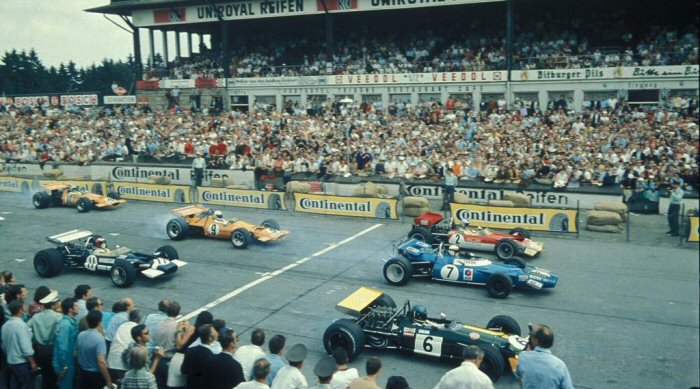
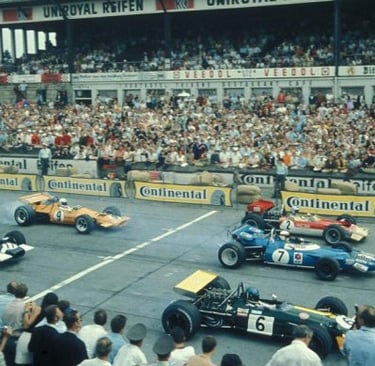
On August 3, 1969, two of the greatest racing drivers of their generation collided in a breathtaking battle across 22 kilometers of twisting asphalt carved through the Eifel mountains. The 1969 German Grand Prix at the Nürburgring Nordschleife was not just a race — it was a defining moment of an era.
The Most Dangerous Track on Earth
The Nürburgring Nordschleife was unlike anything else on the Formula 1 calendar. Stretching over 22 kilometers through the forests of western Germany, the circuit featured more than 170 corners, blind crests, and surface changes that could — and regularly did — kill drivers without warning.
Jackie Stewart himself famously called it "The Green Hell," a name that stuck precisely because no other description came close to capturing the circuit's unforgiving nature. With no run-off areas, crumbling barriers, and sections so remote that ambulances could take minutes to arrive, the Nordschleife demanded total commitment from any driver who wished to be competitive.
In 1969, the circuit had not been substantially modernized. Drivers competed knowing that a single mistake at any of its hundreds of corners could be fatal. It was a circuit that separated true champions from merely talented drivers — and on that August weekend, two men rose above everyone else.
Two Rivals, Two Styles
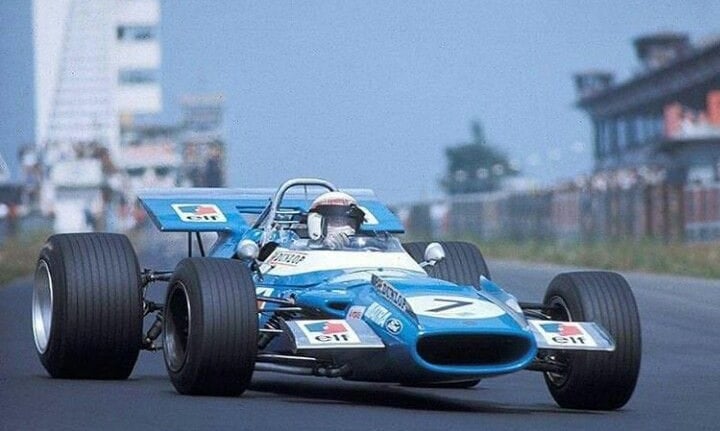
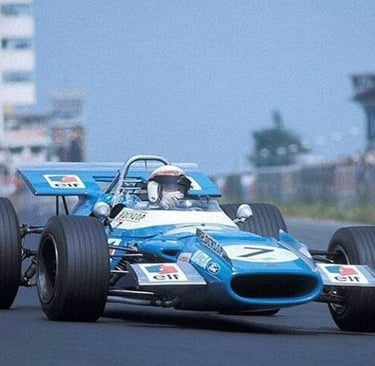
The 1969 Formula One season had been largely a one-man show. Jackie Stewart, driving the blue Matra MS80 for the Tyrrell-Matra team, had dominated from the opening race in South Africa. Clinical, precise, and extraordinarily consistent, the Scottish driver had built up a commanding lead in the World Championship by the time the paddock arrived in Germany.
Stewart's approach to racing was almost scientific. He was among the first drivers to study circuits systematically, identifying braking points and apexes with an engineer's discipline. At the Nürburgring, where memorizing the layout across more than 170 corners was itself a survival skill, this method gave him a formidable edge.
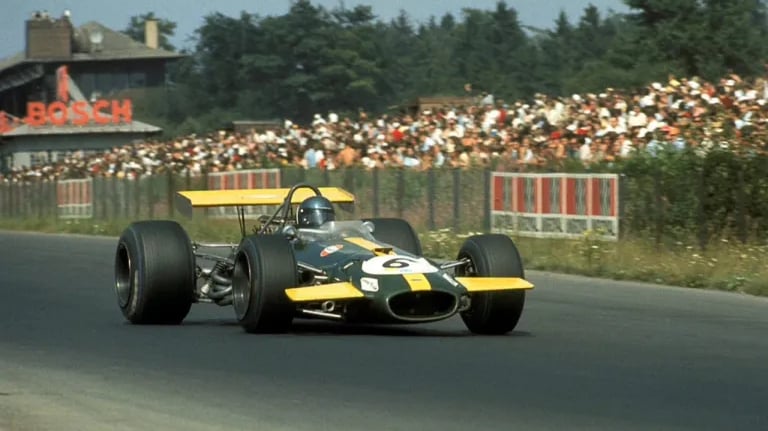
Standing in his way was a 24-year-old Belgian with a completely different philosophy. Jacky Ickx, driving the gold-and-green Brabham BT26A powered by the Ford Cosworth DFV engine, raced on instinct and raw speed. Where Stewart calculated, Ickx attacked. Where Stewart managed risk, Ickx embraced it. The contrast between the two men made their rivalry one of the most compelling in the sport's history.
A Dark Weekend Begins
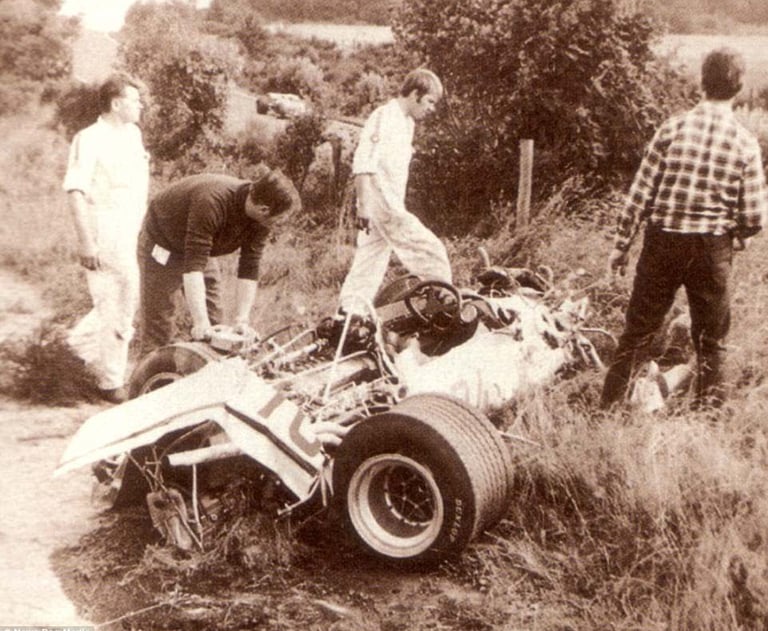
Before the race even started, tragedy struck. During practice on Saturday, German driver Gerhard Mitter — competing in the Formula 2 supporting class — suffered a catastrophic mechanical failure on his BMW. His car became airborne, and Mitter died from his injuries. He was 35 years old.
The accident cast a heavy shadow over the entire weekend. Several drivers spoke openly about the dangers of the circuit, and the atmosphere in the paddock was somber. Yet, as was the custom of the era, the show went on. There was no postponement, no formal discussion of boycott. Drivers climbed into their cars and prepared to race.
The tragedy served as a grim reminder of the stakes involved. Every lap at the Nürburgring Nordschleife in 1969 was driven with the knowledge that the margin between performance and catastrophe was razor thin.
Qualifying and the Grid
When the times were posted after qualifying, it was Jacky Ickx who claimed pole position, with Jackie Stewart alongside him on the front row. Jochen Rindt and Denny Hulme completed the second row, but it was clear to everyone watching that the race would ultimately come down to the two men at the front.
The Brabham BT26A had been a car of significant promise all season, and Ickx had been extracting maximum performance from it throughout. The Matra MS80, meanwhile, was arguably the finest chassis in the field — a beautifully balanced car that Stewart had been using to dismantle the competition race after race.
The stage was set. Twenty-six cars would take the start, but only two truly mattered.
The Race
When the flag dropped, it was Stewart who surged ahead. The Scot's start was clean and controlled, and he led into the first corner with Ickx close behind. For the opening laps, Stewart used his Matra's balance to build a small but meaningful advantage, threading through the Nordschleife's sequence of fast sweeps and tight hairpins with his customary precision.
But Ickx was not fading. He was learning. Watching Stewart's lines, calculating where he could gain time, the Belgian began to close the gap with a relentless pace that alarmed the Matra pit wall.
On lap six, Ickx made his move. In a moment of breathtaking audacity, he swept past Stewart and took the lead. The crowd — including thousands of German fans who had followed Ickx since his wet-weather triumph the year before — erupted. The hunter had become the prey.
What followed was one of the most intense wheel-to-wheel battles in Formula 1 history. Stewart refused to yield. He repassed Ickx, and the two men exchanged the lead multiple times across the Nordschleife's 22 kilometers, each driver finding new tenths of seconds in a circuit that punished any moment of hesitation.
Ickx, driving at the absolute limit, set a new lap record three times during the race. His pace in the middle stages of the Grand Prix was simply extraordinary — a performance that many observers still regard as one of the greatest individual drives in the sport's history.
Then came the decisive moment. Stewart began to report problems with his gearbox. The Matra's transmission was deteriorating, and the Scot found himself unable to fully exploit the car's pace as he nursed the mechanism through the remaining laps. The mechanical issue cost him the ability to respond to Ickx's relentless pressure.
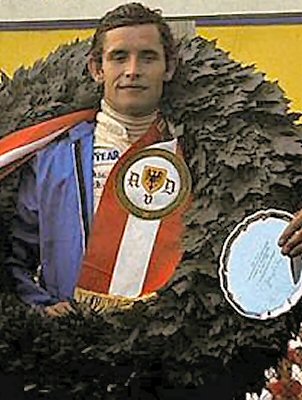
Ickx crossed the finish line first, winning the 1969 German Grand Prix in a time of 1 hour, 49 minutes, and 55.4 seconds. Stewart took second place, 57.8 seconds behind — a gap that told only part of the story of a race that had been decided by inches and sheer willpower.
The video below captures the highlights of the 1969 German Grand Prix. Watch how Ickx and Stewart exchanged the lead through the Green Hell in one of Formula 1's most unforgettable afternoons.
The victory was far more than a single race win. Heading into Germany, Stewart had appeared almost certain to wrap up the 1969 World Championship with races to spare. His lead in the standings was substantial, and his Matra had shown dominant form all season.
Ickx's victory at the Nürburgring changed the atmosphere of the championship. It demonstrated that the Belgian was not merely a fast qualifier but a complete race driver capable of beating the best in the world on the most demanding circuit of them all. It also revealed a potential fragility in the Matra package — the gearbox trouble that hampered Stewart was a warning sign that the team could not afford to ignore.
By the end of the season, Stewart was crowned World Champion with 63 points. Ickx finished second with 37. But the German Grand Prix had shown, for anyone who needed convincing, that the Belgian would remain a serious force in Formula 1 for years to come — a prophecy that proved entirely correct.
More than five decades later, the 1969 German Grand Prix endures as one of the defining races of the classic Formula 1 era. It combined every element that makes motorsport compelling: two elite drivers at the peak of their powers, a circuit of terrifying difficulty, a strategic and physical battle that swung back and forth across fourteen laps, and a mechanical twist of fate that ultimately decided the outcome.
It also represented one of the last great battles on the Nürburgring Nordschleife before the safety movement — spearheaded in large part by Stewart himself — began pushing for fundamental changes to how Formula 1 circuits were designed and managed. The Green Hell would eventually give way to safer, more sterile venues. But in August 1969, it remained in its full, dangerous glory.