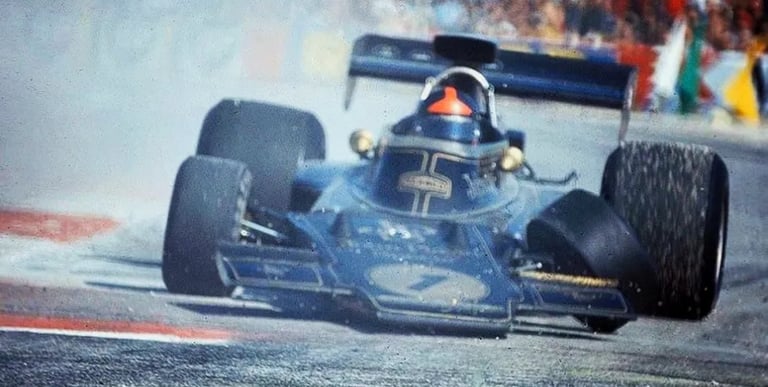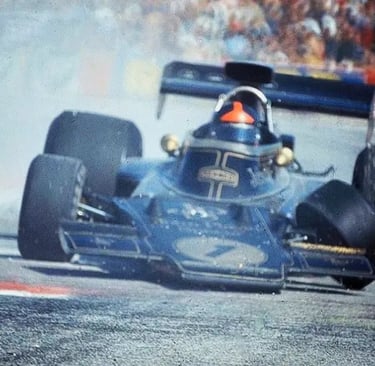
The Long Wait Ends: How Fortune Finally Smiled on Ronnie Peterson at Paul Ricard 1973
CLASSIC MOTORSPORT
2/17/20268 min read
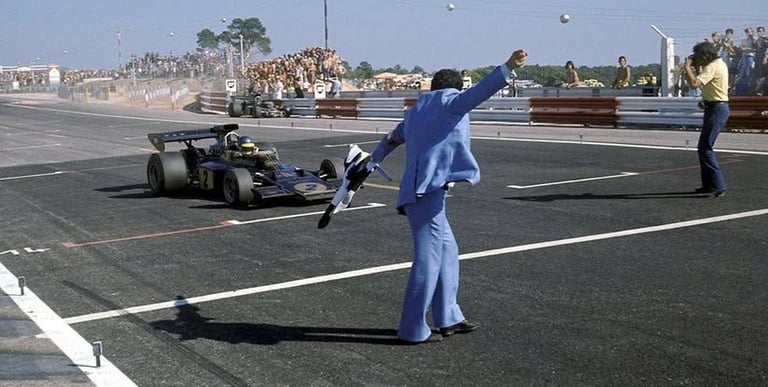
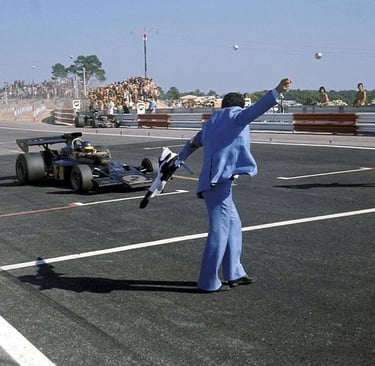
For those who followed Formula 1 in the early 1970s, Ronnie Peterson's talent was never in question. The Swedish driver possessed a raw speed that could electrify any circuit, a natural ability to extract performance from machinery that sometimes bordered on the supernatural. Yet by the time the Formula 1 circus arrived at Paul Ricard's sun-baked plateau above Bandol for the French Grand Prix on July 1st, 1973, Peterson remained winless in Grand Prix racing. That afternoon would change everything, though not in the fairy-tale fashion anyone might have scripted.
The Promise and the Frustration
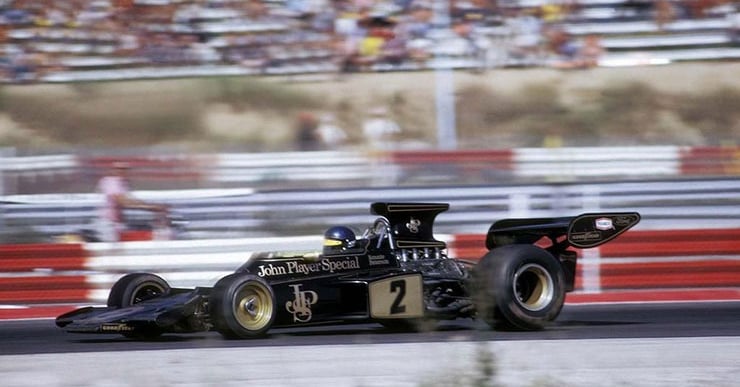
Peterson's move to Team Lotus for 1973, partnering defending World Champion Emerson Fittipaldi, had been greeted with enormous expectations. Colin Chapman had ditched the underwhelming Dave Walker and brought in the emerging Swedish star, promising equal treatment for both drivers. The Lotus 72, now in its fourth season, remained competitive despite its age, but reliability issues continued to plague the team's championship ambitions.
The first half of the 1973 season had been a masterclass in heartbreak for Peterson. At Monaco, he had led commandingly with over five seconds in hand before his dream weekend fell apart. In Sweden, his home race, he suffered last-lap heartbreak, troubled by a slowly deflating left-rear tire that robbed him of victory in front of his own people. Each near-miss seemed to compound the frustration, raising questions about whether Peterson could convert his undeniable pace into silverware.
The Establishment and the Upstart
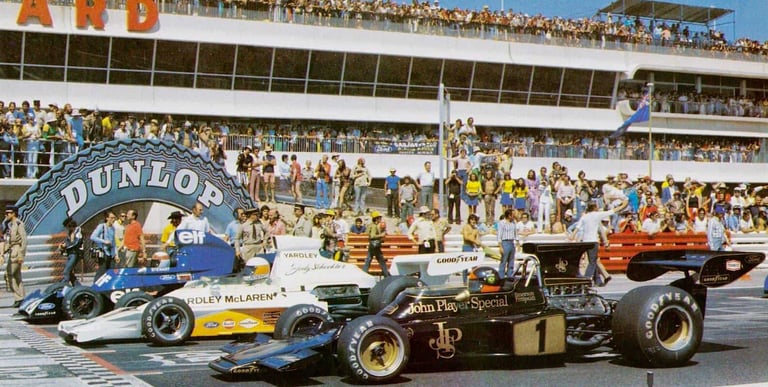
When practice began at Paul Ricard on Friday afternoon, the paddock was focused less on Peterson's quest for a first win than on an astonishing development in the McLaren garage. Jody Scheckter, the woolly-headed South African youngster making only his third Formula 1 appearance and his first European start, was turning heads with sensational pace. Using the team's spare car while Peter Revson competed in USAC events in America, Scheckter demolished the established order.
Jackie Stewart claimed pole position with what many suspected was a timekeeping error of one second, officially recording 1:48.37. But Scheckter's performance in Saturday practice was equally remarkable, positioning himself on the front row between Stewart and Fittipaldi. The "Establishment" drivers—Peterson included—muttered about special engines, special Goodyear tires, anything to explain how this rookie could challenge the elite. Nobody wanted to admit that perhaps, just perhaps, raw talent didn't care about experience or reputation.
Peterson qualified ninth, a position that suggested frustration rather than promise. The Lotus 72, for all its capabilities, required that delicate balance between cornering grip through Paul Ricard's "Mickey Mouse" slot-track section and straight-line speed down the long Mistral straight. Too much wing and the Cosworth V8 couldn't push through the air; too little and lap times bled away in the technical sections. Finding that compromise proved elusive during the sweltering practice sessions.
Race Day Drama
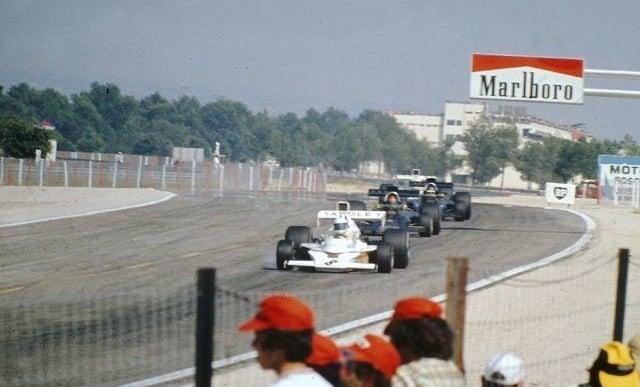
Race day brought scorching temperatures that turned the circuit into a furnace. Twenty-five cars formed up on the grid, drivers seeking whatever shade they could find before the start. When the flag fell, Scheckter executed a perfect getaway, rocketing into the lead with Peterson, Stewart, Denny Hulme, and Fittipaldi in pursuit.
What followed surprised everyone: Scheckter didn't fade. The young South African led lap after lap, the leaders running nose-to-tail in a thrilling train. Peterson ran second for much of the opening phase, shadowing the McLaren and demonstrating the pace that had marked him as a future winner. This was exactly where he deserved to be—at the front, racing for victory.
By lap 22, Fittipaldi had worked his way past both Peterson and Stewart (the latter aided by a tire stop) and positioned himself directly behind Scheckter. The Brazilian World Champion looked determined to take control. Peterson dropped to third, maintaining pressure and waiting for opportunities to develop. Hulme, a lap down after an early tire change, circulated behind the leading group, an experienced observer to the unfolding drama.
The Turning Point
For forty-two laps, Jody Scheckter controlled the French Grand Prix with remarkable maturity. Behind him, Fittipaldi probed for weaknesses, with Peterson maintaining his watching brief, ready to capitalize on any mistake. The leading trio ran in close formation, the tension building with each passing lap.
Then, approaching the tight right-angle corner onto the pit straight on lap 42, everything changed in an instant. Jean-Pierre Beltoise's slower BRM became the catalyst for disaster. Scheckter, following the backmarker, waited patiently for the corner exit to make his pass. Fittipaldi, seeing what he believed was an opportunity, committed to a bold inside move.
The gap wasn't there. The left front wheel of the Lotus struck the McLaren's right side cockpit area. Wheels tangled, and the McLaren launched skyward, landing with a sickening thud that bent its left front suspension mounting. The Lotus skated across the corner onto the rough surface, its left front suspension shattered. Both cars were eliminated instantly. Hulme, who had seen it all developing, threaded through the dust cloud unscathed.
Ronnie Peterson, who had been running right there with the leaders all race long, inherited the lead he so richly deserved.
Finally, Victory
Peterson continued for the remaining twelve laps with measured precision. There was no need for heroics—he had been fast enough to be at the front when it mattered, exactly where his talent had placed him. After all the mechanical failures that had robbed him of deserved wins earlier in the season, the racing gods had finally stopped taking victories away from him.
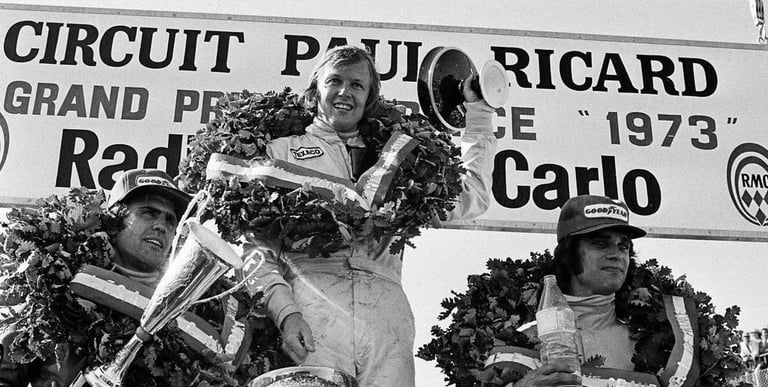
He crossed the finish line forty seconds ahead of François Cevert's Tyrrell, with Carlos Reutemann's Brabham taking third. Stewart, who had dominated qualifying, finished fourth after his tire issues. The margin of victory reflected Peterson's controlled management of the final laps, not any lack of pace.
Colin Chapman leaped joyfully in the pits, celebrating another Lotus victory—the marque's 51st Grand Prix win. For Peterson, the emotion was profound relief mixed with justified pride. He had proven throughout the first half of 1973 that he belonged at the front, matching Fittipaldi stride for stride. Now he finally had a victory to show for it.
Final Classification
Complete race results:
Ronnie Peterson (Lotus-Ford) - 54 laps, 1:41:37.4 - 9 points
François Cevert (Tyrrell-Ford) - +40.9s - 6 points
Carlos Reutemann (Brabham-Ford) - +46.5s - 4 points
Jackie Stewart (Tyrrell-Ford) - +46.9s - 3 points
Jacky Ickx (Ferrari) - +48.9s - 2 points
James Hunt (March-Ford) - +1:22.5s - 1 point
Denny Hulme (McLaren-Ford) - 1 lap down
Jean-Pierre Jarier (March-Ford) - 1 lap down
George Follmer (Shadow-Ford) - 1 lap down
Chris Amon (Tecno) - 2 laps down
Mike Hailwood (Surtees-Ford) - 2 laps down
Arturo Merzario (Ferrari) - 2 laps down
Howden Ganley (Williams-Ford) - 2 laps down
Rikky von Opel (Ensign-Ford) - 3 laps down
Jean-Pierre Beltoise (BRM) - 5 laps down
DNF: Emerson Fittipaldi (Lotus-Ford, accident, lap 41), Jody Scheckter (McLaren-Ford, accident, lap 41), Jackie Oliver (Shadow-Ford, engine, lap 38), Clay Regazzoni (BRM, fuel system, lap 29), Carlos Pace (Surtees-Ford, overheating, lap 27), Graham Hill (Shadow-Ford, gearbox, lap 19), Andrea de Adamich (Brabham-Ford, engine, lap 9), Peter Revson (McLaren-Ford, clutch, lap 3), Wilson Fittipaldi (Brabham-Ford, fuel pump, lap 2), Rolf Stommelen (Brabham-Ford, accident, lap 1).
Fastest lap: Denny Hulme (McLaren-Ford) - 1:50.99 (lap 52)
Pole position: Jackie Stewart (Tyrrell-Ford) - 1:48.37
Witnessing History
The 1973 French Grand Prix remains one of the most significant races in Formula 1 history, marking the moment when one of the sport's most talented drivers finally claimed his deserved maiden victory. For those who want to experience the tension, drama, and emotion of that sweltering afternoon at Paul Ricard, the full race footage captures every crucial moment—from Scheckter's electrifying start to the fateful collision that changed everything, and Peterson's careful management of those final twelve laps that brought him home to victory. Watching the race unfold reveals not just the mechanical drama, but the racing intelligence that kept Peterson positioned perfectly throughout, ready to capitalize when his moment finally arrived.
A Deserved Breakthrough
First victories in Formula 1 carry enormous psychological weight, but Peterson's win at Paul Ricard was anything but fluky. He had demonstrated all weekend that he had the pace to run at the front. He had positioned himself perfectly throughout the race, running second and third while staying close enough to strike. When the opportunity came, he was there—not through luck, but through skill and racecraft that had kept him in contention.
After all the heartbreaking mechanical failures at Monaco and Sweden where Peterson had lost victories that should have been his, Paul Ricard represented a balancing of the scales. He hadn't stolen this win; he had earned the right to be leading when circumstances changed. In motorsport, being in the right position at the right time is itself a skill, and Peterson had perfected it through his consistent front-running pace.
The significance of this victory extended beyond the trophy and nine championship points. It validated what everyone in the paddock already knew: Ronnie Peterson was a match for any driver on the grid, including his World Champion teammate. The only difference between Peterson and Fittipaldi now was that the Brazilian had reliability on his side more often. In terms of pure speed and racecraft, they were equals.
The Foundation for Greater Success
Peterson's French Grand Prix victory proved to be exactly the breakthrough he needed. The psychological barrier was broken. He would go on to win three more races in 1973—Austria, Italy, and the United States—finishing third in the World Championship behind Stewart and Fittipaldi. Each subsequent victory came through dominant performances, but that first win at Paul Ricard opened the floodgates.
The Lotus 72, that aging but still potent weapon, had finally delivered the result Peterson's talent deserved. More importantly, the win silenced any lingering questions about whether he could convert pace into victories. The near-misses of Monaco and Sweden were finally behind him, replaced by the undeniable fact: Ronnie Peterson was a Grand Prix winner, and he had earned it through being exactly where the fastest drivers belong—at the front of the field.
For Jody Scheckter, Paul Ricard 1973 became a painful but valuable lesson in racing's fine margins. The young South African would eventually claim the 1979 World Championship, his talent undeniable despite that afternoon's disappointment.
And for Ronnie Peterson, July 1st, 1973 marked the day when persistence finally paid off, when all the near-misses and mechanical failures that had robbed him of deserved victories were finally balanced by a result that reflected his true speed. He had been fast enough to win for months; now he finally had the trophy to prove it. The long wait was over, and it was richly deserved.