The Most Radical Experiment in F1 History: Inside the Lotus 56B
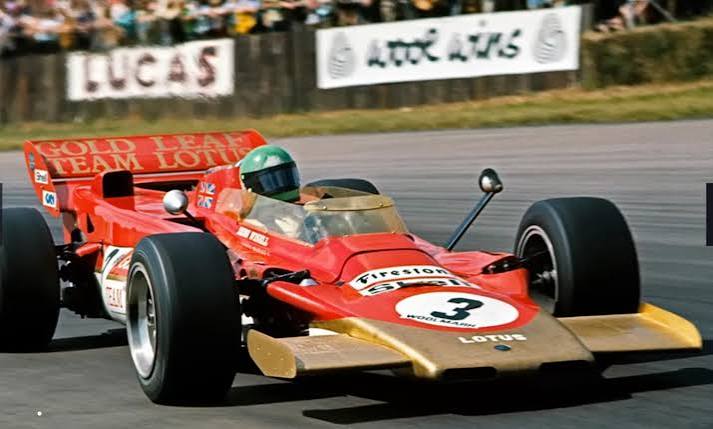
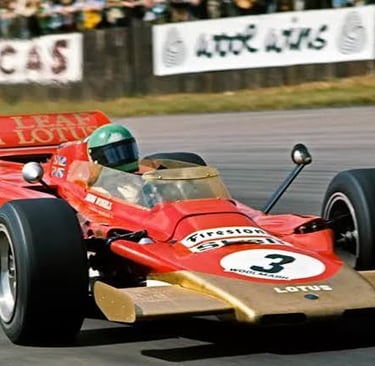
The Lotus 56B was the only Formula 1 car ever powered by a helicopter turbine to race in the World Championship. Born from an Indy 500 project, Colin Chapman's radical experiment flashed real potential in 1971 but never won a race.
CLASSIC MOTORSPORT
7/21/202610 min read
In 1999, with more than 25 years of top-level racing behind him, Emerson Fittipaldi was asked by a journalist from the British magazine Motor Sport which had been the worst car he'd ever driven. It seemed like a hard question for someone who had raced dozens of different machines over such a long career. Fittipaldi didn't hesitate for a second.
"I think it was the turbine," he replied, smiling.
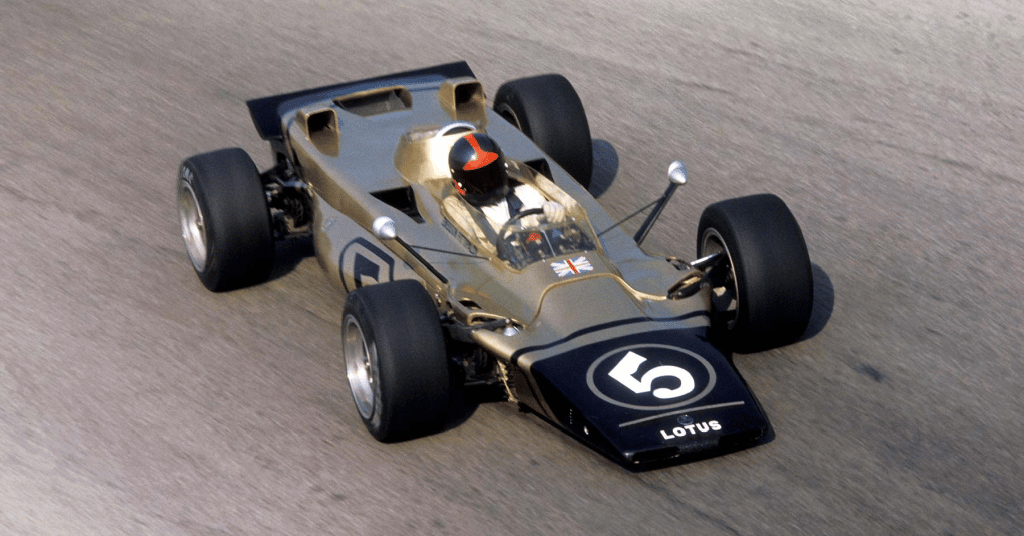
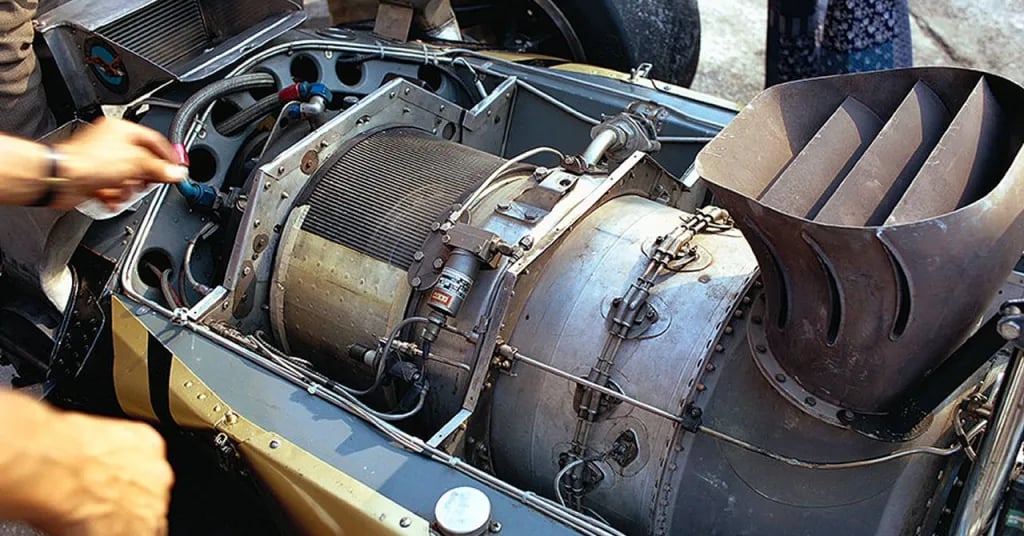
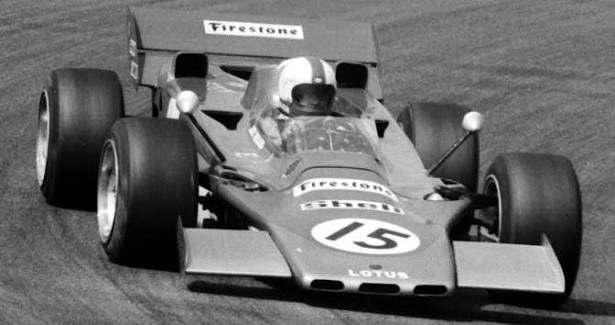
He was talking about the Lotus 56B — a Formula 1 car that didn't have an engine. Not one like any other car in the category has had before or since. Underneath that golden bodywork, instead of a block of pistons, sat a gas turbine — originally designed to power helicopters.
This is the story of the Lotus 56, one of the most radical experiments Formula 1 has ever allowed — and proof that, at certain moments in motorsport history, the line between genius and madness was barely visible at all.
The idea was born at the Indy 500, not in F1
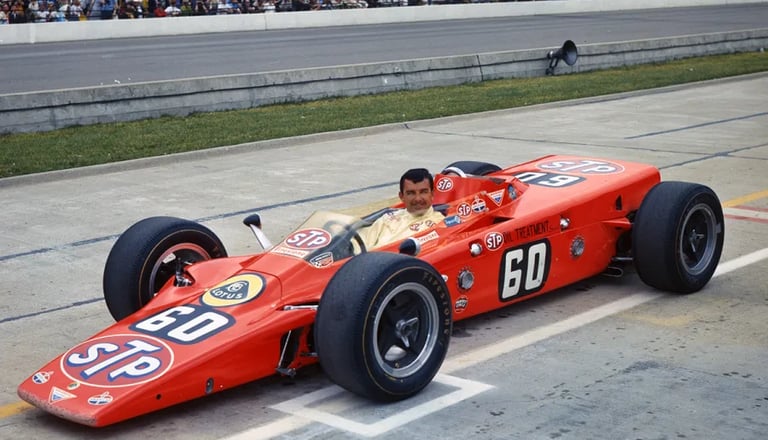
To understand the Lotus 56, you have to go back to 1967 and step outside Formula 1 for a moment. In the United States, Andy Granatelli, owner of the STP oil company and one of the most flamboyant figures in American motorsport, decided to bet on something never seen before at the Indianapolis 500: a car powered entirely by a gas turbine.
The car, nicknamed "Silent Sam" (a nod to its lack of the traditional roar of a piston engine), came astonishingly close to winning the most famous race in the United States that year. Driven by Parnelli Jones, the STP-Paxton Turbocar was leading comfortably when, with just three laps to go, a transmission bearing failed and took the car out of contention. Victory slipped away, but the idea had proven itself fast — too fast, in the eyes of many.
It was this near-miss that caught the attention of Colin Chapman, founder of Lotus and, without exaggeration, one of the boldest — and most controversial — engineers Formula 1 has ever known. Chapman was famous for his "adding lightness" philosophy rather than simply adding power, and he saw the turbine as a perfect opportunity to pursue exactly that: no pistons, no crankshaft, no clutch, and, in its most radical form, no gearbox at all.
Granatelli commissioned Chapman and Lotus to build a successor to the Turbocar, aimed at the 1968 Indy 500. That's how the Lotus 56 was born — initially conceived purely for American oval racing, with no intention whatsoever of ever competing in Formula 1.
Engineering unlike anything else on the grid
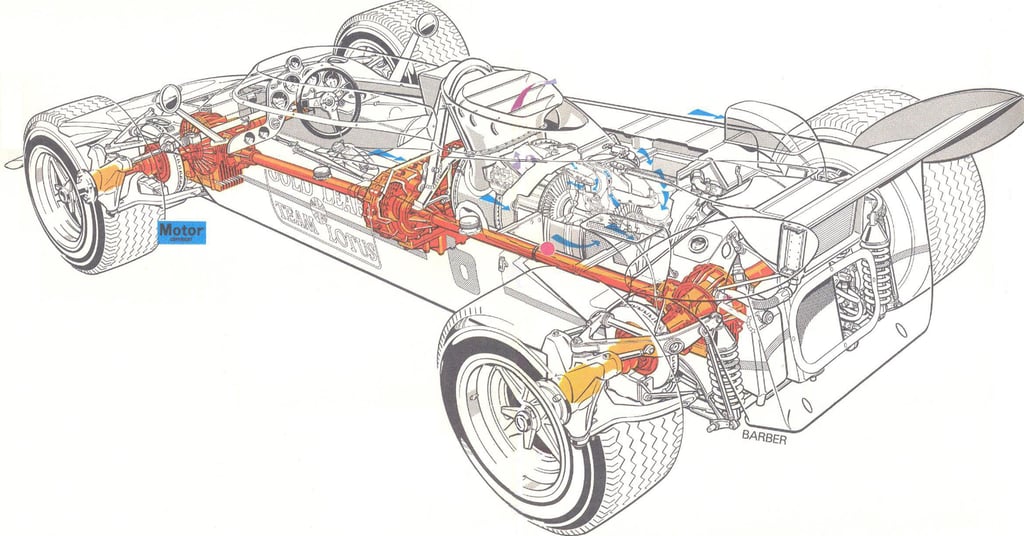
The Lotus 56 used a Pratt & Whitney turbine (the ST6 model, later adapted to the STN6/76 standard), the same engine family used in helicopters and civilian turboprop aircraft. Its operating principle was completely different from any internal combustion engine: air was drawn in through a large intake, compressed, mixed with fuel, and burned continuously — without the intermittent explosions of a conventional piston engine.
This produced some fascinating engineering consequences:
No traditional gearbox or clutch. Power went directly to the wheels through a single-speed planetary gear system.
Four-wheel drive. Necessary to handle the turbine's power delivery, which behaved very differently from a piston engine.
Power in the 500-to-600-horsepower range — significantly above the roughly 430-450 hp that the celebrated Cosworth DFV engine produced at the time.
Brutal fuel consumption. The turbine "drank" far more kerosene than a conventional engine burned in gasoline, forcing the car to carry a much larger tank than normal — nearly double the capacity of a piston-engined car of the era.
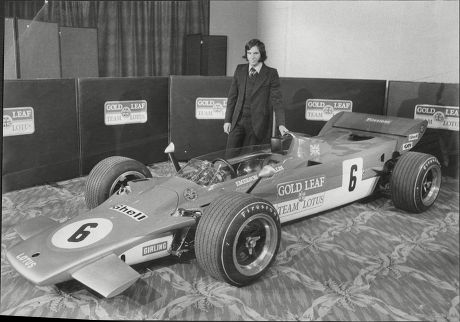
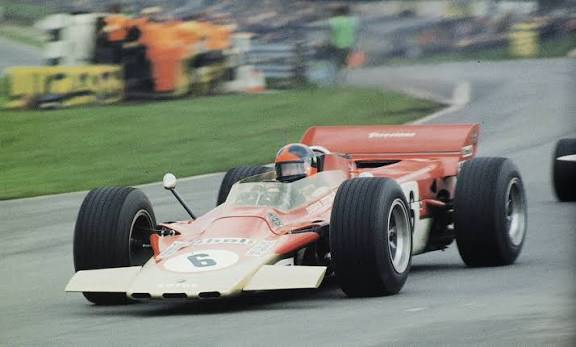
A wedge-shaped design. With no need for a traditional radiator up front, Lotus's engineers — led by chief designer Maurice Philippe — were able to draw a lower, longer, more aerodynamically efficient body. This shape would go on to directly influence the design of the legendary Lotus 72, which would go on to dominate F1 in the years that followed.
At the 1968 Indy 500, Lotus's turbine cars qualified 1st, 2nd, and 11th. But Granatelli's luck repeated itself: Graham Hill's car lost a wheel during the race, and the other two suffered identical fuel pump failures while leading late in the event. Once again, victory slipped away over mechanical details — and this time, the Indy organizers reacted decisively. USAC (the governing body for the race) changed the rules shortly afterward, drastically reducing the permitted air intake size for turbine engines, making the concept competitively unviable.
From the oval to Formula 1
With the door closed in the United States, Chapman didn't give up on the idea. Rather than scrapping the project, he shelved the concept for two years and, in early 1970, reached back out to Pratt & Whitney to develop a turbine that could finally comply with Formula 1 regulations. The Lotus 56B was born — a modified version fitted with front and rear wings to generate downforce, something the original oval-racing concept had never needed.
The 56B made its debut in March 1971 at the non-championship Race of Champions at Brands Hatch. Emerson Fittipaldi, then a rising young Brazilian driver on the team, was chosen to drive it. The initial result wasn't encouraging: he qualified 7th but retired with a suspension failure. The same problem would repeat itself at other non-championship events throughout the season.
Decades later, in an interview with the British magazine Motor Sport, Fittipaldi summed up his relationship with the car in blunt terms. Asked, after more than 25 years of top-level racing, which had been the worst car he'd ever driven, he didn't hesitate — he named the Lotus 56B on the spot. According to the driver himself, the turbine had painfully slow throttle response, which demanded a completely different driving technique: you had to get back on the power while still braking, anticipating the delayed delivery, something entirely counterintuitive for any driver used to piston engines. The absence of the familiar sound of a V8 or V12 also changed the experience completely — instead of a roar, there was a high-pitched turbine whine and suspension noises that would normally be drowned out by the engine.
The one glimpse of real potential: Zandvoort, 1971
It was against this backdrop of modest results that the most interesting moment in the short life of the Lotus 56B in Formula 1 took place: the 1971 Dutch Grand Prix, the fourth round of that year's championship, held at Zandvoort.
Dave Walker, a young Australian driver who had shown promise in Lotus's junior categories, was chosen to give the car its debut in a points-paying World Championship race. In dry conditions, the 56B failed to impress in qualifying, starting a lowly 22nd on a 24-car grid.
Dutch weather, however, changed the picture. On race day, heavy, unrelenting rain battered the circuit throughout. And it was exactly in those conditions that the Lotus 56B's four-wheel drive turned from a technical curiosity into a genuine competitive advantage — something conventional rear-wheel-drive cars simply couldn't replicate on such a soaked track.
In just five laps, Walker rocketed from 22nd to 10th — at one point setting lap times faster than the race leaders themselves, Jacky Ickx and Pedro Rodríguez. It was, without question, the most competitive the turbine car would ever look in its entire brief time in Formula 1 — a real, if fleeting, glimpse of what the technology could offer under the right conditions.
The moment didn't last. Without the familiar engine braking of a conventional piston engine — another quirk of the turbine — Walker slid off under braking at the Tarzan corner and went off track, ending the most promising race in the 56B's history right there. Worth noting: throughout the race the car had been getting progressively lighter as it burned through its generous kerosene load — a factor that, in theory, could have kept helping it in the laps that followed, had Walker managed to stay on track.
The end of a fascinating idea
The 56B would contest two more World Championship races in 1971. In England, at Silverstone, Swedish driver Reine Wisell took the wheel, but the car finished visibly outgunned on power, a full 11 laps behind the leaders. Then, in Italy, at Monza — traditionally a high-speed circuit that rewards powerful engines — it was Fittipaldi's turn to return to the car, finishing 8th. It was the best official result the 56B would ever achieve in Formula 1.
A curious detail of the 1971 Italian Grand Prix goes unnoticed even by attentive fans: the Lotus 56B didn't race in the red, white, and gold colors of sponsor Gold Leaf, but rather in a predominantly gold livery with black accents — and it didn't even officially compete under the "Team Lotus" name. The reason traces back a year earlier, to the death of Jochen Rindt at that same Monza circuit, in September 1970. Since Italian law required a judicial investigation following the fatal accident, the local prosecutor went as far as indicting Colin Chapman for manslaughter, and there was a real risk of the team's assets being seized while the case was ongoing. To shield itself from that legal exposure, Lotus began entering its cars in certain races under a separate corporate name, "World Wide Racing," formally disconnected from Team Lotus — and it was under that banner, with its own paint scheme, that the turbine car appeared at Monza in 1971. Chapman would only be acquitted of the charge in 1976, six years after Rindt's death.
Despite this, Colin Chapman decided to shut the project down at the end of that season. There were obvious technical reasons — the car was heavy, unpredictable to drive, and mechanically fragile — but there was also a strategic one. Fittipaldi himself, in later interviews, recalled the team's reasoning: if the turbine concept ever did become genuinely competitive, it was extremely likely that the FIA would simply ban it — exactly as USAC had already done at the Indy 500 a few years earlier. Investing further resources into a path that could be shut down at any moment by a regulatory decision didn't seem to make sense.
In hindsight, the decision proved correct. As early as 1972, Lotus would launch the Type 72 — a car that directly inherited the wedge-shaped design pioneered by the 56 project — and go on to win the Constructors' World Championship. The turbine car's legacy, then, didn't disappear: it survived quietly, in the shape of the chassis that replaced it.
Colin Chapman: the engineer who treated rules as suggestions
To understand how such an extreme project could ever come to life within Lotus, it helps to know a little more about the man behind it. Colin Chapman was a genius engineer who saw technical regulations almost as a puzzle to be creatively solved, rather than a rigid boundary to be cautiously respected. Throughout his career, he would be responsible for other radical ideas that changed Formula 1 forever, such as the pioneering use of ground-effect aerodynamics in the Lotus 78 and 79 in the late 1970s.
The Lotus 56 fits that pattern perfectly. Rather than accepting the turbine as an isolated curiosity confined to American oval racing, Chapman wanted to test how far the concept could go within Formula 1's rules — still fairly loose at the time. It's the kind of regulatory boldness that barely exists anymore in top-tier motorsport, where technical regulations now run to hundreds of pages and are constantly revised to close loopholes before they can even be exploited.
A curious technical detail: how to reverse a car with no gearbox?
One of the most peculiar aspects of the Lotus 56B illustrates the kind of engineering challenge the turbine posed. Since the car had no conventional gearbox, creating a reverse gear — a regulatory requirement at the time — was far from trivial. The team's solution was to install an electric mechanism, driven by a starter motor connected via a toothed belt to the four-wheel-drive system's transfer case. This mechanism spun the power turbine in reverse, reversing the direction of the drivetrain — provided the turbine's gas generator was stationary at the moment of activation. It was, in practice, an elegant engineering fix for a problem that simply didn't exist on any other car on the grid.
Another little-known detail: the Pratt & Whitney turbine had a projected service life of 1,000 hours — a surprisingly high number by Formula 1 standards of the time, when piston engines were rebuilt far more frequently. A recording clock mounted at the rear of the chassis tracked the accumulated running hours of the engine over its lifetime.
Questions about the Lotus 56B
Why didn't the Lotus 56 have a gearbox? Because turbine engines deliver power continuously, in a way very different from a piston engine. This eliminated the need for multiple gears — power went straight to the wheels through a single-speed gear system.
How many drivers raced the turbine car in Formula 1? Three: Emerson Fittipaldi, Dave Walker, and Reine Wisell, each at a different round of the 1971 championship.
Why did Formula 1 never use turbine engines again? There was no explicit, immediate ban in Formula 1 the way there was at the Indy 500, but the combination of excessive weight, sluggish throttle response, high fuel consumption, and the fear of a future regulatory ban meant no other team ever followed the path Lotus had opened.
The Legacy of Lotus 56B
The Lotus 56 never won a Formula 1 race. Ask any casual fan of the sport to name legendary cars from the category, and it's unlikely the 56 would make the list — overshadowed by established champions like the Lotus 72, the McLaren MP4/4, or the Williams FW14B.
And yet, few cars capture the spirit of an era in which Formula 1 still operated, in many ways, as an open laboratory for experimental engineering. There was no technical rulebook as extensive and restrictive as today's, spelling out with millimetric precision what could and couldn't be done. An engineer with a bold idea — and, in Chapman's case, a rare talent for turning bold ideas into real cars — could simply try. Regulation, more often than not, only reacted afterward.
Today, the only surviving Lotus 56B belongs to Classic Team Lotus, run by Clive Chapman, Colin Chapman's son, and is still occasionally displayed and demonstrated at historic events like the Goodwood Festival of Speed. It stands as a physical reminder — golden, silent, and strangely elegant — of a path Formula 1 once explored, nearly conquered in the rain on a Dutch afternoon, and then left behind for good.