The Rodriguez Brothers: Mexico's Tragic Formula 1 Legends
They were two brothers who helped place Mexico on the world motorsport map. Both died because of it. This is the full story of Ricardo and Pedro Rodríguez — Mexico's first, and greatest, Formula 1 heroes.
CLASSIC MOTORSPORT
5/4/202613 min read
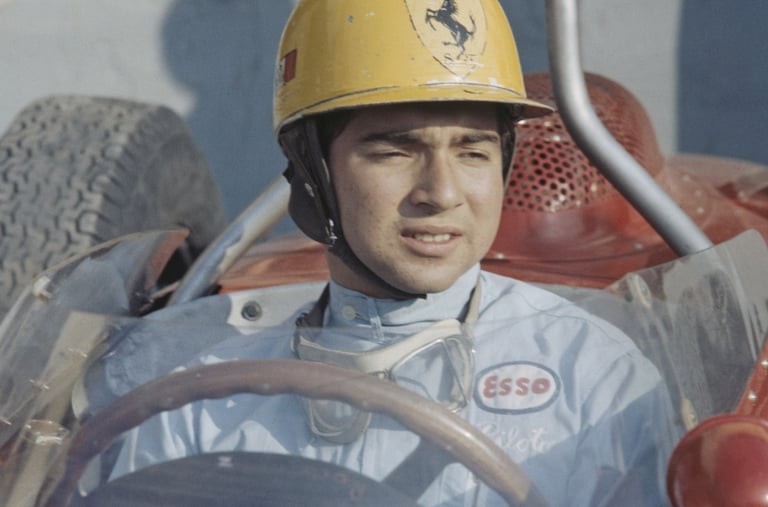
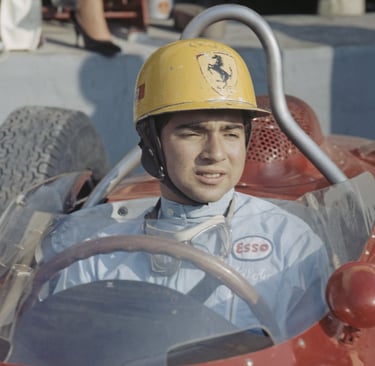
They were two brothers who helped place Mexico on the world motorsport map. Ricardo arrived first — a teenage prodigy who shocked Ferrari and the European racing establishment before his life was cut brutally short. Pedro followed a longer and more complex road, building one of the most complete careers in the history of the sport across Formula 1, Le Mans, Daytona and circuits across three continents. Both gave everything to racing. Both died because of it. This is the full story of Ricardo and Pedro Rodríguez — Mexico's first, and greatest, Formula 1 heroes.
A Family Built Around Speed
The Rodríguez story cannot be told without understanding its roots. Pedro Natalio Rodríguez, the brothers' father, was a passionate motorsport enthusiast who gave his sons access to machines and competition from the earliest possible age. Born in Mexico City — Pedro on January 18, 1940, and Ricardo on February 14, 1942 — the two brothers grew up immersed in the culture of speed. They began by racing bicycles as children, progressed to motorcycles in their early teenage years, and eventually entered cars at a level that would take them directly to the top of international motorsport.
Both brothers became Mexican national motorcycle champions — Pedro in 1952 and 1954, and Ricardo following the same path before switching full-time to cars. That early formation on two wheels was decisive. It gave both brothers extraordinary balance, mechanical sensitivity, and a willingness to operate at the absolute limit of traction — qualities that would define their driving styles for the rest of their careers, and that would earn them the respect of teammates, rivals, and engineers across the world.
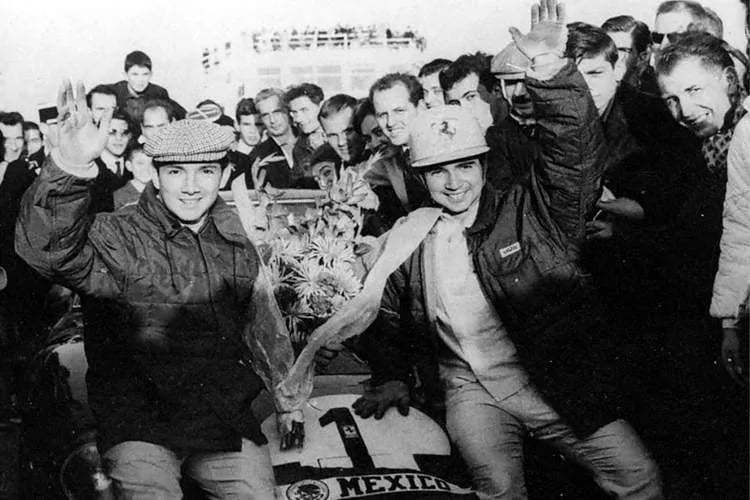
The family competed under the Scuderia Rodríguez banner, initially entering events across North America under the guidance of Luigi Chinetti's North American Racing Team (NART). The two brothers often shared the same car in endurance events, building a competitive partnership that went far beyond sibling rivalry. One of their most celebrated early achievements came at the 1961 Paris 1000 km at Montlhéry, where they drove a Ferrari 250 GT to victory for NART — a result that brought them directly to the attention of Enzo Ferrari, who offered both brothers Formula 1 seats with the Scuderia.
Ricardo: The Prodigy Who Stunned the World
Ricardo Rodríguez was the younger brother but the first to create an international shockwave. His international debut came in 1957 at Riverside, California, where he won his class in the under-1.5-litre category in a Porsche RS at just 15 years old. That was only the beginning of a series of results that would leave the motorsport world struggling to find superlatives.
The scale of his talent was already clear at Le Mans, the most prestigious endurance race in the world. Ricardo was refused entry to the 1958 race because he was just 16 years and 106 days old — the organisers deemed him too young to compete at La Sarthe. He returned in 1959, 1960 and 1961, each time raising his level. In 1960, at just 18 years and 133 days of age, he partnered André Pilette to a second-place finish at Le Mans — a result that made him the youngest driver ever to stand on the podium at La Sarthe, a record that still stands to this day.
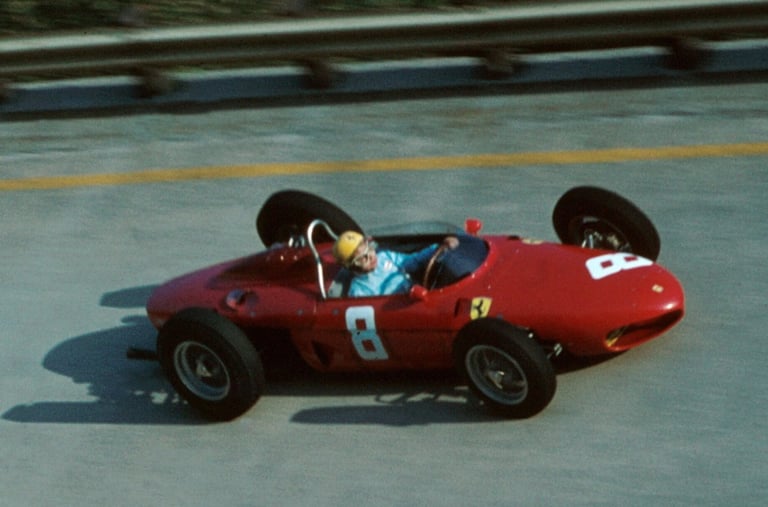
By 1961, Ferrari had seen enough. The legendary Scuderia invited Ricardo to make his Formula 1 debut as a guest at the Italian Grand Prix in Monza, the most important race on Italian soil. He was 19 years and 208 days old. Ricardo qualified in an astonishing second on the grid, becoming at that moment the youngest driver ever to start from the front row of a Formula 1 World Championship race. That record would stand until the 2016 Belgian Grand Prix, when a 18-year-old Max Verstappen broke it.
In the race itself, Ricardo ran competitively with Phil Hill and Richie Ginther — his own Ferrari teammates — exchanging positions and demonstrating a maturity that few drivers show in their first Formula 1 appearance. Only a fuel pump failure after 13 laps denied him the chance to finish. Ferrari immediately offered him a place in the 1962 programme.
He was the youngest Ferrari driver in Formula 1 history at the time, a record he held for 63 years until March 2024, when Oliver Bearman started the Saudi Arabian Grand Prix for Ferrari aged 18 years and 305 days.
The 1962 season saw Ferrari use Ricardo sparingly but effectively. He scored points at the Belgian Grand Prix with a fourth-place finish, and sixth at the German Grand Prix. He also won the 1962 Targa Florio alongside Olivier Gendebien and Willy Mairesse in a Ferrari 246 SP — one of the most celebrated sports car victories of that season. The motorsport world was already talking about him as a future World Champion. That conversation would never be finished.
Pedro: The Elder Brother With the Longer Arc
While Ricardo was lighting up the paddock with his precocious brilliance, Pedro was developing along a different but equally formidable trajectory. His path into Formula 1 was more gradual, his reputation built over a wider range of disciplines and a longer period of time — but by the early 1960s, anyone who followed international motorsport knew that Pedro Rodríguez was one of the most dangerous drivers on the grid at any circuit, in any conditions.
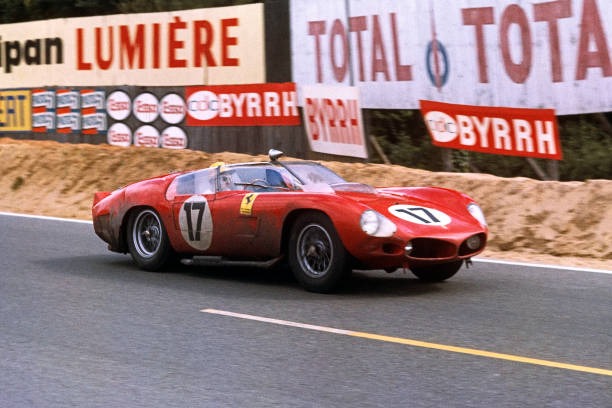
Pedro had been racing at the highest level of sports car competition since the late 1950s, regularly partnering his brother at Le Mans, Sebring, the Nürburgring and across North America for the NART team under Luigi Chinetti. In 1960 at Cuba's Liberty Grand Prix, he followed the winning Maserati of Stirling Moss home in second. In 1961, alongside Ricardo, he ran with the works Ferraris for 23 hours at Le Mans before an engine failure two hours from the end ended their challenge — a performance that, combined with their Paris 1000 km victory, convinced Enzo Ferrari to offer both brothers Formula 1 seats.
Here, however, the two brothers diverged significantly. Ricardo accepted the offer immediately. Pedro declined, citing a motor business in Mexico City that required his presence. It was a decision that altered the trajectory of both careers: Ricardo became Ferrari's teenage sensation in Formula 1, while Pedro continued his development across multiple categories, building the depth and range of experience that would make him such a formidable all-round driver in later years.
Pedro finally made his Formula 1 World Championship debut in 1963, driving for Team Lotus at the United States Grand Prix at Watkins Glen and the Mexican Grand Prix at the renamed Magdalena Mixiuhca circuit. He failed to finish on both occasions, but the foundations of a serious Grand Prix career were being firmly established.
November 1, 1962: The Day the Dream Ended
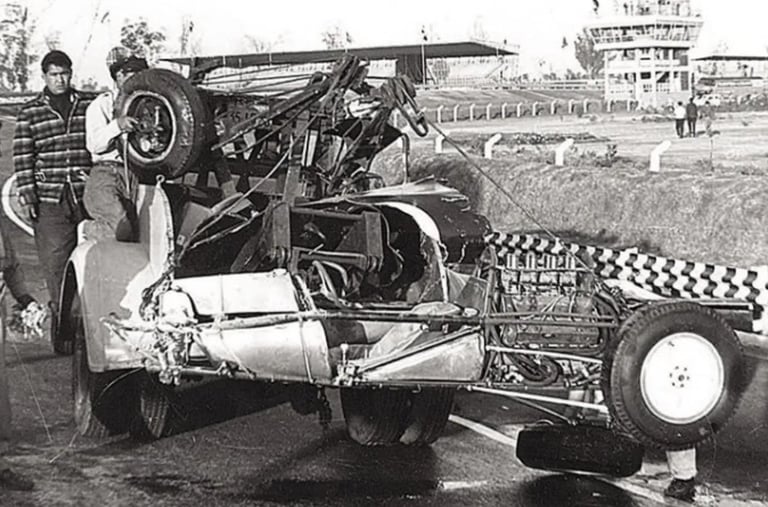
The most devastating moment in the brothers' story came during the first Mexican Grand Prix, held at the Magdalena Mixiuhca circuit in Mexico City. Ferrari decided not to enter the non-championship event, leaving Ricardo without a car from the Italian team at the one race his home crowd most wanted to see him contest.
Determined to compete in front of his own people, Ricardo signed to drive Rob Walker's Lotus 24. During the first day of unofficial practice, the Lotus suffered a failure of the rear right suspension at the Peraltada — the fastest and most demanding corner on the circuit. The car struck the barriers at high speed. Ricardo died almost instantaneously. He was 20 years old. His death provoked national mourning in Mexico, and sent a wave of grief through the international racing community that had watched his rise with such excitement and admiration.
The circumstances carried an almost unbearable symbolic weight: the Peraltada had been partly developed with the involvement of the brothers' own father, Natalio Rodríguez, who had been closely associated with the creation of the circuit. The most dangerous corner on the track — the one that claimed his youngest son — bore a part of his own signature.
Pedro was at the circuit that day. After Ricardo's crash, he withdrew from the event and briefly considered retiring from racing entirely. In the end, he chose to carry on — and the years that followed would tell the rest of the story.
Pedro Rebuilds: The Making of a Champion
The years after 1962 saw Pedro transform grief into competitive purpose. He did not simply continue his career; he elevated it, broadening his range of experience across disciplines and steadily becoming one of the most respected drivers in the world.
In 1963, the year he made his Formula 1 debut with Lotus, Pedro also won the Daytona Continental in a Ferrari 250 GTO for NART, and finished third at Sebring sharing a 330 TRI/LM with Graham Hill. The combination of sports car results and Formula 1 experience was building a driver of exceptional depth and versatility.
Over the following years, Pedro drove for Ferrari in sports car racing almost continuously through NART, and moved between different Formula 1 teams seeking competitive machinery. Results in Formula 1 were modest through the mid-1960s, but his reputation as a racing driver — particularly in endurance events and particularly in difficult conditions — was growing every year.
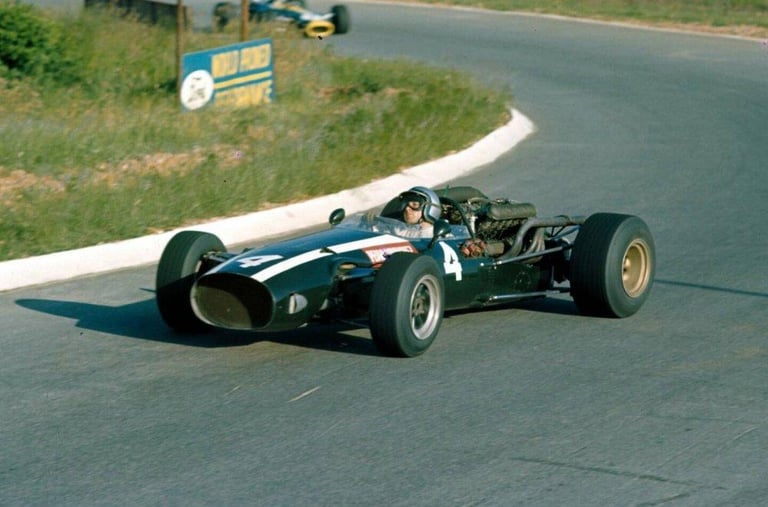
At the start of the 1967 Formula 1 season, in just his ninth World Championship Grand Prix start, Pedro Rodríguez won the South African Grand Prix at Kyalami, driving a Cooper-Maserati for the Cooper Car Company. It was the first Formula 1 Grand Prix victory ever achieved by a Mexican driver. The result was as much a historical milestone as it was a personal statement: Pedro Rodríguez was not simply the famous brother of a more celebrated prodigy. He was a Grand Prix winner in his own right.
The South African victory came with a characteristic anecdote. When the organizers came to play the national anthem at the ceremony, they did not have the Mexican national anthem and played the Mexican hat dance instead. From that moment on, Pedro always traveled with a Mexican flag and a personal recording of the national anthem, so the same thing could never happen again.
Le Mans 1968 and the Peak of His Powers
In 1968, Pedro Rodríguez reached the summit of endurance racing. The 24 Hours of Le Mans that year was held in September — delayed from its traditional June date due to the political unrest that had swept France in May 1968. Partnered with Belgian driver Lucien Bianchi in a Ford GT40 Mk I entered by John Wyer Automotive Engineering under the Gulf Oil sponsorship — car number 9 — Pedro won what remains the most prestigious endurance race in the world.
The victory was the culmination of a journey that had begun with his first attempt at Le Mans in 1958, a decade earlier, and had continued without interruption through 11 starts, including the near-miss of 1961 when he and Ricardo had run with the works Ferraris for 23 hours before the engine expired. He came back every year, 14 times in total, and when the victory finally came, it was one of the defining moments of his entire career.
Within Formula 1, his move to BRM for 1968 produced a significant improvement in his championship results. He immediately demonstrated his trademark excellence in the wet at Zandvoort and at Rouen, where he set his only Formula 1 career fastest lap during the French Grand Prix. His performances earned him renewed respect and confirmed his standing as one of the top drivers in the field.
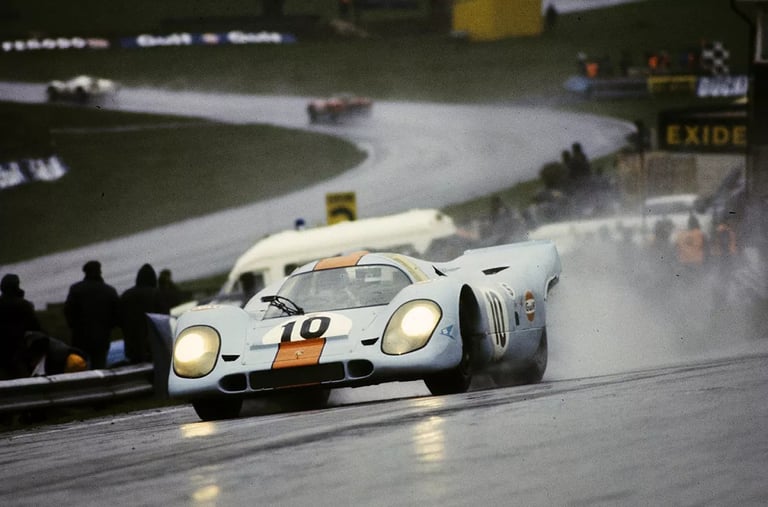
The BRM years through 1970 and 1971 also saw Pedro at the wheel of the legendary Porsche 917 for John Wyer's Gulf-sponsored sportscar programme. Across 1970 and 1971, he won eight races in the 917 — including victories at Daytona, Brands Hatch, Monza, Watkins Glen and Spa — contributing directly to Porsche's World Sportscar Championship titles. He was a two-time winner of the 24 Hours of Daytona and one of the most feared drivers in endurance racing of any era.
Spa, 1970: A Master Class at the Fastest Race in History
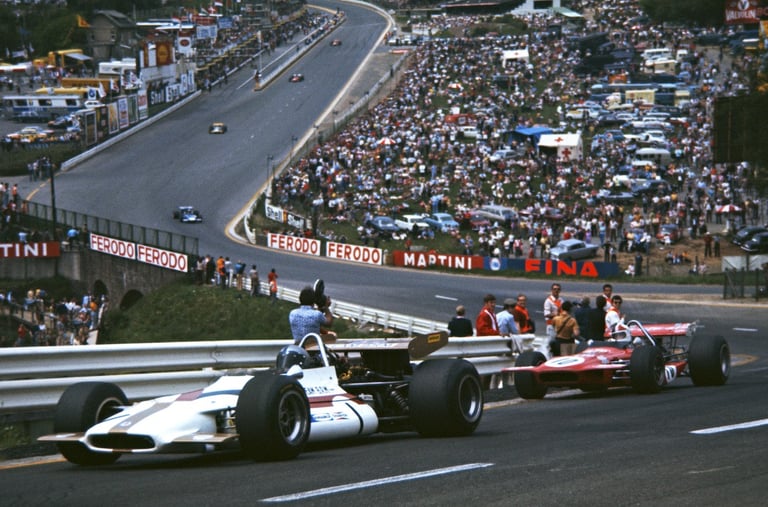
The defining Formula 1 moment of Pedro Rodríguez's career came at the 1970 Belgian Grand Prix at Spa-Francorchamps. To understand its full significance requires understanding what Spa represented in that era: not the modern, barrier-lined circuit of today, but a raw, terrifying blast through the Belgian countryside at speeds that tested every driver's courage to the very limit. Eau Rouge — now a celebrated and commercially named corner — was in 1970 a genuinely dangerous bend through which many of the era's best drivers had been hurt or killed.
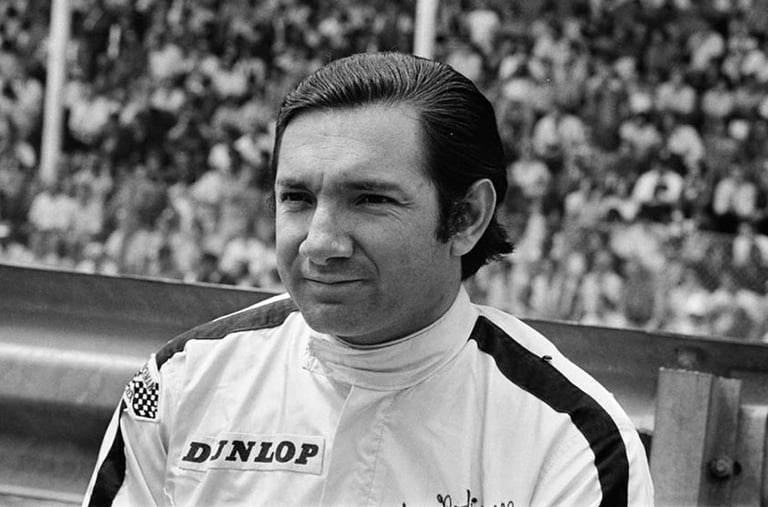
In his BRM P153, Pedro won the race ahead of Jean-Pierre Beltoise's Matra, in 3rd, crossing the line just 1.1 seconds ahead of Chris Amon's March, the 2nd place. More remarkable than the margin of victory was the speed at which it was achieved: his average race speed of 149.94 mph (241.31 km/h) was the highest ever recorded in the history of Formula 1 Grand Prix racing up to that point — a record of outright speed achieved not on a totally dry, pristine surface, but under the demanding conditions of a Belgian spring. It was one of the great individual performances in the sport's history, and it confirmed what many had long suspected: Pedro Rodríguez, in the wet and at the fast circuits, was simply without equal.
It is possible to watch the highlights of this incredible race in the link below:
The 1971 season brought the promise of even more. BRM had developed the new P160 chassis under designer Tony Southgate, and for the first time in years the team had consistently competitive engines. The possibility of a genuine World Championship challenge was real. At the Dutch Grand Prix at Zandvoort, Pedro challenged Jacky Ickx through the rain and only narrowly missed winning. His career had reached its absolute peak. Then came July.
Norisring, July 11, 1971: The Story Ends
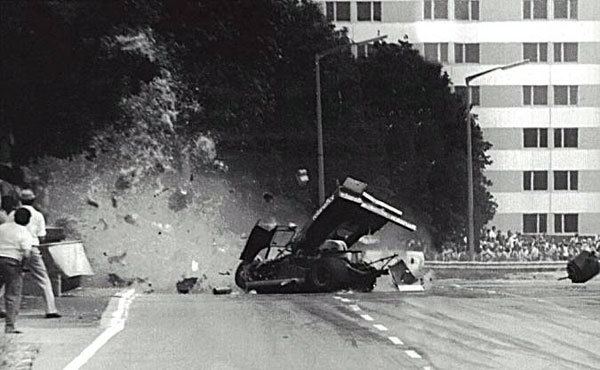
The end came on a warm summer afternoon in Nuremberg, West Germany, during an Interserie sports car race at the Norisring circuit. Pedro was driving a Ferrari 512 M for his friend Herbert Müller — the same Herbert Müller with whom he had shared a Porsche 908 at the 1971 Targa Florio — in what should have been a routine appearance in a category where he was deeply comfortable.
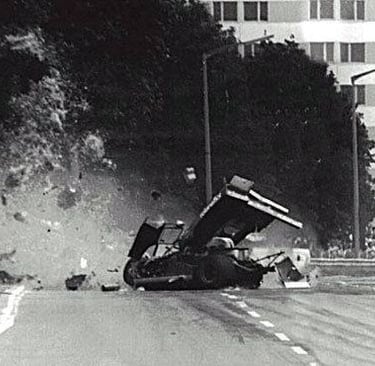
The precise sequence of events that led to the accident has never been completely resolved, and accounts from the period differ in their details. What a contemporary trackside source reported is that photographers and observers at the circuit had noticed something wrong with Pedro's right front tyre as early as lap 10 of the race. On lap 12, the tyre came off completely under heavy braking for the sharp S-bend. The car struck a wall with enormous force, rebounded across the track and caught fire immediately. Pedro was extracted from the burning wreck alive, but had suffered catastrophic injuries. He died shortly afterward at the age of 31.
What is certain is that a mechanical failure and the resulting crash took his life — just as a mechanical failure of the rear suspension had taken Ricardo's nine years earlier at the Peraltada in Mexico City.
The symmetry is almost unbearable. Two brothers. Two careers of exceptional talent. Two deaths caused by machinery failing at the worst possible moment on a racing circuit. Their father, who had loved motor racing deeply enough to pass that passion on to both his sons, outlived them both.
A Name on the Circuit
The response of the Mexican nation and the international motorsport community was immediate and lasting. The Magdalena Mixiuhca circuit in Mexico City — which had already been associated with Ricardo's name after 1962 — was officially renamed the Autódromo Hermanos Rodríguez, the Brothers Rodríguez Circuit, in 1973. The renaming ensured that both names would remain permanently attached to the country's most important motorsport venue, visible at every race meeting, printed on every ticket, spoken on every broadcast.
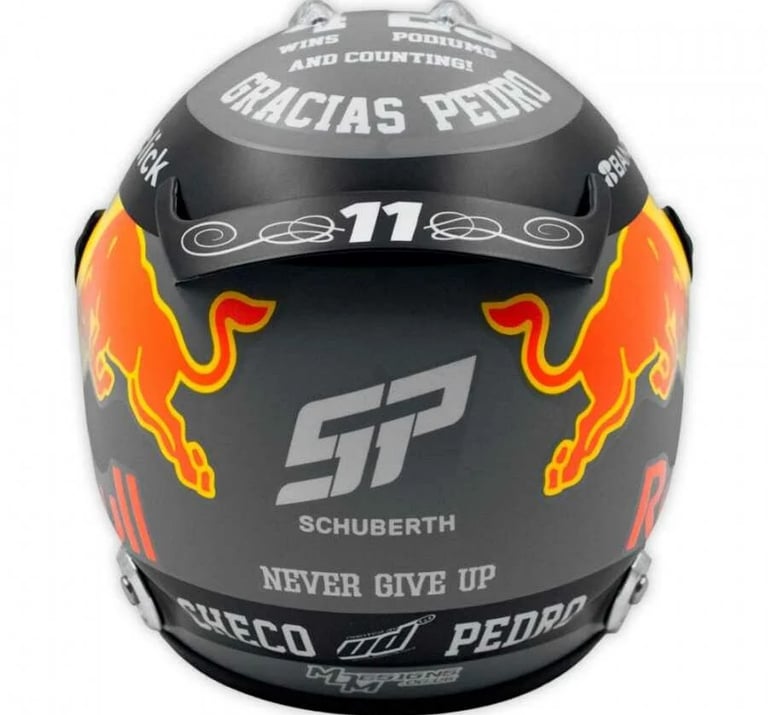
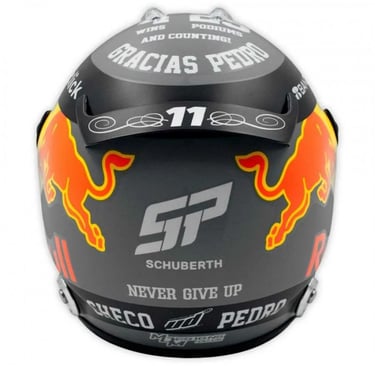
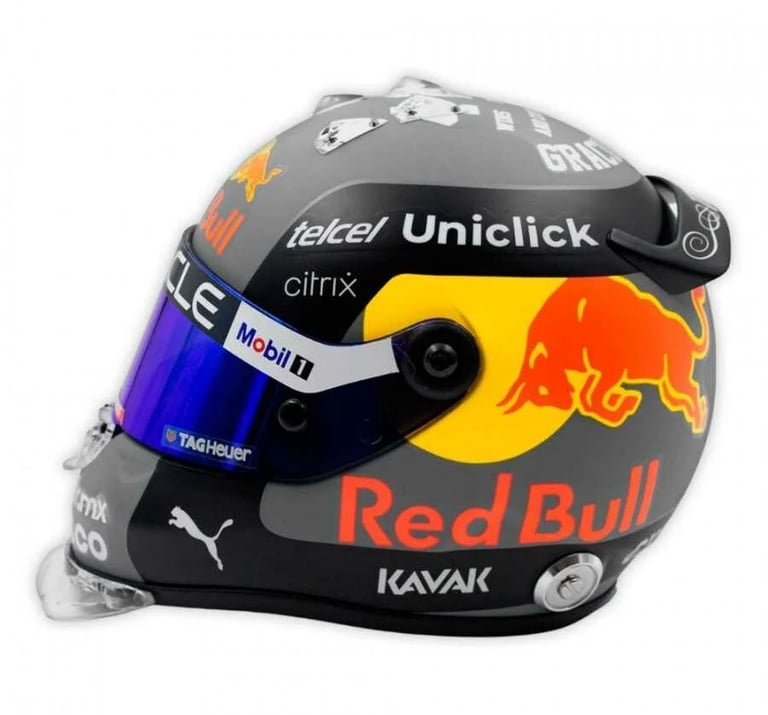
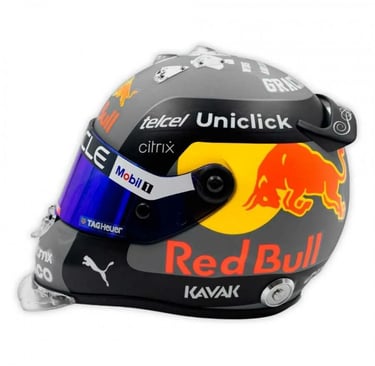
The legacy of the brothers continued to be honoured in concrete and personal ways in the decades that followed. In 2024, Mexican driver Adrián Fernández acquired the BRM P153 with which Pedro won the 1970 Belgian Grand Prix at Spa from a private collector — returning one of the most significant machines in Mexican motorsport history to the country it had once represented at the highest level. And at the 2022 Monaco Grand Prix, Sergio Pérez — the only other Mexican driver in Formula 1 history ever to win a race — wore a specially designed helmet featuring Pedro's colour scheme and the words "GRACIAS PEDRO" on the crown, acknowledging the debt that Mexican motorsport owes to the man who first showed the world what a Mexican driver could do.
What Ricardo and Pedro Left Behind
The Rodríguez brothers remain compelling because their careers capture both the romance and the brutality of motor racing's most dangerous age. Ricardo's story is about breathtaking promise interrupted almost before it properly began — a driver who made the front row of the Italian Grand Prix on his first attempt, won the Targa Florio, scored points for Ferrari at 20 years old, and was gone before anyone had the chance to see what he might become. Pedro's story is about turning grief into greatness, channeling the loss of his brother into a career that produced Formula 1 victories, Le Mans glory, eight Porsche 917 victories in the World Sportscar Championship, and a performance at Spa-Francorchamps in 1970 that has never been forgotten by those who saw it.
Together, the brothers opened the door for Mexican racing at the highest level. Before Ricardo walked onto the Ferrari pit wall at Monza in 1961, Mexico had no Formula 1 driver and no Grand Prix tradition. By the time Pedro won at Spa in 1970, Mexico had a Le Mans winner, a Grand Prix winner, and a pair of brothers whose names were written into the history of the sport in letters that no revision of the record books will ever erase.
Every time Formula 1 returns to the Autódromo Hermanos Rodríguez in Mexico City, the name on the circuit entrance points back to where the story began — with two young men from Mexico City who loved racing more than almost anything else, who gave the sport everything they had, and whose absence still marks the history of Formula 1 more than five decades after they were lost.
Ricardo and Pedro Rodríguez. Gone too soon. Never forgotten.