The Truth Behind Moss's Victory at Aintree 1955
CLASSIC MOTORSPORT
2/9/20265 min read
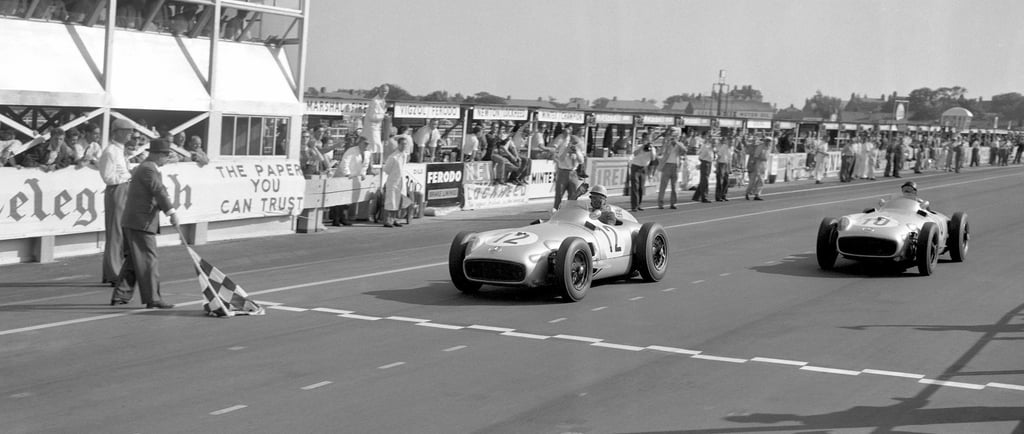
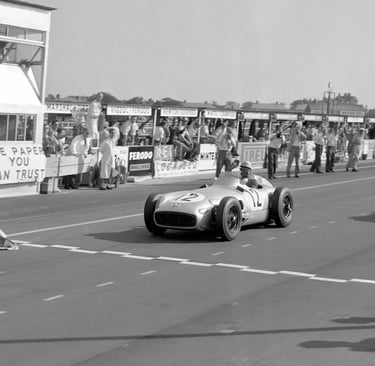
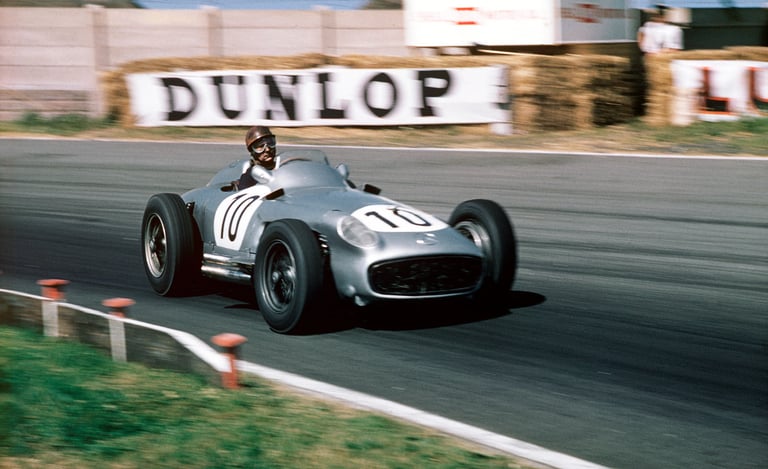
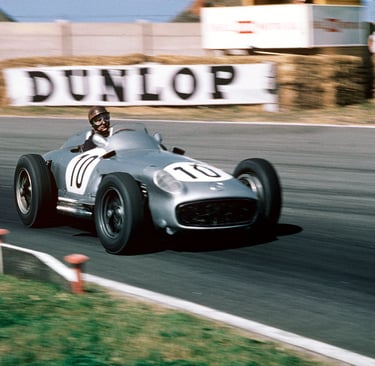
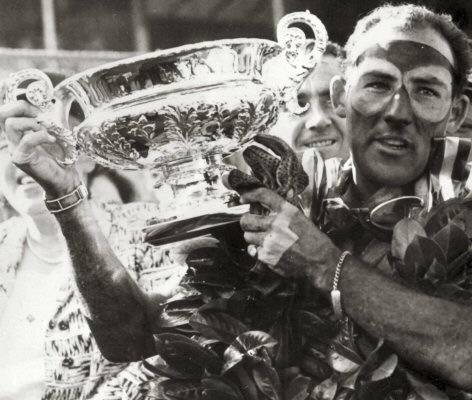
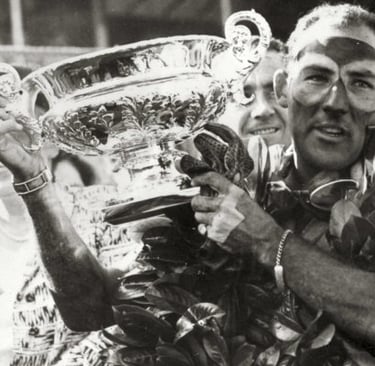
The 1955 British Grand Prix, held on July 16 at the Aintree Circuit, remains one of the most debated episodes in Formula One history. The question that has persisted for 70 years is simple, yet deeply intriguing: Did Stirling Moss truly earn his first World Championship victory, or did Juan Manuel Fangio, his legendary Mercedes teammate, gift him the triumph in front of the British crowd?
The Historical Context
The 1955 season had been marked by the Le Mans tragedy in June, which resulted in the cancellation of the French, German, Swiss, and Spanish Grands Prix. When the Formula One circus arrived at Aintree, Fangio already dominated the championship with 27 points against Moss's mere 13, with only two races remaining. The 44-year-old Argentine had won three of the four previous races, while 25-year-old Moss was still seeking his first victory in the top category.
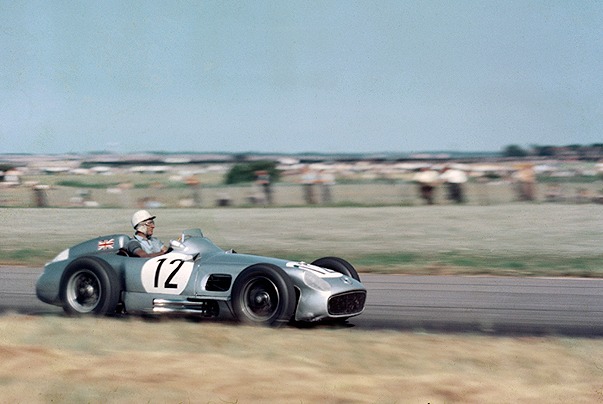
The Aintree circuit, built around the famous Grand National horse racing track in Liverpool, was one of Europe's most modern and safe facilities at the time. There, Mercedes fielded their four W196s: Moss, Fangio, Karl Kling, and Piero Taruffi.
To better understand the atmosphere and intensity of this historic race, watch this comprehensive summary of the 1955 British Grand Prix at Aintree, which captures the key moments of the legendary duel between Moss and Fangio:
The Race Unfolds
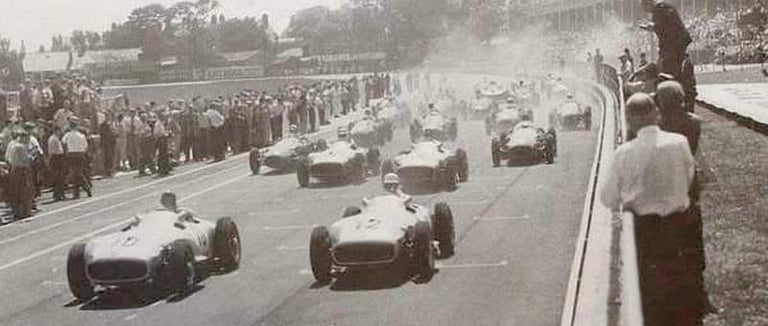
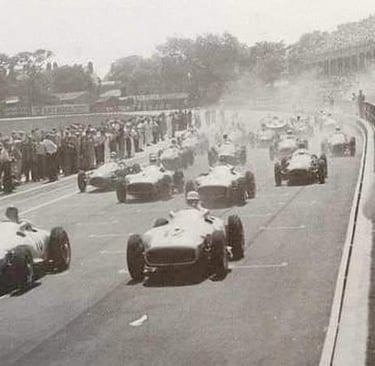
The battle began in qualifying, when Moss beat Fangio for the first time that year, taking pole position by just 0.2 seconds. At the start, however, Fangio reclaimed the lead in the first-corner chaos. What followed were 90 laps of controlled yet intense dueling.
Moss regained the lead on lap three, only to be overtaken again by Fangio on lap 18. The decisive moment came on lap 26, when, according to Richard Williams of The Observer, Moss executed "some neat work at overtaking a backmarker under braking, forcing Fangio to back off" - a maneuver he had learned from Luigi Villoresi at Monza years before.
There is, however, an alternative version of this episode. Photographer Michael Tee, positioned on the opposite side of the circuit, told Simon Taylor that he witnessed Fangio going off track onto the grass. According to Tee, after the race, the Argentine gave him a telling-off for changing position, depriving him of using the photographer as a braking reference.
Team Orders and Neubauer's Enigma
From lap 49, after Roberto Mieres's retirement (the last serious rival in a Maserati), team manager Alfred Neubauer ordered the Mercedes drivers to maintain the status quo and reduce their pace. According to Denis Jenkinson, in his 1980 book celebrating Fangio's biographical film, Neubauer had decided the victory should go to Moss.
This would not have been a precedent. In 1954, Fangio had already agreed to a similar scheme, yielding victory to Kling in a demonstration race at the AVUS circuit. The big question is: Did Moss know about this decision?
Nigel Roebuck, a Motor Sport journalist who was present at Aintree as a nine-year-old boy, had the opportunity to interview both drivers decades later. Moss was categorical: "Don't ask me if he let me win that day, because I honestly don't know, and it was something we never discussed afterwards. I can say there were no pre-arranged tactics between us, nor team orders from Neubauer".
The Briton added: "Perhaps it was suggested to Fangio that he should let me win, because it was the British Grand Prix. It's quite possible. But he wasn't the type of guy who would let me know, unlike some drivers from the recent past. He had too much class for that".
Fangio's Response
Fangio's response to Roebuck was characteristically enigmatic: "I don't think I could have won, even if I'd wanted to. Stirling was really pushing that day, and his car had a higher final ratio than mine. It was faster".
This technical statement is fascinating. Fangio suggests Moss had a mechanical advantage - a higher gear ratio that would provide better acceleration. Curiously, Moss never publicly acknowledged this difference.
The Secret Agreement and the Final Lap
The most surprising revelation came years later, in the preface Fangio wrote for the book "Stirling Moss: My Cars, My Career" in 1987. Addressing Moss directly, Fangio revealed: "Then there were the times when we raced each other from start to finish, until the 1955 Belgian Grand Prix at Spa, when you finally agreed with me that the battle between us should only last until we gained a certain advantage over the competition. Then Neubauer had to show us the 'Langsam' [slow] pit signal and whoever was in front stayed in front, and whoever was in second stayed in second".
This agreement, sealed at Spa weeks before Aintree, should have settled the question. But it didn't. On the final lap, something extraordinary happened. Moss, still unsure about what he should do, reduced his pace - enough to allow Fangio to draw almost alongside him. But when he realized "the Old Man" was still behind him at the final corner, Moss confessed: "I can say I gave it everything down the straight to the finish line!".
The final margin was just 0.2 seconds after more than three hours of racing. Moss recorded the fastest lap, almost 2 seconds quicker than Fangio. Mercedes completed a historic 1-2-3-4, a result that would not be repeated until the 2010 Chinese Grand Prix.
Conclusion: Victory or Gift?
The truth probably lies somewhere between the extremes. The evidence suggests that Neubauer and Fangio planned to facilitate Moss's victory in front of his home crowd. The Spa agreement established that once in front with a safe advantage, position would be maintained. Moss led most of the second half of the race, technically fulfilling the agreement's terms.
But Fangio's dramatic approach on the final lap, apparently defying Neubauer's "slow down" signals, and Moss's instinctive response of accelerating to the line reveal something fundamental about these two giants. As Mike Doodson wrote in Motor Sport Magazine: "In Formula One, any attempt to keep a good man under control is doomed to failure. The desire to win will always defeat good intentions".
Fangio had enough class to honor the spirit of the agreement and give the young talent his first victory. But he also had enough pride to ensure that if Moss crossed the line first, it would be because he deserved it on the final lap. Moss, for his part, had genuine speed that weekend - pole position and fastest lap attest to this.
Seventy years later, the 1955 British Grand Prix remains a testament to a different era: when mutual respect, sportsmanship, and competitive drive coexisted in delicate balance - and when the line between earned victory and gifted victory was deliberately kept shrouded in mystery.