Tony Brooks: The Champion-Class Driver History Almost Forgot
Tony Brooks was a champion-class driver who rivaled Stirling Moss and nearly won the 1959 title, yet history forgot him. This article reveals why one of F1's greatest uncrowned drivers deserves to be remembered among the legends.
CLASSIC MOTORSPORT
5/19/202612 min read
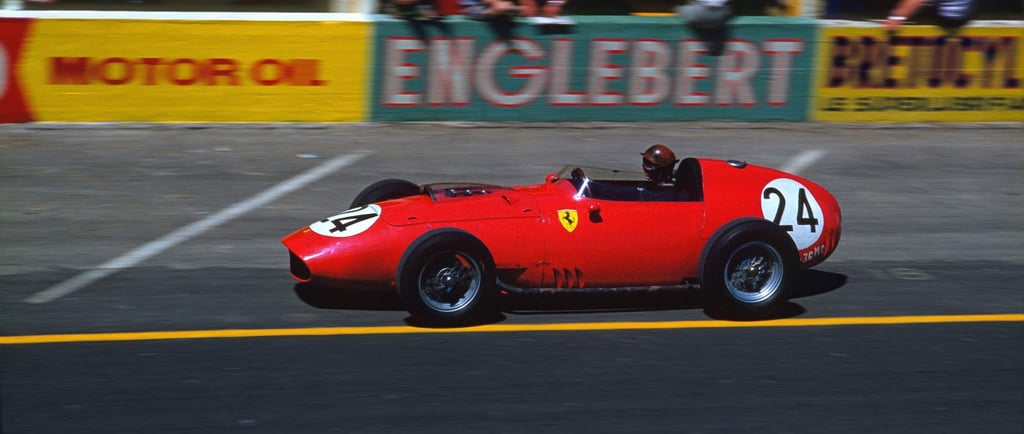
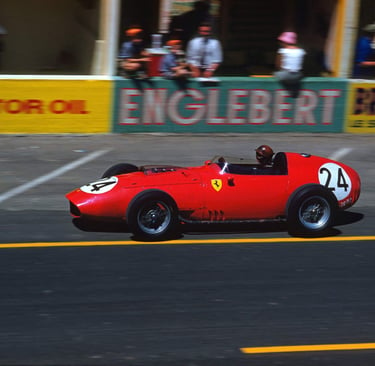
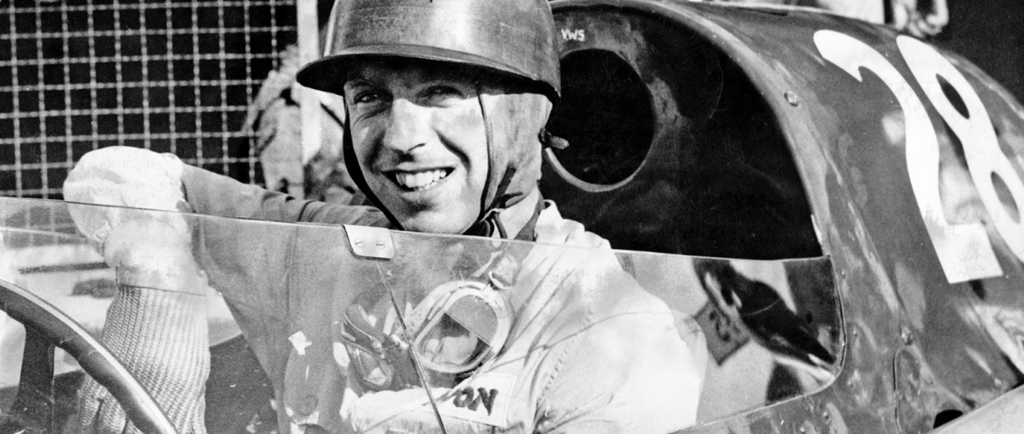
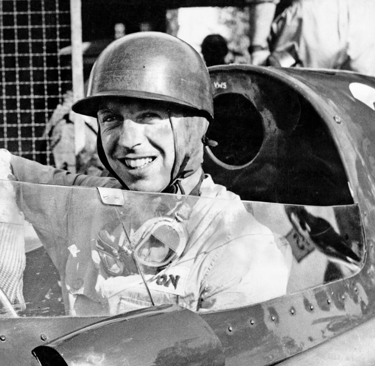
Tony Brooks occupies a strange and revealing place in Formula 1 history. He is remembered as "the racing dentist," as a stylish and intelligent British driver of the 1950s, and as one of Ferrari's leading men before the rear-engined revolution changed the sport. Yet those labels still undersell him. The deeper historical record suggests something stronger: Brooks was not merely a fine Grand Prix driver of his era, but a driver of genuine championship quality, one whom Stirling Moss himself considered exceptional, and one whose results, racecraft, and reputation stand up remarkably well when compared with more famous world champions.
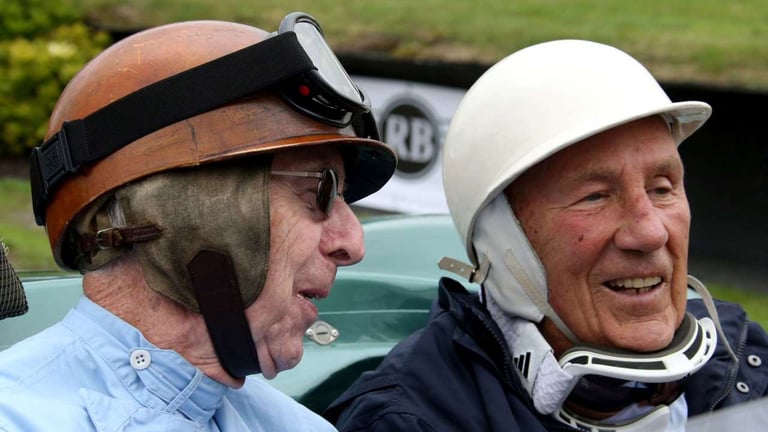
Brooks won six World Championship Grands Prix, finished runner-up in the 1959 world championship, and at his peak beat the best drivers and teams of one of the most dangerous and mechanically unpredictable eras the sport has ever known. More importantly, the strongest testimony comes from those who knew exactly what elite driving looked like. Stirling Moss described Brooks as "the greatest 'unknown' racing driver there's ever been" and said he was "far better than several people who won the world championship." On another occasion, Moss went even further, saying that if he were selecting a team, Brooks would be the first driver, with Jim Clark alongside him. For a driver of Moss's stature to speak in those terms is not a courtesy; it is a historical clue.
More Than "The Racing Dentist"
Brooks's unusual route into top-level motor racing partly explains why he has often been treated as a romantic side note rather than as a driver of the highest order. Trained in dentistry and balancing professional study with racing, he developed a reputation for intelligence, precision, and mechanical sympathy long before he became a major Formula 1 name. That background fed the "racing dentist" nickname, but it also reinforced a misconception that he was an amateur who rose above expectations rather than a complete elite driver in his own right.
In reality, Brooks's rise was quick because the talent was obvious. He emerged in British national racing, impressed in sports cars and Formula 2 machinery, and soon showed he could combine speed with judgment in a way team managers prized in the 1950s. Those qualities mattered enormously in an era when races were long, cars were fragile, circuits were unforgiving, and survival depended on more than raw bravery. The best drivers had to be fast enough to win while preserving machinery and reading changing conditions, and Brooks excelled at exactly that balance.
His breakthrough came in 1955 at the non-championship Syracuse Grand Prix, where he arrived as a young dental student and left as a major prospect after beating established teams in a Connaught. The result was significant because it was a real statement of talent on an unfamiliar road circuit while he was still balancing study and racing. From the start, Brooks looked like a driver who understood both speed and survival.
Vanwall, Team Orders, and the Moss Problem
One reason Brooks's legacy has remained slightly obscured is that his best years came partly in the orbit of Stirling Moss himself. At Vanwall, the great British hope of the late 1950s, Brooks was racing inside a team and a national narrative that naturally centered on Moss. Brooks was contractually obliged to give priority to Moss in certain situations, a remarkable fact when viewed in hindsight because it suggests that one of Britain's very fastest drivers was not always operating as a fully independent spearhead.
The most revealing comparison came in 1958. Brooks often had to surrender chassis, engine, or gearbox to Moss, who had first choice as number one driver, yet Brooks still matched Moss with three victories for Vanwall. That is a crucial point for any article about Brooks's quality: even when the team hierarchy favored Moss, Brooks remained capable of winning at the same rate on the right weekends. The races he won came at Spa, the Nürburgring, and Monza, all tracks that demanded speed, precision, and composure.
That context matters when judging results. If a driver is already close to Moss in outright ability, but does not enjoy equal strategic standing inside the team, the record can understate how formidable he really was. Brooks still won major races and built a reputation strong enough that Moss never treated him as a secondary figure in talent terms. In effect, Brooks had the unusual misfortune of being great in the same national moment as a more famous great.
The 1957 British Grand Prix and the Shape of a Top Driver
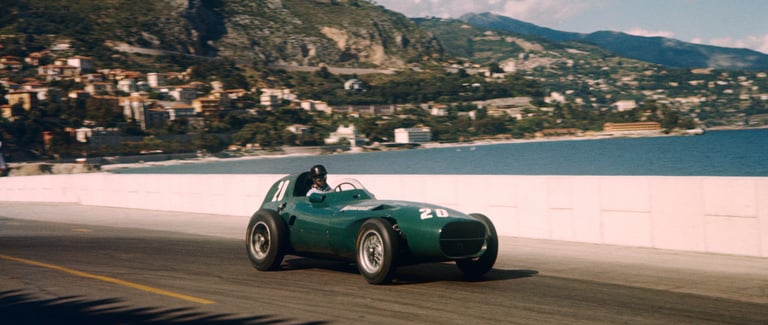
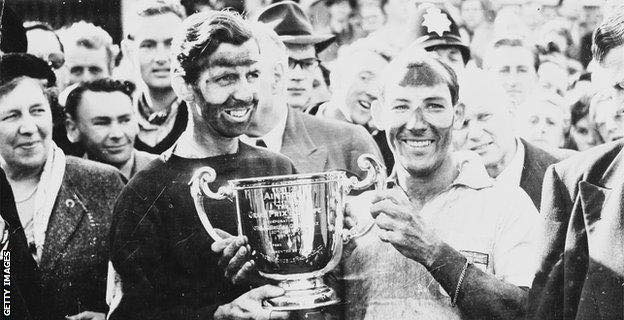
Brooks's victory in the 1957 British Grand Prix, shared with Moss in a Vanwall, remains one of the symbolic moments of British motor racing because it marked the first World Championship Grand Prix victory for a British car driven by Britons on British soil. As a historical event, it is usually told as a landmark for Vanwall and for Britain's rise. But it also matters in personal terms: Brooks was central to one of the races that helped redefine where top-level Grand Prix power was shifting.
That shift is important because the late 1950s were the beginning of Britain's emergence as the sport's technical and competitive center. Brooks was not a passenger in that movement. He was one of its key performers, trusted by a leading team and capable of converting the moment into victory. Drivers who sit at the center of turning points in Formula 1 history are rarely there by accident.
The 1957 British Grand Prix at Aintree was particularly significant because it came at a time when British teams were still struggling to establish themselves against the dominant Italian machines. Brooks and Moss shared the car, but Brooks drove the faster stints and was widely credited with the stronger performance over the race distance. That detail shows that even inside a partnership with Moss, Brooks was not simply sharing glory; he was demonstrating that he could carry the car at the limit.
Ferrari and the 1959 Title Fight
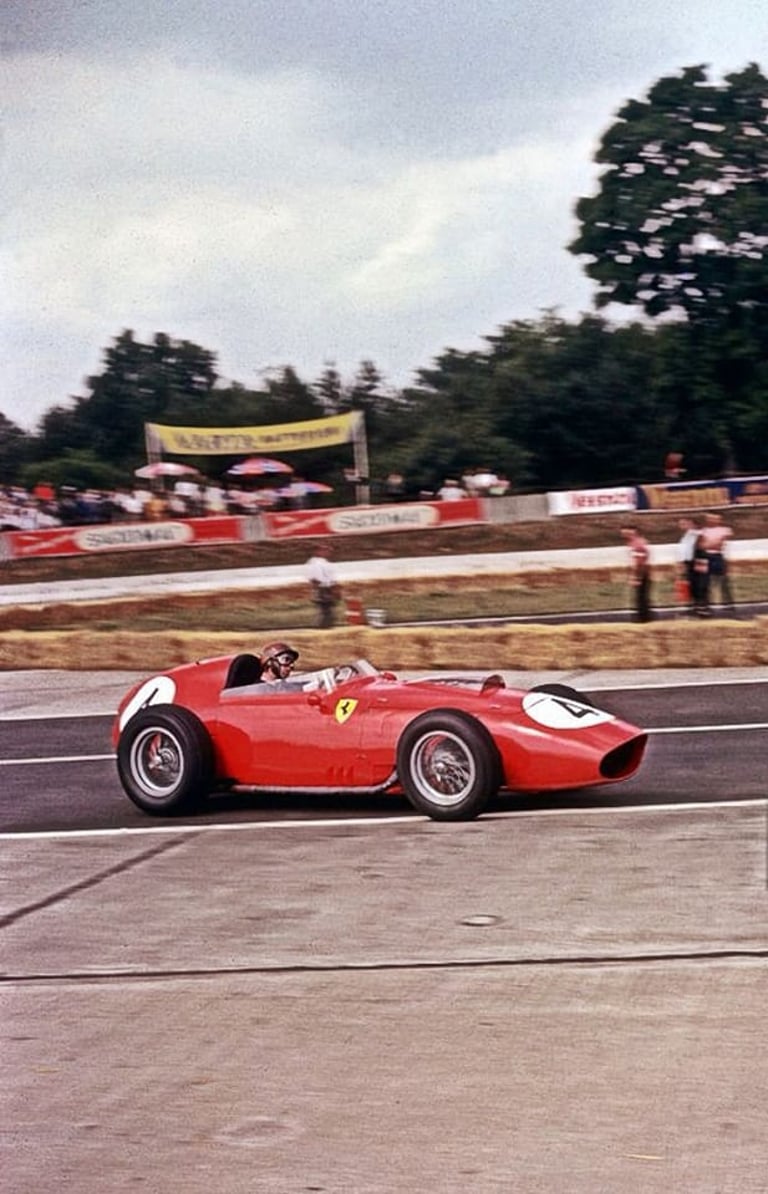
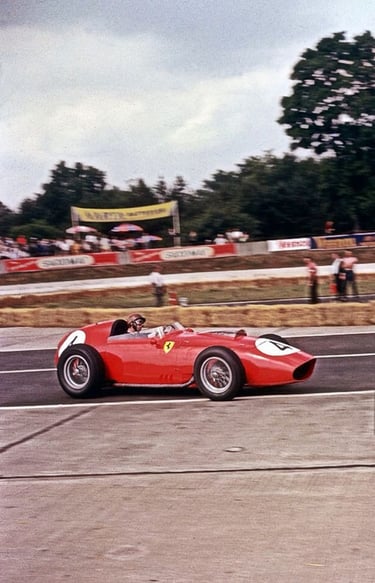
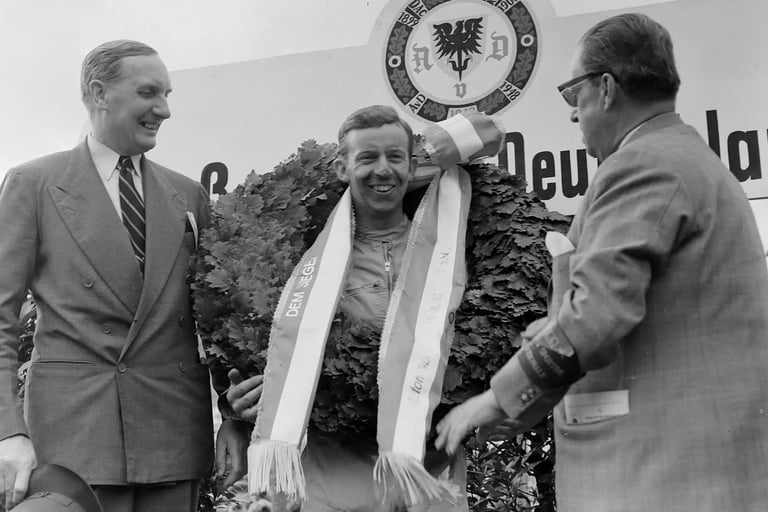
If one season proves that Brooks belonged in the company of champions, it is 1959. Driving for Ferrari, he won at Reims and at AVUS, and arrived at the final round still in realistic contention for the world championship. That season did not end with a crown, but the mere fact that Brooks carried the title fight so deep into the year, against rivals like Moss and Jack Brabham during a moment of technical upheaval, is itself a major statement of quality.
His German Grand Prix win at Avus put him within four points of Jack Brabham with three races left. The context makes it even more impressive. Ferrari's front-engined cars were increasingly under threat from the lighter, rear-engined Coopers, whose layout was about to transform Formula 1. Brooks was therefore not only battling elite drivers; he was also trying to hold back the future with a car architecture nearing the end of its era. That he remained a title contender under those circumstances says much about the standard of his driving.
The decisive final race at Sebring is often recalled for Jack Brabham pushing his car across the line to secure the championship. Yet Brooks's role in that story is crucial. He entered the event as one of only three realistic title contenders, alongside Brabham and Moss. After early contact damaged his Ferrari, Brooks stopped to inspect the car rather than drive blind with a possible safety problem, then recovered strongly but lost the time that might have changed the championship outcome. It was a decision consistent with his character: intelligent, technically aware, and just cautious enough to preserve life and machinery in an era that punished recklessness with catastrophe.
At Sebring, the final round of the 1959 championship, Brooks qualified on the front row, but a grid issue pushed him back, and then he was hit at the start by Wolfgang von Trips's Ferrari. Brooks then made a deliberate precautionary pit stop because he had previously had serious crashes and had promised himself not to take unnecessary risks in a substandard car. He finished third overall, and Brabham took the title. That outcome is often remembered as bad luck, but it was also a reflection of Brooks's character: intelligent, careful, and unwilling to gamble with his life for a title.
The Style of Greatness
Brooks did not build his reputation by appearing superhuman in the way Fangio sometimes did or by cultivating the heroic aura that surrounded Moss. His greatness was subtler and, in some ways, easier for history to overlook. He was smooth, mechanically sympathetic, analytically minded, and capable of a pace that, on the right day, could make even the very best look ordinary. Motor Sport Magazine wrote that at his peak Brooks could "reduce everyone else to bit-parts, even the great Stirling Moss."
That is a remarkable line, but it matches the broader evidence. Brooks's reputation among serious historians rests not on one upset victory or one flattering memory, but on a recurring pattern: when conditions aligned and machinery held together, he won like a driver who belonged at the very top. The combination of speed, sympathy, and judgment is exactly what made the greatest champions of the 1950s so formidable, and Brooks consistently displayed those same qualities.
Formula1.com website adds that Brooks drove with "astonishing speeds with an economy and artistic precision that was beautiful to behold." That combination of testimony and description is important: Brooks was not simply brave, but smooth, efficient, and technically aware.
Measuring Brooks Against World Champions
Brooks's case becomes stronger when he is compared not to a modern idealized legend, but to the actual champions around him. He raced in the same broad window as Fangio, Hawthorn, Brabham, and Phil Hill, and his level on pure pace was plainly worthy of that company. He did not achieve the titles they did, but championship totals in the 1950s were shaped by far more than pace alone: fragile cars, dangerous circuits, team politics, and the small number of races in each season magnified every retirement and every moment of bad luck.
The comparison with Mike Hawthorn is particularly revealing. Hawthorn became world champion in 1958, but Moss later suggested Brooks was better than several title winners, a statement many historians read as including champions of Brooks's own era. Brooks's win rate and flashes of dominance support that interpretation. He was capable of weekends in which he looked every bit the equal of Moss and the match of anyone else in the field. That is exactly what separates a respected period driver from a true champion-class talent.
Brooks's raw statistics are strong even before context is added. He won six Grands Prix from 38 starts, a striking return in an era when cars failed often and races were long, dangerous, and mechanically punishing. He was the most successful driver of his era after Fangio, Ascari, and Moss, which places him in rare company even without a world title. That is exactly the sort of record that separates a good driver from a historically significant one.
The deeper point is that Brooks's results were not built only on survival. When he had competitive machinery, he was capable of front-running pace and race-winning control, and his win rate reflects that. In the 1950s, many talented drivers produced flashes of brilliance but could not convert them into results because of mechanical fragility or over-commitment. Brooks repeatedly converted.
Moss's Praise to Him
Many historical reputations become exaggerated over time, but Brooks's case is unusual because his greatest advocate was a direct contemporary with no need to flatter him. Moss is widely regarded as the greatest driver never to win the world championship and one of the purest judges of driving talent in the sport's history. When Moss said Brooks was better than several world champions, he was speaking as a man who had raced against Fangio, partnered elite drivers, and understood the subtle differences between speed, race intelligence, and mechanical sensitivity.
The most striking point is that Moss did not praise Brooks in vague, sentimental terms. He described him as very fast, careful with the car, and good enough to be chosen as first driver in an ideal team. That description cuts to the heart of what separated the very best drivers of the 1950s from the merely spectacular. In that era, greatness was not just a matter of one-lap brilliance. It required controlling tire wear, preserving gearboxes and engines, managing fuel and brakes, and judging when to attack without crossing the line into self-destruction. Brooks, in Moss's account, possessed that complete package.
There is also a subtle but valuable point in the way Moss and Brooks are linked historically. Moss became the public face of British racing brilliance, while Brooks remained quieter and less theatrical. Yet the record suggests they were much closer in ability than their later reputations imply, especially in the late 1950s when both were winning against the best the sport has to offer. Brooks did not lack pace; he lacked the myth-making machinery that followed Moss.
Why History Slightly Lost Him
Several factors explain why Brooks is not discussed as often as comparable talents. His Formula 1 career was relatively short, ending after 1961, and he walked away young enough that there was no long late-career reinvention to extend his legend. He never secured the one title that transforms strong careers into permanent mainstream fame, and he raced in a period where death, danger, and constant turnover left many remarkable drivers partially obscured in collective memory.
He also lacked the myth-making advantages that helped define others. Fangio had five world titles and an aura of supreme mastery; Moss became the noble uncrowned king; Jim Clark, who came just after Brooks's peak, became the poetic symbol of natural genius. Brooks, by contrast, was understated, cerebral, and briefly present at the front. Yet drivers of that type are often the ones fellow professionals rate highest, because they recognize how difficult controlled speed really is.
Brooks retired at 29, after finishing third at Watkins Glen in 1961, because he had a business to build and a family to consider. That early exit helped keep his legend from growing in the way some longer careers do. But it also preserved the impression of a man who had already done enough to prove his class.
A Driver Worth Reframing
The fairest way to describe Tony Brooks is not as an overlooked curiosity, but as an uncrowned champion-level driver. The record shows a man who won often when he finished, fought for the 1959 title to the last round, succeeded for Vanwall and Ferrari, and earned extraordinary praise from Stirling Moss, one of the sharpest evaluators the sport has ever produced. That combination of evidence is powerful because it joins numbers, race results, and peer testimony into one coherent picture.
Brooks may never have had the title that would settle the matter for casual readers, but history does not have to remain trapped by the championship table. Some drivers are remembered because the numbers force remembrance. Others deserve remembrance because a closer reading of the numbers, the circumstances, and the testimony reveals what the title standings could not fully capture. Tony Brooks belongs firmly in the second category: not just a very good driver of the 1950s, but one of the finest, and a man whose talent clearly placed him in the company of world champions even if the championship itself narrowly escaped him.
The best historical summary may be the one preserved by Moss and repeated by later obituaries: Brooks was a driver of extraordinary ability who never quite received the fame his speed deserved. He was a serious, analytical racer who could win on classic circuits, fight for championships, and stand beside Moss without looking out of place. That is not the profile of an underrated curiosity. It is the profile of a champion-level driver whose title count was smaller than his talent.
Tony Brooks should be remembered not as a footnote to Stirling Moss, but as one of the clearest examples of how Formula 1 history can understate greatness when it relies too heavily on championships alone. He was fast enough to beat elite teams, composed enough to win in the hardest races, and respected enough that Moss himself treated him as a driver of the highest order. That is a legacy worthy of the very best.