Too Fast, Too Young, Too Soon: The Story of Britain's Lost F1 Generation
Roger Williamson, Tony Brise and Tom Pryce were Britain's future F1 World Champions. Between 1973 and 1977, all three were killed. This is their story.
CLASSIC MOTORSPORT
3/25/202616 min read
The Void at the Top of British Motorsport
There is a question that haunts British motorsport history like a ghost that refuses to leave: what if they had lived?
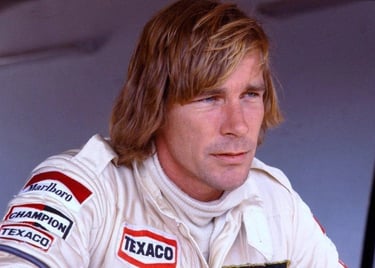
Between 1976 and 1992, sixteen years passed without a British Formula 1 World Champion. In a sport where Britain had long considered itself the spiritual home of racing — home to the constructors, the engineers, the gearheads, the mechanics who built the machines that won championships — that silence was deafening. James Hunt had seized the crown in 1976, that unforgettable rain-soaked afternoon at Fuji, edging Niki Lauda by a single point in one of the most dramatic championship battles the sport had ever seen. It would be the last time a British driver stood on the top step for a long time.
Nigel Mansell finally ended the drought in 1992, commanding the season in his dominant Williams FW14B with such authority that he sealed the title at the Hungarian Grand Prix with five races still to run. The British crowd exhaled. But those who truly understood the sport — the journalists, the team managers, the old mechanics who still carried the smell of Castrol and burned rubber in their memories — knew that the gap should never have been that wide.
Because in the years between Hunt and Mansell, three young men had been destined to fill that void. Three Britons who, at the time of their deaths, were spoken of not merely as promising talents, but as future world champions.
Their names were Roger Williamson, Tony Brise, and Tom Pryce.
They died within four years of each other — between 1973 and 1977 — taken by a sport that was still learning, painfully and slowly, what it owed to the men who risked everything to drive its cars. Together, they represent something that the veteran motorsport journalist David Tremayne would later call, in his definitive book on the subject, The Lost Generation — a phrase borrowed from literature, from the era after the First World War, when an entire cohort of brilliant young minds had been destroyed before they could change the world.
The Killing Fields: Formula 1 in the 1970s
To understand why Williamson, Brise, and Pryce died, you must first understand the world they raced in. And that world, by any modern standard, was one of extraordinary, almost casual brutality.
Formula 1 in the 1970s was the fastest sport on Earth, and also one of the most lethal. The BBC noted that Sir Jackie Stewart — himself a ferocious early campaigner for improved safety — once calculated that drivers at the peak of his career faced a fifty-fifty chance of being killed within five years of sustained competition.
The cars were terrifyingly quick and structurally fragile. Fuel tanks were positioned without thought for impact survival. Barriers were made of hay bales and goodwill. Circuit medical facilities ranged from inadequate to non-existent. Fireproof suits were an afterthought; safety harnesses were considered by some drivers to be a liability rather than a protection — the old fear being that in a fire, you needed to escape quickly, and a harness could trap you. The sport's attitude toward death was, by modern standards, almost incomprehensible: it was considered an acceptable, even inevitable, cost of doing business. If you don't want to die, don't race. The saying was not ironic. It was a genuine philosophy.
Stewart had pushed hard for reform throughout his career, campaigning for armco barriers, proper medical teams at circuits, and structural changes to the cars. His decision to step away was made public in the most devastating of circumstances: his friend and teammate François Cevert was killed in qualifying at Watkins Glen in October 1973 — the very race that had been planned as Stewart's final and 100th Grand Prix. With Cevert gone, Stewart did not start the race. He simply walked away, and the sport he left behind was still dangerously slow in its transformation.
The changes came, but they came in the language of tragedy: each death producing a temporary flicker of outrage, followed by incremental improvements, followed by the next death. It was into this world — brilliant, seductive, and pitiless — that Roger Williamson, Tony Brise, and Tom Pryce drove their racing cars. Each of them had every quality required to survive and flourish. Each of them had the speed, the intelligence, the instinct. What they could not control was the era they had been born into, and the sport that era had produced.
The killing fields were waiting. And the lost generation was about to be written into history.
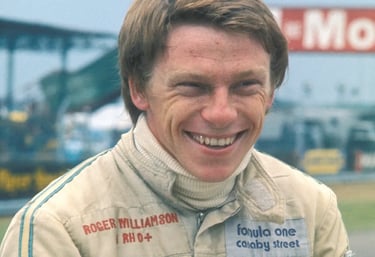
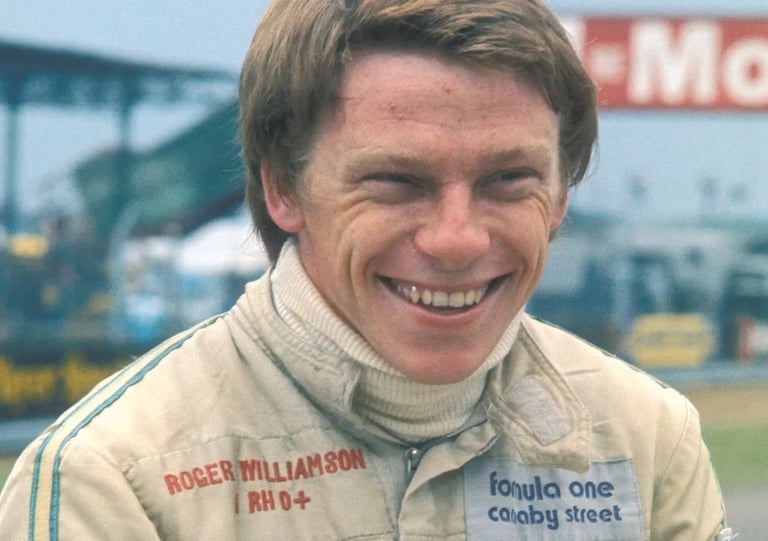
Roger Williamson (1948–1973): The First to Fall
There is a piece of footage that every serious Formula 1 historian knows, and that no one who has seen it ever forgets.
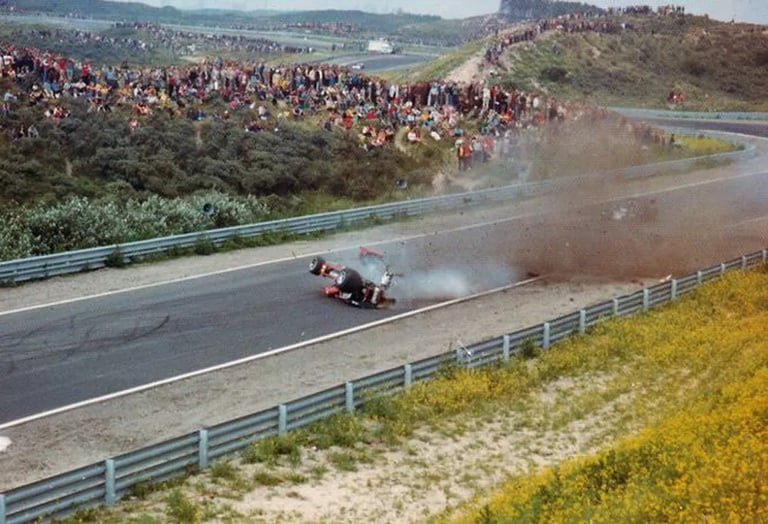
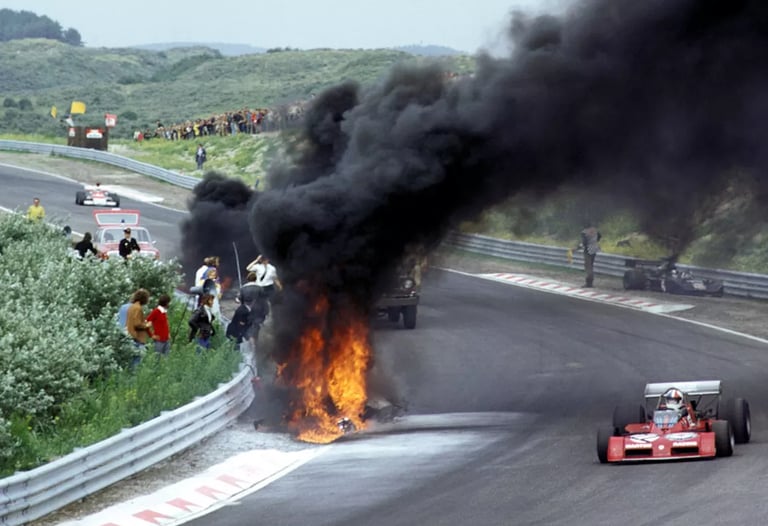
It lasts just over two minutes. The camera is mounted at trackside at the Circuit Zandvoort, during the 1973 Dutch Grand Prix. A small March racing car sits upside down in the sand trap, flames licking steadily from its undercarriage. A lone figure in a white racing suit runs toward it, tries to flip the car, grabs a small fire extinguisher from a bewildered marshal, and aims it at the fire. He shouts for help. No help comes. The race continues. Cars stream past at racing speed, their drivers — some of whom have noticed, many of whom have not — unable to stop. The man in the white suit does not give up. He keeps fighting the fire with his bare hands and a tiny extinguisher that was never designed for this. After more than two minutes of desperate, solitary struggle, he finally kneels beside the car. There is nothing more he can do.
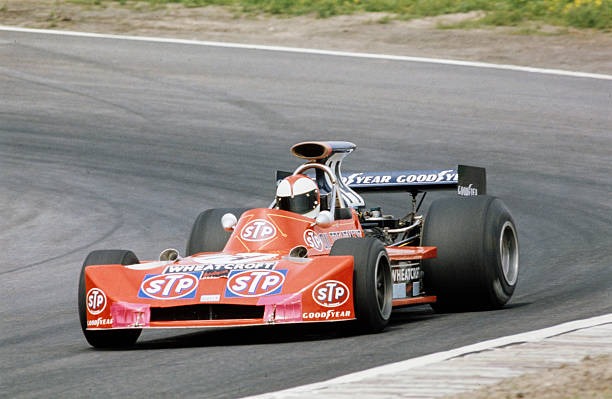
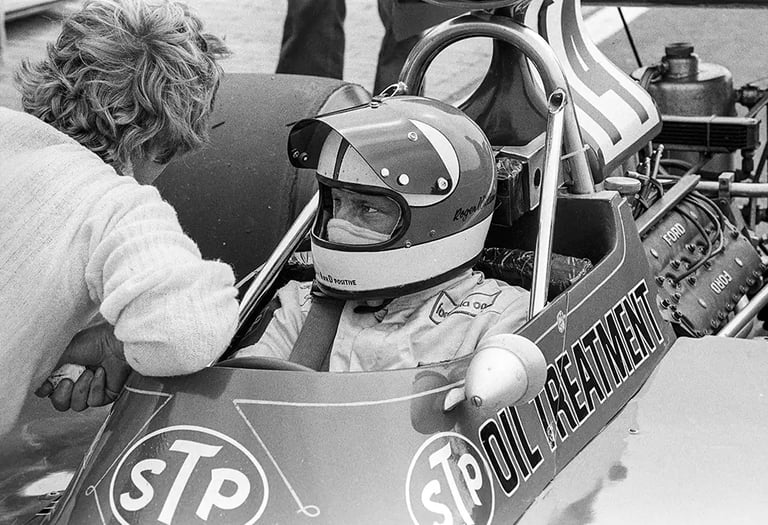
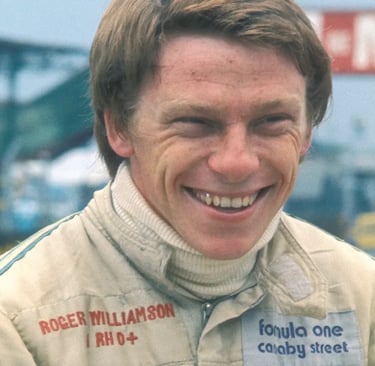
The man in the white suit was David Purley, who later received the George Medal for his bravery that day. The driver in the car was Roger Williamson. He was 25 years old, competing in only his second Formula 1 Grand Prix, and he was widely considered one of the most gifted natural racing talents Britain had produced in a decade.
Williamson had grown up in Ashby-de-la-Zouch, Leicestershire, the son of a small businessman who could barely afford the costs of entry-level motorsport. What changed his trajectory was the intervention of Tom Wheatcroft, a construction magnate and passionate motorsport patron from the East Midlands, who recognised in the young Williamson a quality that went beyond technique or courage. "Roger didn't just drive fast," Wheatcroft would later say. "He made the car do things it shouldn't have been able to do." Wheatcroft funded Williamson's rise through the junior formulae with the fervour of a man who genuinely believed he was bankrolling a future world champion.
The results justified the faith. Williamson dominated British Formula Three across 1971 and 1972, winning championships in both seasons with a ruthless consistency that drew admiring comparisons to the young Jackie Stewart. He moved into Formula 2 and was immediately competitive. By the time he appeared on the Formula 1 grid in 1973, with a works March backed by Wheatcroft's money, the whispers had become a chorus: here was a driver who could win races before the decade was out, and championships after that.
His Grand Prix debut came at Silverstone in July 1973 — and it ended on the very first lap, when a nine-car collision at the start swept him out of the race before he had turned a single meaningful wheel in anger at Formula 1 level. It was a cruel and arbitrary beginning. Two weeks later came Zandvoort, his second start, and the race that would become one of the most haunting episodes in the sport's history.
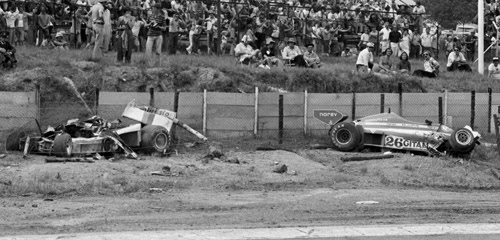
On lap eight of the Dutch Grand Prix, Williamson suffered what appeared to be a tyre failure or a suspension collapse at high speed. The March went airborne, barrel-rolled, and landed upside down on the track before sliding into the sand. The car caught fire almost immediately.
What happened next became one of the most damning indictments of the sport's safety culture in its entire history. Williamson was alive in the wreckage. He had survived the impact. The fire, however, was the killer — and there was no one equipped or organised to fight it. The marshals were untrained, the equipment was inadequate, and the race direction made the incomprehensible decision not to stop the race. For more than two minutes, David Purley fought alone to save his friend, risking his own life in the process, while Formula 1 cars drove past on the racing line. By the time a fire crew arrived with proper equipment, Roger Williamson was gone.
The aftermath was a mixture of grief and fury. Wheatcroft never fully recovered from the loss. Purley was haunted by the event for the rest of his life. And in the paddock, the mood among drivers and journalists was one of cold, simmering anger. The accident accelerated the already-urgent conversation about marshal training and circuit safety — a conversation that would take years to produce meaningful systemic change. Roger Williamson had driven exactly two Grands Prix. The real thing had been destroyed before it could even begin.
Below is the record of the 1973 Dutch Grand Prix and the terrible accident involving Williamson. Viewer discretion is advised when watching the footage.
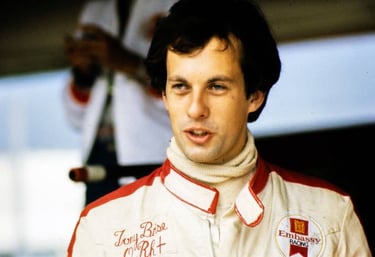
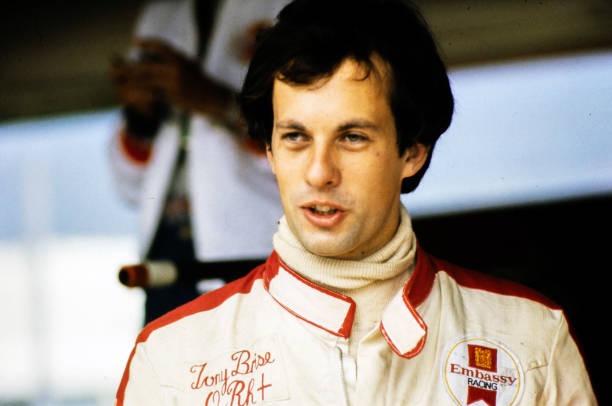
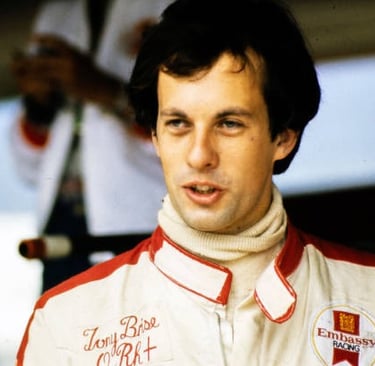
Tony Brise (1952–1975): The Prodigy Who Never Got His Chance
If Roger Williamson represented the raw, explosive talent of a working-class kid from the East Midlands who had fought his way to the top, Tony Brise represented something slightly different: a driver of such polished, sophisticated speed that even the sport's most experienced judges were left searching for comparisons.
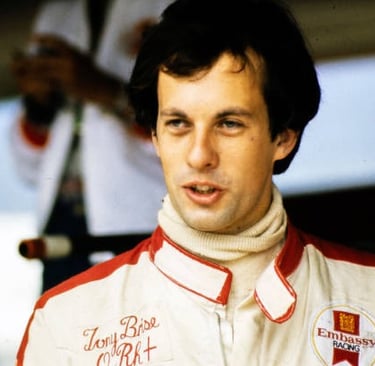
Brise was born in Erith, Kent, on 28 March 1952, into a family with motorsport in its blood — his father John Brise was an experienced club racer who introduced his son to the sport young and deliberately. By the time Tony was in his early twenties, he had already demonstrated a breadth of ability that was unusual even among the elite of British junior racing. He won in Formula Ford, dominated Formula Atlantic, and carried himself in the cockpit with the calm, measured authority of a much older driver. Where some young racers were fast but erratic, Brise was fast and precise — a combination that veteran engineers immediately recognise as something close to irreplaceable.
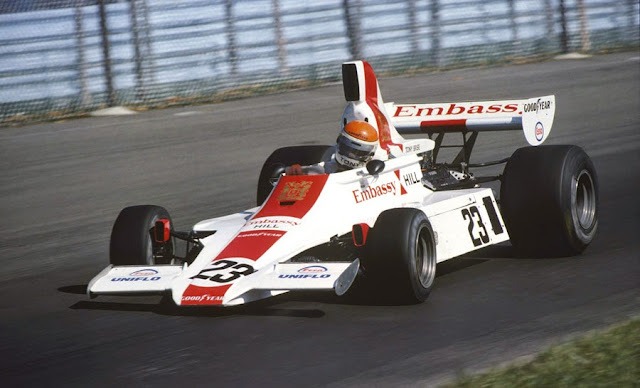
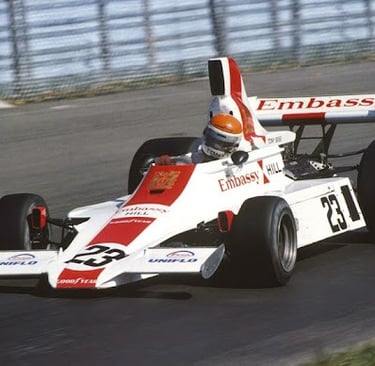
The defining episode in his junior career came at Zolder, Belgium, during his early Formula 1 outings with the Embassy Hill team in 1975. In a car that was, by any honest assessment, not a front-runner — a Hill GH1 powered by a Cosworth DFV — Brise qualified seventh. In a midfield car. The underlying pace was unmistakable, and Motorsport Magazine's Matt Bishop would later describe his performances as evidence of a driver who "transcended the mediocrity of his machinery" in a way that only a handful of talents in any generation can.
What made the picture even more striking was who he was beating inside his own team. For the majority of the 1975 season, Brise's teammate at Embassy Hill was Alan Jones — the Australian charger who would go on to become Formula 1 World Champion with Williams in 1980. Brise outperformed him consistently, race after race, in identical machinery. In the final rounds of the season, his teammate became the experienced German driver Rolf Stommelen, a seasoned Formula 1 campaigner. The pace differential remained. Brise was simply operating at a different level from everyone around him.
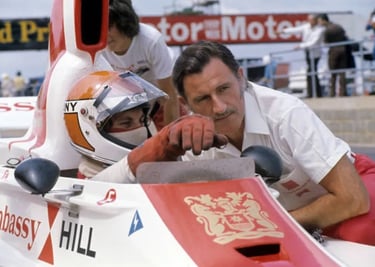
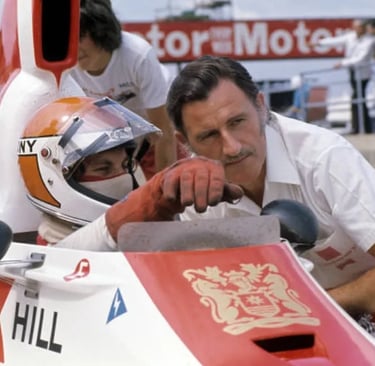
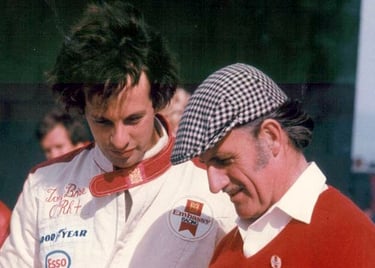
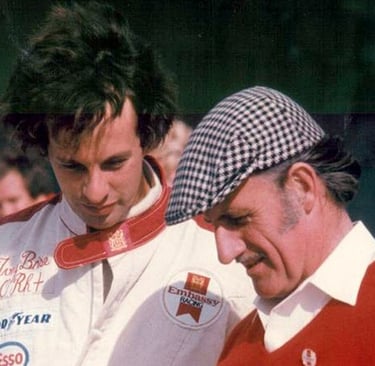
The man who spotted this quality earliest, and acted on it most decisively, was Graham Hill. The double World Champion — winner of the Formula 1 title in 1962 and 1968, Monaco specialist, Le Mans winner, aviation enthusiast and team owner — had by 1975 retired from driving but remained deeply embedded in the sport through his Embassy Hill team. Hill had a gift for recognising talent, and in Brise he saw something extraordinary. He brought the young Kent driver into the team and began to groom him — methodically, deliberately — as the cornerstone around whom Embassy Hill's future would be built.
That future was already being engineered in aluminium and composite fibre. The GH2, designed by Andy Smallman, was under development and intended to give Brise a machine genuinely worthy of his ability for 1976. In late November 1975, Brise, Hill, Smallman, and three team mechanics flew to Paul Ricard in the south of France to test the new machine. The test went well. On the evening of 29 November, Hill piloted his own Piper Aztec aircraft back toward London, approaching Elstree Airfield through dense fog. He lost his bearings on approach. The aircraft struck trees on Arkley golf course near Barnet and caught fire. All six people on board were killed instantly.
Tony Brise was 23 years old. He had, across ten Formula 1 Grands Prix in a non-competitive car, already demonstrated that he was faster than a future world champion. Nobody who had watched him drive doubted where the trajectory was heading. The crash at Elstree erased what many who were there — and who have thought carefully about the era since — believe would have been one of the great ones.
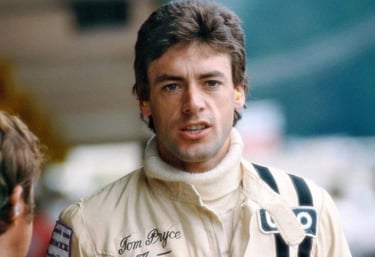
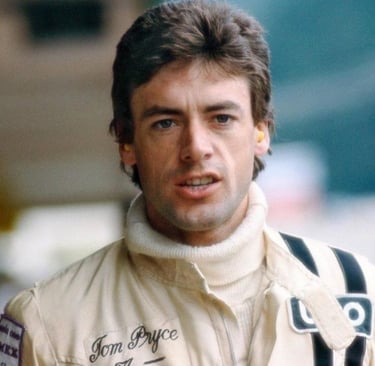
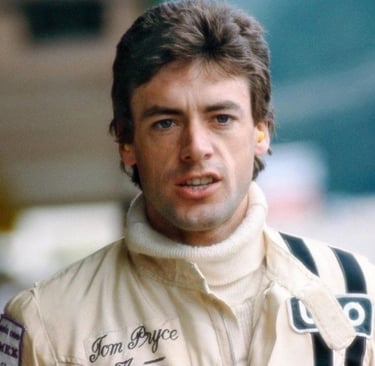
Tom Pryce (1949–1977): The Welshman Who Came Closest
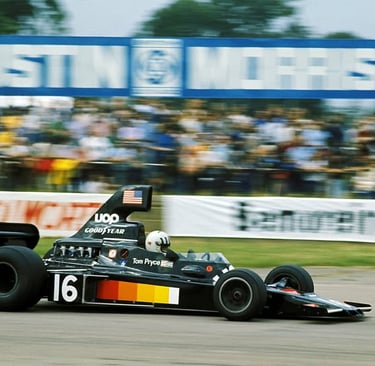
Of the three drivers who make up Britain's lost generation, Tom Pryce is the one whose story carries the deepest vein of cruelty. Because Pryce, unlike Williamson or Brise, had already shown the world exactly what he was capable of.
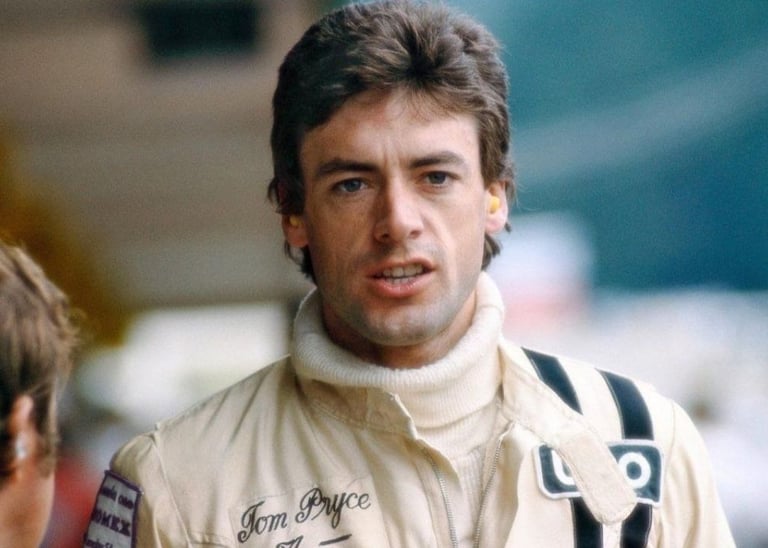
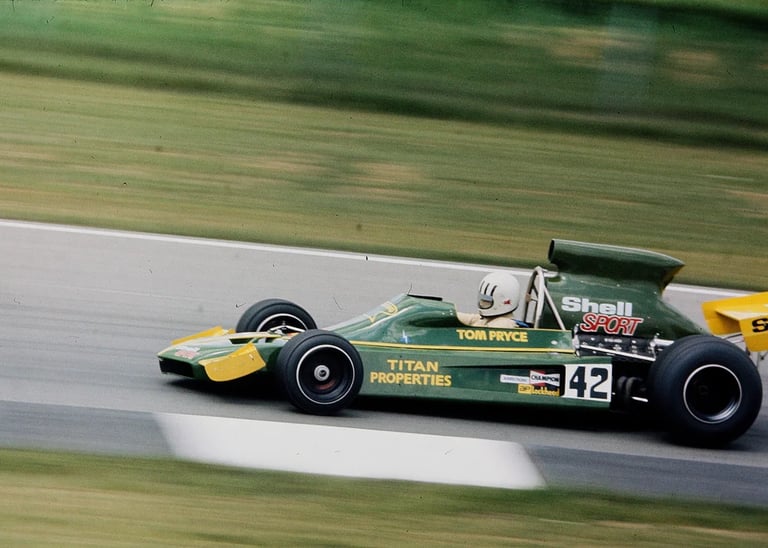
Thomas Maldwyn Pryce was born on 11 June 1949 in Ruthin, Denbighshire — a small market town in the hills of North Wales, far removed from the circuits and paddocks and wealthy patrons of the English motorsport establishment. His path into racing was unconventional, driven more by raw instinct than by money or connections. He worked his way up through the junior formulae with the kind of relentless, resourceful hunger that tends to separate genuine talent from comfortable talent, and by the time he made his Formula 1 debut with the small Token team in 1974, the paddock was already paying attention.
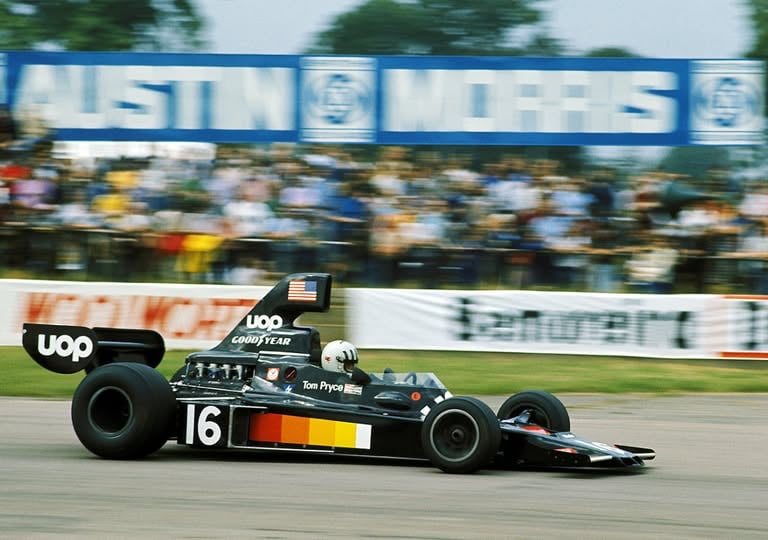
His opportunity came fully into focus when he joined the Shadow team midway through the 1974 season — a move triggered by one of those moments of pure, undeniable performance that cannot be ignored. At Monaco that year, Pryce had won the Formula 3 support race in dominant fashion. Shadow signed him almost immediately. What followed was a rapid and compelling demonstration of everything the team had seen in that Monaco performance.
At the 1975 Monaco Grand Prix — historically the circuit that separates the merely quick from the genuinely exceptional — Pryce qualified second. Then came Brands Hatch, and the non-championship Race of Champions. Starting from pole position, Pryce made a poor start and found himself behind Ronnie Peterson and Jacky Ickx — two of the fastest drivers on the circuit. He passed them both. He then closed an eight-second gap to race leader Jody Scheckter, the man who would become world champion four years later, and when Scheckter's engine failed under the pressure of being hunted, Pryce inherited the lead and held it to the finish. He became the first — and to this day only — Welshman ever to win a Formula 1 race.
Two weeks later, at Silverstone, in front of his home crowd, Pryce claimed pole position for the British Grand Prix, and led the race before tyre trouble intervened. He finished the season tenth in the World Championship, with a third place in Austria and multiple points finishes — all in a Shadow that was competitive but never dominant. Among the informed observers of the sport, the question was no longer whether Tom Pryce would win a World Championship Grand Prix. It was when.
The 1977 South African Grand Prix at Kyalami began on 5 March. In the wet Wednesday practice session, Pryce set the fastest time — 1 minute 31.57 seconds — with the reigning and eventual 1977 World Champion Niki Lauda a full second behind him. That figure is worth sitting with: a full second. In Formula 1 terms, at that level, it is an enormous margin. When the track dried on Thursday, Pryce slipped to fifteenth on the grid — the Shadow was at its best in the wet, and the gap closed in the dry — but the raw speed he had displayed was noted by everyone who kept timesheets.
What happened in the race itself was not a crash in any conventional sense. It was something stranger and more terrible: a sequence of random, unconnected events that combined with mathematical precision to produce an outcome of devastating finality.
On lap 22, the Shadow of Renzo Zorzi stopped on the track opposite the pit straight and caught fire. Two marshals — both young and inexperienced — sprinted across the live racing track carrying heavy fire extinguishers. Pryce and Hans Joachim Stuck were slipstreaming down the main straight at speeds approaching 270 kilometres per hour, cresting the blind brow of the hill that concealed the scene ahead. Stuck spotted the marshals with just enough time to react and steer around them. Pryce, tucked tight in the slipstream directly behind, crested the hill a fraction of a second later with no warning at all.
He struck the marshal, 19-year-old Frederik Jansen van Vuuren, at full racing speed. The impact killed van Vuuren instantly. The 18.2-kilogram fire extinguisher the marshal had been carrying was hurled into the air by the force of the collision and struck Tom Pryce's helmet with lethal force. Pryce was killed immediately. His Shadow continued down the circuit on its own, driverless, until it came to rest. The race continued. Niki Lauda won.
Tom Pryce was 27 years old.
The Lost Generation — What the Numbers Cannot Measure
Between July 1973 and March 1977, three of Britain's finest racing talents — three men who, by any reasonable measure of speed, intelligence, and competitive quality, were capable of becoming Formula 1 World Champions — were killed by the sport they loved. They died in entirely different circumstances: one in a fire that should have been extinguished, one in a plane descending through fog, one in a freak collision at the crest of a hill. What their deaths shared was not method but timing — all three taken before the 1980s, before the era of meaningful safety reform, before the sport had finally been forced, through accumulated tragedy, to value the lives of the men who drove its cars.
The term "lost generation" carries a precise literary weight. Gertrude Stein used it to describe the young Americans who survived the First World War but were spiritually broken by it — a cohort of brilliant minds destroyed before they could build the world they had been born to build. David Tremayne applied that same framework, with full deliberateness, to Williamson, Brise, and Pryce. The parallel holds in every important respect. These were not merely drivers who died young. They were drivers whose deaths left a specific, measurable absence in the history of their sport — a silence where championships should have been, a void where rivalries should have burned.
Consider what the record books might have looked like. Roger Williamson, dead at 25 in only his second Grand Prix, had already won back-to-back British Formula Three titles and was being compared to the young Jackie Stewart. Tony Brise, dead at 23 with ten Grands Prix to his name, had outperformed Alan Jones — who would become World Champion in 1980 — and Rolf Stommelen throughout the 1975 season in machinery that was never going to win races. Tom Pryce, dead at 27 with a Race of Champions victory and a pole position at Silverstone already in his career, had been one second faster than Niki Lauda in wet practice just days before the race that killed him. They were proven quantities, destroyed at the precise moment when proof was turning into achievement.
Between James Hunt's championship in 1976 and Nigel Mansell's in 1992, sixteen years passed without a British Formula 1 World Champion. Those who lived through that era — the engineers, the journalists, the fans who stood at Silverstone every July and waited — often described the absence as inexplicable: how could Britain, the nation that built the cars and trained the mechanics and produced the drivers, go so long without winning its own sport? The answer, at least in part, lies in four years in the 1970s when the sport took three of the most likely candidates and simply removed them from the story.
Safety in Formula 1 did not improve overnight, and it did not improve easily. Each of the three deaths contributed, in its own painful way, to the pressure for change. Williamson's death at Zandvoort exposed the catastrophic inadequacy of marshal training and race-stopping procedures, and the footage of David Purley fighting alone became one of the most frequently cited pieces of evidence in the ongoing debate about circuit safety standards. Brise and Hill's deaths in the Elstree crash triggered a broader conversation about the responsibilities of team principals and the culture of casualness around private aviation in the sport. And Pryce's death at Kyalami — so random, so mechanical in its cruelty — reinforced the argument that even the most skilled driver, in the most controlled environment, could be killed by a system that had not adequately thought through every variable of risk.
The safety revolution that accelerated through the 1980s and 1990s, culminating in the wholesale redesign of circuits, cars, and safety protocols that followed the deaths of Roland Ratzenberger and Ayrton Senna at Imola in 1994, was built on the foundation of every lesson learned from the deaths that preceded it. Roger Williamson, Tony Brise, and Tom Pryce did not die so that others might live — the sport was not yet wise enough to make that bargain consciously. But their deaths made the living of others more likely.
That is their legacy: not what they won, but what their absence forced the sport to become. And it is for that reason — as much as for the championships they never claimed and the races they never ran — that they deserve to be remembered not merely as names on a memorial wall, but as the lost generation of British motorsport: the drivers who should have defined an era, and whose silence instead defined it.
If stories like this matter to you — the ones history almost forgot, the drivers who raced at the edge of everything and paid the ultimate price — then Racing and Beyond is the channel you've been looking for. We dig deep into the races, the rivalries and the lives that shaped motorsport forever. Subscribe and never miss a story worth remembering: