When Tyrrell Ruled the Green Hell: The Legendary 1971 German Grand Prix
CLASSIC MOTORSPORT
2/5/20265 min read
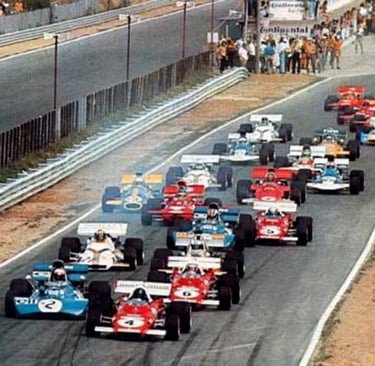
1971 German GP: The Day Tyrrell Dominated the Green Hell
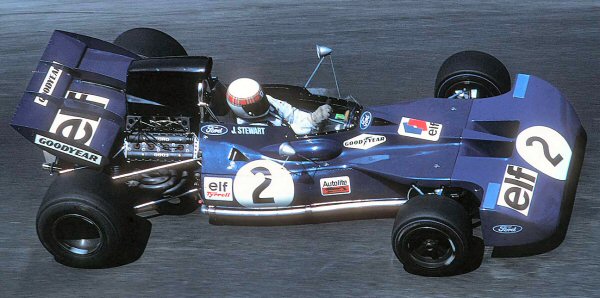
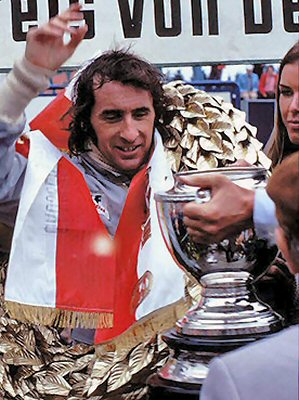
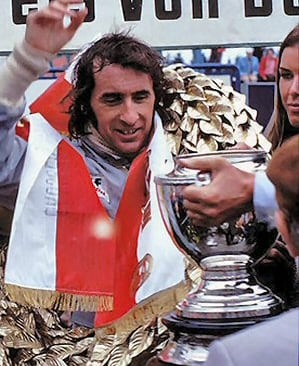
The 1971 German Grand Prix entered Formula 1 history as one of the most impressive demonstrations of technical superiority and driving excellence by a team. On August 1st of that year, Jackie Stewart drove his Tyrrell-Ford 003 to a dominant victory at the legendary Nürburgring Nordschleife circuit, consolidating what would become his second world title. The race not only marked Stewart's fifth victory of the season but also demonstrated why Tyrrell Racing was light-years ahead of its rivals that season.
The Green Hell Challenge
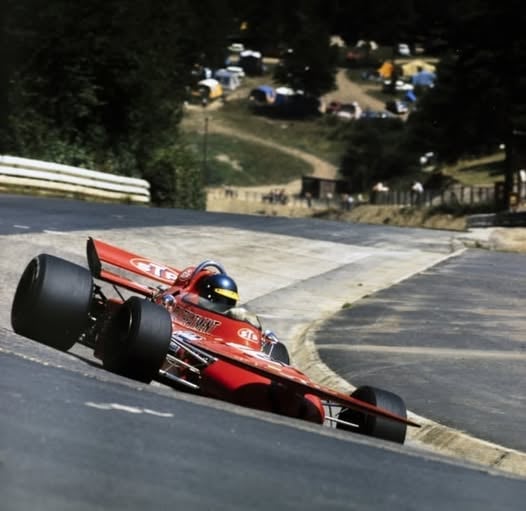
The Nürburgring Nordschleife was not just any circuit. With its impressive 22.8 km length and 73 challenging corners, the German track became known as the "Green Hell" - a nickname credited to Jackie Stewart himself due to its extreme danger and the dense vegetation surrounding the track. The length was equivalent to almost five times that of Interlagos Circuit, making each lap a test of physical and mental endurance.
The impossibility of positioning track marshals along the entire circuit made any accident potentially fatal, as the response time of rescue teams was significantly longer. By that time, approximately fifty drivers had already lost their lives at the Nordschleife, including names like Britain's Peter Collins and Holland's Carel Godin de Beaufort. The 1971 race would require 12 brutal laps on this unforgiving track.
Tyrrell's Supremacy in 1971
The 1971 season was the golden year for Tyrrell Racing Organisation, a team founded and led by Ken Tyrrell. After breaking the agreement with Matra and building their own car, the Tyrrell 001, for the final races of 1970, the British team was ready to dominate. The secret to their success lay in the revolutionary Tyrrell 003, designed by Derek Gardner, which debuted at the 1971 Spanish GP and won on its very first outing.
Equipped with the powerful Ford Cosworth DFV engine, considered the best in the category at the time, Tyrrell took advantage of the instability of rival teams like Ferrari, BRM, and Lotus to build a colossal advantage. Jackie Stewart would achieve six victories throughout the season, securing his second world championship with an impressive 62 points - almost double that of runner-up Ronnie Peterson. The dominance was such that Stewart sealed the title as early as the sixth race of the championship.
Relive History in Color
For enthusiasts who wish to witness this historic moment, follows an exceptional audiovisual record of this legendary race. The video below presents the best moments of the 1971 German Grand Prix, capturing the intensity and emotion of that memorable Sunday at the Nürburgring.
A fascinating detail of this record is that the images were preserved in vibrant colors - a true rarity for the era, considering that most Formula 1 broadcasts and records from the early 1970s were predominantly in black and white or had quite limited color quality. These color images allow us to appreciate details that would normally be lost: the distinctive blue of Stewart's Tyrrell, the intense red of the Ferraris, and especially the lush green of the vegetation that gave the Nordschleife its sinister nickname "Green Hell". It's a time window that transports us directly to that historic day, allowing us to experience the race almost as if we were in the German grandstands over 50 years ago.
The Race That Defined an Era
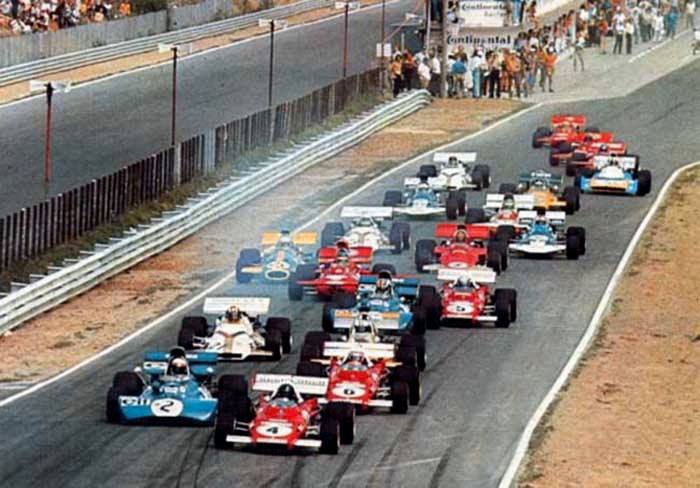
When the lights went out at the Nürburgring that August morning, Jackie Stewart set off determined to add another victory to his collection. Alongside him, teammate François Cevert also piloted a Tyrrell 003 adapted to his physical characteristics - the cars were customized considering the different heights of the drivers.
The race was a demonstration of absolute control. Stewart navigated the 73 dangerous corners of the Nordschleife with surgical precision, maintaining a pace that rivals simply could not match. While drivers like Jacky Ickx and Jo Siffert retired from the race, victims of the circuit's brutality, the Scotsman remained unshaken.
Clay Regazzoni, driving a Ferrari, managed to hold third position but was miles away from Stewart's pace. Second place went to François Cevert, completing a historic Tyrrell one-two finish on the podium and consolidating the British team's total domination.
The Legacy of Victory
The victory at the 1971 German GP was the definitive confirmation that Tyrrell Racing had built the best package in the category - combining innovative chassis, powerful engine, and the best drivers of the era. Stewart would finish the season with 62 points and his second world title, paving the way to win the triple championship in 1973.
The Tyrrell 003 would remain competitive in subsequent seasons, proving that Derek Gardner had created a truly revolutionary design. For Ken Tyrrell, that August Sunday represented the pinnacle of years of hard work building his own team after the separation from Matra.
A Masterclass at the Green Hell
The 1971 German Grand Prix remains one of the clearest examples of technical and sporting domination in Formula 1 history. Jackie Stewart didn't just win a race - he completely dominated the most dangerous and challenging circuit on the calendar, demonstrating why he is considered one of the greatest drivers of all time.
The combination of Stewart's exceptional talent, the technical brilliance of the Tyrrell 003, and Ken Tyrrell's visionary leadership created a perfect synergy that resulted in one of the most memorable years in motorsport history. More than five decades later, that victory at the Green Hell continues to be remembered as a defining milestone of Formula 1's golden era.
Race Results - 1971 German Grand Prix
Nürburgring Nordschleife - August 1, 1971 - 12 laps
Classified:
Jackie Stewart (Tyrrell-Ford) - 1:29:16.3
François Cevert (Tyrrell-Ford) - +30.1s
Clay Regazzoni (Ferrari) - +37.1s
Mario Andretti (Ferrari) - +2:05.0
Ronnie Peterson (March-Ford) - +2:29.1
Tim Schenken (Brabham-Ford) - +2:58.6
John Surtees (Surtees-Ford) - +3:19.0
Reine Wisell (Lotus-Ford) - +6:31.7
Graham Hill (Brabham-Ford) - +6:37.0
Rolf Stommelen (Surtees-Ford) - +1 lap (11 laps)
Vic Elford (BRM) - +1 lap (11 laps)
Nanni Galli (March-Alfa Romeo) - +2 laps (10 laps)
Retirements:
Emerson Fittipaldi (Lotus-Ford) - 8 laps - Oil leak
Chris Amon (Matra) - 6 laps - Accident
Henri Pescarolo (March-Ford) - 5 laps - Suspension
Peter Gethin (McLaren-Ford) - 5 laps - Accident
Denny Hulme (McLaren-Ford) - 3 laps - Fuel leak
Howden Ganley (BRM) - 2 laps - Engine
Andrea de Adamich (March-Alfa Romeo) - 2 laps - Injection
Jacky Ickx (Ferrari) - 1 lap - Accident